Welcome to Arles: A City Where Art and History Intertwine
Located in the heart of Provence, Arles stands as a living testament to the vibrant blend of ancient Roman heritage and the creative spark that drew Vincent van Gogh to its sun-soaked streets. Beyond its evocative ruins, bustling squares, and cultural gems, Arles offers visitors a portal into both its storied past and dynamic present.
Often overshadowed by nearby Avignon, Arles has a distinctive, unpolished charm. Though much of the city was destroyed during World War II bombings, Arles has rebounded, embracing an infectious joie de vivre and welcoming travelers to discover a beautiful mess of history, art, and Provençal daily life.
At a Glance: Unmissable Highlights of Arles
- Roman Arena: A grand amphitheater still alive with events and summer “bullgames.”
- St. Trophime Church: A masterpiece of Romanesque architecture with exquisite details.
- Arlaten Folk Museum: The region’s premier museum for Provençal culture and folklore.
- Ancient History Museum: Takes you back to Arles’ Roman era with models and artifacts.
- Fondation Van Gogh: Showcases contemporary artworks alongside original Van Gogh pieces.
- Forum Square: The lively heart of the city, packed with cafés and social buzz.
- Frank Gehry Tower & LUMA Arles: Modern art meets innovative architecture in Gehry’s climbable tower.
- Réattu Museum: Eclectic art inside a stunning 15th-century mansion.
Arles’ Roman Ruins: Walking Through Time
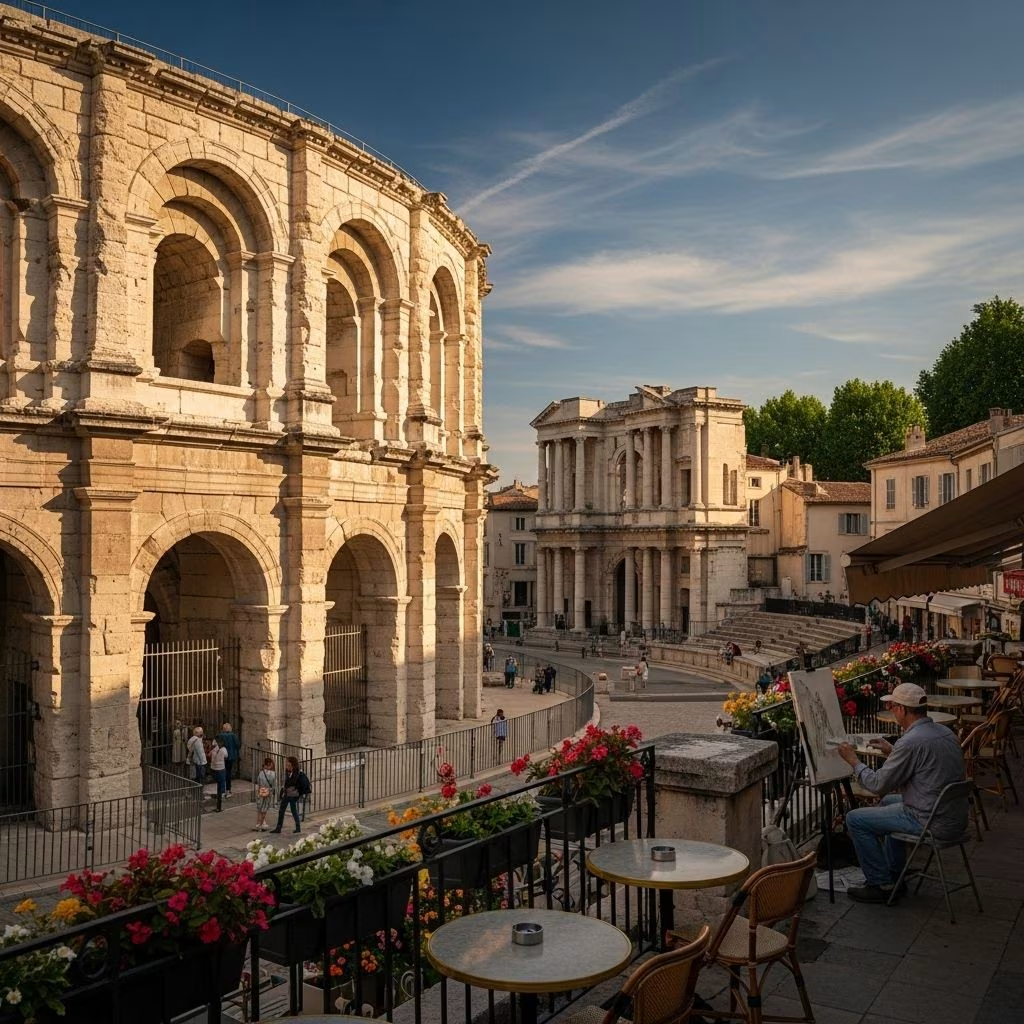
Few French cities match Arles in Roman grandeur. Its Roman Arena, constructed almost 2,000 years ago, once staged epic gladiator battles and wild animal hunts for crowds of 20,000. Today, the arena remains central to local life, hosting thrilling summer bullgames and festivals even as ancient stone bleachers recall the city’s enduring legacy. For panoramic city views, climb the medieval tower above the arena’s ticket booth.
Nearby, remnants of the Classical Theater and other Roman ruins dot the cityscape, creating a dramatic open-air museum. The Ancient History Museum deepens this experience with detailed models, statuary, and artifacts from Arles’ Roman heyday.
St. Trophime Church: Romanesque Beauty
The St. Trophime Church enthralls with its finely carved Romanesque entrance. This architectural gem, built between the 12th and 15th centuries, is further noted for its cloisters and elaborately sculpted portals depicting biblical scenes. Its serene interiors provide a welcome contrast to the lively squares outside.
Provençal Culture: Museums and Markets
No Arles visit is complete without savoring local culture. The Arlaten Folk Museum is the region’s gold standard for understanding Provençal customs, costumes, and folklore. After a long renovation, the museum stands as a captivating celebration of the city’s heritage.
Wander through Arles’ open-air markets to sample fresh flowers, produce, cheeses, and even Spanish paella—a testament to the city’s historical crossroads with North Africa and Spain. These bustling streets capture Arles’ authentic, everyday spirit.
Artistic Muse: Van Gogh’s Arles
Vincent van Gogh arrived in Arles in 1888, seeking inspiration beyond the gray confines of Paris. The city’s Mediterranean light, vibrant colors, and rugged landscapes fueled the Dutch artist’s most productive period—over 200 works in just over a year. Today, Arles is a kind of open-air Van Gogh exhibition, with the city marked by numerous steel-and-concrete “easels”—each showing a photo of the original painting juxtaposed with its real-life scene.
Follow Van Gogh’s path with a specially mapped walking tour, available from the tourist office. Must-see stops include:
- The Yellow House: Site of Van Gogh’s ambitious (but ill-fated) art colony.
- The Café Terrace at Night: Still a working café, immortalized in Van Gogh’s luminous painting.
- Starry Night Over the Rhône: The riverbank echoes the iconic swirls of Van Gogh’s style.
- L’Espace Van Gogh: The former hospital where Van Gogh recovered, with a charming courtyard recognizable from his art.
- Monastery Saint-Paul de Mausole: A short trip away, featuring a replica of Van Gogh’s room and inspiring Provençal scenery.
The Fondation Van Gogh continues his legacy, displaying contemporary interpretations of the painter’s work—and always at least one original Van Gogh loan from Amsterdam. While Arles owns none of Van Gogh’s works, the city’s atmosphere and sites allow visitors to experience his vision firsthand.
Lively Squares and Contemporary Scene
Forum Square anchors modern life in Arles—a lively gathering place dotted with cafés, restaurants, and market stalls. Once the ancient Roman forum, it now pulses with daily activity and social energy.
Arles is also recalibrating for the future. The Frank Gehry Tower and the adjacent LUMA Arles campus inject modern art and architecture into the city’s landscape. The Gehry-designed tower, with its shimmering metallic facade, offers panoramic views as well as access to experimental cultural exhibitions within LUMA Arles.
Arles Through the Seasons: Festivals and Bullgames
Arles’ calendar features bullgames and occasional bullfights in the Roman Arena—a tradition blending Roman spectacle with local Provençal culture. The summer months pulse with events, music, and art festivals against the striking backdrop of its ancient monuments.
The city’s pedestrian-friendly zones, tailor-made for indulging in ice cream and people-watching, spiral toward squares that surprise and delight at every turn.
Where to Relax: Hotel Le Calendal
Ideally positioned between the Roman Arena and Classical Theater, Hôtel le Calendal is a favorite refuge. Guests enjoy Provençal-themed rooms, breezy cafés, and a palm-shaded courtyard—perfect for tasting local wines or a leisurely buffet breakfast amidst the city’s bustle.
Museum Highlights: Eclectic and Unmissable
- Ancient History Museum: Offers models, sculptures, and immersive insight into Arles’ Roman legacy.
- Arlaten Folk Museum: The top museum for Provençal folklore, costumes, and daily life artifacts.
- Fondation Van Gogh: Modern art and original Van Gogh work under one roof.
- Réattu Museum: An eclectic mix of art in a strikingly preserved mansion, reinforcing Arles’ reputation as a city for culture lovers.
Sample Itinerary: A Day in Arles
| Morning | Afternoon | Evening |
|---|---|---|
|
|
|
Frequently Asked Questions (FAQs)
Q: Why did Van Gogh choose Arles?
A: Van Gogh was drawn to Arles for its bright sunlight, vibrant colors, and unique Provençal scenery, which inspired over 200 works in just one year.
Q: What Roman ruins are still visible in Arles?
A: The Roman Arena, Classical Theater, ancient walls, and numerous artifacts and structures throughout the city form a dramatic open-air exhibition.
Q: Can you see original Van Gogh paintings in Arles?
A: Yes. The Fondation Van Gogh typically displays at least one original Van Gogh painting on loan, together with contemporary works inspired by him.
Q: What is the best way to explore Van Gogh’s legacy in Arles?
A: Obtain a Van Gogh easel map from the tourist office and follow a walking tour of easel markers corresponding to the exact spots Van Gogh painted.
Q: Is Arles suitable for families and casual travelers?
A: Absolutely. Arles offers pedestrian-friendly streets, engaging museums, vibrant markets, and lively squares—a perfect blend for all types of visitors.
Travel Tips for Visiting Arles
- Getting Around: The city’s core is compact and easily walkable. Rent a bike or stroll to take in sites at your own pace.
- Best Time to Visit: Summer brings vibrant festivals, but spring and early autumn offer pleasant weather with fewer crowds.
- Local Cuisine: Try Provençal specialties at open-air markets and traditional cafés—expect olives, cheeses, fresh bread, and seafood.
- Stay Central: Booking accommodation near Forum Square or the Roman Arena optimizes sightseeing and nighttime ambiance.
- Language: French is spoken widely, but English is common in tourist services.
Why Arles is a Must-Visit in Southern France
Arles invites travelers to walk in the footsteps of Roman gladiators and visionary artists alike. Whether you’re seeking ancient history, a lively Provençal scene, or the sites immortalized on Van Gogh’s canvases, Arles rewards with authentic experiences at every turn.
From powerful ruins to vivid modern art, bustling squares, and culinary delights, Arles encapsulates the essence of southern France—a timeless destination ready to be explored, savored, and revisited.
References
- https://www.islands.com/1788523/city-france-arles-rick-steves-see-world-van-gogh-artist/
- https://www.ricksteves.com/europe/france/arles
- https://www.ricksteves.com/watch-read-listen/video/tv-show/provence-legendary-light-wind-and-wine
- https://www.ricksteves.com/watch-read-listen/read/articles/seeing-provence-through-van-gogh-eyes
- https://www.youtube.com/watch?v=vRXhfTFAYM0
- https://blog.ricksteves.com/blog/tag/arles/
- https://community.ricksteves.com/travel-forum/france/itinerary-advice-is-arles-a-good-base
- https://www.youtube.com/watch?v=RwSRNEIX2DQ