


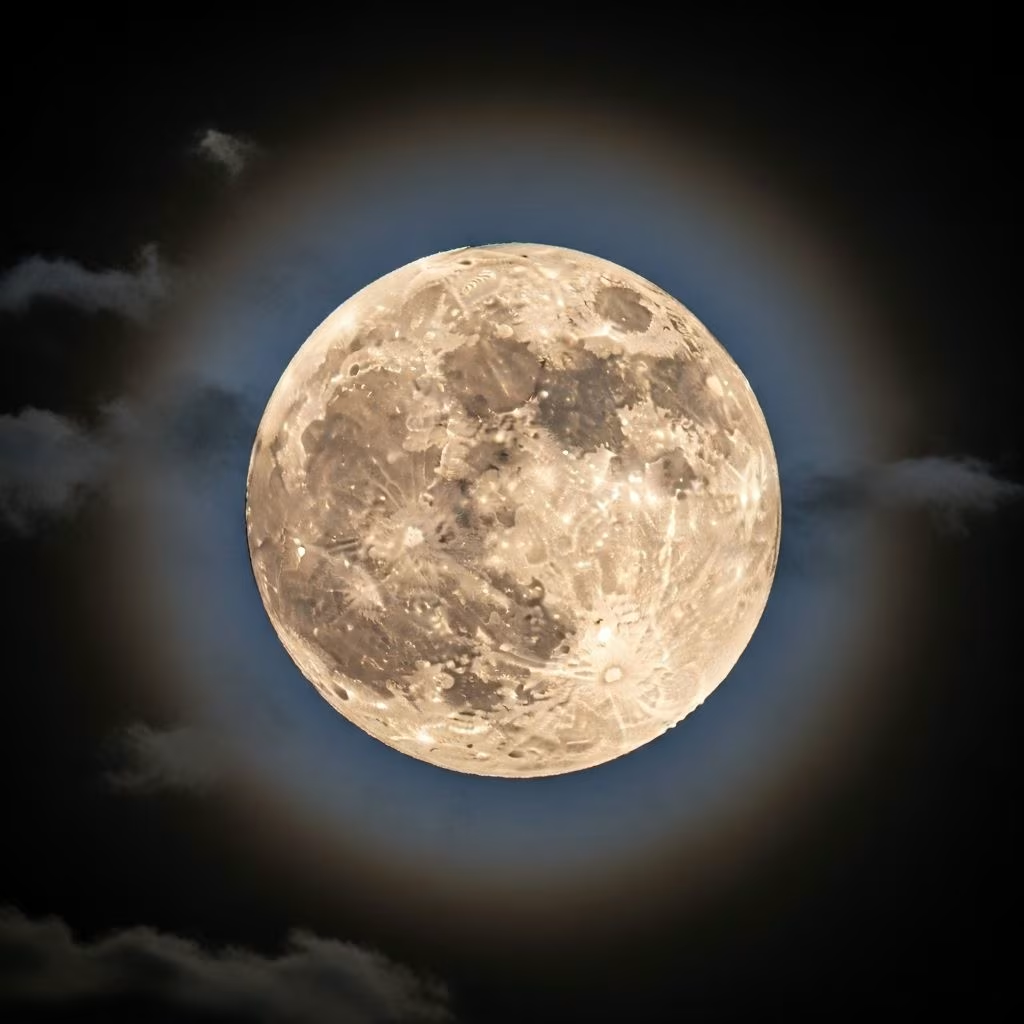
Full Moon Calendar 2025: Dates, Names, and Astronomical Insights
The full moon remains one of the most awe-inspiring celestial events, marking a night when the entire face of the Moon shines brightly in the sky. This phenomenon not only signals a midpoint in the lunar cycle but also serves as a cultural and astronomical touchstone for communities worldwide. In 2025, the full moons will offer unique opportunities for skywatchers, with several supermoons and the return of traditional lunar names that echo centuries of folklore and seasonal rhythms.
Understanding the Full Moon Phenomenon
A full moon occurs when the Moon is positioned directly opposite the Sun relative to Earth. This alignment allows the side of the Moon facing our planet to be completely illuminated by sunlight, leading to its spectacular visibility in the night sky. The lunar orbit creates a continuous cycle of changing phases, of which the full moon is the brightest and most recognizable.
- Lunar Phases: The Moon cycles through eight phases each month, culminating in the full moon when Earth lies between the Sun and the Moon.
- Opposition: At this stage, the Moon rises in the east at sunset and sets in the west at dawn, making it visible throughout the night[13].
- Cultural Significance: Each full moon carries traditional names reflecting seasonal changes, agricultural cycles, and folklore from diverse cultures.
2025 Full Moon Calendar: Dates and Traditional Names
The following table outlines the dates and times (Eastern Time) for each full moon in 2025, alongside their traditional names. Supermoons are indicated by an asterisk (*), which occur when the Moon is closer to Earth, appearing larger and brighter than usual[12].
| Date | Time (ET) | Name | Supermoon |
|---|---|---|---|
| Monday, Jan. 13 | 5:27 p.m. | Wolf Moon | No |
| Wednesday, Feb. 12 | 8:53 a.m. | Snow Moon | No |
| Friday, March 14 | 2:55 a.m. | Worm Moon | No |
| Saturday, April 12 | 8:22 p.m. | Pink Moon | No |
| Monday, May 12 | 12:56 p.m. | Flower Moon | No |
| Wednesday, June 11 | 3:44 a.m. | Strawberry Moon | No |
| Thursday, July 10 | 4:37 p.m. | Buck Moon | No |
| Saturday, Aug. 9 | 3:55 a.m. | Sturgeon Moon | No |
| Sunday, Sept. 7 | 2:09 p.m. | Corn Moon | No |
| Monday, Oct. 6 | 11:48 p.m. | Hunter’s Moon | Yes* |
| Wednesday, Nov. 5 | 8:19 a.m. | Beaver Moon | Yes* |
| Thursday, Dec. 4 | 6:14 p.m. | Cold Moon | Yes* |
Traditional Full Moon Names and Their Origins
Most full moons are named according to indigenous American and European traditions, drawing from the natural world and agricultural cycles:
- Wolf Moon (January): Named for wolves’ howling during winter’s scarcity.
- Snow Moon (February): Reflects heavy snowfall typical of late winter.
- Worm Moon (March): Linked to earthworm emergence as the soil warms.
- Pink Moon (April): Inspired by phlox flowers blooming in spring.
- Flower Moon (May): Commemorates widespread spring blossoming.
- Strawberry Moon (June): Marks strawberry harvesting season.
- Buck Moon (July): Refers to the rapid antler growth in male deer[13].
- Sturgeon Moon (August): Named for the abundance of sturgeon fish during late summer.
- Corn Moon (September): Associated with corn gathering and harvests.
- Hunter’s Moon (October): Signifies hunting and preparation for winter.
- Beaver Moon (November): Relates to beavers building winter dams.
- Cold Moon (December): Marks the onset of winter temperatures.
What Is a Supermoon?
A supermoon occurs when a full moon coincides with perigee, the Moon’s closest point to Earth in its orbit. These moons appear slightly larger and brighter in the night sky. In 2025, the Hunter’s Moon, Beaver Moon, and Cold Moon will all be supermoons, offering spectacular lunar viewing experiences[12].
- Increased apparent size: The Moon can look up to 14% larger and 30% brighter compared to a typical full moon.
- Best viewing: Observers can notice the difference most during moonrise and moonset, when the lunar disk is near the horizon due to the “moon illusion.”
- Supermoon impact: No proven impact on human behavior, but tides may fluctuate slightly due to gravitational effects.
Buck Moon: July’s Celestial Highlight
The Buck Moon will peak on Thursday, July 10, 2025, and can be seen rising in the east after sunset. Its name reflects the growth of antlers in male deer, a symbol of summer’s unfolding. This year’s Buck Moon will occur just days after Earth’s aphelion, when our planet is farthest from the Sun, making this full moon the furthest from the Sun in 2025—a unique aspect influenced by orbital geometry[13].
- Other names: Thunder Moon (reflecting July storms), Hay Moon (connecting to hay harvests).
- Visibility: Begins after sunset; moonrise times vary by location but will be visible all night long.
The Lunar Cycle and Phases Explained
Each lunar cycle spans approximately 29.5 days, consisting of eight visible phases:
- New Moon
- Waxing Crescent
- First Quarter
- Waxing Gibbous
- Full Moon
- Waning Gibbous
- Last Quarter
- Waning Crescent
The full moon represents the midpoint of the cycle, when sunlight fully illuminates the lunar surface facing Earth. The cycle impacts natural rhythms on Earth, including tides and biological cycles in many organisms.
Observing the Full Moon: Tips for Skywatchers
Viewing a full moon is one of the simplest astronomical activities—no equipment required!
- Where to look: The Moon rises in the east at sunset and is visible throughout the night.
- Best conditions: Find a location with little light pollution for the brightest view.
- Photography: Use a tripod and set manual exposure for sharp lunar images.
- Moonrise/Moonset times: Check local lunar calendars for exact times in your region.
- Supermoon viewing: Aim for moonrise or moonset to see the apparent size difference.
Lunar Folklore and Superstitions
The full moon has inspired myths and legends for millennia:
- Werewolves and shapeshifting: Many cultures believed the full moon triggered transformations.
- Lunar madness: The term “lunacy” stems from the Latin “luna” for moon, reflecting the belief in behavior changes during a full moon.
- Harvest cycles: Traditional farming communities used the full moon to time planting and harvesting.
- Festivals: Full moons remain important in calendars worldwide, driving celebrations and observances.
Why Are Full Moons Different Each Month?
The appearance of each full moon depends on:
- Seasonal alignment: The lunar calendar doesn’t match the solar calendar, causing full moons to move through seasons.
- Orbital geometry: The Moon’s elliptical orbit brings it closer or farther from Earth, creating supermoons and micromoons.
- Atmospheric effects: Weather, humidity, and local conditions can affect visibility and lunar coloration.
Frequently Asked Questions (FAQs)
Q: What is a full moon?
A: A full moon occurs when the entire face of the Moon facing Earth is illuminated by sunlight, with Earth positioned between the Sun and the Moon.
Q: How often does a full moon occur?
A: A full moon appears roughly once every 29.5 days, the midpoint of the lunar cycle.
Q: What is a supermoon, and when will they happen in 2025?
A: A supermoon is when the Moon appears larger and brighter due to its proximity to Earth in its orbit; the Hunter’s Moon, Beaver Moon, and Cold Moon in 2025 will be supermoons[12].
Q: Where do full moon names come from?
A: Most are drawn from indigenous North American and European traditions, reflecting natural events, agricultural cycles, or folklore.
Q: Can a full moon affect human behavior?
A: There is no scientific evidence for significant behavioral effects, although myths and cultural stories persist[10].
Q: How can I best observe the full moon?
A: Watch from a dark area away from city lights, during moonrise or moonset for a dramatic effect, and use binoculars or a telescope for detailed viewing.
Skywatching: Planning for the Next Full Moon
Whether you’re a casual observer or an avid astronomer, each full moon creates an opportunity to reconnect with the night sky. Mark your calendar with the 2025 lunar schedule, and prepare for special events such as supermoons and traditional celebrations. For up-to-date moonrise and moonset times in your location, consult your preferred lunar calendar or astronomy website.
- Stay informed: Many astronomy outlets provide weekly lunar details, including visibility guides and skywatching tips.
- Join community events: Public observatories and planetariums often host moon-viewing parties around major lunar occurrences.
Additional Resources for Moon Enthusiasts
If you’re interested in furthering your lunar knowledge, several resources offer ongoing updates and educational material about upcoming full moons, lunar eclipses, and skywatching tips:
- Online lunar calendars with exact dates and times
- Mobile apps for moon phase tracking and alerts
- Local astronomy clubs for group viewing events
- Websites specializing in astronomy news and skywatching guidance
Tips for Using a Lunar Calendar
- Reference times: Dates and times often use Eastern Time; convert to your local timezone before planning.
- Supermoon alerts: Pay attention to perigee dates for the best viewing potential.
- Astronomical events: Use calendars to track eclipses, meteor showers, and planetary conjunctions that may coincide with full moons.
Conclusion: The Full Moon’s Everlasting Appeal
The full moon remains a constant companion to those who look skyward, bridging science, mythology, and cultural celebration. As you follow the 2025 lunar calendar, each glowing moon offers not just a chance for awe and observation, but a window into traditions shared across time and geography. Plan your next moonlit encounter and enjoy the cycles that have guided humanity for millennia.
References
- https://www.space.com/18880-moon-phases.html
- https://www.space.com/stargazing/july-full-moon-2025-rises-this-week-heres-what-to-expect-from-the-buck-moon
- https://www.astronomy.com/observing/full-moon-calendar-dates-times-types/
- https://www.spacecalendar.com
- https://starwalk.space/en/moon-calendar
- https://proof.spacecalendar.com/category/calendar/
- https://spaceandtelescope.com/full-moon/
- https://stories.myspaceastronomy.com/2024-full-moon-calendar-dates-times-types-and-names/
- https://www.timeanddate.com/moon/phases/
- https://www.youtube.com/watch?v=x8KUfeVen_Y
- https://www.rmg.co.uk/stories/space-astronomy/full-moon-calendar-2025
- https://www.livescience.com/space/the-moon/full-moons-of-2025-names-dates-and-everything-you-need-to-know
- https://www.chron.com/news/space/article/full-moon-this-week-20760676.php
- https://www.timeanddate.com/astronomy/moon/full-moon.html
- https://shelystoddard.pages.dev/upscmkq-november-2024-calendar-full-moon-and-sun-photos-pomxxvj/
- https://www.sciencefocus.com/space/full-moon-uk
- https://en.wikipedia.org/wiki/Full_moon
- https://theweek.com/science/full-moon-calendar-names


