


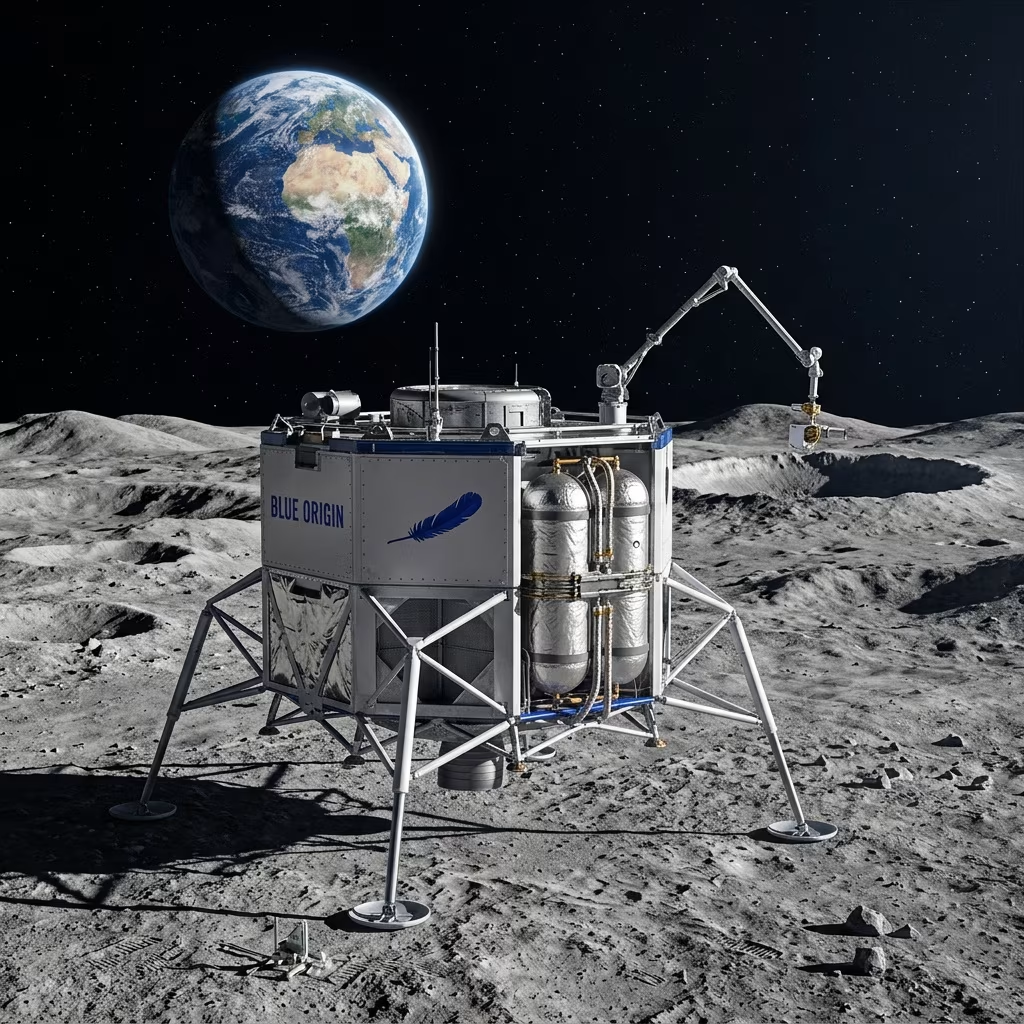
Blue Moon Lunar Lander: Blue Origin’s Plan for the Moon
Blue Moon represents Blue Origin’s pioneering leap towards returning humans and delivering advanced equipment to the Moon. Initiated by entrepreneur Jeff Bezos and developed by his aerospace company, Blue Origin, this advanced lunar lander takes aim at sustainable exploration and paves the way for future colonization of the lunar surface.
Introduction: The Need for a New Lunar Lander
Since the Apollo era, only 12 astronauts have set foot on the moon—the last in 1972. Human curiosity and scientific ambition have never faded. In the 21st century, the call to return is louder, as governments and private enterprises plot courses not only for short visits but for prolonged human presence and activity on our nearest celestial neighbor. Blue Moon is both a symbol and a tool in this new era of exploration.
Blue Origin and the Vision of Lunar Settlement
Blue Origin, founded by Amazon’s Jeff Bezos, aspires to become a major stakeholder in humanity’s future in space. The company’s vision extends beyond lunar landings; it envisions a future where humans can sustainably live, work, and even thrive beyond Earth—especially on the Moon. Though Blue Moon was not chosen for NASA’s Artemis-3 human landing mission, Blue Origin remains committed to supporting future Artemis program missions and, ultimately, establishing a sustained human and robotic presence on the Moon.
Blue Moon Landers: Mark 1 and Mark 2
The Blue Moon project comprises a family of lunar landers and supporting infrastructure, developed with top aerospace collaborators including Lockheed Martin, Draper, Boeing, Astrobotic, and Honeybee Robotics.
- Blue Moon Mark 1: An uncrewed, robotic lander, initially targeted for a 2024 launch (now scheduled for 2025). Capable of delivering up to 3 metric tonnes of payload, Mark 1 will carry scientific instruments, infrastructure modules, and rovers to the lunar surface. The initial goal is to support the setup of lunar bases, especially near the lunar south pole.
- Blue Moon Mark 2: The human-rated version, aiming to bring crews of up to four astronauts to the Moon for stays of up to 30 days. Chosen by NASA in 2023 for its Sustaining Lunar Development Human Landing System contract, Mark 2 is designed to be fully reusable and reconfigurable for cargo missions as well.
Key Specifications Table
| Feature | Mark 1 (Robotic) | Mark 2 (Human) |
|---|---|---|
| Payload Capacity | Up to 3 tonnes | 4 crew, cargo variant available |
| Crew Endurance | N/A | Up to 30 days |
| Autonomy | Precision LIDAR-guided | Precision LIDAR-guided |
| Reusability | No | Yes |
Lunar Lander Technology: Precision, Modularity, and Innovation
State-of-the-art engineering underpins Blue Moon’s ability to function independently and reliably in the harsh lunar environment.
- LIDAR Navigation: The lander uses advanced LIDAR (Light Detection and Ranging) to ensure pinpoint landings within 23 meters of a pre-selected site. LIDAR’s laser mapping enables avoidance of rocks and craters, ensuring safety for precious cargo and (eventually) crew.
- Laser-Mapped Terrain: By firing a grid of laser beams at the moon’s surface, Blue Moon constructs a high-resolution, real-time map to identify the safest touchdown zone.
- Automated Hazard Avoidance: The guidance system uses these maps to select the most favorable landing spot as the spacecraft descends.
Mission Modularity
- Blue Moon’s design allows for different mission parameters, such as deploying micro-satellites in lunar orbit or releasing rovers and instruments after landing.
- Equipment can be customized for the specific needs of each mission—from pure science to site preparation for infrastructure.
- For future crewed missions, an ascent module can be attached, allowing astronauts and lunar samples to return to orbit and then to Earth.
Refueling in Space: The Hydrogen Advantage
A particularly visionary component of Blue Moon is its use of liquid hydrogen as fuel—not just for energy efficiency, but also for scalability in the lunar environment.
- Sourced on the Moon: Lunar water ice, discovered in permanently shadowed regions, can be split into hydrogen (fuel) and oxygen (for breathing). This propellant choice enables future refueling directly on the Moon, reducing reliance on launches from Earth and dramatically cutting costs.
- Closed-Loop Aspirations: A Moon-refueled system could power further expeditions or support persistent bases, realizing goals of a sustainable, resource-utilizing lunar economy.
Mission Goals and Future Prospects
Blue Moon’s flexible, scalable architecture supports multiple lunar science objectives and international partnerships. Its long-term mission goals include:
- Delivering infrastructure—habitats, power systems, and research laboratories—to the lunar surface to lay the groundwork for long-term human activity.
- Supporting Artemis Program objectives, by integrating with NASA’s lunar logistics and other future Artemis flights. Blue Moon Mark 2 is scheduled as the backup lander for crewed Artemis V missions post-2030, working alongside other systems such as SpaceX’s Starship HLS.
- Developing a reusable lunar economy, where supplies, refueling, and construction gradually shift from Earth-based to Moon-based supply chains.
- Enabling lunar science and discovery, including searching for usable resources like water ice, testing new life-support technologies, and deploying new telescopic and geophysical observatories.
Blue Moon and the Artemis Missions
NASA’s Artemis program aims to return humans—including the first woman and next man—to the lunar surface. While Blue Moon lost out on early Artemis contracts, the Mark 2 variant was later awarded a contract via the Sustaining Lunar Development Human Landing System. Blue Moon and its collaborators—including Lockheed Martin’s Cislunar Transporter, which helps refuel and deploy the lander—play a critical role in building the infrastructure for NASA’s future lunar outposts.
How Blue Moon Differs from Apollo and Other Landers
- Autonomy and Precision: Blue Moon’s software and LIDAR mapping tech provide far more accurate landing and navigation than the Apollo-era hardware, which relied heavily on manual control and visual cues.
- Reusable Technology: The Mark 2 lander is designed for multiple missions, while Apollo’s landers remained on the Moon or were discarded.
- Resource Utilization: Apollo brought all fuel and supplies from Earth. Blue Moon aims to utilize local lunar resources.
- Versatility: Blue Moon can serve as a robotic cargo carrier or a crewed base module, whereas most historical landers had only a single function.
Blue Moon and the Future of Lunar Human Settlement
Blue Moon is an important prototype for lunar infrastructure and resource extraction. Its ability to land large payloads, refuel from lunar resources, and support sustained crewed missions opens the door for:
- Permanent lunar habitats—scientific bases, greenhouses, and manufacturing plants, established and maintained with local materials.
- Regular lunar cargo delivery, facilitating routine supply missions, scientific equipment drops, and eventual commercial activity.
- Lunar surface mobility, including rovers and prospecting vehicles, launched from Blue Moon for independent surface operations.
Challenges and Competition
- Technical Hurdles: Precision landing, regolith (lunar dust) mitigation, life-support integration, and autonomous operations in a hostile environment remain engineering challenges.
- Program Delays: Original launch timelines (2024 for Mark 1) have been pushed due to design refinements, NASA contract delays, and competitive landscape shifts.
- Competition: SpaceX’s Starship Human Landing System, which won the first Artemis HLS contract, is the main commercial competitor. NASA’s diversified approach leverages this competition to drive innovation and reduce risk by using multiple providers.
Frequently Asked Questions (FAQs)
Q: Who owns and leads the Blue Moon project?
A: Blue Moon is developed and led by Blue Origin, the private space venture founded by Jeff Bezos. The company collaborates with major aerospace partners such as Lockheed Martin, Draper, Boeing, Astrobotic, and Honeybee Robotics.
Q: What makes Blue Moon different from previous lunar landers?
A: Blue Moon emphasizes precision autonomous landings, modularity for various mission types, the use of lunar resources for refueling, and a strong focus on reusability (for the Mark 2 version). Its design marks a significant leap in technology over the Apollo systems.
Q: Was Blue Moon selected for NASA’s Artemis missions?
A: Blue Moon was not chosen for the initial Artemis human landing contracts (Artemis III), but the advanced Mark 2 variant later won NASA’s Sustaining Lunar Development Human Landing System contract as a secondary provider for subsequent crewed Artemis missions.
Q: How is Blue Moon refueled?
A: The Blue Moon lander uses liquid hydrogen, which in the future could be produced from water ice mined on the Moon—allowing local production of both fuel (hydrogen) and oxygen.
Q: What is Blue Origin’s long-term vision for Blue Moon?
A: Blue Origin aims for Blue Moon to support regular cargo and crew missions, underpin future lunar bases, contribute to in-situ resource utilization, and ultimately help establish a permanent human presence on the Moon.
Further Resources
- Follow Blue Origin’s updates and latest news on their official website.
- Watch Blue Origin’s detailed Blue Moon lander explainer video for more technical insight.
- Read NASA’s official Artemis mission pages to understand how Blue Moon fits into the next phase of lunar exploration.
For breaking news, in-depth features, and more on space science and lunar missions, subscribe to leading space news platforms and join the global conversation on reaching—and living on—the Moon.
References
- https://www.space.com/blue-origin-lunar-lander
- https://www.space.com/next-supermoon-blue-moon-2024-or-2037-why
- https://spaceplace.nasa.gov/full-moons/en/
- https://en.wikipedia.org/wiki/Blue_Moon_(spacecraft)
- https://en.wikipedia.org/wiki/Blue_moon
- https://www.science.org/content/article/get-ready-first-super-blue-blood-moon-eclipse-more-150-years
- https://www.rmg.co.uk/stories/space-astronomy/what-blue-moon-how-often-does-it-occur
- https://science.nasa.gov/solar-system/moon/super-blue-moons-your-questions-answered/
- https://www.thespacereview.com/article/3713/1
- https://fireflyspace.com/missions/blue-ghost-mission-1/
- https://www.thespacereview.com/article/2413/1
- https://www.blueorigin.com/blue-moon
- https://www.geekwire.com/2025/blue-origin-blue-moon-lunar-lander-nasa/
- https://www.youtube.com/watch?v=st1cKMJcveo
- http://www.collectspace.com/ubb/Forum35/HTML/000920.html
- https://www.youtube.com/watch?v=QFh1YKqfV1g


