


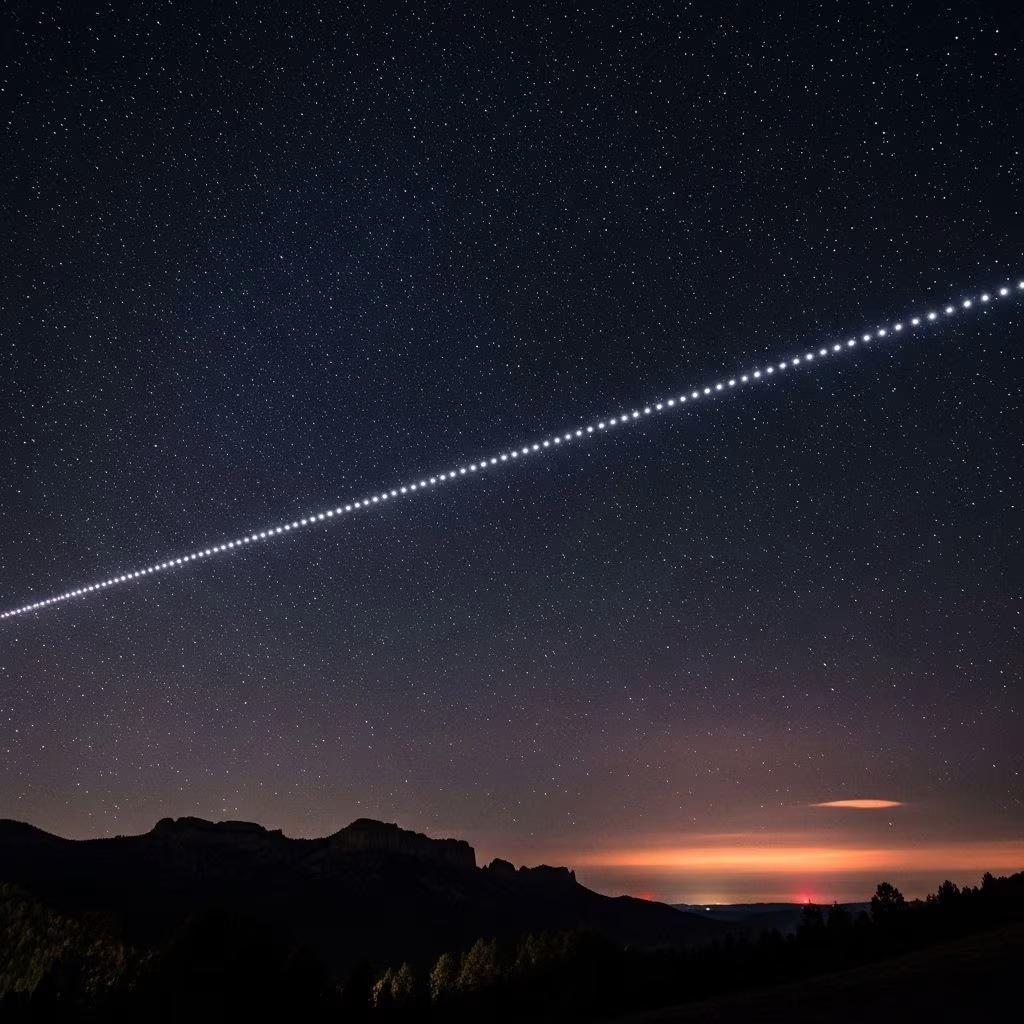
How to See and Track the Starlink Satellite Train in the Night Sky
SpaceX’s Starlink satellite trains have become an awe-inspiring spectacle for skywatchers worldwide. These lines of bright dots streaking silently across the night sky are not a sign of alien visitors; they’re part of an unprecedented project to bring high-speed global internet and transform space infrastructure. This guide covers what Starlink satellite trains are, why they form, when and where to view them, and how to track their dazzling journeys across the heavens.
What Are Starlink Satellites?
Starlink satellites are the backbone of SpaceX’s initiative to provide universal, high-speed internet, especially to remote and underserved areas. Rather than relying on traditional ground cables or cellular towers, Starlink uses thousands of small satellites in low Earth orbit (LEO), with the system rapidly expanding since its debut.
- Altitude: Roughly 550 km (340 miles) above the Earth’s surface.
- Connectivity: Satellites communicate with ground stations, user terminals (your dish), and—using advanced laser links—directly with each other in space.
- Constellation size: As of 2025, there are more than 7,500 active Starlink satellites, making it the largest satellite network ever launched.
This dramatic leap in infrastructure is reshaping the future of internet access while giving rise to a new astronomical phenomenon: the Starlink satellite train.
The Starlink Satellite Train Explained
After each Falcon 9 rocket launch, groups of Starlink satellites are deployed in tight formation. Initially, they travel close together while ascending toward operational altitude and gradually spread out to their designated slots. This chain of satellites, all reflecting sunlight as they move across the night sky, creates the visually striking satellite train[10].
- Release sequence: Satellites are grouped during launch and released in rapid succession, minimizing collision risks and space debris[10].
- Reflection: The fresh satellites are especially bright, as they tend to reflect sunlight intensely before SpaceX’s mitigation techniques take effect.
- Formation: A line or ‘train’ of bright moving points—visible for several days or even weeks post-launch, especially near twilight.
With each launch, new Starlink trains can appear, and veteran trains may linger in the skies depending on the time of day and observer’s location.
How to Spot Starlink Satellites
To observe the Starlink satellite train yourself, timing and location are vital. Satellite visibility depends on the interplay between sunlight, local darkness, and atmospheric conditions.
- Best times to spot: Shortly after sunset or before sunrise, when the satellites are still sunlit while observers are in night’s shadow.
- Ideal locations: Dark, rural areas away from city lights offer the clearest views. Urban areas with heavy light pollution make spotting satellites more difficult.
- Visibility window: The trains are brightest and easiest to spot in the days immediately after a launch, although trains can remain visible for weeks.
Starlink satellites generally move quickly across the sky—taking just a few minutes to traverse your visible horizon. Look for a string of bright, evenly spaced lights, moving in a straight line.
Visual Characteristics at a Glance
| Characteristic | Description |
|---|---|
| Shape | Single line (train) of dots |
| Brightness | Typically magnitude +1 to +5 (visible to naked eye shortly after launch) |
| Color | White or slightly bluish-white |
| Speed | Crosses sky in several minutes |
| Number in Train | Varies by launch; often 20–60 per group |
Top Tools for Tracking Starlink Satellite Trains
Technology makes spotting and predicting satellite passes far more accessible. Here are top resources for skywatchers:
- FindStarlink.com: Provides real-time, location-based predictions of when and where Starlink satellites will be visible. Users can enter their location for pass timings and brightness forecasts.
- Starlink Tracker: Mobile apps and browser-based trackers display live satellite positions and upcoming visibility windows.
- Starlink Map: Interactive maps allow you to follow the entire constellation’s real-time positions worldwide.
- General satellite tracking websites: Many astronomy sites and apps, such as Heavens-Above, offer Starlink pass data.
Many tools include option to receive notifications of upcoming train passes over your area, making it easy to prepare for an observation session.
Best Visibility Tips
Maximize your chances of seeing the Starlink train with these expert suggestions:
- Check local pass predictions: Use trackers to find when Starlink trains will be visible in your region.
- Choose dark locations: Escape urban light pollution; the darker the surroundings, the brighter the satellites appear.
- Monitor weather: Clear skies are essential—satellites can’t be seen through cloud cover.
- Know your twilight: The window after sunset or before sunrise is crucial because satellites are illuminated but your location is in darkness.
- Bring friends: Many find satellite train spotting more fun (and easier) in a group, and someone may spot trains you miss!
- No telescope required: Starlink trains are visible to the naked eye and through binoculars; a telescope is not necessary for casual views.
Impact on Astronomy and Mitigation
The Starlink satellite train’s brilliance has ignited debate among astronomers and amateur skywatchers. While the spectacle inspires countless people to look up, the increased satellite presence has complicated astronomical observation and research.
- Light pollution: Bright satellites interfere with deep-sky images and data collection.
- Collision risk and space debris: Launching in trains minimizes debris, but long-term concerns persist as the constellation grows[10].
- SpaceX’s mitigation steps: Recent satellites include anti-reflective coatings and orientation adjustments to reduce brightness and visual impact.
Continued collaboration between space agencies, private companies, and astronomers aims to maintain both scientific integrity and opportunities for public wonder.
Frequently Asked Questions (FAQs)
Q: What is the Starlink satellite train?
A: The Starlink satellite train consists of newly launched SpaceX satellites traveling in close formation, appearing as a linear chain of bright dots across the night sky. This spectacle is most prominent in the days following each Starlink launch.
Q: Can I see the Starlink satellite train without a telescope?
A: Yes. Starlink trains are usually visible to the unaided eye during optimal viewing times after sunset and before sunrise, especially in locations far from city lights.
Q: How many Starlink satellites are currently in orbit?
A: As of 2025, more than 7,500 satellites are operating in low Earth orbit, forming the world’s largest satellite constellation.
Q: Will the train always appear as a straight line?
A: The “train” formation is most striking shortly after launch when satellites are clustered together. Over time, they disperse to their assigned orbits, and the line becomes less distinct[10].
Q: Are Starlink satellite trains bad for astronomy?
A: Their brightness can interfere with astronomical observations, though SpaceX has taken steps to minimize impact. Collaboration continues between SpaceX and astronomers to mitigate adverse effects.
Q: Where can I check if Starlink is visible tonight?
A: Visit FindStarlink.com or use popular satellite tracking apps for real-time visibility forecasts for your location.
See Starlink in Action: Quick Steps
- Check Starlink pass forecasts for your city on FindStarlink.com.
- Pick an observation time—right after sunset or before sunrise.
- Head to a dark, open area with a clear view of the sky.
- Look for a moving chain of bright dots—the Starlink train!
Final Thoughts
The rise of Starlink satellites is more than technological progress—it’s a visual invitation to connect people worldwide and rediscover the night sky. Whether you’re chasing trains for wonder or using new internet access in remote locations, the shimmering procession of Starlink satellites is here to stay, drawing eyes upward and inspiring curiosity every week.
References
- https://starwalk.space/en/news/spacex-starlink-satellites-night-sky-visibility-guide
- https://findstarlink.com
- https://www.youtube.com/watch?v=MBZPduPf0cE
- https://www.youtube.com/watch?v=f-fbuFqxvYI
- https://starlinkinstallationpros.com/starlink-satellite-train-how-to-see-and-track-it-in-the-night-sky/
- https://www.starlink.com/updates
- https://ts2.tech/en/dont-miss-spacexs-dazzling-starlink-satellite-train-heres-how-to-watch-it/
- https://www.wtvr.com/news/local-news/starlink-satellite-train-seen-central-virginia-july-26-2025
- https://www.cleartelecommunications.com/post/starlink-satellite-train
- https://starlinkinsider.com/starlink-satellite-train/
- https://www.space.com/see-spacex-starlink-satellites-in-night-sky.html
- https://www.starlinkinfo.com/starlink-satellite-train
- https://spaceiusa.com/starlink-tracker/
- https://galaxyaerospaceghana.com/starlink-satellite-train-how-to-see-and-track-it-in-the-night-sky/
- https://lms-staging.ccsa.ca/understanding-the-starlink-satellite-train-2023-schedule-map/
- https://satellitemap.space
- https://networkbuildz.com/starlink-satellite-train-tracker/


