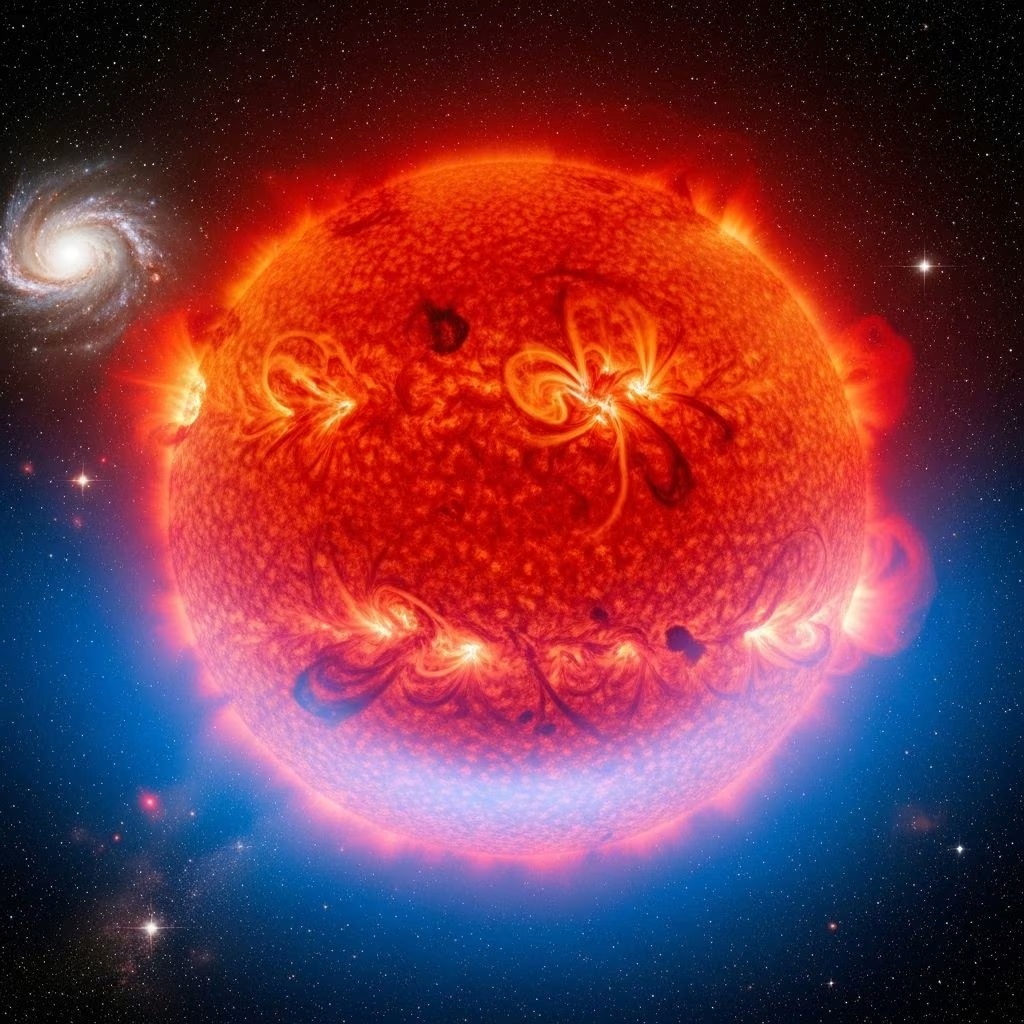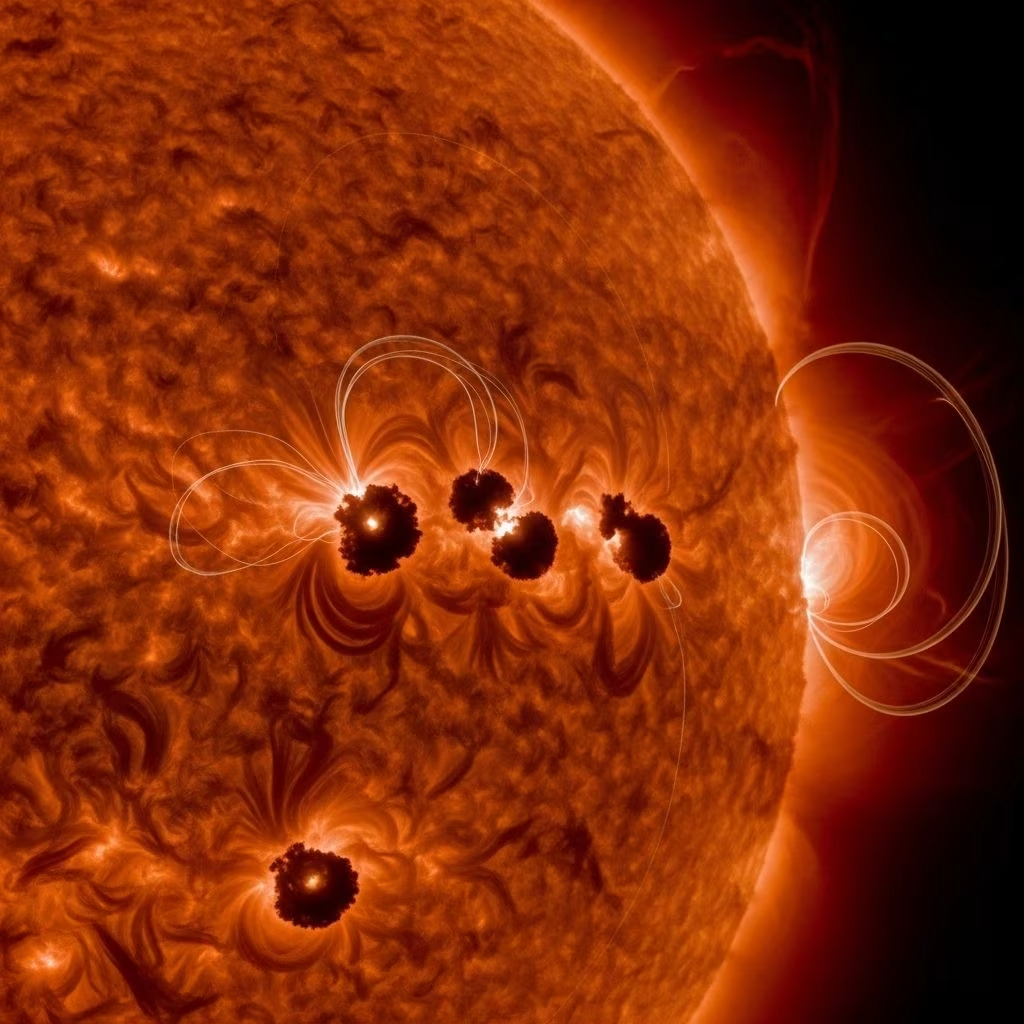
The summer solstice is not only an astronomical event marking the longest day of the year in the Northern Hemisphere, but also a celebration woven into the tapestry of countless cultures. Occurring as a direct result of Earth’s axial tilt and its orbit around the Sun, the solstice has influenced human civilization, inspired ancient architecture, and continues to be a time for global gatherings and scientific wonder.
What Is the Summer Solstice?
The summer solstice is the moment when the Sun appears to reach its northernmost point in the sky relative to Earth’s celestial equator. This typically falls on June 20 or 21 in the Northern Hemisphere. In 2025, the solstice occurs on June 20 at 10:42 p.m. EDT (June 21 at 02:42 UTC). On this day, those north of the equator experience the longest stretch of daylight all year, with the Sun tracing its highest and longest path across the sky.
- Solstice comes from Latin: sol (“sun”) + stitium (“to stand still”). This describes the apparent standstill of the Sun’s movement north or south before reversing direction.
- Summer solstice marks the start of astronomical summer in the Northern Hemisphere.
- The event’s date and time vary across the globe due to time zones, although the astronomical moment is the same worldwide.
Why Does the Summer Solstice Occur?
The root cause of the solstice lies in Earth’s geometry:
- Earth’s axis is tilted about 23.5 degrees relative to its orbital plane. This tilt causes different parts of Earth to receive varying amounts of sunlight throughout the year.
- During the summer solstice, the Northern Hemisphere is maximally tilted toward the Sun. This results in longer days and shorter nights north of the equator and triggers the opposite (winter solstice) south of the equator.
- The Sun appears directly overhead at noon along the Tropic of Cancer (latitude 23.5°N), a geographic marker circling the globe.
- This tilt likely stems from ancient collisions during Earth’s formation, notably one with a Mars-sized body that also resulted in the creation of the Moon.
How the Solstice Changes Daylight
The solstice’s immediate effect is a dramatic extension of daylight hours. The actual length of the day depends on latitude:
- At higher northern latitudes, daylight can last 16 hours or more. Within the Arctic Circle, the Sun never sets on the solstice (“Midnight Sun”).
- For example, in New York City, the Sun is above the horizon for over 15 hours, while in Philadelphia, the solar arc reaches about 73 degrees above the southern horizon at noon.
- At the equator, the day length varies little throughout the year, staying near 12 hours.
- In the Southern Hemisphere, the situation is reversed—the June solstice marks the shortest day and start of winter.
| Location | Latitude | Daylight Duration |
|---|---|---|
| London, UK | 51.5°N | 16 hrs 38 min |
| New York, USA | 40.7°N | 15 hrs 6 min |
| Philadelphia, USA | 39.9°N | 15 hrs 0 min |
| Oslo, Norway | 59.9°N | 18 hrs 50 min |
| Buenos Aires, Argentina | 34.6°S | 9 hrs 52 min |
Key Dates and Timing for 2025
Exact Moment: The 2025 summer solstice occurs on June 20 at 10:42 p.m. EDT (June 21 at 02:42 UTC). The discrepancy in date and time across locations is due to global time zone differences.
- New York, USA: June 20, 10:42 p.m. EDT
- London, UK: June 21, 3:42 a.m. BST
- Tokyo, Japan: June 21, 11:42 a.m. JST
At the moment of the solstice, the Sun is directly overhead the Tropic of Cancer in the western Pacific Ocean, approximately 1,400 miles south of Tokyo.
The Science Behind Earth’s Tilt and Seasons
Seasons are a product of the constant tilt of Earth’s axis and its orbital motion around the Sun. As Earth revolves each year, the orientation of the tilt stays the same relative to distant stars, but the Sun’s position changes:
- At the June solstice, Earth’s North Pole is most tilted toward the Sun, causing longer, warmer days in the Northern Hemisphere.
- At the December solstice, the South Pole tilts toward the Sun, flipping the seasons.
- The equinoxes, occurring in March and September, are the moments when day and night are nearly equal everywhere on Earth.
How the Solstice Affects Life on Earth
Astronomical events like the solstice profoundly impact natural cycles, cultures, and technologies.
- Ecological Effects: Animal behaviors, migrations, plant flowering, and crop cycles are tied to the shifting daylight.
- Historical Calendars: Ancient peoples used solstices to construct calendars, guide agriculture, and time rituals.
- Modern Celebrations: Many countries host solstice festivals, some linked to ancient practices, folklore, or astronomical observations.
Astronomical and Historical Significance
The summer solstice has fascinated cultures for millennia, inspiring architecture and ritual. Across the world, ancient and modern sites mark the Sun’s position on solstices with elaborate accuracy.
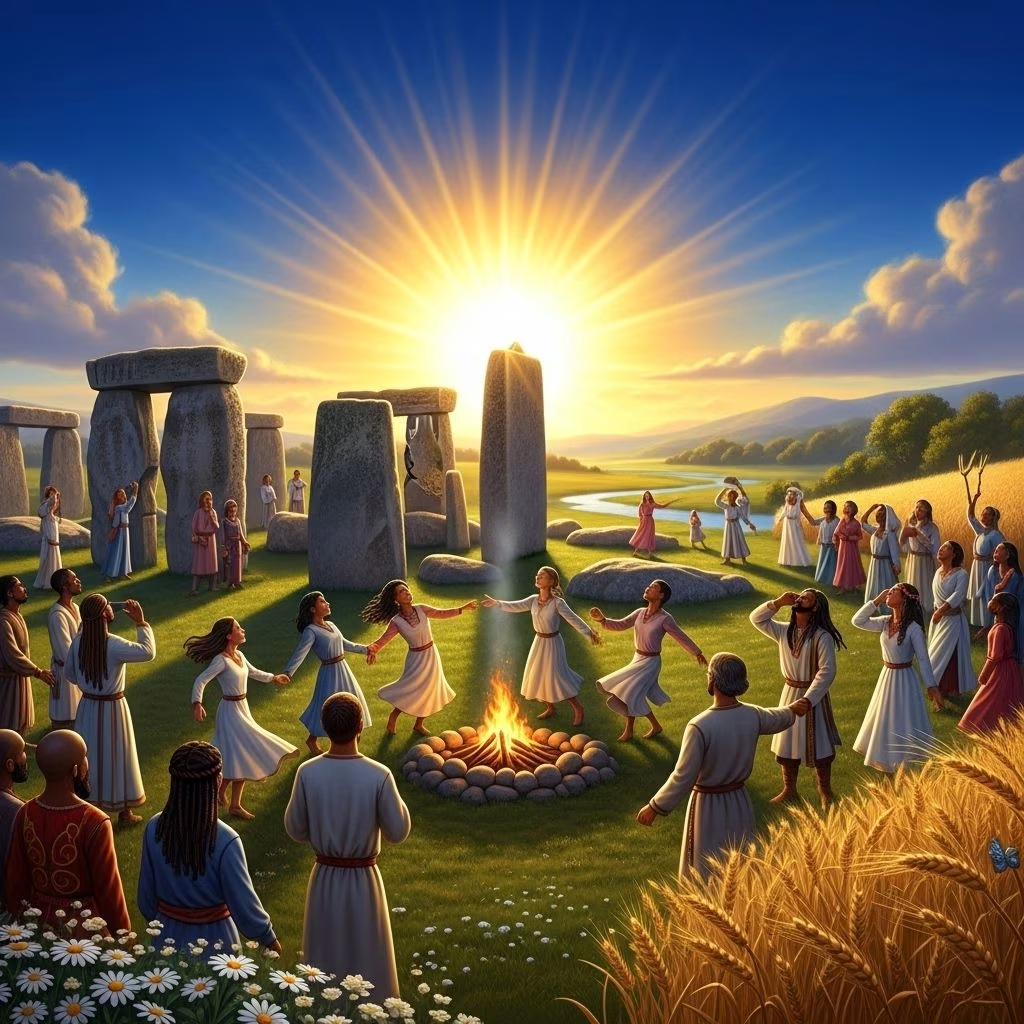
- Stonehenge (England): Built around 2500 BCE, the monument aligns perfectly with the sunrise on the summer solstice. Thousands still gather here to witness the event.
- Chichén Itzá (Mexico): The Mayan pyramid is designed to cast a serpent-like shadow on solstice days.
- Newgrange (Ireland): Although primarily marking the winter solstice, this burial mound also expresses the importance of the Sun in ancient societies.
Many cultures refer to solstice as the “turning point of the Sun,” celebrating its life-giving force and marking the transition of seasons through feasts, music, and ritual gatherings.
Observing the Solstice: What Can You See?
For skywatchers and those interested in astronomy, the summer solstice offers:
- The highest Sun of the year: The Sun’s noon altitude (measured in degrees above the horizon) is at its maximum.
- Longest daylight: The Sun follows a wide, high arc in the sky, rising and setting at its most northerly points along the horizon.
- Short shadows: At noon, especially in the tropics, your shadow is at its absolute shortest.
In the far north (above the Arctic Circle), the Sun never fully sets—a phenomenon called the Midnight Sun—while in the polar south, darkness dominates.
How People Celebrate the Summer Solstice
Humanity has marked the solstice for thousands of years, and contemporary events still echo ancient traditions:
- Stonehenge celebrations: People gather to watch the sunrise through the ancient stones, a testament to collective memory and shared wonder.
- Festivals and bonfires: In Scandinavia and the Baltic states, “Midsummer” is celebrated with music, feasts, and large outdoor fires.
- Spiritual practices: Some cultures honor the solstice as a time of renewal, reflection, and connection with nature.
In modern society, the solstice inspires a range of activities, from stargazing parties to scientific outreach, all celebrating the dynamic, ever-changing dance between Earth and Sun.
Frequently Asked Questions About the Summer Solstice
Q: When exactly is the 2025 summer solstice?
A: In 2025, the summer solstice occurs on June 20 at 10:42 p.m. EDT, which is June 21 at 02:42 UTC.
Q: Does the solstice mean the earliest sunrise or latest sunset?
A: Not always. While the longest day does occur on the solstice, the dates of earliest sunrise and latest sunset vary by location due to the Earth’s elliptical orbit and the equation of time.
Q: Why is the solstice not always on the same date each year?
A: It can fall on June 20 or 21, depending on the year and your local time zone, because the length of Earth’s orbit and the calendar year are not perfectly synchronized.
Q: Can the solstice be seen or measured directly?
A: Yes! By tracking the Sun’s highest and longest path across the sky or observing noon shadows at their shortest, you can directly experience the effects of the summer solstice.
Q: Do all planets experience solstices?
A: Only those with an axial tilt (like Earth, Mars, or Uranus) have solstices and corresponding seasons. Planets without tilt or with chaotic rotation do not.
Key Takeaways About the Summer Solstice
- The summer solstice marks the longest day of the year for the Northern Hemisphere, as the North Pole tilts maximally toward the Sun.
- Its occurrence and impact are rooted in Earth’s 23.5° axial tilt—a fundamental fact of our planet’s cosmic architecture.
- This astronomical event is deeply connected to human history, nature, cultural traditions, and our ongoing scientific curiosity.
References
- https://www.space.com/stargazing/summer-solstice-2025-is-here-today-marks-the-longest-day-of-the-year-for-the-northern-hemisphere
- https://www.space.com/stargazing/summer-solstice-2025-brings-changing-seasons-to-earth-on-june-20
- https://space-india.com/summer-solstice/
- https://en.wikipedia.org/wiki/Summer_solstice
- https://www.livescience.com/space/the-sun/when-is-the-summer-solstice-in-2025-it-depends-on-your-time-zone
- https://science.nasa.gov/solar-system/skywatching/night-sky-network/tropical-solstice-shadows/
- https://www.the-independent.com/space/solstice-summer-2025-when-time-b2772352.html
- https://www.skyatnightmagazine.com/space-science/summer-solstice
- https://www.accuweather.com/en/space-news/summer-solstice-asteroid-day-among-biggest-space-events-in-june/1779315
- https://killzoneblog.com/2022/06/happy-summer-solstice.html
- https://www.rmg.co.uk/stories/time/summer-solstice
- https://www.britannica.com/science/summer-solstice-astronomy
- https://www.spacecentre.ca/what-is-the-summer-solstice/
- https://www.inverse.com/article/46295-summer-solstice-view-from-space
- https://www.the-independent.com/space/solstice-2025-summer-when-uk-b2774034.html
- https://airandspace.si.edu/stories/editorial/40-years-triton-summer
- https://tellurideinside.com/2014/06/longest-day-of-the-year-summer-solstice-arrives-saturday.html
- https://airandspace.si.edu/stories/editorial/three-things-know-about-summer-solstice
- https://bigthink.com/starts-with-a-bang/summer-solstice-earliest-since-1796/
- https://www.jpl.nasa.gov/news/the-longest-day/