Best Cameras for Astrophotography in 2025
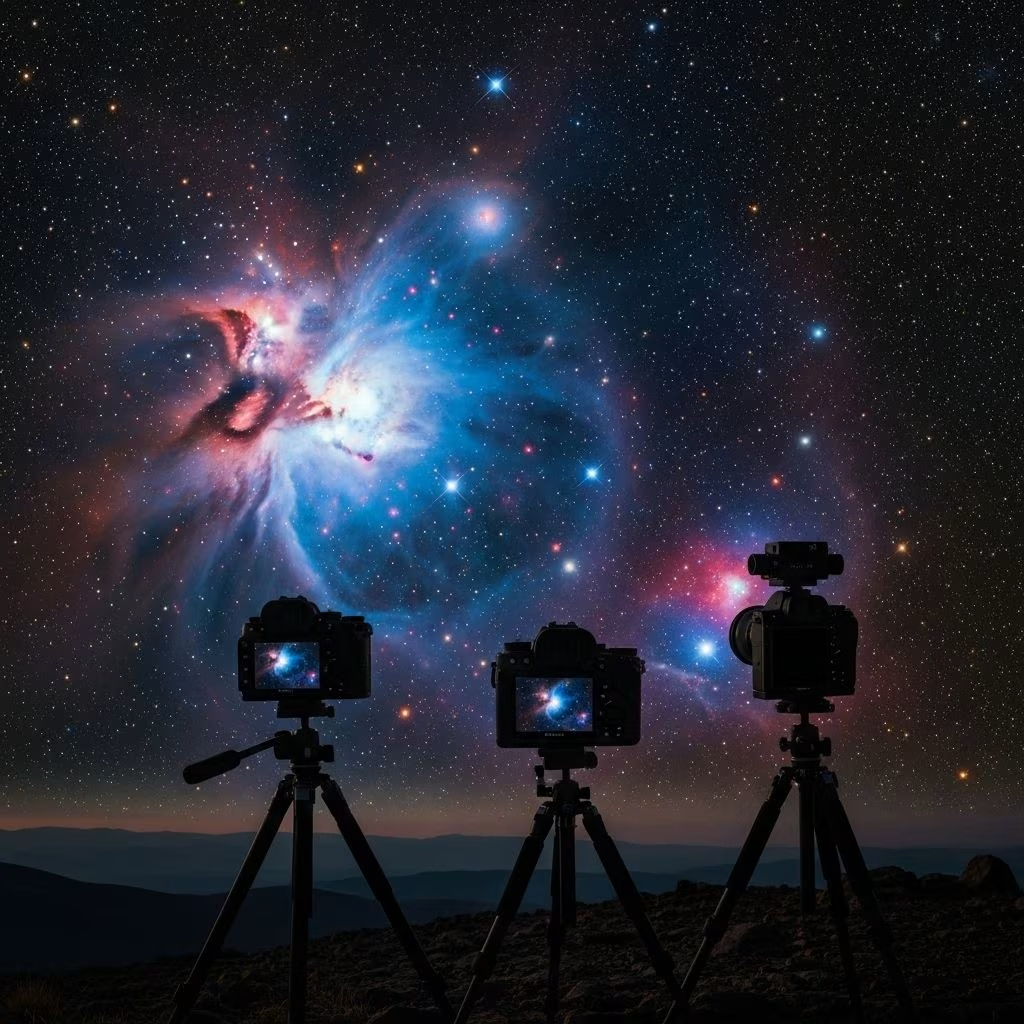
Astrophotography continues to evolve, making it more accessible for beginners and professionals alike. Advancements in camera technology and star trackers now allow users on any budget to capture striking nightscapes, deep-sky objects (DSOs), planets, and the Moon. This article presents the best astrophotography cameras for 2025 based on extensive research, community consensus, and hands-on testing. It covers core considerations for camera choice, highlights the top picks for various astrophotography genres, and answers common questions to guide your next purchase.
Technical Foundations: Pixel Scaling & ISO
Before diving into specific camera models, understanding sensor characteristics is crucial for astrophotography. Besides megapixels, parameters like read noise, quantum efficiency (QE), and ISO invariance play major roles in image quality under low light.
Higher resolution sensors are not always better—using more megapixels can demand significantly better optics and more processing power, while the perception of extra resolution may be limited by lens quality. For astrophotography, sometimes a lower-resolution sensor with superior low-light response and lower noise yields better results. Ultimately, choosing a camera means balancing sensor size, resolution, and low-light capabilities against the demands of your workflow and your optical system.
Best Overall & Nightscape Astrophotography Camera: Nikon Z6 I/II
- Sensor: Full-frame, 24MP BSI (Back-side Illuminated)
- ISO Performance: Excellent ISO invariance, dual-gain
- Lenses: Adapts nearly all mounts
- Special Features: Exceptional read noise and QE for clean, detailed nightscapes
The Nikon Z6 I and Z6 II remain top choices for nightscape astrophotography for several years, thanks to their sensor properties and lens compatibility. Autofocus performance is less relevant for astrophotography where manual focusing is standard. The Z-mount optical system provides minimal chromatic aberration, coma, and astigmatism—crucial for crisp star rendering. This camera is recommended for those who want versatility: seamless lens adaptation, superb sensor performance, and a strong balance between workflow efficiency and image quality.
While newer bodies exist, the Z6 series delivers consistent results and value, especially given its wide community trust and adaptability.
Best Deep-Sky Cameras: ZWO ASI2600MC Pro & ASI294MC Pro
- ZWO ASI2600MC Pro
- APS-C sensor with high quantum efficiency
- Low read noise (as low as 1.0 e-), efficient cooling
- 16-bit ADC for increased tonal range
- ZWO ASI294MC Pro
- 4/3″ sensor for affordable wide-field imaging
- Efficient color capture for nebulae and galaxies
- Integrated cooling, highly regarded for value
ZWO’s cooled dedicated astrophotography cameras set industry standards for deep-sky imaging, providing high sensitivity, low thermal noise, and reliable performance for long exposures. The ASI2600MC Pro is ideal for serious imagers seeking outstanding tonal gradation and fine detail, while the ASI294MC Pro gives more affordable access to high-quality imaging for wide fields and color nebula shots. Both models integrate seamlessly with tracking mounts and telescopes, making them well suited for faint galaxies, star clusters, and emission or reflection nebulae.
Best Camera for Planetary, Solar & Lunar Imaging: ZWO ASI174MM / ASI385MC
- ZWO ASI174MM
- Monochrome sensor for higher resolution stacking
- High frame rate (up to 164 fps) for capturing fleeting planetary details
- Widely used by advanced imagers for solar, lunar, and planetary data
- ZWO ASI385MC
- Color sensor, 120 fps maximum capture rate
- Great for beginners seeking simple planetary imaging with vibrant colors
- Cost-effective and easier to use than monochrome alternatives
Planetary photography demands very high-speed sensors to freeze atmospheric turbulence and reveal fine details. The ASI174MM is favored for its mono capability, offering the ability to use specialized color filters and stacking for maximum resolution and contrast. Alternatively, the ASI385MC offers simplified workflows with integrated color, ideal for direct, user-friendly results. Both are also popular autoguider cameras for deep-sky workflows.
Best Dedicated Astrophotography Cameras (DSO, Color & Mono)
| Model | Type | Best Use | Key Features |
|---|---|---|---|
| ZWO ASI2600MC Pro | Color, APS-C | Deep Sky Objects | Low noise, wide field, deep cooling |
| ZWO ASI294MC Pro | Color, 4/3″ | Wide-field, entry-level DSO | High QE, affordable, compact |
| ZWO ASI174MM | Mono, 1/1.2″ | Planetary, Solar, Lunar | High fps, reliable mono performance |
| ZWO ASI385MC | Color, 1/2″ | Planetary, entry-level DSO | Easy color workflow, good fps |
Best Camera Phones for Astrophotography
Recent smartphones boast enhanced sensors and software features tailored for stargazing and astrophotography. While not a replacement for dedicated gear, options like Huawei P50 Pro and Google Pixel 7 Pro feature advanced Night Modes, manual controls, and AI stacking. These enable accessible Milky Way shots and lunar close-ups for those who prioritize portability and ease-of-use.
- Best Overall: Google Pixel 7 Pro
- Best for Night Sky: Huawei P50 Pro
- Runner-up: Samsung Galaxy S23 Ultra
These devices excel for quick nightscape imaging, astrophotography-for-social-media, and travelers who want multi-purpose pocket gear.
DSLR vs Mirrorless: Which is Better for Astrophotography?
| System | Advantages | Considerations |
|---|---|---|
| DSLR |
|
|
| Mirrorless |
|
|
For most astrophotographers, mirrorless presently offers better low-light performance and modern sensor features with easier adaptation to various lens mounts. However, many DSLRs remain capable for deep-sky imaging and long exposures.
Frequently Asked Questions (FAQs)
Q: What is the most important camera specification for astrophotography?
A: Low read noise, high quantum efficiency, and noise performance are paramount. In practice, these ensure cleaner images of faint objects and allow for effective stacking and dark frame correction.
Q: Do you need a cooled camera for astrophotography?
A: Cooled cameras are strongly recommended for deep-sky imaging since cooling reduces thermal noise during long exposures. However, for planetary, lunar, or nightscape imaging, cooling is less essential as exposures are much shorter.
Q: Is a color or monochrome camera better for astrophotography?
A: Monochrome sensors offer more flexibility and higher resolution, allowing for custom filter use and efficient stacking. Color sensors are easier for beginners, offering plug-and-play convenience and integrated color data.
Q: Can smartphones compete with dedicated astro cameras?
A: Smartphone night modes and AI stacking enable impressive results for basic Milky Way shots and lunar images, but dedicated cameras (DSLR, mirrorless, or astro cameras) still surpass phones for faint, detailed, or deep-sky objects.
Q: What is the best camera for a beginner astrophotographer?
A: Entry-level options like the Nikon Z6 II, Sony Alpha a7 III, or Canon EOS R are excellent for new users. For dedicated astro work, consider ZWO ASI294MC Pro or ASI385MC—both offer user-friendly starters with good image quality.
Tips for Buying an Astrophotography Camera
- Set your imaging goals: Nightscapes, planets, or DSOs?
- Evaluate sensor specifications: Size, type, read noise, quantum efficiency
- Check lens and telescope compatibility
- Consider software support: RAW stacking, capture apps, filter wheel controls
- Assess budget vs performance: Entry-level DSLRs start around $700, while advanced cooled cameras cost $1000+
- Read real-world user reviews and community forums
Final Thoughts
Astrophotography offers rewarding opportunities for artists, scientists, and everyday explorers alike. Whether your goal is a simple nightscape or the full glory of distant nebulae, choosing the right camera can transform your results. Consider your preferred imaging style, weigh sensor specifications carefully, and leverage the rich support offered by astro forums and user communities. With the rapid innovation in both consumer and dedicated astro gear, 2025 is a stellar time to upgrade your toolkit and reach for the stars.
References
- https://www.space.com/best-camera-phone-astrophotography
- https://www.space.com/dslr-vs-mirrorless
- https://astroforumspace.com/astrophotography-cameras-which-are-the-best/
- https://www.youtube.com/watch?v=kNL12mCbbm8
- https://astroforumspace.com/astrophotography-cameras-top-10-questions-answered/
- https://petapixel.com/best-astrophotography-cameras/
- https://www.youtube.com/watch?v=oINbKMCopBw
- https://www.livescience.com/best-astrophotography-cameras
- https://www.dancuny.com/camera-collecting-blog/tag/cameras+in+space
- https://astrobackyard.com/astrophotography-cameras/
- https://michiganstopsmartmeters.com/what-camera-can-survive-space/
- https://launchwithus.com/lwu-blog/2016/02/29/camera-options-for-near-space-balloon-missions
- https://www.techradar.com/news/best-travel-camera
- https://www.digitalcameraworld.com/features/they-upgrade-the-cameras-regularly-not-only-because-they-get-better-but-because-their-sensors-get-damaged-by-radiation-astronaut-thomas-pesquet-talks-about-shooting-the-earth-from-out-of-space
- https://www.digitalcameraworld.com/buying-guides/the-best-action-cameras
- https://maptrekking.com/best-cameras-for-bloggers/
- https://optcorp.com/collections/deep-space-cameras
- https://www.dpreview.com/forums/thread/3902058