Meteor Showers and Shooting Stars: A Complete Guide for Stargazers
Meteor showers and shooting stars captivate stargazers around the world, combining the awe of celestial science with the simple joy of watching bright streaks of light race across the night sky. While many people use these terms interchangeably, understanding what really happens in the atmosphere helps deepen appreciation for these spectacular events.
What Are Shooting Stars?
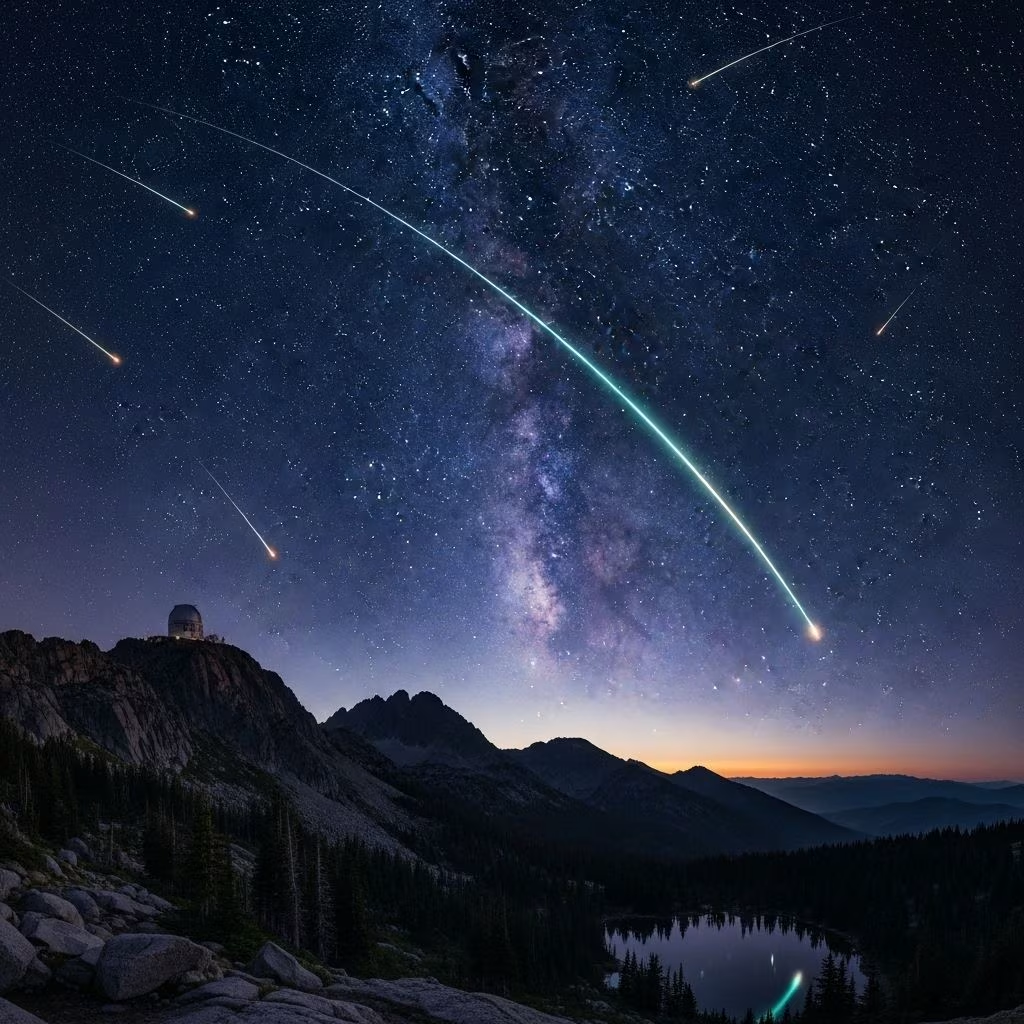
A shooting star is not a star at all. It is the bright streak of light produced when a meteoroid—a tiny particle of space debris, often no larger than a grain of sand—enters Earth’s atmosphere at a tremendous speed. These particles move so fast (tens of thousands of miles per hour) that friction with the air causes them to heat up and glow, creating the familiar flash of a shooting star.[10]
- Most shooting stars last less than a second.
- The light trail is called a meteor; if a fragment survives and lands on Earth, it is called a meteorite.[10]
- Shooting stars can occur any night, as individual meteoroids randomly enter the atmosphere.
Meteor Showers Explained
Meteor showers are regular astronomical events in which dozens—even hundreds—of meteors can be seen hourly, all seemingly radiating from a single point in the sky known as the radiant. They occur when Earth passes through the debris trail left behind by a comet or, less commonly, an asteroid. As the planet sweeps through this debris, large numbers of meteoroids collide with the atmosphere in a short period, creating a spectacular display of shooting stars.
- Annual phenomena: Most major meteor showers are predictable and occur at the same time each year.
- Comet origins: The debris creating meteor showers typically comes from comets shedding material as they pass near the Sun.
- Shower duration: While named for a peak night, showers can last for several days or weeks.
Shooting Stars vs. Meteor Showers
The terms “shooting stars” and “meteor showers” are often used interchangeably, but they mean different things.
| Term | Definition |
|---|---|
| Shooting Star | Single meteor, often from random space debris, visible at any place or time in the night sky. |
| Meteor Shower | Dozens to hundreds of meteors appearing in a concentrated period—typically when Earth passes through a comet’s debris stream. |
So, all meteors in a meteor shower are shooting stars, but not all shooting stars are part of a meteor shower.
The Science Behind the Streaks
The fascinating phenomenon of shooting stars relies on several scientific processes:
- Entry to the atmosphere: Meteoroids enter at 11–72 km per second (25,000–160,000 mph), creating tremendous friction.[10]
- Heating up: The high-velocity entry causes the particles to heat up, ionize the air, and emit light—producing a visible flash.
- Altitude: Most meteors burn up in the mesosphere, at altitudes between 76–100 km (47–62 miles).
- Colors: The color of a meteor can vary depending on its composition. For example:
- Orange/yellow: sodium content
- Green: nickel or magnesium
- Blue: iron
- Sound: While rare, particularly bright meteors (fireballs) can be accompanied by sonic booms.
Major Meteor Showers of the Year
While small shooting stars can be seen any clear night, several reliable meteor showers occur every year. Each shower is named for the constellation from which its meteors appear to radiate. Here are some of the most anticipated events:
- Quadrantids (January): Short-lived but intense, peaking in early January.
- Lyrids (April): Known for fast and bright meteors, peaking around April 22.
- Eta Aquariids (May): Best seen from southern latitudes; debris from Halley’s Comet.
- Perseids (August): The most popular Northern Hemisphere shower, producing up to 60-100 meteors an hour at its August peak.
- Orionids (October): Another shower originating from Halley’s Comet, peaking in late October.
- Leonids (November): Known for rare but spectacular meteor storms.
- Geminids (December): Exceptionally bright, with multi-colored meteors, peaking around mid-December.
Tip: The exact intensity of a meteor shower can vary year-to-year, depending on how thick the debris stream is and on weather or moonlight conditions.
How to Watch Meteor Showers
Watching a meteor shower or catching a lone shooting star doesn’t require specialized equipment, but a few simple strategies can enhance your experience:
- Find Dark Skies: Get as far from city lights as possible—light pollution can obscure all but the brightest meteors.
- Check the Moon Phase: A bright Moon can wash out fainter meteors. New moon nights or when the Moon is below the horizon are best.
- Let Your Eyes Adjust: Allow at least 20 minutes in darkness for maximum night vision.
- Lawn Chairs and Blankets: Make yourself comfortable—reclining flat gives the widest view of the sky.
- When to Look: The best rates are usually after midnight and before dawn, when your location faces the direction of Earth’s travel through space.
- Look for the Radiant: While meteors will appear all over the sky, tracing their paths backward will indicate the radiant point of the shower.
- Dress Warmly: Even summer nights can be cold when you’re outside for hours.
Best Practices at a Glance
| Tip | Why It Matters |
|---|---|
| Go where it’s darkest | Reduces light pollution |
| Check shower peak times | Catches the most meteors |
| No telescopes needed | Meteors are fast, use unaided eyes |
| Bring snacks/water | Comfort for long viewing sessions |
| Plan for weather | Clear, cloudless nights are essential |
Frequently Asked Questions (FAQs)
Q: Are all shooting stars part of meteor showers?
A: No. Shooting stars can occur randomly at any time of the year as sporadic meteors. Meteor showers are special events when many meteors appear because Earth is crossing a region of high space debris density.
Q: What is the difference between a meteor, meteoroid, and meteorite?
A: A meteoroid is the particle in space; a meteor is the glowing streak it creates when it burns in the atmosphere; a meteorite is any remaining fragment that lands on Earth.
Q: Why do meteor showers seem to come from one part of the sky?
A: That point is called the radiant. It’s an illusion: the meteors’ parallel paths seem to radiate outward due to perspective (like railroad tracks converging in the distance).
Q: Can meteor showers harm us?
A: No. Meteoroids causing meteor showers are extremely small and burn up high in the atmosphere. Large chunks are rare and most never reach the ground.
Q: Are any meteor showers visible worldwide?
A: Some showers are best seen from one hemisphere, but popular ones like the Perseids (Northern) or Geminids (global) are visible to a broad population.
Q: What causes different meteor colors?
A: The color depends on chemical composition and speed. Sodium glows yellow, magnesium burns blue-green, and so on. High speed also increases brightness and can shift color.[10]
Final Thoughts
Meteor showers and shooting stars are more than fleeting spectacles—they offer glimpses into the workings of our solar system and the movement of cosmic material through space. By understanding the science and best viewing practices, anyone can enjoy these awe-inspiring events to the fullest, right from their own backyard. Whether you seek a once-in-a-lifetime meteor storm or the quiet magic of a single shooting star, the universe has a light show waiting for you.
References
- https://www.space.com/stargazing/meteor-showers/the-perseid-meteor-shower-kicks-off-summer-shooting-star-season-this-week-heres-how-to-see-it
- https://www.space.com/stargazing/meteors-showers/geminid-meteor-shower-fills-the-sky-with-shooting-stars-in-spectacular-time-lapse-photos
- https://science.nasa.gov/solar-system/meteors-meteorites/
- https://www.livescience.com/space/meteoroids/perseid-meteor-shower-2025-how-to-see-shooting-stars-despite-the-full-moon
- https://science.nasa.gov/solar-system/meteors-meteorites/facts/
- https://spacewonderslive.com/blog/meteor-showers-vs-shooting-stars.html
- https://www.planetary.org/video/what-is-a-meteor-shower
- https://spaceyv.com/shooting-stars/
- https://www.youtube.com/watch?v=CBUTU3HCjBE
- https://en.wikipedia.org/wiki/Meteor
- https://myspacemuseum.com/meteor-showers
- https://www.youtube.com/watch?v=5z2dQ0zSZ2c
- https://www.skyatnightmagazine.com/advice/skills/meteor-showers-how-observe-record-shooting-stars
- https://www.nps.gov/articles/000/idkt_shootingstars.htm
- https://mcdonaldobservatory.org/meteor-showers
- https://sciencerecent.com/space/meteor/