Solar Storm from Active Sunspot May Ignite Auroras on August 8
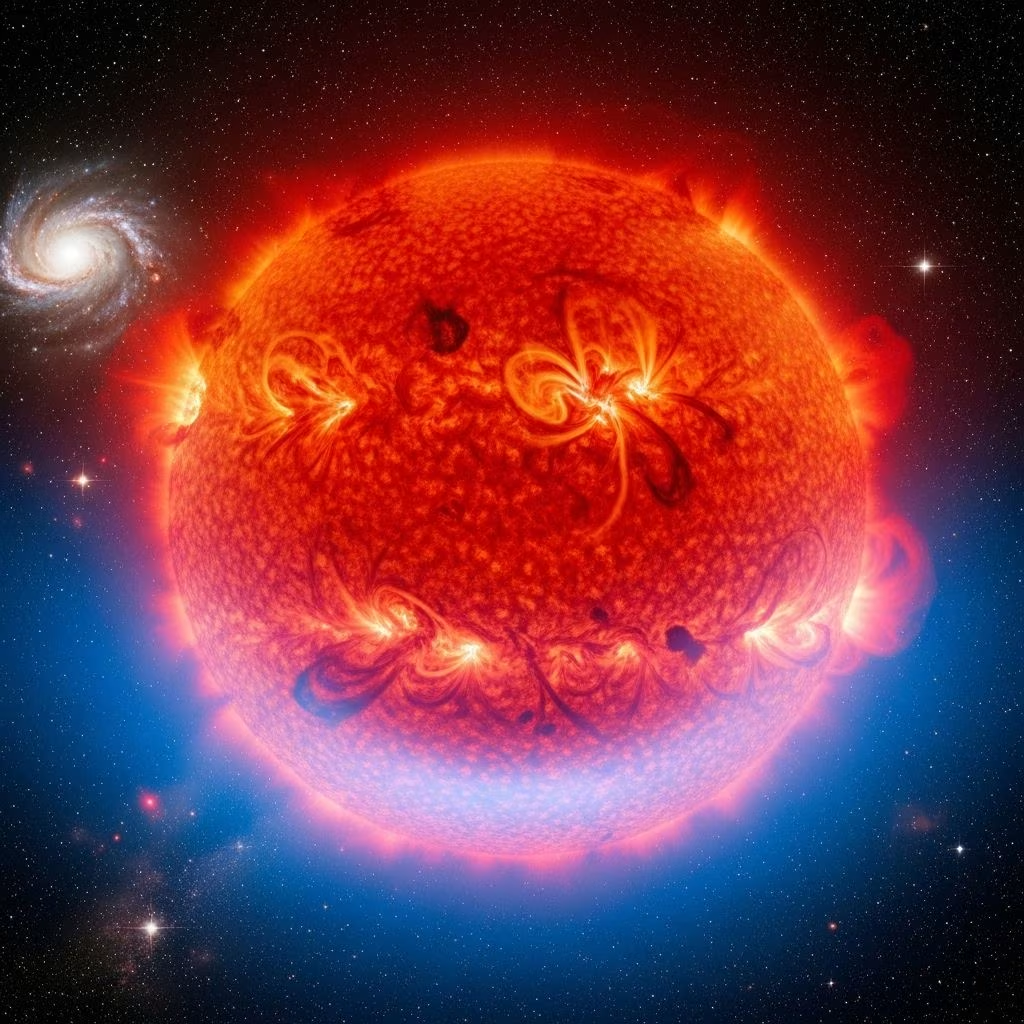
On August 5, 2025, heightened solar activity burst into view with a powerful M-class flare and associated coronal mass ejection (CME) from an especially busy sunspot region. Space weather experts and aurora chasers are now watching closely as this event could deliver a glancing blow to Earth’s magnetosphere around August 8, potentially generating vibrant auroras and minor geomagnetic disruptions across northern latitudes. This episode marks a striking moment in Solar Cycle 25’s escalation, offering both scientific intrigue and celestial spectacle.
What Caused the Upcoming Solar Storm?
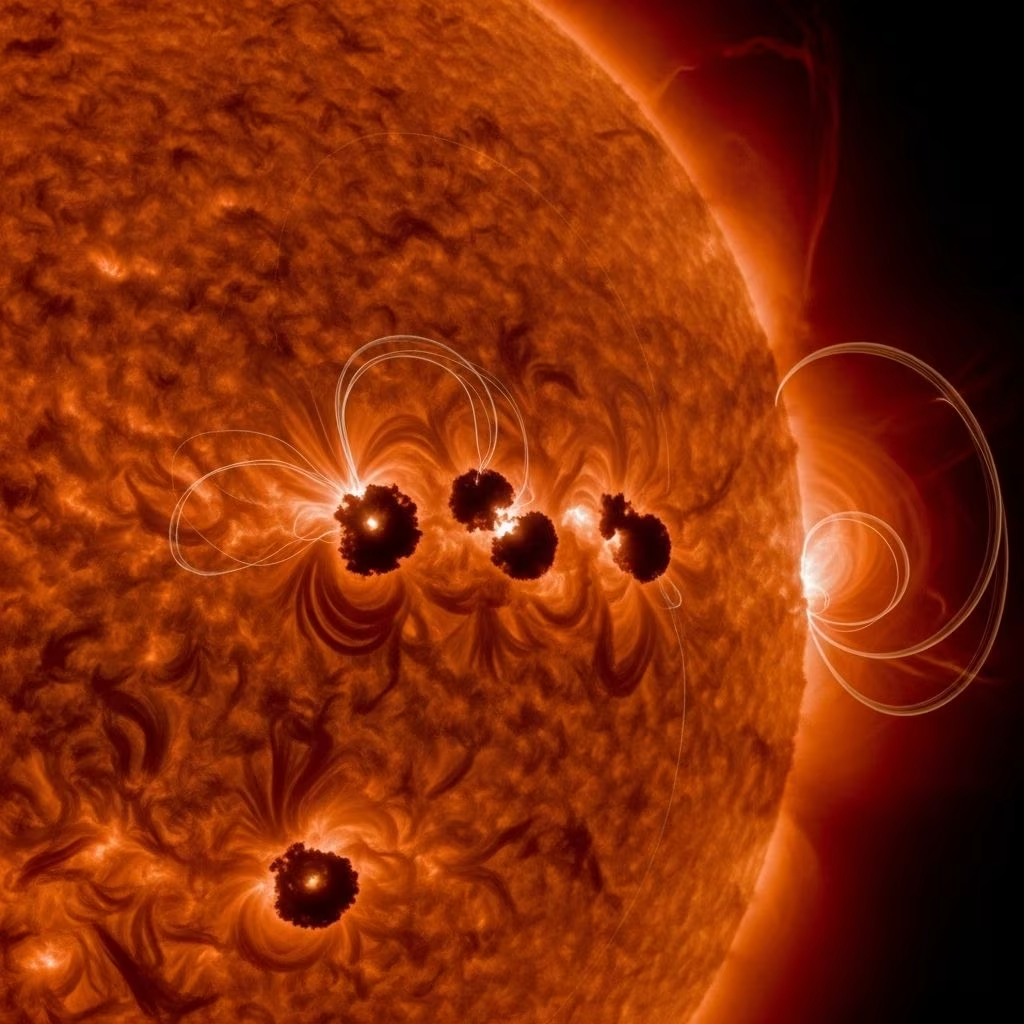
The solar storm was triggered when sunspot region 4168 unleashed an M4.4-class solar flare on August 5, sending a surge of high-energy particles and magnetic plasma outward from the center of the solar disk. Accompanying this flare, a coronal mass ejection (CME) erupted toward space. CMEs occur when vast amounts of solar plasma and magnetic field lines are expelled from the sun’s corona — sometimes containing billions of tons of material and traveling millions of kilometers per hour.
- Sunspot region 4168 showed increased activity with three notable M-class flares in under 24 hours, marking a dramatic end to several quiet solar weeks.
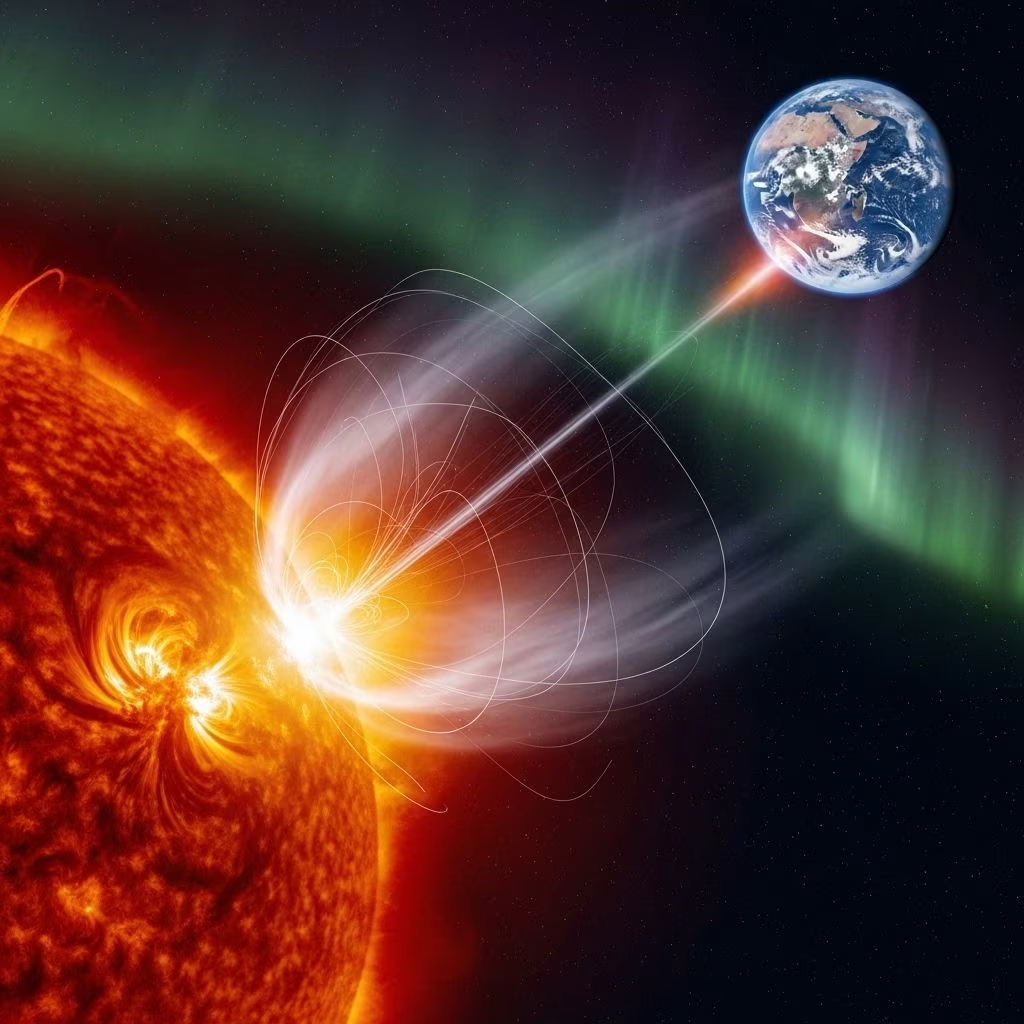
- Although the CME launched slightly westward rather than directly toward Earth, modeling by NASA and NOAA suggests we could still receive a glancing impact, enough to influence our planet’s magnetosphere.
The Nature and Impact of Geomagnetic Storms
Geomagnetic storms are disturbances in Earth’s magnetosphere, typically driven by high-speed streams of solar wind or CMEs interacting with our planet’s magnetic field. The plasma and magnetic field imbedded in the CME can compress the magnetosphere, triggering dynamic effects in the upper atmosphere and sometimes producing dazzling auroras as a bonus for skywatchers.
| Storm Category | Noaa Severity (G-Scale) | Potential Effects |
|---|---|---|
| Minor | G1 | Weak power grid fluctuations, possible auroras at high latitudes. |
| Moderate | G2 | Possible impacts noted on satellites, HF radio, visible auroras further south. |
| Severe | G3+ | Potential disruptions to navigational and satellite systems, strong auroras even at mid-latitudes. |
The anticipated event for August 8 is forecast to be in the G1–G2 range, meaning it is considered minor to moderate. While not on the scale of historic storms, such as the powerful G5 event in May 2024, it is still significant for scientists and aurora enthusiasts alike.
Where and When Might Auroras Be Visible?
If the CME’s magnetic orientation aligns optimally, auroras could brighten the skies across parts of North America and Eurasia. Space weather forecasters suggest that the most likely regions for aurora sightings stretch from New York to Idaho in the U.S., and potentially as far north as Michigan and Maine if geomagnetic conditions favor visibility. The best views will be away from city lights under clear, dark skies.
- Peak visibility is most likely overnight on August 8–9.
- Auroras may appear as shimmering curtains, green or red arcs, and can sometimes extend much further south during moderate geomagnetic events.
- For those outside the aurora zone, satellite images and aurora webcams provide alternate ways to witness the spectacle.
Solar Cycle 25: Building Toward Maximum Activity
The flurry of activity from sunspot region 4168 comes amid the rapid progression of Solar Cycle 25. The sun operates in eleven-year cycles, fluctuating between periods of quieter and more intense magnetic activity. Experts anticipate that Solar Cycle 25 will reach its peak around 2025, bringing more sunspots, flares, and CMEs than seen in recent years.
- Solar maximum means greater chances for geomagnetic storms and auroras, but also increased risks for satellites and technological infrastructure.
- Scientists use these events to refine space weather prediction models, helping to protect critical assets in orbit and on Earth.
- It’s a prime time for both research and public engagement, as spectacular sky phenomena (like auroras) draw attention worldwide.
Potential Effects on Earth’s Technology and Environment
NOAA and NASA stress that the upcoming geomagnetic storm should be manageable for most technology users and infrastructure. Still, even mild storms can produce some disruptions:
- Satellite navigation and communications may experience minor signal fluctuations.
- Power grids at northern latitudes could register small fluctuations but are not expected to face significant issues.
- HF radio users, especially pilots and mariners in polar regions, may notice signal fading or static.
- Enhanced auroral activity can influence GPS accuracy due to changes in the ionosphere.
How Scientists Track and Predict Space Weather
Forecasting solar storms and their effects on Earth requires a blend of ground-based observatories, satellite monitoring, and sophisticated computer models.
- Sunspot monitoring: Specialized telescopes track sunspot number, size, and magnetic complexity to gauge eruption risks.
- Solar telescopes and satellites: NASA’s Solar Dynamics Observatory and the NOAA Space Weather Prediction Center constantly observe the sun’s surface and atmosphere for flare and CME activity.
- Modeling the solar wind: Probabilistic models like NASA’s WSA-ENLIL simulate CME trajectories and their likely impact on the magnetosphere.
- Aurora alerts: Aurora forecasting platforms keep skywatchers updated on real-time chances for northern and southern lights.
Frequently Asked Questions (FAQs)
Q: What makes solar storms more intense during Solar Cycle peaks?
A: The sun’s magnetic field strengthens and becomes more chaotic during cycle maxima, generating increased numbers of sunspots, flares, and CMEs — all key drivers of geomagnetic storms and auroral displays.
Q: How can I maximize my chances to see auroras during the storm?
A: Find a location far from city lights, ideally under clear, dark skies in regions forecast to be under the auroral zone (such as northern U.S. states). Use aurora alert apps or NOAA’s real-time data to monitor active periods. Patience and persistence pay off, as auroras can appear and fade within minutes or hours.
Q: Are solar storms dangerous to everyday life?
A: Most solar storms are not directly hazardous to people on Earth. Stronger storms can affect technological systems — satellites, communications, and power grids — but mitigation protocols minimize major risks. Astronauts in orbit may need additional precautions during peak flare periods.
Q: Could the August 8 storm produce noticeable disruptions?
A: Current forecasts indicate the August 8 solar storm is likely to be moderate (G1–G2), producing manageable effects and possible auroras but not widespread disruption to infrastructure.
Q: What’s the difference between a solar flare and a CME?
A: A solar flare is a bright, intense burst of radiation typically lasting minutes to hours, while a CME is a huge expulsion of plasma and embedded magnetic field from the sun’s corona. CMEs are more likely to generate geomagnetic storms if Earth-directed.
Key Takeaways for Space Enthusiasts and Skywatchers
- An M-class solar flare and accompanying CME from sunspot 4168 could trigger auroras and a geomagnetic storm on August 8.
- Forecasts suggest a G1–G2 level event, with potential for visible auroras and minor technology impacts.
- Solar Cycle 25 is intensifying; expect more frequent and powerful space weather events in the months ahead.
- Prepare for aurora viewing by checking forecasts, seeking dark sites, and watching sky conditions on August 8–9.
Further Reading and Aurora Resources
- NOAA Space Weather Prediction Center – Updates and aurora forecasts
- NASA Solar Dynamics Observatory – Monitoring sunspots and solar eruptions
- Aurora tracking apps – Real-time alerts for optimal viewing
As Solar Cycle 25 ramps up, events like the August 8 solar storm showcase the sun’s power to transform our night skies and challenge our technologies, reminding us that space science is as much about wonder as it is about vigilance.
References
- https://www.space.com/astronomy/sun/solar-storm-launched-from-busy-sunspot-could-trigger-auroras-on-aug-8
- https://www.youtube.com/watch?v=SItdIe1X7RU
- https://www.livescience.com/planet-earth/weather/auroras-may-be-visible-from-18-states-this-weekend-as-solar-storm-barrels-toward-earth
- https://nasaspacenews.com/2025/08/solar-surprise-m4-4-solar-flare-from-sunspot-4168-and-the-dance-of-space-weather/
- https://www.spaceweather.live/en/archive/2025/08/27/aurora.html
- https://www.swpc.noaa.gov
- https://www.spaceweatherlive.com/en/solar-activity/solar-flares.html
- https://www.space.com/stargazing/auroras/northern-lights-may-be-visible-in-these-18-us-states-sept-1-2-2025
- https://ts2.tech/en/black-moon-meteors-auroras-skywatch-alert-for-aug-23-24-2025/
- https://www.spaceweatherlive.com/en/archive/2025/08/12/xray.html
- https://www.spaceweather.gov
- https://www.youtube.com/watch?v=en2Ern0fBH8
- https://www.swpc.noaa.gov/products/3-day-forecast
- https://www.spaceweather.live/en/archive/2025/08/25.html
- https://www.poollicht.be/en/archive/2025/08/09/xray.html
- https://www.poollicht.be/en/archive/2025/08/08.html
- https://www.aurorahunter.com/northern-lights-forecast.html
- https://ts2.tech/en/black-moon-sparks-cosmic-show-meteors-planet-parade-auroras-on-aug-24-25-2025/