


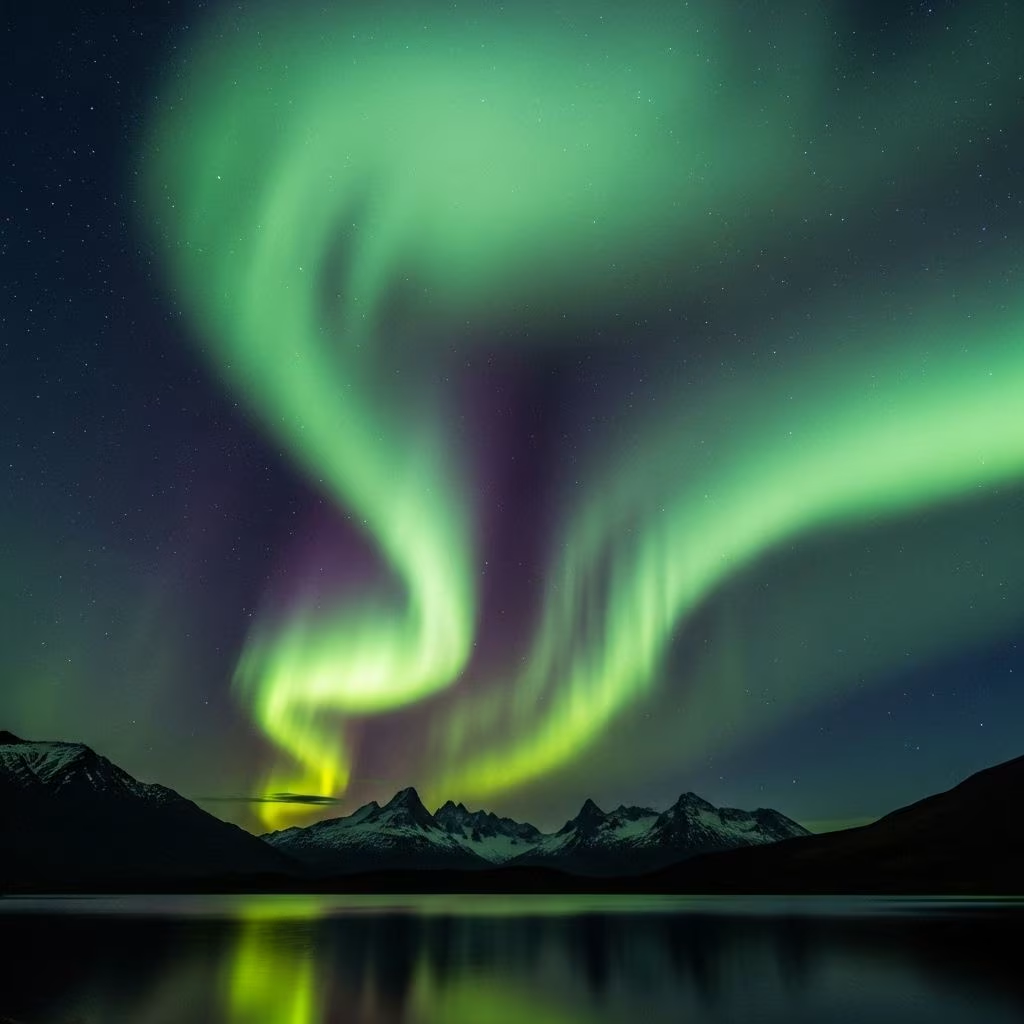
Northern Lights on the Horizon: Where and When to Watch the August Auroras
The rarely visible northern lights may illuminate skies across 15 states in the continental U.S. during the nights of August 18-19, promising a dazzling show for stargazers well beyond the usual high-latitude regions. This phenomenon, known formally as the aurora borealis, results from a geomagnetic storm triggered by heightened solar activity. If weather and sky conditions permit, millions of Americans could witness a celestial spectacle typically reserved for more northern locales.
What Triggers the Northern Lights?
The northern lights are the luminous result of interactions between solar plasma ejected from the sun and the Earth’s magnetic field. Specifically, the phenomenon relies on events like coronal mass ejections (CMEs)—large, fast-moving clouds of charged particles hurled from the sun. When these particles reach Earth, they excite oxygen and nitrogen atoms in the upper atmosphere, resulting in glowing curtains and arcs of green, pink, red, and purple light in the sky.
- Coronal mass ejection (CME) on August 16 is forecast to reach Earth on August 18, increasing geomagnetic activity.
- Geomagnetic storms occur when solar material collides with Earth’s magnetosphere, disrupting the magnetic field and allowing auroral displays to extend farther south.
- Most auroras are seen close to the poles; only strong solar storms bring visible auroras to the U.S. Midwest, Northeast, or Pacific Northwest.
August 18-19 Aurora Forecast: Why This Event is Special
The current auroral forecast stems from a sizable CME detected by the National Oceanic and Atmospheric Administration’s (NOAA) Space Weather Prediction Center. As the charge cloud interacts with Earth’s magnetic field, forecasters expect geomagnetic conditions sufficient to light up the northern skyline in unprecedented locations.
Key facts about the August 18-19 aurora event:
- K-index (Kp) forecast: NOAA expects a Kp of 5, signaling moderate geomagnetic storm intensity.
- Geomagnetic storm category: This is classified as G1—minor on NOAA’s geomagnetic storm scale (which ranges from G1 to G5).
- Viewing conditions: Visibility depends on local weather, sky darkness, and a clear view of the northern horizon.
What Is the K-index? Understanding Aurora Forecasts
The K-index (or Kp index) is a global scale measuring geomagnetic disturbances, rated from 0 (very quiet) to 9 (extremely disturbed). The higher the Kp, the further south the northern lights extend:
| Kp Index | Aurora Visibility |
|---|---|
| 0–2 | Visible only in high-latitude regions (Alaska, northern Canada) |
| 3–4 | Northern Canada, far northern U.S. (North Dakota, Minnesota) |
| 5 | Extends to more northern U.S. states (e.g., Michigan, Wisconsin, Montana) |
| 6–7+ | Possible in central U.S. or southern states during major storms |
This August event’s predicted Kp of 5 means areas well beyond Alaska or northern Canada could catch the show. Forecasters utilize the Kp index and aurora prediction models to draw a “view line”—the southernmost limit where auroras might be seen on the northern horizon.
Which 15 U.S. States May See the Northern Lights?
According to NOAA forecasts, large sections of the Midwest, Northeast, and far Northwest may fall within the auroral view line for the night of August 18 into August 19. If sky conditions cooperate, watch for the glow in these states:
- Maine
- New Hampshire
- Vermont
- New York
- Massachusetts
- Connecticut
- Rhode Island
- Pennsylvania
- Ohio
- Indiana
- Illinois
- Iowa
- Wisconsin
- Minnesota
- North Dakota
Some forecasts also suggest possible visibility in parts of:
- Michigan (especially the Upper Peninsula)
- Montana
- South Dakota
Important: Exact visibility will depend on how the storm unfolds, so states slightly south of this list should still monitor aurora forecasts on the night of the event.
Aurora Forecast Map
Noaa produces aurora forecast maps, showing the predicted view line for these events. On August 18, that view line extends as far south as northern Illinois, Ohio, and Pennsylvania. Areas north of this line are prime candidates for aurora viewing if sky conditions allow.
Best Time and Tips for Watching the Northern Lights
Sighting the aurora requires patience and planning, as displays are subtle and sometimes faint in southern regions. NOAA recommends these tips to maximize your odds:
- Go out late: The best viewing occurs within one to two hours of midnight (local time). Auroras rarely show before sunset and vanish at dawn.
- Head north and find darkness: Seek out locations with an unobstructed view toward the northern horizon and minimal light pollution (ideally away from cities).
- Check for clouds: High or thick clouds can block the view, so consult a weather forecast for your area.
- Be patient: Auroras fluctuate over minutes to hours. Sometimes faint glows develop into vibrant moving arcs or curtains.
- Bring a camera: Modern cameras, particularly those with manual settings, can capture details and colors the naked eye may miss.
How to Tell If You Are Seeing an Aurora
In the lower 48 states, auroras may not look as dramatic as in Alaska or Canada. They can appear as:
- Faint green or white glows near the horizon
- Diffuse arcs or patches, sometimes motionless
- Slowly shifting bands, pillars, or curtains of light (under strong geomagnetic activity)
Pro tip: Let your eyes adjust for up to 20 minutes in darkness to catch the faintest displays.
What Is a Geomagnetic Storm? How Solar Weather Impacts Earth
A geomagnetic storm is a temporary disturbance in Earth’s magnetic field caused mostly by incoming streams of charged particles from the sun. The August 18-19 aurora event is linked to:
- A coronal mass ejection ejected from the sun’s surface, detected on August 16
- This CME is carrying a cloud of magnetized solar plasma toward Earth’s upper atmosphere
- Upon arrival, the magnetic field disturbance enables particles to enter Earth’s polar regions more easily, triggering auroral activity
- Most geomagnetic storms are minor, but exceptionally strong events can interfere with satellites, radio communications, GPS, and power grids
For this week’s aurora, the storm is rated as G1—minor, meaning risks to infrastructure are very limited, but auroral displays are predicted to be more widespread than typical.
What Makes This Aurora Event Unique?
- CMEs of this strength are not rare at the peak of the solar cycle, but they do not always impact Earth head-on.
- When they do, the simultaneous demand for clear skies, local darkness, low light pollution, and the right geographic location makes such visible events noteworthy for lower-latitude observers.
- Major aurora events like this, visible as far south as Illinois or Pennsylvania, may happen only a few times per decade.
Current Solar Activity and What It Means for the Future
The sun is approaching the maximum of Solar Cycle 25, meaning more frequent solar storms and heightened auroral activity across the globe. This year has already brought multiple aurora events visible across broad swathes of North America and Europe.
Space weather outlooks suggest that, through the next 12–24 months, aurora forecasts beyond the usual high latitudes could become more common, offering more opportunities for lower U.S. states to experience the northern lights.
How to Stay Updated: Tracking Aurora Alerts and Space Weather
Space weather can change rapidly. To maximize your chances:
- Bookmark NOAA’s Space Weather Prediction Center and its live aurora forecast map.
- Follow local meteorology outlets and aurora chasers on social media for last-minute updates and real-time eyewitness reports.
- Consider smartphone apps (such as Aurora Forecast or My Aurora Forecast) for notifications when geomagnetic activity spikes in your region.
Table: Quick Reference — Aurora Visibility by State (August 18-19)
| Region | States | Viewing Probability |
|---|---|---|
| Northeast | Maine, New Hampshire, Vermont, New York, Massachusetts, Connecticut, Rhode Island | High |
| Midwest | Ohio, Indiana, Illinois, Iowa, Wisconsin, Minnesota, North Dakota | Moderate |
| Upper Midwest & Northern Plains | Michigan (UP), Montana, South Dakota | Possible (if storm is stronger) |
Frequently Asked Questions (FAQs)
Q: What time should I look for the northern lights?
A: The optimal period is typically 10 p.m. to 2 a.m. local time, with auroras most likely within two hours of midnight. Avoid searching during twilight or daylight.
Q: Where should I go for the best chance to see the aurora?
A: Head north, away from cities. Find dark, elevated areas with an unobstructed view of the northern horizon. Avoid bright streetlights or headlights.
Q: Will city lights ruin my view?
A: Light pollution drastically reduces aurora visibility. In urban areas, faint auroras might be completely washed out. Rural and wilderness locations are best.
Q: Are auroras dangerous during a geomagnetic storm?
A: No, auroras are not dangerous to people on the surface. Minor geomagnetic storms occasionally disrupt high-frequency communications or satellites, but pose no threat to skywatchers.
Q: What causes the different colors in the aurora?
A: Green is the most common color, created by oxygen molecules about 60 miles up. Reds and pinks occur higher (due to rarefied oxygen or nitrogen) and are less common, especially at lower latitudes.
Final Tips for Skywatchers
- Check forecasts frequently, as aurora predictions can change on short notice.
- Bring binoculars or a camera with manual settings to enhance the experience.
- Dress warmly and be prepared for long periods outside at night.
- Share your observations—if you spot auroras, report them via local news, space weather hotlines, or aurora apps to help others enjoy the show!
If conditions hold, this August aurora event could create one of the most memorable night-sky spectacles in recent U.S. history for residents across the Midwest and Northeast. Whether you’re an amateur astronomer or a casual observer, this rare opportunity is worth planning for—don’t miss the chance to see the cosmos in action!
References
- https://www.space.com/stargazing/auroras/northern-lights-may-be-visible-in-these-18-states-tonight-august-7-8
- https://www.usatoday.com/story/news/weather/2025/08/18/northern-lights-visible-states/85709040007/
- https://www.usatoday.com/story/news/nation/2025/08/08/northern-lights-forecast-aurora-map/85572299007/
- https://timesofindia.indiatimes.com/etimes/trending/aurora-2025-18-us-states-could-see-the-northern-lights-tonight-and-heres-how-to-watch-them/articleshow/123192825.cms
- https://www.livescience.com/planet-earth/weather/auroras-may-be-visible-from-18-states-this-weekend-as-solar-storm-barrels-toward-earth
- https://abcnews.go.com/US/northern-lights-visible-dozen-us-states-tonight/story?id=124741604
- https://www.softservenews.com
- https://www.clickondetroit.com/news/local/2025/08/08/northern-lights-could-be-visible-in-michigan-friday-night-heres-what-to-know/
- https://www.youtube.com/watch?v=mEb5uXw8oFc
- https://www.adventureworld.com/blog/the-best-times-places-to-see-the-northern-lights-in-2025/
- https://www.czen.org/northern-lights-forecast-these-u-s-states-could-see/
- https://www.space.com/stargazing/auroras/northern-lights-may-be-visible-in-these-18-us-states-sept-1-2-2025
- https://news.ssbcrack.com/northern-lights-might-be-visible-in-18-u-s-states-on-august-7-8-2025/
- https://www.youtube.com/watch?v=fRdI7mxDeMI
- https://news.ssbcrack.com/northern-lights-expected-across-parts-of-the-u-s-on-august-12-2025/


