


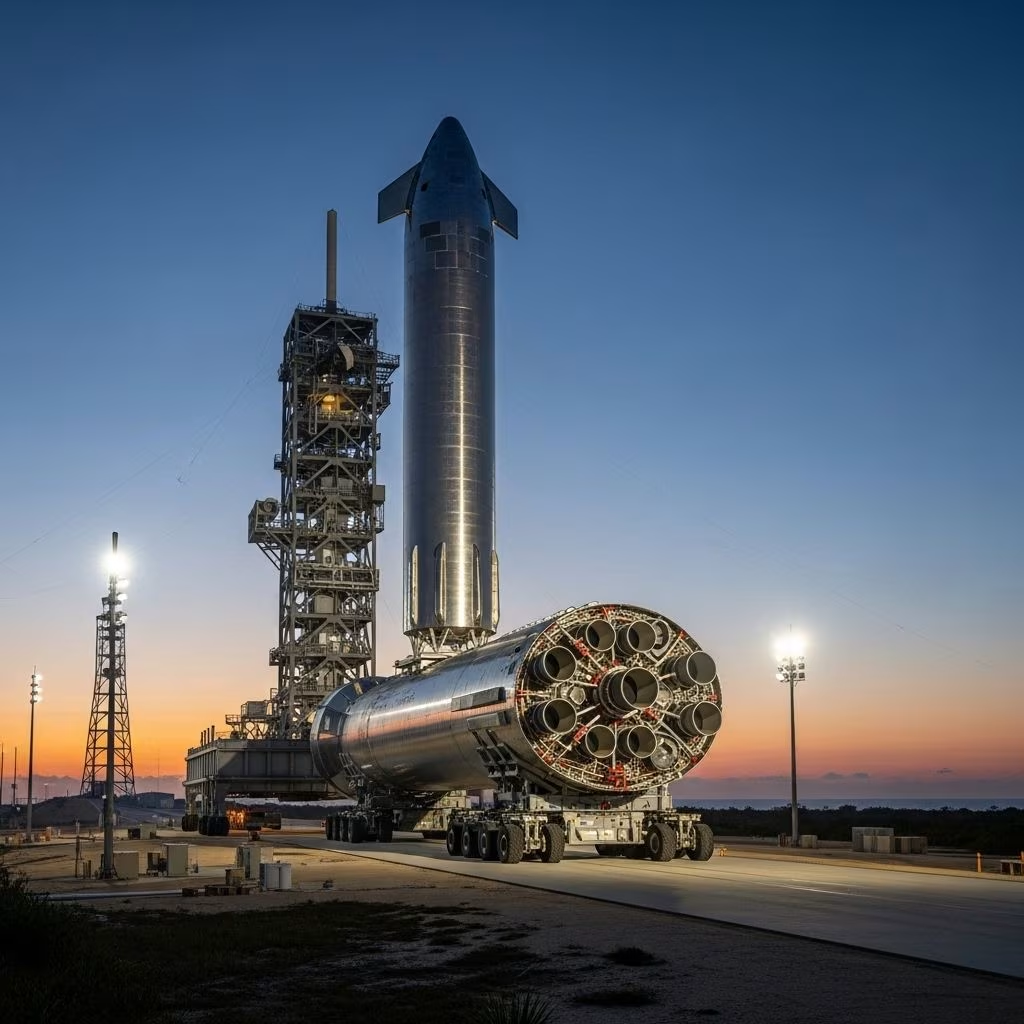
SpaceX Rolls Out Super Heavy for Historic Starship Flight 10
SpaceX has once again captured the world’s attention by moving its massive Super Heavy booster—one of the largest rockets ever constructed—to the launch pad at Starbase, Texas. This operation sets the stage for the much-anticipated Starship Flight 10, an integrated test flight crucial to the future of reusable launch vehicles and NASA’s Artemis lunar exploration program. As final preparations are underway, the aerospace industry and space enthusiasts await the latest chapter in SpaceX’s relentless pursuit of interplanetary capability.
Overview: The Road to Flight 10
The Starship Flight 10 test marks SpaceX’s fourth launch of 2025, representing another stride toward full reuse and operational reliability for the Starship launch system. The combined stack—featuring Super Heavy Booster 16 and Starship Ship 37—stands nearly 400 feet (120 meters) tall. Together, they form the most powerful rocket configuration in operation, positioning SpaceX at the forefront of next-generation launch technology.
- Date of Move: August 24–26, 2025
- Location: SpaceX Starbase, near Brownsville, Texas
- Stack Height: ~394 feet (120 meters)
- Key Components: Super Heavy Booster 16 (first stage), Starship Ship 37 (upper stage), both Block 2 variants
- Mission Milestones: Integrated full-stack fueling, liftoff, stage separation, demonstration payload deployment, and splashdown recovery
Preparations at Starbase: Engineering the Future
In the days leading up to launch, SpaceX teams worked around the clock at Starbase to transport and erect the colossal Super Heavy booster. The coordination required for such a move is immense, involving specialized roll-lift hardware, custom transporter vehicles, and intricate ground systems checks. As fueling operations commenced, teams loaded both the booster and Starship upper stage with hundreds of tons of cryogenic liquid methane and liquid oxygen.
SpaceX’s approach relies on rapid iteration, with each launch driving incremental upgrades and refinements to core systems. Notably, Flight 10 is using Block 2 evolutions, with improved engine reliability, avionics, and stage separation hardware—a testimony to SpaceX’s philosophy of evolving through repeated real-world testing.
Super Heavy Booster: The Powerhouse of Starship
At the heart of the Starship system lies the Super Heavy booster, a first stage powered by 33 Raptor engines. With thrust unmatched by any operational rocket, Super Heavy provides the muscle needed to hoist the Starship upper stage clear of the atmosphere—an essential step for both crewed lunar missions and deep-space ambitions.
- Engine Count: 33 Raptor engines
- Thrust: Nearly double that of Saturn V, with over 16 million pounds (7,257 metric tons)
- Block 2 Upgrades: Enhanced reliability, better fuel management, upgraded flight software
- Splashdown Test: Controlled descent into the Gulf of Mexico following successful separation
Starship Upper Stage: A Road to Artemis and Beyond
The Starship upper stage, designed for both orbital and deep-space missions, is rapidly maturing as the prime candidate for NASA’s Artemis 3 lunar lander. Flight 10 introduces Ship 37, sporting Block 2 improvements that address flight termination, engine relight capability, and payload integration. This mission also features eight dummy Starlink satellite payloads, a vital demonstration of Starship’s ability to eventually serve commercial broadband networks in orbit.
- Block 2 Ship: Enhanced avionics, Raptor engine relight in orbit, refined heat shield
- Artemis Program: On track as lunar lander for NASA’s Artemis 3 moon mission (target 2027)
- Starlink Test Payloads: Eight simulators launched aboard Ship 37
Timeline of Operations: From Pad Rollout to Launch
| Event | Time (EDT) | Status/Note |
|---|---|---|
| Pad rollout completed | 7:00 p.m. | Super Heavy staged at launch site |
| Fueling underway | 7:00 – 7:30 p.m. | Loading methane and oxygen |
| Final countdown | 7:20 – 7:30 p.m. | Weather GO, all systems nominal |
| Liftoff | 7:30 p.m. | Flight 10 launch |
| Stage separation | ~2 min 30s after launch | Hot staging event, booster returns |
| Super Heavy splashdown | ~T+5 min | Controlled soft landing in Gulf |
| Starship splashdown | End of flight | On-target landing, later tipped over and exploded |
Mission Highlights: What Flight 10 Demonstrated
- Successful full-stack fueling and launch
- Rapid stage separation with hot staging
- Super Heavy booster performed a controlled splashdown in the Gulf of Mexico
- Starship upper stage landed on target and subsequently tipped over (intentional or by design) for post-landing data analysis
- Demonstration of Starlink dummy payload integration and deployment testing
- Live video views enabled by on-board Starlink terminals during ascent and landing phases
Starship and Super Heavy Advancements
Flight 10 builds upon lessons from previous launches, especially regarding stage recovery and in-mission engine relighting. Incremental upgrades in Block 2 variants address vibration, engine reliability, and landing precision. SpaceX openly shares that failures and post-landing events, such as Starship’s tipping and explosion after splashdown, provide valuable data to refine both hardware and operating procedures.
These advances are especially important as the company targets future missions with crewed landings and commercial payloads. The drive to iterate quickly—sometimes with rapid hardware losses—has put SpaceX in the unique position of dramatically accelerating design cycles compared to traditional aerospace manufacturers.
Countdown, Weather, and Launch Window
- Countdown Routine: Coordinated launch sequence, multiple ground systems check
- Launch Window: Opened at 7:30 p.m. EDT (2330 GMT)
- Weather Conditions: Initially a concern, ultimately green for launch with a 55% chance of favorable weather
- Flight Readiness: As of T-5 minutes, all systems and teams were GO
Photos and Live Views: Documenting History in Real-Time
SpaceX’s launch webcasts and Starlink-linked payload cameras provided stunning live coverage throughout the mission, offering both technical observers and the public a dramatic front-row seat to the scale and intensity of the world’s largest rocket in action. Photos from the pad rollout, preflight preparations, fueling, and launch captured the intricate details of what may become a benchmark in commercial and exploratory rocketry.
- High-resolution images of booster transport and stacking
- On-pad shots highlighting the full Super Heavy-Starship configuration
- Live video streams displaying fueling, countdown, ignition, and ascent
- Breathtaking views of stage separation and splashdown from onboard cameras
Broader Implications: Starship’s Role in Lunar and Deep-Space Exploration
The successful demonstration flights of Starship, especially Flight 10, propel SpaceX closer to its dual objectives: routine orbital launches with full-stage recovery and reliable lunar landings for NASA’s Artemis missions. Each flight is calibrated to test not only vehicle reliability but also core mission profiles necessary for future crewed spaceflight and interplanetary cargo delivery.
- Artemis 3 Lunar Lander: Starship selected by NASA as lunar lander for projected 2027 crewed mission
- Reusable Launch Goals: Targeting rapid turnaround of booster and ship for cost-efficient access to orbital and deep-space destinations
- Commercial Payloads: Testing and validating Starlink payload integration for mass broadband service
Frequently Asked Questions (FAQs)
Q: What is the significance of the Super Heavy booster?
A: The Super Heavy booster is the world’s largest and most powerful rocket first stage, essential for lifting heavy payloads and Starship’s upper stage into orbit, especially for lunar and deep-space missions.
Q: Why is Starship Flight 10 important?
A: Flight 10 is a critical step in proving staged reusability and reliable operation of the Starship launch system; it supports SpaceX’s lunar ambitions and contributes vital data for future crewed missions.
Q: Did everything go as planned for Flight 10 launch?
A: The launch, stage separation, and booster splashdown were successful. The Starship upper stage performed its landing but tipped over and exploded, providing useful data for upgrades.
Q: How does Starship support NASA Artemis missions?
A: Starship, scheduled for further upgrades, is intended to serve as NASA’s Artemis 3 lunar lander—directly supporting the goal of returning astronauts to the moon by 2027.
Q: What incremental changes were introduced in Flight 10?
A: Block 2 hardware improvements included upgraded engines, avionics, and structural modifications to enhance stage separation, recovery, and reliability based on feedback from earlier test flights.
Q: How did SpaceX address previous flight failures?
A: SpaceX uses data from hardware failures, such as loss of upper stages, to rapidly iterate designs and ensure each subsequent flight includes fixes and improved robustness.
Looking Forward: Starship Flight 11 and Beyond
Flight 10’s achievements set the stage for even more ambitious test flights. SpaceX is already preparing for Flight 11, integrating new lessons and hardware fixes gleaned from Flight 10 and its predecessors. As testing continues, each launch tightens timelines for lunar mission readiness and further hones the Starship system for commercial and scientific milestones.
- Next planned launch: Starship Flight 11
- Expected advancements: Improved splashdown recovery, additional payload demonstration
- Target missions: Integrated support for Artemis lunar landing and expanded Starlink deployment
SEO Keywords Table
| Keyword | Relevance |
|---|---|
| SpaceX | Company enabling reusable launch vehicles |
| Starship | Upper stage vehicle for lunar & orbital missions |
| Super Heavy booster | First stage of the Starship launch system |
| Flight 10 | Crucial test flight for next-gen rocketry |
| Launch | Pivotal operation in vehicle testing regime |
From pad rollout and booster transport to high-stakes countdown and launch, SpaceX’s Starship Flight 10 continues to drive innovation in modern rocketry and shape the future of lunar access, orbital operations, and beyond.
References
- https://en.wikipedia.org/wiki/Starship_flight_test_10
- https://www.space.com/news/live/spacex-starship-missions-updates
- https://www.space.com/space-exploration/launches-spacecraft/spacex-targeting-date-for-10th-starship-rocket-test-flight
- https://spaceflightnow.com/launch/starship-flight-10/
- https://nextspaceflight.com/launches/details/7885
- https://www.youtube.com/watch?v=04-mfJavLT0
- https://www.youtube.com/watch?v=bhn2I183Db4
- https://nextspaceflight.com/launches/details/7885/
- https://www.spacex.com/vehicles/starship/
- https://en.wikipedia.org/wiki/SpaceX_Starship
- https://starship-spacex.fandom.com/wiki/Starship_Flight_Test_10
- https://rocketlaunch.org/launch-schedule/spacex/starship
- https://www.cbsnews.com/news/spacex-launches-super-heavy-starship-critical-10th-test-flight/
- https://spaceanddefense.io/starship-flight-10-soars-successfully-amid-high-stakes-for-reusability/
- https://tlpnetwork.com/launches/starship-flight-10
- https://spaceflightnow.com/2025/08/25/live-coverage-spacex-preps-for-starship-flight-10-following-sunday-scrub/


