Mars and the Crescent Moon: An Unforgettable Conjunction at Sunset
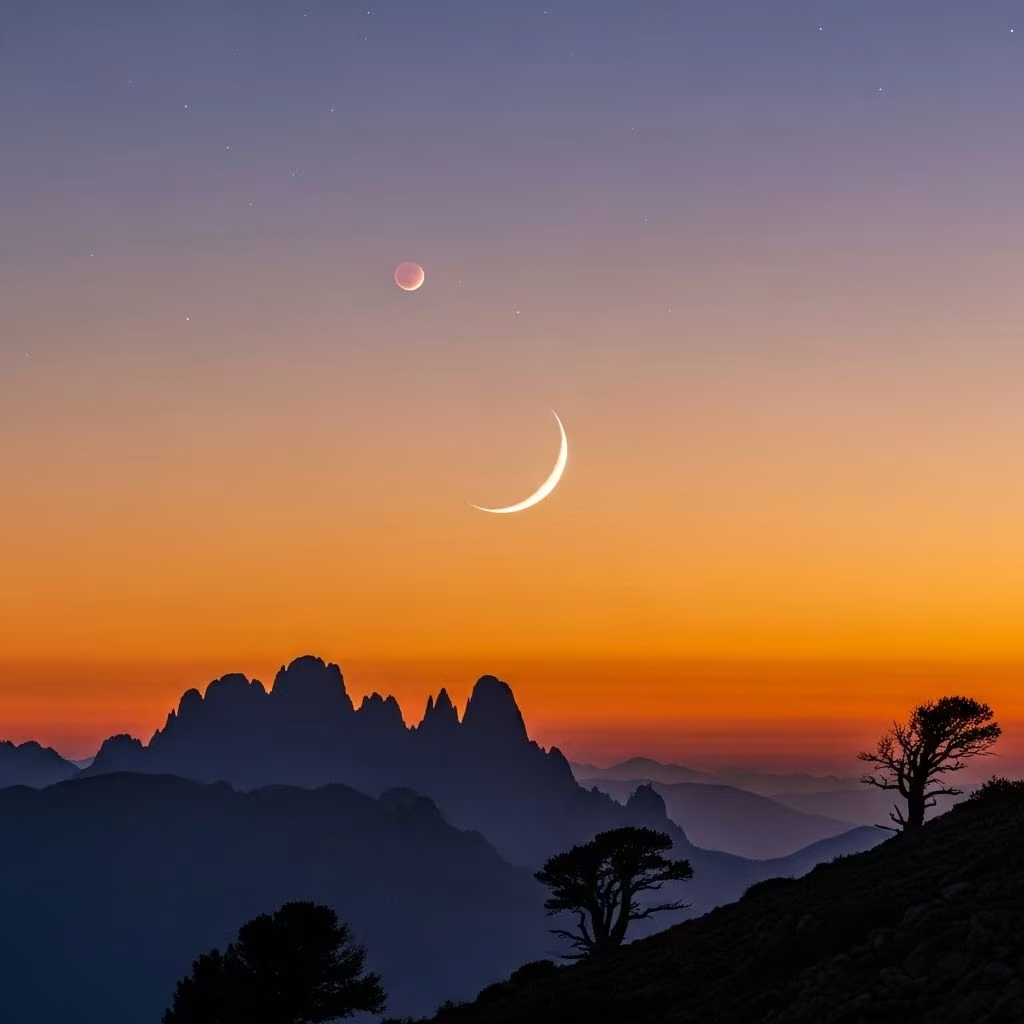
On August 26, 2025, skywatchers across the globe are treated to a spectacular visual event: Mars in close conjunction with the slender waxing crescent moon, set against the sparkling stars of the constellation Virgo.
For a short window after sunset, you can catch these celestial bodies as they sink toward the western horizon, offering a scene that blends astronomy, science, and natural beauty.
Why This Conjunction is Special
- Rare Proximity: Mars and the crescent moon appear less than 6 degrees apart—close enough to fit comfortably within your field of view and strikingly near when seen with the naked eye.
- Twilight Highlight: The event unfolds during twilight, making the red glow of Mars and the soft moonlight especially vivid set against fading sky hues.
- Virgo as a Backdrop: Both Mars and the moon are framed by the signature stars of Virgo. Spica, Virgo’s brightest star, shines to the moon’s upper left, while Porrima glimmers above Mars, completing a stunning triangle in the sky.
- Earthshine: The crescent moon glows faintly with reflected sunlight from Earth (Earthshine), lending an ephemeral, magical appearance.
How and When to Watch: Essential Viewing Tips
Timing and preparation are key to catching this event. Mars sits less than 10 degrees above the horizon at sunset, with the moon hovering slightly lower and to its left.
- Sunset Window: Aim to be ready just as the sun dips below the western horizon to spot Mars and the crescent moon before they fade—there’s about an hour to watch before they set.
- Best Location: Choose an observation spot with a clear, unobstructed view of the low western sky. Mountains, hills, trees, or buildings may block your view—flat landscapes or a high vantage point work best.
- Degree Measurement: To estimate distances in the sky:
- Hold out your closed fist at arm’s length: that’s 10° (roughly the height of Mars above the sunset horizon).
- Hold up your index, middle, and ring fingers together: that’s 5° (similar to the gap between Mars and the moon).
- Tools: Naked eyes provide a satisfying view, but 10×50 binoculars or a small telescope will reveal stunning lunar and planetary detail—like Mare Crisium, a distinctive lunar lava plain.
Understanding the Celestial Geometry
What makes this event so remarkable is the visual alignment (conjunction) rather than physical closeness—Mars and the moon appear near each other due to their positions in Earth’s sky, sharing similar celestial longitudes.
| Celestial Object | Position on Aug. 26, 2025 | Visual Highlights |
|---|---|---|
| Mars | <10° above western horizon at sunset | Red, planet-like glow Near right of the moon |
| Moon (Crescent) | Less than 6° lower left of Mars ~11% illuminated | Thin crescent shape Earthshine faintly visible |
| Spica (Virgo) | Upper left of the moon | Brightest star in Virgo Forms triangle with moon & Mars |
| Porrima (Virgo) | ~3° upper right of Mars | Dim star, completes triangle Enhances constellation view |
The Moon’s Nightly Motion: Tracking the Changes
This conjunction is also a lesson in sky movement. Over several nights, the moon’s orbital progression can be watched as it moves eastward, shifting from near Mars to Spica and then toward Antares (by August 31)—a visible demonstration of celestial dynamics.
- August 26: Moon close to Mars
- August 27–29: Moon glides toward Spica
- August 30–31: Moon moves farther east, approaching Antares
This eastward journey highlights the moon’s rapid motion compared to stars and planets—an ideal opportunity for observers to compare positions night by night.
Using Binoculars and Small Telescopes: Enhancing Your Viewing Experience
While the naked-eye view offers charm, binoculars or telescopes reveal remarkable details:
- 10×50 Binoculars: Show Mars as a tiny reddish disk, the moon as a crisp crescent, and dark lunar markings including Mare Crisium (the “Sea of Crises”) and Mare Fecunditatis (the “Sea of Fertility”).
- Small Telescope (e.g., Celestron NexStar 8SE): Provides a detailed look at lunar surface features, craters, and maria.
- Astrophotography: A DSLR camera with a telephoto lens is excellent for capturing wide-field images. For closer lunar shots, adapt the camera to a telescope and use short exposures to avoid twilight washout.
Tips for Successful Stargazing
- Check the Weather: Clear skies are essential—monitor forecasts and satellite images before heading out.
- Avoid Light Pollution: Urban areas may limit contrast; travel to rural or elevated sites for best results.
- Time Your Arrival: Arrive 30 minutes before sunset for setup and orientation.
- Take Safety Precautions: Bring a flashlight with red filter, dress for temperature changes, and use insect repellent as needed.
The Science Behind the Conjunction
A conjunction like this is a product of the moon’s rapid 27-day orbit against the slower movement of Mars along the ecliptic.
On August 26, 2025 at 12:41 p.m. EDT, the moon and Mars share the same celestial longitude as seen from Earth—though exact alignment occurs during daylight, its visible culmination is at sunset.
Conjunctions do not imply close physical approach; Mars remains tens of millions of miles away. The visual proximity is a geometric illusion—one that transforms the night sky into a living classroom of angles and alignments.
Frequently Asked Questions (FAQs)
Q: When is the best time to view this conjunction?
Just after sunset on August 26, 2025. You’ll have about one hour before Mars and the moon set below the western horizon.
Q: Do I need special equipment to see Mars and the moon?
No. Both objects are visible with the naked eye, but binoculars or a small telescope will improve your view of lunar features and reveal Mars as a disk rather than a star-like point.
Q: How can I find Mars and the moon in the sky?
Face west just after sunset. Look for a thin crescent moon less than 10 degrees above the horizon. Mars will be a red-tinged ‘star’ to its upper right, under 6 degrees away.
Q: Can I photograph the conjunction?
Yes! Use a tripod-mounted camera and a telephoto lens, or attach a DSLR to a telescope for close-ups of the lunar crescent next to Mars. Short exposures work best during twilight.
Q: Why is the moon moving each night?
The moon orbits Earth every 27 days, shifting its position in relation to background stars and planets. You can track its rapid eastward motion with nightly observing.
Further Reading and Observing Opportunities
- Stargazing Guides: Use planetarium apps or websites like Sky & Telescope and In-The-Sky.org for updated positions and movement charts.
- Upcoming Conjunctions: The moon will make similar close passes with other planets in coming months. Watch for Saturn, Jupiter, and Venus moon conjunctions this season.
- Astronomy Clubs: Local groups often hold skywatching nights for such events—join them to get tips and use shared telescopes.
Summary Table: Key Points for August 26, 2025 Conjunction
| Feature | Details |
|---|---|
| Date & Time | August 26, 2025—just after sunset (twilight window about 1 hour) |
| Objects Visible | Mars (red planet), waxing crescent moon (~11% lit), Spica, Porrima (Virgo stars) |
| Best Viewing Tools | Naked eye, 10×50 binoculars, small telescope, DSLR for photos |
| Direction | Western horizon—clear, low sky needed |
| Context | Conjunction: close apparent proximity, not physical approach |
| Constellation | Virgo—scene enhanced with Spica and Porrima |
| Lunar Features | Mare Crisium, Mare Fecunditatis—dark lunar maria visible in binoculars |
Quick Observing Checklist
- Plan a sunset outing with a western landscape clear of obstacles.
- Scan for the delicate crescent moon and fiery red Mars within a fist’s span of each other.
- Use fingers to estimate degrees: fist (10°), three fingers side-by-side (5°).
- Try binoculars for lunar and planetary details. Spot Mare Crisium and track Virgo’s stars.
- Capture the view with your phone or camera before twilight fades.
Final Thoughts: Why Stargazers Shouldn’t Miss This Event
The Mars-crescent moon pairing of August 26, 2025, is not merely a picturesque moment—it’s a gateway to understanding the sky’s motion, the beauty of planetary and lunar conjunctions, and the simple thrill of sunset stargazing.
Let this twilight spectacle inspire you to keep looking up—there’s always another dance unfolding among the stars.
References
- https://www.space.com/stargazing/mars-close-to-crescent-moon-sunset-aug-26-2025
- https://in-the-sky.org/news.php?id=20250826_20_100
- https://nasaspacenews.com/2025/08/tonight-august-26-skywatching-magic-crescent-moon-meets-mars-in-twilight/
- https://www.youtube.com/watch?v=O71CNXKTwk0
- https://www.youtube.com/watch?v=I4dqgy9UhQw
- https://fairbanksmuseum.org/tuesday-august-26-2025/
- https://www.moneycontrol.com/science/slender-crescent-moon-and-mars-to-align-in-a-striking-sunset-view-tonight-article-13490586.html
- https://whenthecurveslineup.com/2024/08/16/2024-august-26-mars-between-horns-morning-moon-with-pleiades/
- https://www.skyatnightmagazine.com/news/planet-parade-august-2025
- https://www.newsbytesapp.com/news/science/tonight-crescent-moon-mars-to-appear-close-together-in-sky/tldr
- https://whenthecurveslineup.com/2025/08/10/2025-august-25-31-moons-evening-return/
- https://www.space.com/stargazing/new-moon-of-august-2025-brings-a-rare-black-moon-and-a-close-mars-encounter
- https://om-journal.com/cldr/1756206000
- https://science.nasa.gov/solar-system/whats-up-august-2025-skywatching-tips-from-nasa/
- https://lunaf.com/lunar-calendar/2025/08/26/
- https://www.theweathernetwork.com/en/news/science/space/perseids-and-planet-alignments-look-up-whats-in-the-night-sky-for-august-2025?_guid_iss_=1
- https://www.yourtango.com/2025388580/zodiac-signs-success-august-26-2025