Steph Curry, Scott Kelly, and the Moon Landing: From Controversy to Conversation
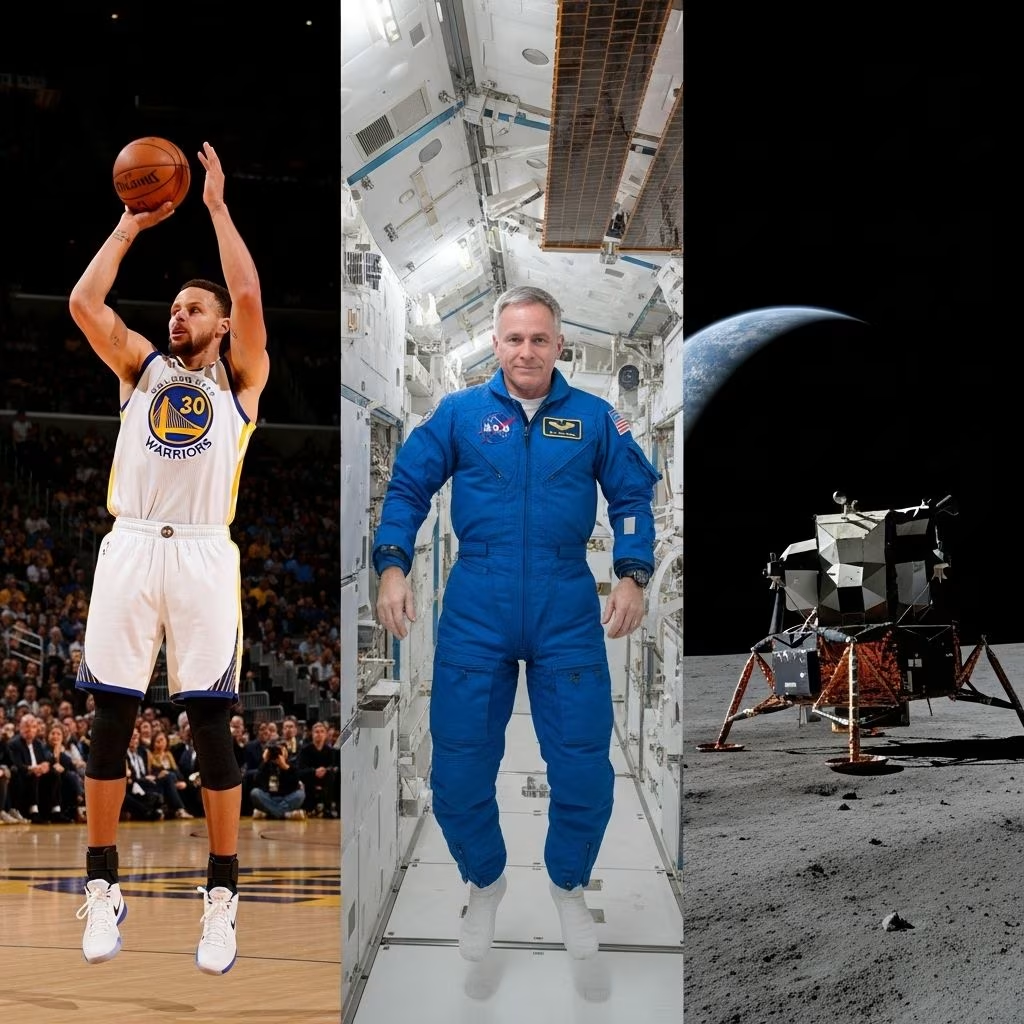
When NBA superstar Steph Curry made an offhand remark doubting the authenticity of the Apollo moon landings on a popular podcast, few could have predicted the far-reaching repercussions. What began as a joke quickly mushroomed into a viral debate, ultimately prompting a high-profile conversation between Curry and former NASA astronaut Scott Kelly. This incident not only tested Curry’s public influence but also sparked renewed dialogue about history, science, national pride, and how celebrity statements can shape public perception.
The Podcast Remark that Launched a Thousand Tweets
It all started innocuously enough. During a December 2018 episode of “Winging It,” The Ringer’s podcast featuring NBA players, Curry playfully asked his fellow guests, “We ever been to the moon?” The reply was a chorus of “No” from Vince Carter, Kent Bazemore, and Andre Iguodala. Curry quipped, “They’re gonna come get us — I don’t think so, either.”
Though it seemed tongue-in-cheek, the clip quickly went viral. Social media platforms exploded with reactions, as fans, scientists, and members of the public debated whether Curry was being serious or sarcastic. The comment spawned a wave of responses from those urging Curry to clarify, holding him accountable for the possible spread of misinformation. As one of the NBA’s brightest stars, Curry’s comments carried significant weight in shaping public opinion, especially for younger fans.
Public Reaction and NASA’s Response
Curry’s unexpected foray into lunar skepticism drew the attention of experts and officials, most notably at NASA. Eager to turn the controversy into a productive educational opportunity, NASA swiftly extended Curry an invitation:
- Visit the Johnson Space Center in Houston
- Tour the Lunar Lab and examine Apollo mission artifacts, including lunar rocks
- Meet with scientists, engineers, and astronauts to discuss the evidence supporting the Apollo landings
NASA spokesman Allard Beutel’s official communication encapsulated the agency’s approach: “There’s lots of evidence NASA landed 12 American astronauts on the moon from 1969-1972. We’d love for Mr. Curry to tour the lunar lab at our Johnson Space Center in Houston, perhaps the next time the Warriors are in town.”
Other luminaries joined the conversation. Former President Obama reportedly contacted Curry, as did several retired astronauts, highlighting the significant impact one celebrity’s words can have on civic discourse and historical memory.
Scott Kelly Steps In: Reaching Out for a Dialogue
Among those moved to respond was Scott Kelly, a highly decorated astronaut with 520 days in space over four missions. Reaching out via Twitter, Kelly wrote: “Steph, so much respect for you, but re the moon-landing thing, let’s talk. DM me.”
Kelly’s invitation was not just for a private chat. Understanding the value of transparency and public engagement, Kelly and Curry agreed to have their conversation live on Instagram. On December 15, the two shared a 16-minute talk with thousands of viewers, discussing topics such as:
- The Apollo program’s significance to science and humanity
- NASA’s achievements and future missions
- The dangers of spreading misinformation, even as a joke
- The responsibility of public figures to inspire scientific curiosity among youth
The Instagram Live Conversation: Clarifying and Educating
Curry began the livestream with a direct apology to Kelly, acknowledging how even a joking remark could be misinterpreted and contribute to broader misconceptions. Curry stated, “It was important for me to understand … the magnitude of things that I say and my comments, how much weight they carry, joking or not.”
Curry continued, reflecting on the week’s events: “For me to reflect on the last week, it’s been one of those situations where I had President Obama contact me, you [Kelly] and one other astronaut. [You all] really wanted to educate me on how significant the moon landing was — obviously it was real — but in terms of the sense of national pride, and how that exploration for mankind has pushed boundaries and limits on what is possible.”
Kelly responded thoughtfully. While expressing appreciation for Curry’s engagement, he warned of the dangers of seemingly harmless conspiracy theories, noting that moon-landing denials can act as a “gateway” to other, more damaging beliefs. Kelly emphasized the need for critical thinking and reliance on verifiable evidence, urging public figures to help foster a culture of scientific curiosity and trust in expertise.
The Wider Cultural Impact: National Pride and the Power of Exploration
The moon landing has long stood as a symbol of human ingenuity, perseverance, and national achievement. In their conversation, Kelly emphasized the extraordinary technological and human effort behind Apollo:
- Apollo missions landed 12 astronauts on the moon between 1969 and 1972
- The program required innovation in engineering, materials science, communications, and navigation
- Motivated countless young people to pursue careers in science, technology, engineering, and mathematics (STEM)
Both Curry and Kelly highlighted how, beyond being a technical milestone, the Apollo landings inspired global wonder and pride, pushing boundaries for what was considered possible. Curry ultimately acknowledged the authenticity and legacy of the landings, underscoring the importance of exploration for future generations.
Science Communication and the Responsibilities of Public Figures
The incident underscored a key modern challenge: the influence of celebrities on public understanding of science and history. Public figures, whether they intend to or not, can dramatically influence perceptions and beliefs. When someone as widely admired as Curry raises doubts—jokingly or not—about a monumental event like the moon landing, the ripple effect can be significant, especially among impressionable audiences.
Key lessons from the episode include:
- Public figures have an amplified role in shaping discourse and should weigh the impact of their statements
- Even casual or humorous remarks can be misconstrued and fuel misinformation online
- Prominent figures should leverage their platforms to champion scientific literacy and critical thinking
NASA as an Educator
NASA’s swift and gracious response—inviting Curry to visit its facilities—demonstrates the agency’s commitment to outreach and public engagement. By embracing the opportunity to educate rather than chastise, NASA set a positive example for constructive dialogue in the face of controversy. Their strategy:
- Provided a wealth of tangible evidence: lunar rocks, mission transcripts, hardware, and photographic records
- Offered direct engagement with scientists and astronauts
- Encouraged curiosity and firsthand learning experiences
The Enduring Appeal (and Danger) of Conspiracy Theories
Kelly’s remarks during his Instagram Live conversation with Curry highlighted another critical issue: the persistence and proliferation of conspiracy theories in the digital era. While moon landing denial may seem relatively harmless, Kelly noted that such beliefs can prime individuals for more dangerous forms of misinformation, affecting everything from public health to democratic institutions.
Why do these theories persist?
- Complex historical events are often oversimplified or misrepresented online
- Confusion, humor, and cynicism blur lines between skepticism and denial
- The internet helps amplify fringe beliefs, lending them unwarranted visibility
Educators and scientists warn that viral misinformation can undermine trust in established facts, complicating efforts to teach critical thinking and civic responsibility.
Celebrity Influence and Social Media Amplification
The Curry incident stands as a powerful case study in how public statements by celebrities can be:
- Swiftly magnified by social media
- Transformed from private jokes into viral talking points
- Addressed—productively or otherwise—by institutions, fans, and the media
NBA rivals even joined in, with teams like the Sacramento Kings running playful videos “trolling” Curry for his apparent skepticism, showcasing how fast pop culture responds to and reframes such controversies.
The Long-Term Impact: Inspiring Curiosity and Reflection
Despite the initial backlash, Curry’s handling of the situation—embracing dialogue, apologizing sincerely, and promoting scientific engagement—has been seen by many as a model for turning missteps into teachable moments.
The episode produced several positive outcomes:
- Renewed focus on the Apollo program’s historical importance
- Greater public interest in NASA’s ongoing work and upcoming Artemis missions
- Opportunities for STEM educators to capitalize on the event and spark curiosity among students
- Strengthened ties between athletics, science, and education advocacy
From Controversy to Collaboration: Shaping the Next Generation
Ultimately, the Curry-Kelly dialogue served as a reminder that even public gaffes can be harnessed for positive change. As Curry observed, “Inspiring kids to care about science, technology, engineering and math” is a vital task, one to which all influential figures should aspire.
NASA’s patient invitation, Scott Kelly’s generous outreach, and Curry’s willingness to listen and learn together offer a pathway for responsible leadership in the public eye.
Table: Timeline of Events
| Date | Event |
|---|---|
| Early December 2018 | Steph Curry raises doubt about moon landing on podcast |
| December 10, 2018 | NASA publicly invites Curry to tour lunar lab and see moon evidence |
| December 10, 2018 | Scott Kelly reaches out to Curry via Twitter |
| December 15, 2018 | Curry and Kelly host Instagram Live conversation |
| Following days | Public dialogue continues, with media, fans, and NBA figures participating |
Key Evidence of Moon Landings (According to NASA)
- Moon rocks returned by Apollo astronauts: distinct geochemical signatures, not found on Earth
- Retroreflectors placed on the lunar surface still bounce laser beams back to Earth today
- Thousands of hours of film, photos, and documentation produced during missions
- Independent verification by rival nations’ tracking stations
- Ongoing reanalysis of Apollo materials by modern laboratories
Frequently Asked Questions (FAQ)
Q: Did Steph Curry really believe the moon landings were faked?
A: Curry later clarified that his skeptical remarks were meant as a joke and not a serious statement of belief. He expressed surprise at the viral reaction and used the opportunity to educate himself and others about the Apollo program.
Q: Why was there such a strong response to Curry’s comment?
A: As a prominent public figure, Curry’s words reach millions. Even jokes about historic events like the moon landing can influence public opinion, especially among young fans, prompting concern from scientists and educators about reinforcing conspiracy theories.
Q: What actions did NASA and astronaut Scott Kelly take?
A: NASA invited Curry to tour their lunar lab and see first-hand the evidence supporting the moon landings. Scott Kelly reached out for a public conversation to explain the importance of the Apollo program and scientific literacy, which they later held live on Instagram.
Q: What are some ways to distinguish scientific fact from conspiracy theory?
A: Experts recommend verifying sources, seeking consensus among subject-matter experts, and consulting credible institutions. Scientific conclusions depend on repeatable evidence, peer review, and transparency—principles absent from most conspiracy claims.
Q: What lasting effects did this episode have?
References
- https://www.space.com/42763-steph-curry-moon-landing-scott-kelly.html
- https://www.nbcsports.com/nba/news/stephen-curry-talks-with-astronaut-scott-kelly-on-instagram-live-about-moon-landing-comments
- https://www.space.com/42699-steph-curry-apollo-moon-landings.html
- https://www.cbssports.com/nba/news/warriors-steph-curry-talked-to-a-retired-astronaut-about-his-moon-landing-comments/
- https://www.si.com/extra-mustard/2018/12/17/monday-hot-clicks-stephen-curry-scott-kelly-astronaut-interview-video
- https://www.foxnews.com/sports/steph-curry-us-moon-landing-questions-sparks-flood-of-hilarious-twitter-question
- https://www.cbsnews.com/news/stephen-curry-moon-landing-nasa-golden-state-warriors-winging-it-podcast-vince-carter-kent-bazemore-annie-finberg-johnson-space-center-houston/
- https://www.youtube.com/watch?v=fmv6MB_t5Hc
- https://www.youtube.com/watch?v=U1zBvbZCDPY
- https://abc7news.com/golden-state-warriors-stephen-curry-steph-moon-landing/4881308/
- https://nesn.com/2018/12/steph-curry-interviews-astronaut-after-claiming-moon-landing-was-fake/
- https://bleacherreport.com/articles/2810242-nasa-invites-stephen-curry-to-tour-lunar-lab-after-moon-landing-comments
- https://bleacherreport.com/articles/2810517-stephen-curry-comments-on-moon-landing-were-one-thousand-percent-a-joke
- https://www.espn.co.uk/nba/story/_/id/25518468/stephen-curry-golden-state-warriors-says-joking-moon-landing-accept-nasa-invitation
- https://www.independent.co.uk/news/world/americas/stephen-curry-moon-landing-nasa-nba-rocks-space-winging-it-podcast-conspiracy-theory-a8677486.html
- https://www.thedailybeast.com/stephen-curry-apologizes-to-astronaut-scott-kelly-after-questioning-moon-landing-conspiracy
- https://www.latimes.com/sports/la-sp-curry-moon-landing-20181213-story.html
- https://www.skysports.com/nba/news/36226/11578453/stephen-curry-suggests-willingness-to-meet-nasa-over-moon-landing-doubts
- https://www.essentiallysports.com/nba-basketball-news-stephen-curry-once-made-bizarre-statement-on-moon-landing-which-prompted-a-special-invite-from-nasa-to-prove-him-wrong/