


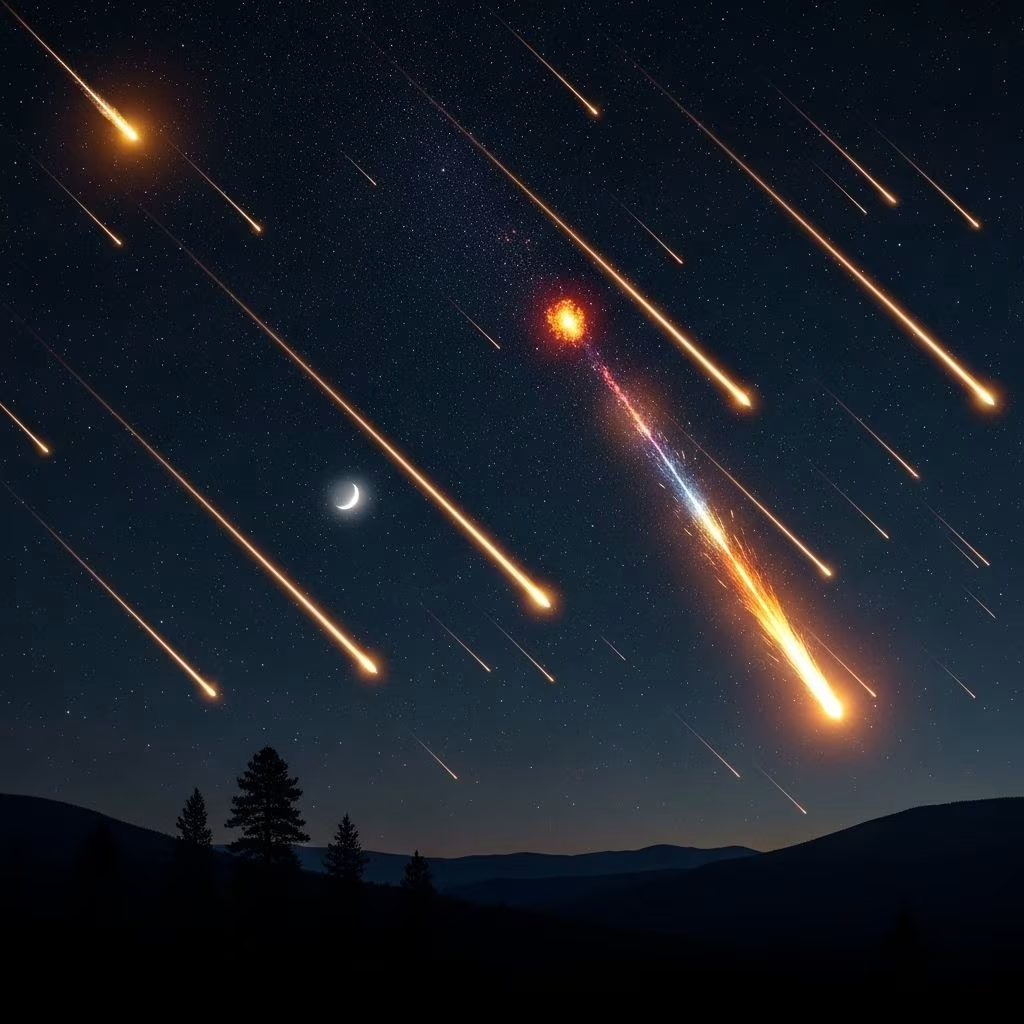
Taurid Meteor Shower 2025: A Guide to the Year’s Spectacular Celestial Display
The Taurid meteor shower stands out among annual meteor events for its dazzling fireballs and extended visibility. Occurring each autumn, the Taurids treat observers to slow, colorful meteors and, occasionally, the spectacle of exceptionally bright fireballs streaking across the night sky.
Overview: The Taurid Meteor Shower
The Taurids are a diffuse, long-lasting meteor shower visible from late October through almost the end of November. Unlike other prominent showers such as the Perseids or Geminids, which often deliver dozens to over a hundred meteors per hour, the Taurids typically produce a modest rate of 3–15 meteors per hour, sometimes punctuated by impressive fireballs.
- Duration: Approximately six weeks, late October through late November.
- Visibility: Both evening and morning hours, due to the high radiant.
- Location: The meteors appear to originate from the constellation Taurus, near the Pleiades.
The Taurid meteor shower comprises two streams—Northern and Southern—each with distinct peak periods yet both traced to the same ancient cometary origin.
What Causes the Taurid Meteor Shower?
The Taurids are the visible result of Earth passing through a vast stream of cosmic debris, mainly comprised of dust and ice left behind by comet 2P/Encke. This parent body, one of the solar system’s oldest known comets, has an exceptionally short orbital period of just 3.3 years, meaning its path frequently crosses Earth’s orbit.
- Origin: Dust and ice from comet Encke over thousands of years.
- Distribution: The debris is spread out, forming a meteoroid complex so wide that Earth takes weeks to traverse it.
There is some astronomical debate as to whether Encke is the original parent, or a fragment of a much larger, ancient comet that unraveled, creating a complex trail—including Encke and other asteroid-like bodies.
Dual Streams: Southern and Northern Taurids
The Taurids are special among meteor showers for their two distinct branches:
- Southern Taurids: Peak around November 5 each year.
- Northern Taurids: Peak around November 12.
Each stream features subtle differences in origin and progression:
- Elderly Meteor Stream: Gravitational effects from the planets and sun gradually fanned out the Taurid debris across separate orbital paths.
- Lengthy Show: Both streams overlap, keeping meteor activity steady for around a month.
2025 Calendar: Key Dates and Peak Viewing Times
In 2025, the Taurid meteor shower will be observable throughout November, with peak activity on the following nights:
| Stream | Peak Date (2025) | Typical Hourly Rate | Best Viewing Time |
|---|---|---|---|
| Southern Taurids | November 5 | Up to 10 per hour (fireballs possible) | Evenings and pre-dawn |
| Northern Taurids | November 12 | Up to 15 per hour at darkest skies | Midnight to pre-dawn |
- Full Active Window: October 20 – November 27
- Moon phases: Light from the moon can obscure fainter meteors, especially in early November.
Unlike showers with brief, sharp peaks, Taurid meteors can be seen for several hours nightly over nearly a month, offering ample opportunity for skywatchers.
Fireballs: The Signature of the Taurids
The Taurid meteor shower is famed for producing fireballs—exceptionally bright meteors that outshine even the brightest stars. These fireballs often glow yellow, orange, green, or blue, captivating onlookers.
- Large Fragments: The Taurid debris stream contains larger particles, increasing the odds of fireballs.
- Colorful displays: While yellow dominates, varying compositions produce striking orange, green, red, and blue meteors.
- Slow Speed: Due to their low atmospheric entry speed (about 17 miles / 27 km per second), fireballs appear to drift slowly across the sky, making them easier to spot.
These dramatic meteors have prompted speculation about past major impacts, but recent research reduces fears of doomsday-sized Taurid asteroids.
How to See the Taurid Meteor Shower
Enjoying the Taurids requires little equipment. Follow these tips for the best experience:
- Find a dark, open site: Urban light pollution reduces visibility. Seek a spot away from city lights.
- Check the moon phase: Moonlight can wash out fainter meteors; time your viewing for moonless hours whenever possible.
- Look toward Taurus: The radiant is near the constellation Taurus, close to the famous Pleiades cluster, usually high overhead by 1:30 a.m.; but Taurid meteors may appear anywhere in the sky.
- Optimal hours: Late evenings through early morning hours generally offer the most meteors.
- Prepare for comfort: Bring layers, reclining chairs, and patience—meteor watching favors those who take time.
Scientific Insights: Debris, Color, and Speed
The science behind the Taurids reveals important clues about the solar system’s evolution and cosmic dynamics:
- Meteoroid Composition: Ice, dust, and rocky fragments shed over thousands of years from comet Encke.
- Larger than average: Taurid debris includes noticeably bigger fragments than most other showers, resulting in more fireballs.
- Colorful Displays: Elements like sodium, magnesium, and iron burn in the atmosphere, producing yellow, orange, green, blue, and red hues.
- Slow velocity: Taurids travel at 17 mi (27 km) per second—relatively slow for meteors.
The Taurid stream’s spread and slow evolution over time are shaped by gravitational interactions with planets, especially Jupiter. This process splits the shower into “elderly” streams—the present-day Southern and Northern Taurids.
Asteroid Threats & Planetary Defense
Because the Taurid complex includes larger fragments and asteroidal bodies, astronomers once worried it posed an outsized impact risk. Research with advanced telescopes (like the Zwicky Transient Facility) suggests the probability of encountering a large dangerous asteroid in the Taurid swarm is now considered low.
- No doomsday asteroids: Recent studies downplay catastrophic impact fears from Taurid stream objects.
- Planetary defense: Continuous monitoring ensures detection and mitigation of any threats.
- Historic impacts: Some historic events, like Tunguska (1908), are speculated to be linked to Taurid fragments, but consensus remains elusive.
Frequently Asked Questions (FAQs)
Q: What makes the Taurid meteor shower unique?
A: The Taurids are known for their slow, bright fireballs, long duration, and colorful meteors arising from larger debris than most showers.
Q: When is the best time to watch Taurid meteors?
A: The best viewing is on clear, moonless nights between October 20 and November 27, especially near the Southern peak (Nov. 5) and Northern peak (Nov. 12), from midnight to pre-dawn.
Q: Where should I look in the sky?
A: Focus your gaze near the constellation Taurus; the radiant lies close to the Pleiades cluster, but meteors can appear anywhere overhead.
Q: How many meteors can I expect to see?
A: Under perfect conditions, rates approach 10–15 per hour at peak. In most areas, 3–5 per hour is a realistic expectation. Fireballs are less frequent but highly visible.
Q: Are Taurid meteors dangerous?
A: The meteors themselves pose no danger. Earlier concerns about large asteroids in the Taurid stream have been reduced thanks to updated survey data.
Related Resources & Further Reading
- How comets cause meteor showers
- Taurid meteor shower: When, where & how to see it
- Planetary defense and asteroid tracking
Summary: Why the Taurids Matter
The Taurid meteor shower delivers an extended, visually compelling celestial show each year. Its slow, bright, radiant meteors—often punctuated by dazzling fireballs—offer a reminder of the ongoing interplay between Earth and the debris left behind by ancient comets. For those seeking a thoughtful, memorable skywatching experience, the Taurids provide an annual opportunity rich in scientific intrigue and natural beauty.
References
- https://www.space.com/taurid-meteoroid-stream-no-doomsday-asteroids
- https://www.space.com/taurid-meteor-shower-2020-peaks-soon.html
- https://www.space.com/taurid-meteor-shower-november-2023-guide
- https://www.space.com/nothern-taurid-meteor-shower-peaks-saturday-nov-12-2022
- https://www.space.com/taurid-meteor-shower
- https://www.space.com/taurid-meteor-shower-november-2022
- https://www.space.com/stargazing/dont-miss-the-taurid-meteor-shower-peak-with-colorful-fireballs-and-shooting-stars-this-week
- https://www.space.com/beta-taurid-meteor-shower-tunguska-explosion-planetary-defense.html
- https://www.space.com/taurid-meteor-shower-2021-peaking-now
- https://www.space.com/jupiter-opposition-taurid-meteor-shower-november-2023


