Neptune’s Temperature Mysteries: Cooling in the Heart of Summer
Neptune, the eighth and outermost planet in our solar system, has long fascinated astronomers with its deep blue hue, dynamic weather patterns, and enigmatic temperatures. Recent research has added a startling twist: instead of warming during its southern summer, Neptune is inexplicably cooling . This article delves into Neptune’s temperature extremes, the latest scientific findings, and why this distant ice giant remains one of astronomy’s greatest puzzles.
Quick Facts about Neptune
- Distance from Sun: 30 times farther away than Earth
- Year Length: 165 Earth years
- Average Atmospheric Temperature at Cloud Tops: ~55 K (−218 °C; −361 °F)
- Center (Core) Temperature: ~5,400 K (5,100 °C; 9,300 °F)
- Internal Energy Output: Emits 2.6 times as much energy as it receives from the Sun
- Notable Feature: Fastest sustained winds in the solar system (up to 2,100 km/h / 1,300 mph)
Unusual Seasonal Cooling: New Observations
Over the past two decades, astronomers have collected data on Neptune’s temperature during its southern summer—expecting it to get warmer. Instead, Neptune’s average global temperature has dropped by 14 degrees Fahrenheit (8 degrees Celsius) . This finding comes from infrared observations between 2003 and 2018 using leading telescopes, including:
- ESO’s Very Large Telescope (Chile)
- Keck and Subaru Telescopes (Hawaii)
- NASA’s Spitzer Space Telescope
Lead researcher Michael Roman described the change as “unexpected” since planetary summer should correspond to gradual warming . Data indicate that the observed cooling isn’t uniform, suggesting complex atmospheric dynamics at play.
Neptune’s Southern Polar Warming
Amid overall cooling, scientists observed a rapid warming in Neptune’s stratosphere above the south pole. Between 2018 and 2020, this region experienced a speedy warming of about 20°F (11°C) . This kind of polar warming is unprecedented for Neptune. The warming raises questions about the drivers of atmospheric temperature shifts.
Seasonal Changes and Solar Cycles
Neptune’s seasons last more than 40 Earth-years each. The planet’s current southern summer began in the millennium’s earliest years, yet observations cover less than half a single Neptune season . This limitation makes interpreting temperature trends difficult—no one anticipated such rapid, dramatic changes over such a short window.
Possible explanations for Neptune’s temperature variability include:
- Seasonal Atmospheric Chemistry: Changes in composition could alter the atmosphere’s ability to cool .
- Random Weather Variability: Neptune is known for turbulent weather patterns .
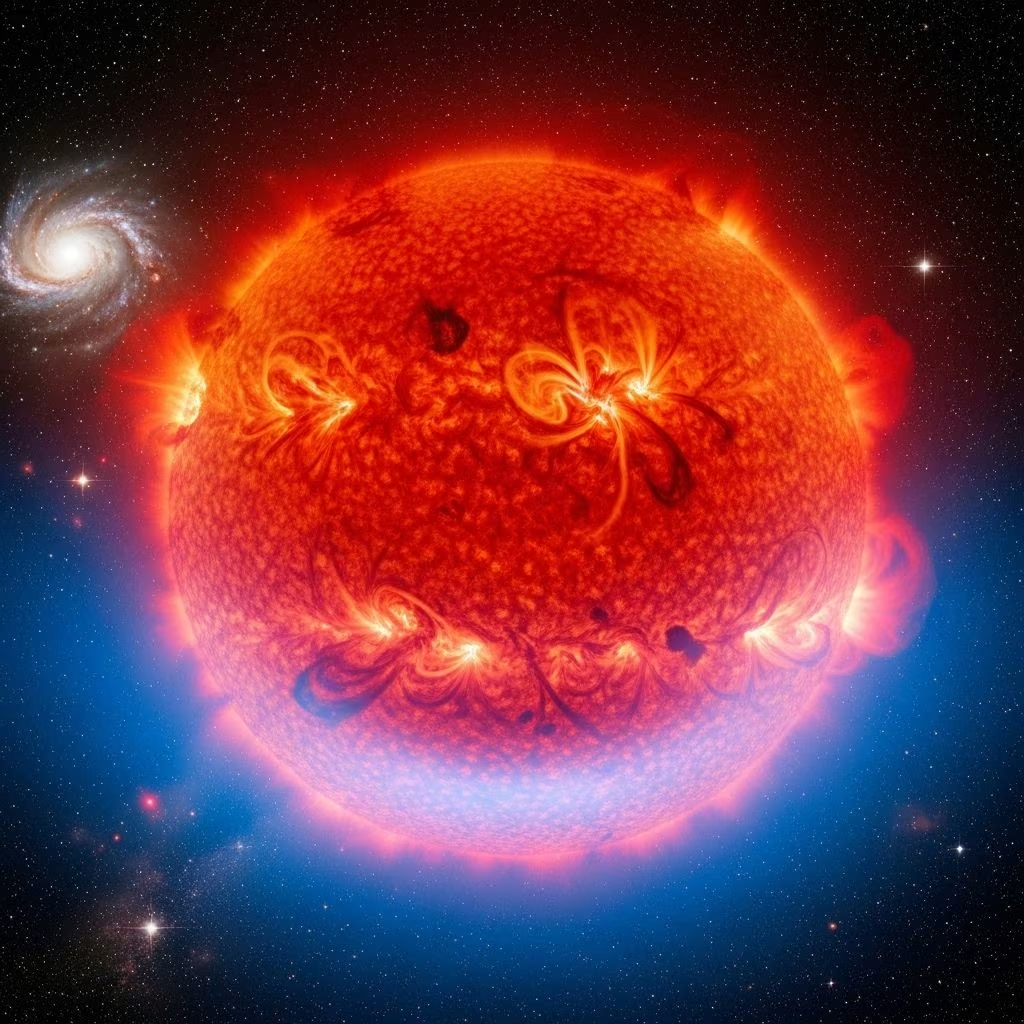
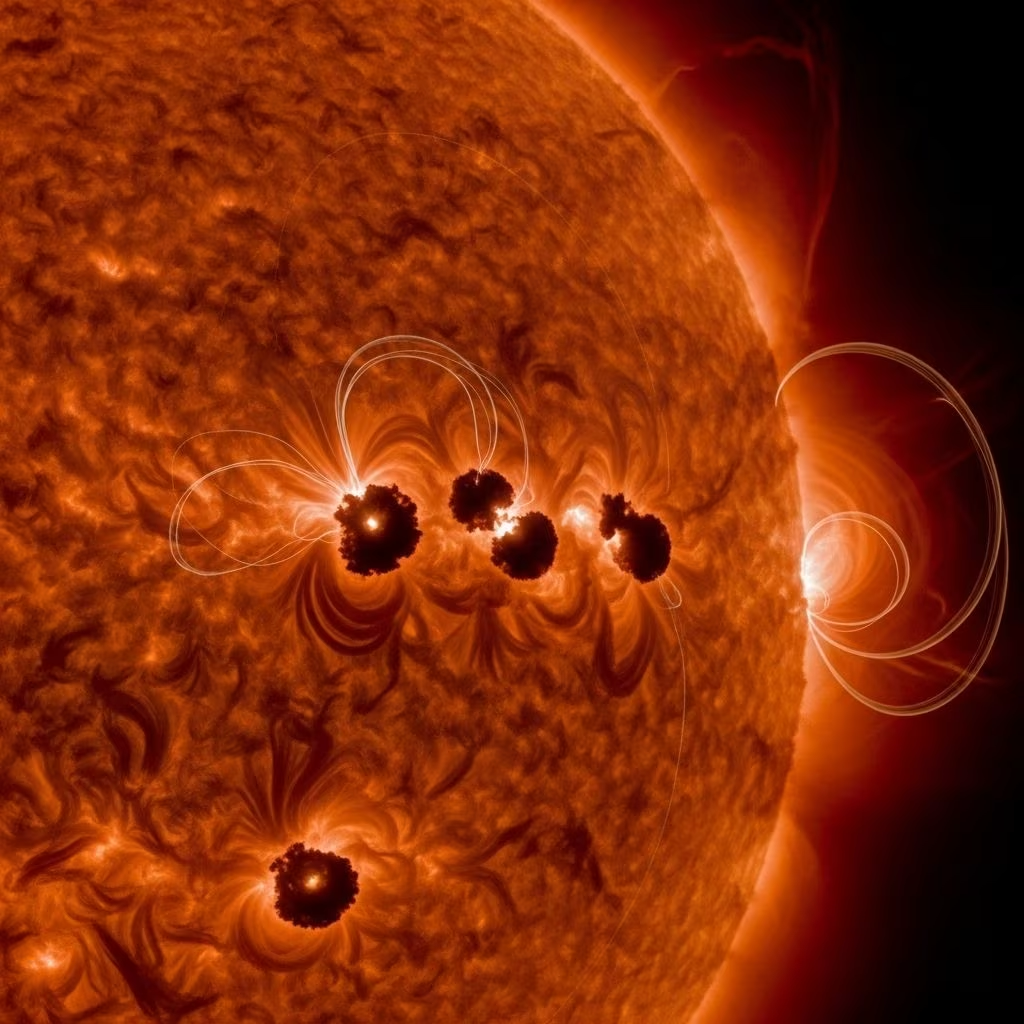
- Solar Activity Cycle: The 11-year sunspot cycle might influence temperature by changing the amount of solar radiation received .
As Glenn Orton, senior scientist, notes: “Our data cover less than half a Neptune season. So no one was expecting to see large and rapid changes.”
Structure and Composition: Why Is Neptune So Cold?
Atmospheric Ingredients
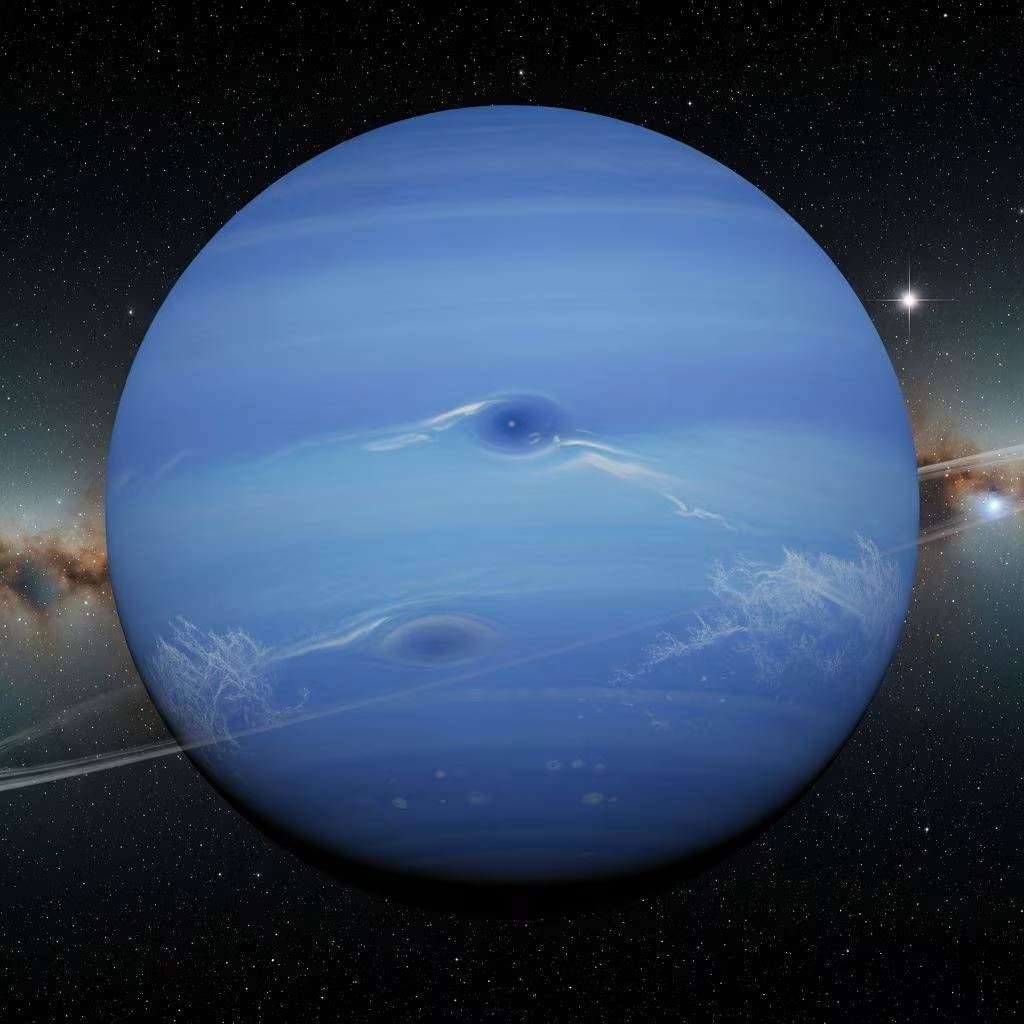
Neptune’s atmosphere is primarily hydrogen and helium, with significant amounts of methane. Methane absorbs red light, contributing to Neptune’s vivid blue color. Scientists believe an unidentified gas may further brighten Neptune’s blue compared to Uranus .
Temperature Profile by Altitude and Depth
| Region | Temperature | Description |
|---|---|---|
| Cloud Tops | ~55 K (−218 °C/-361 °F) | One of the coldest places in solar system |
| Minimum (Stratosphere, 0.1 bar) | ~50 K (−223 °C/-370 °F) | Occurs at very high altitude |
| 1-bar pressure level | ~74 K (−199 °C/-326 °F) | Near main atmospheric reference level |
| Deep Interior | Up to ~7,000 K (6,700 °C/12,000 °F) | Extreme pressure/heat |
| Core | ~5,400 K (5,100 °C/9,300 °F) | Planetary center/core |
At the one-bar level, Neptune’s mean temperature is about 74 K (−326 °F, −199 °C), with slight variations by latitude and altitude. Interestingly, Uranus and Neptune receive similar amounts of sunlight but Neptune’s internal heat is much higher .
Internal Heat: The Hidden Engine
Unlike Uranus, Neptune emits over twice the energy it absorbs from the Sun. The source of Neptune’s internal heating remains a mystery. Some possibilities include:
- Residual heat from the planet’s formation
- Unknown processes in its deep interior generating energy
This internal energy, combined with the heat received from the Sun, powers Neptune’s fierce winds and active weather, despite the deep cold in its outer layers .
Why Is Neptune’s Heat so Puzzling?
Neptune’s internal heat output is 2.6 times the solar input, compared to Uranus’s 1.1 times. Yet Uranus and Neptune are similar in size and composition. The discrepancy between their heat emissions is a longstanding unsolved problem in planetary science .
Extreme Weather: The Most Active Atmosphere
Neptune’s position in the solar system subjects it to only faint sunlight, making it difficult to observe even with large Earth-based telescopes. Improved imaging with the Hubble Space Telescope and other instruments is revealing more about Neptune’s dynamic weather. Key features include:
- Strong sustained winds: Reaching up to 2,100 km/h (1,300 mph)—faster than any other planet .
- Great Dark Spots: Immense storms, similar to Jupiter’s Great Red Spot. Active and changing — one notable spot was seen by Voyager 2 in 1989, and new spots have been studied since .
- Cloud Activity: Continuous formation and dissipation of clouds, including high-altitude methane ice clouds .
Neptune’s weather is driven both by the Sun and — more importantly — by its mysterious internal heat source.
Comparing Neptune and Uranus: A Tale of Two Ice Giants
| Property | Neptune | Uranus |
|---|---|---|
| Distance from Sun | 30 AU | 19 AU |
| Internal Heat Output | 2.6 × Solar Input | 1.1 × Solar Input |
| Effective Temperature | ~59.3 K | Similar (as both planets absorb/reflect similar sunlight) |
| Atmospheric Activity | Highly dynamic | Featureless for long periods |
| Winds | Up to 2,100 km/h | Less extreme |
Rings, Moons, and Observational Challenges
Neptune’s faint, fragmented ring system — discovered in 1984 and confirmed in 1989 by Voyager 2 — distinguishes it from other gas giants . The planet also hosts several moons, with Triton being the largest and most scientifically interesting. Due to its great distance from Earth, Neptune’s size and dimness present challenges to astronomers, requiring the use of large telescopes and advanced optics .
Voyager 2: Unveiling Neptune
The only spacecraft to visit Neptune so far, Voyager 2 flew by the planet on August 25, 1989 . Its observations revealed dark spots, powerful storms, and provided temperature readings, greatly expanding our knowledge of this distant world.
Current Mysteries and Scientific Frontiers
Despite new data, many questions persist about Neptune’s temperature, heat flow, seasonal cycles, and weather. These mysteries continue to drive planetary science:
- What mechanisms underpin the unexplained cooling during Neptune’s summer?
- How does internal energy generation work in Neptune’s depths?
- How do atmospheric chemistry and solar activity interact on such distant planets?
Scientific studies, using advanced telescopes and space missions, remain vital to solving Neptune’s many riddles.
Frequently Asked Questions (FAQs)
Q: What is Neptune’s average atmospheric temperature?
A: At the cloud tops, Neptune’s atmosphere averages about 55 K (−218 °C; −361 °F) .
Q: Why is Neptune cooling during its southern summer?
A: Scientists don’t know the exact reason. Possible factors include changes in atmospheric chemistry, random weather patterns, or influences from the 11-year solar activity cycle .
Q: How does Neptune’s internal heat compare to other planets?
A: Neptune emits 2.6 times more energy than it receives from the Sun, unlike Uranus which emits only 1.1 times more. The cause of Neptune’s greater internal heat is still a mystery .
Q: Why does Neptune appear blue?
A: Its blue color comes from methane in the atmosphere, which absorbs red light and reflects blue. An unknown atmospheric gas may enhance its brightness .
Q: Has Neptune been visited by spacecraft?
A: Yes, Voyager 2 flew by Neptune in 1989, the only spacecraft to have done so .
Summary Table: Neptune Temperature and Facts
| Measurement | Value |
|---|---|
| Minimum Atmospheric Temperature (0.1 bar) | ~50 K (−223 °C/-370 °F) |
| Mean Temperature (Cloud tops) | ~55 K (−218 °C/-361 °F) |
| Atmospheric Temperature (1-bar level) | ~74 K (−199 °C/-326 °F) |
| Center/Core Temperature | ~5,400 K (5,100 °C/9,300 °F) |
| Internal Energy Output | 2.6 × Solar Input |
| Wind Speed | Up to 2,100 km/h (1,300 mph) |
Conclusion
Neptune continues to challenge and intrigue planetary scientists. Its unexplained seasonal cooling, powerful internal heat, strikingly active atmosphere, and the lingering mysteries below its icy clouds make Neptune a laboratory for understanding planetary climate, dynamics, and evolution. As telescopic technologies improve and missions venture further, our grasp of this icy blue world at the edge of the solar system will only deepen.
References
- https://www.space.com/neptune-cooling-down-temperature-mystery
- https://en.wikipedia.org/wiki/Neptune
- https://www.britannica.com/place/Neptune-planet
- https://science.nasa.gov/neptune/neptune-facts/
- https://space-facts.com/neptune/
- https://science.nasa.gov/resource/solar-system-temperatures/
- https://www.youtube.com/watch?v=DhLm_4pBrso
- https://study.com/learn/lesson/video/neptune-moons-composition.html