Does Blow-Drying Kill Lice?
Head lice infestations are a common concern, especially among children. For families seeking non-chemical alternatives to treat lice, one persistent question arises: Does blow-drying actually kill lice and their eggs? This article examines the scientific evidence, real-world techniques, and comparisons with other lice treatment options to provide a comprehensive understanding of blow-drying’s role in lice management.
Understanding Lice Infestation
Head lice are tiny, wingless insects that feed on human blood and reside close to the scalp. Their eggs, called nits, adhere tightly to hair shafts, making removal challenging. Lice spread primarily through direct head-to-head contact and are not related to personal hygiene.
- Lice lifecycle: Adult female lice lay eggs (nits) near the scalp. These hatch in about 7-10 days, with nymphs becoming reproductive adults in another 7-10 days.
- Symptoms: Itching, visible nits/lice, and, sometimes, irritation or secondary infection from scratching.
How Blow-Drying Works Against Lice
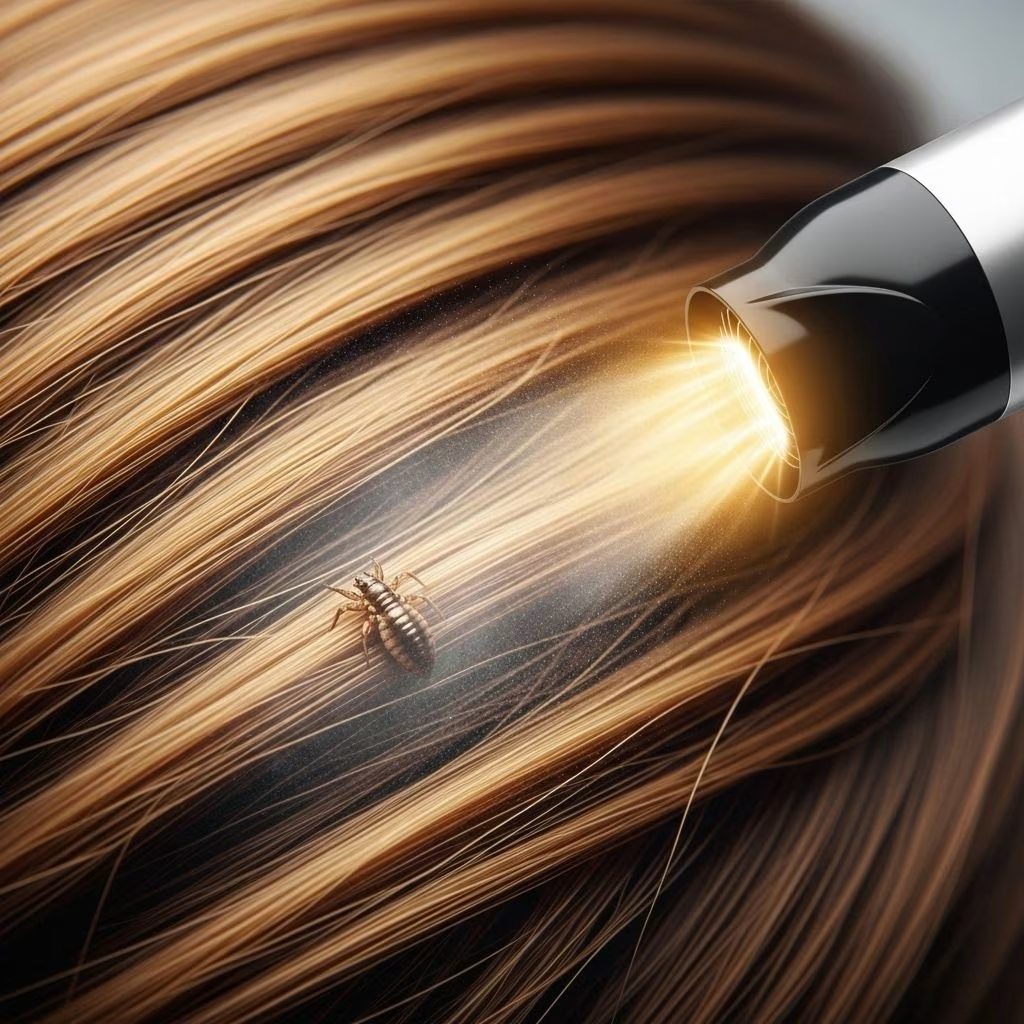
Blow-drying is considered a physical method for combating lice by delivering heated air to the scalp and hair shafts. The main mechanism is desiccation — the heat dries out and dehydrates both lice and their eggs.
- Hot, dry air dehydrates lice and eggs: Lice and their eggs cannot withstand extreme dryness or heat, causing their bodies and internal moisture to rapidly evaporate.
- Eggs (nits) are more vulnerable: Evidence suggests eggs are more susceptible to hot air than live lice due to their inability to move or escape during treatment.
Types of Blow Dryers & Hot Air Devices Used in Studies
- Bonnet-style hair dryers
- Handheld blow dryers (diffuse and direct heat)
- Wall-mounted dryers (such as those in public restrooms)
- Professional devices (e.g., the LouseBuster)
Research Evidence: How Effective Is Blow-Drying?
Studies have evaluated various hot air delivery methods for their effectiveness against lice and nits. The most referenced clinical research involved controlled treatments on children with different devices and heat settings.
| Device/Method | % of Eggs Killed | % of Lice Killed | Comments |
|---|---|---|---|
| Bonnet-style dryer | 89% | 10% | Least effective for lice removal; high for eggs |
| Handheld blow dryer (diffuse heat) | 45% | 9% (not significant) | Better than bonnet for eggs, low lice mortality |
| Handheld blow dryer (directed heat) | 98% | 44% | Very effective for eggs, moderate for lice |
| Wall-mounted dryer | 47.5% | 47.2% | Moderate effect for both |
| LouseBuster | ~46% | 67.8% | Professional device; high lice kill rate |
| LouseBuster with comb handpiece | ~45% | ~80% | Best overall efficacy in trials |
In follow-up, 10 out of 11 children treated with the LouseBuster with a comb handpiece were completely louse-free after one week. However, no heat treatment achieved 100% eradication in a single session; eggs were generally more susceptible than live lice.
What Does This Mean for Household Blow Dryers?
Most families do not have access to professional devices like the LouseBuster. Household blow dryers can provide some effectiveness — particularly when used with direct, sustained heat close to the scalp — but results are usually lower than specialized tools.
- Household dryers kill a significant portion of eggs, but often leave some live lice, necessitating repeated applications.
- Success rates increase with daily use over one week to target lice emerging from unhatched eggs.
- Combination with nit combing (manual removal) greatly improves total eradication rates.
How to Use a Blow Dryer for Lice Removal: Step-by-Step Guide
While blow-drying alone is insufficient, incorporating it into a thorough lice removal routine can help. Here’s how to use a blow dryer effectively and safely against lice:
- Wash and detangle hair: Clean, tangle-free hair allows better airflow and heat penetration.
- Set blow dryer to maximum tolerable heat and airflow: Maintain a safe distance from the scalp to avoid burns. Use directed heat (nozzle attachment) for best results.
- Dry hair in small sections: Separate hair to expose the roots and scalp, where lice and nits reside.
- Focus on roots and scalp: Slowly pass the dryer over each section, paying extra attention behind ears and at the nape.
- Repeat daily: Continue daily blow-drying for 7–10 days to account for newly hatched lice.
- Follow each drying session with fine-tooth nit combing: Comb through hair in small sections, wiping the comb after each pass to remove dead lice and loosened nits.
Tips for Effective and Safe Use
- Never use a blow dryer on wet hair with chemical lice treatments that contain flammable ingredients (such as alcohol or isopropyl myristate).
- Monitor heat exposure to prevent scalp burns, dryness, or hair damage.
- Children and those with sensitive skin require extra caution during heat application.
Advantages and Limitations of Blow-Drying for Lice Treatment
| Advantages | Limitations |
|---|---|
|
|
Comparison: Blow-Drying vs. Other Lice Treatments
Most medical guidelines recommend a combination of physical and chemical methods for complete lice eradication:
- Chemical shampoos and lotions: These contain pediculicides such as permethrin or malathion. Effectiveness can be diminished by growing resistance and many products do not reliably kill nits.
- Suffocation therapies: Oils (like mineral or coconut oil) or petrolatum-based products aim to block lice’s airways, often used overnight before washing and combing.
- Wet combing: Applying conditioner and methodically combing out lice and nits, repeated several times weekly for at least two weeks.
- Professional hot air treatments: Devices like the LouseBuster are more effective than home dryers, but access may be limited and professional application is required.
Combination therapy — manual nit combing, blow-drying, and appropriate medication or suffocants — usually provides the best outcome.
Frequently Asked Questions (FAQs)
Q: Can a blow dryer kill all lice and nits?
No, household blow dryers typically kill a high percentage of nits (eggs) but may leave some live lice. No single treatment guarantees total eradication; repeated sessions and nit combing improve results.
Q: How often must I use a blow dryer to treat lice?
Daily sessions (10–30 minutes each), lasting at least a week, are recommended to disrupt the lice life cycle and cover eggs that may hatch later.
Q: Are there any safety risks to blow-drying for lice treatment?
Consider the risk of scalp burns, dryness, and hair breakage, particularly if the blow dryer is held too close or used on high heat in one spot for too long. Monitor children closely and take breaks as needed.
Q: Can I combine blow-drying with medicated lice shampoo?
Yes, but exercise caution. Do not use blow dryers on hair treated with flammable medications until fully washed out and dried.
Q: What’s the best way to maximize blow-drying’s effectiveness?
- Use directed, hot airflow on the scalp in sections.
- Pair each session with fine-toothed nit combing.
- Repeat daily for 7–10 days.
- Disinfect clothing, hats, pillows, and hair accessories in hot water to prevent reinfestation.
Q: When should I consult a healthcare provider?
If over-the-counter or physical home treatments like blow-drying and combing do not resolve the infestation after two weeks, or if there are signs of skin infection, persistent irritation, or allergic reactions, seek medical advice.
Key Takeaways
- Blow-drying can help reduce lice and their eggs but is unlikely to eradicate all lice in one session.
- Eggs (nits) are more susceptible to heat, but repeated treatment and manual combing are crucial.
- Professional devices offer higher effectiveness, but household dryers are safer when used properly and combined with combing.
- Use a multi-pronged approach: heat, combing, and, if needed, medicated or suffocant therapies.
- Safety is paramount; always monitor for scalp irritation and avoid using heat with flammable lice products.
In summary, while blow-drying is not a standalone cure for lice infestation, it is an accessible, pesticide-free supportive tool — especially when paired with diligent nit combing and repeat treatments. Consult a healthcare professional if home management does not yield complete results.
References
- https://pmc.ncbi.nlm.nih.gov/articles/PMC2083419/
- https://www.aafp.org/pubs/afp/issues/2007/0315/p910.html
- https://www.laifentech.com/blogs/news/can-a-hair-dryer-kill-lice
- https://www.contemporarypediatrics.com/view/killing-lice-hair-dryer-more-lot-hot-air
- https://www.healthline.com/health/lice/how-to-kill-head-lice
- https://www.medicalnewstoday.com/articles/318026
- https://www.mayoclinic.org/diseases-conditions/head-lice/diagnosis-treatment/drc-20356186
- https://www.healthychildren.org/English/health-issues/conditions/from-insects-animals/Pages/signs-of-lice.aspx
- https://www.cdc.gov/lice/treatment/index.html