Heart failure is a progressive condition in which the heart’s ability to pump and circulate blood effectively is diminished. Two fundamental physiological concepts—preload and afterload—play pivotal roles in this process. Understanding these terms is essential for grasping how heart failure develops, what symptoms may occur, and how medical professionals manage the condition.
Understanding Preload and Afterload
Before diving into how heart failure affects preload and afterload, it helps to define each concept:
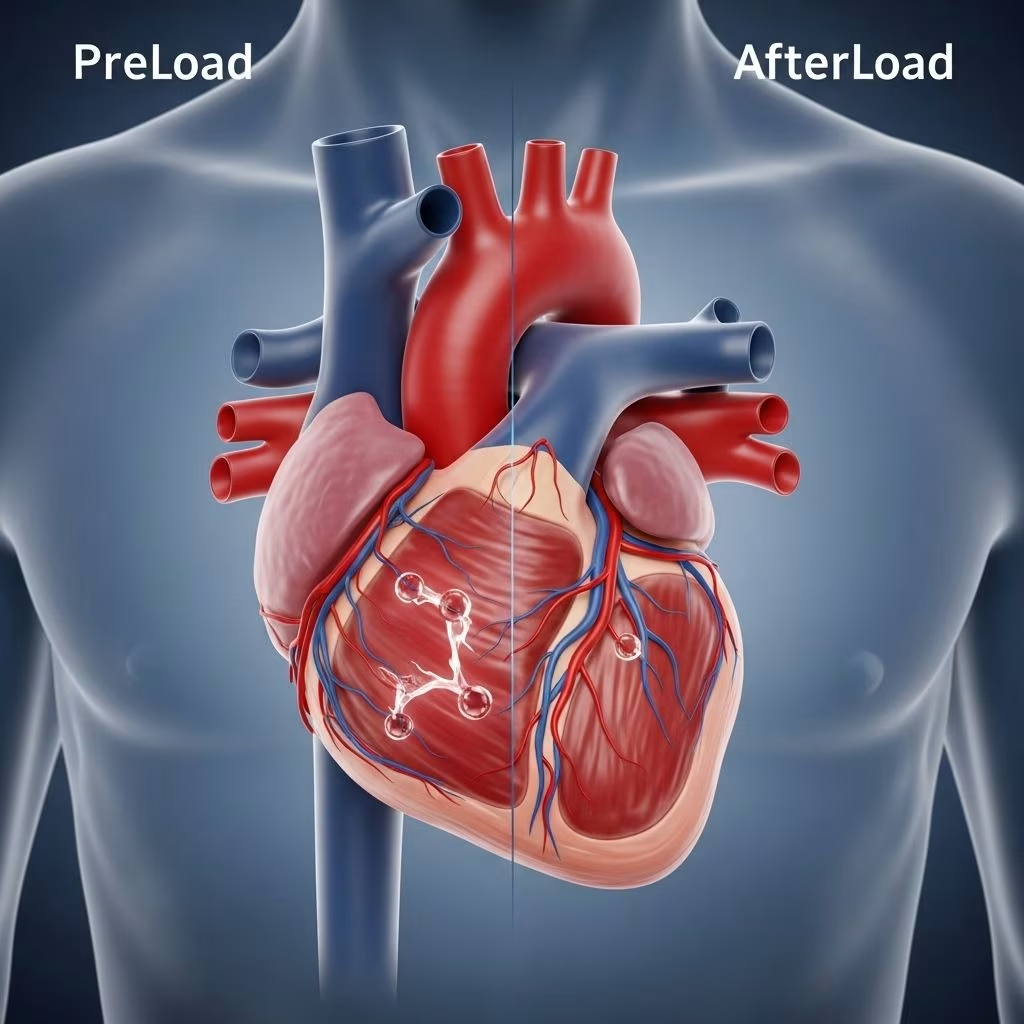
- Preload: The stretch or filling of the heart muscle (myocytes) right before it contracts. Preload is closely related to the volume of blood returning to the heart (venous return) and filling the ventricles during diastole (the heart’s relaxation phase).
- Afterload: The resistance or pressure that the heart must overcome to eject blood during systole (the contraction phase). Afterload is largely determined by blood pressure and systemic vascular resistance (the tone and diameter of blood vessels).
Both preload and afterload are essential in determining the stroke volume (the amount of blood ejected per heartbeat) and overall cardiac output.
How Heart Failure Affects Preload and Afterload
Heart failure isn’t a uniform disease—its effects on preload and afterload depend on the underlying type and mechanism of heart dysfunction. Here’s a breakdown by specific heart failure categories:
Heart Failure with Reduced Ejection Fraction (HFrEF)
Also known as systolic heart failure, in HFrEF the heart’s pumping strength decreases and less blood is ejected from the ventricles. Typically defined by an ejection fraction of less than 40%, HFrEF causes:
- Decreased contractility: The muscle is less effective at shortening and pumping.
- Increased afterload: Due to compensatory mechanisms and higher resistance, the heart must pump against more pressure.
This cycle of weak pumping and high resistance further reduces cardiac output and can result in fluid buildup.
Heart Failure with Preserved Ejection Fraction (HFpEF)
In this type, the heart’s ejection fraction is normal (often > 50%), but the heart muscle is stiff and doesn’t relax well. HFpEF causes:
- Decreased preload: The heart cannot fill properly during diastole, so less blood is available to pump out.
- Increased afterload: Blood vessels often tighten, raising blood pressure and resistance.
Even with a normal percentage of blood being ejected, the actual amount may be insufficient, causing symptoms.
Right Ventricular Systolic Dysfunction
While left heart failure is most common, it can progress to right-sided heart failure. In these cases:
- Decreased preload: The right ventricle cannot fill effectively.
- Increased afterload: The right ventricle faces increased resistance, often due to lung or pulmonary vessel issues.
- Reduced contractility: The right side weakens, increasing symptoms and often worsening left-sided failure.
What Causes Changes in Preload and Afterload?
Both preload and afterload are dynamic; they change due to physiological, pathological, and pharmacological influences. Understanding these factors can help you and your care team manage heart failure more effectively.
Factors That Affect Preload
- Conditions that increase preload:
- Mitral regurgitation (blood flows backward into the heart)
- Aortic regurgitation
- Lower heart rate (more filling time)
- Decreased venous compliance (more blood returning from veins)
- Conditions that decrease preload:
- Mitral stenosis (narrowing of the mitral valve)
- Hypovolemic shock (low blood volume)
- Higher heart rate (less filling time)
- Severe blood loss or dehydration
- Prolonged nausea/vomiting causing fluid loss
Factors That Affect Afterload
- Causes of increased afterload:
- Aortic valve stenosis (narrowing increases resistance)
- Heart failure itself (body compensatory mechanisms)
- Increased systemic vascular resistance (vasoconstriction)
- High blood pressure
- Causes of decreased afterload:
- Use of vasodilator medications that lower blood vessel resistance, including:
- ACE (angiotensin-converting enzyme) inhibitors
- Hydralazine
- Nitroglycerin
- Certain calcium channel blockers (e.g., nifedipine, amlodipine)
Physiology: The Frank-Starling Mechanism
The Frank-Starling mechanism explains how the heart uses changes in preload to adapt stroke volume. As preload increases—within limits—the heart contracts more forcefully. However, in heart failure, these compensation systems are often stretched to their limits, leading to diminished returns and worsening symptoms.
Afterload affects how hard the heart must work to pump. Higher afterload means the heart ejections less blood (lower stroke volume) and more blood is left in the ventricle after contraction (higher end-systolic volume). This in turn can secondarily increase preload in the next cycle, as more blood returns and accumulates.
Table: Preload vs. Afterload
| Factor | Definition | Typical Effects in Heart Failure |
|---|---|---|
| Preload | Amount of ventricular stretch at end of diastole (filling) | May decrease in HFpEF, can be elevated in volume overload |
| Afterload | Resistance the heart must overcome to eject blood | Often increased in both HFrEF and HFpEF, stressing the heart |
Why Preload and Afterload Changes Matter in Heart Failure
When the balance between preload, afterload, and contractility is disrupted, heart failure symptoms worsen and complications become more likely. The body will initially try to compensate for a weakened heart by retaining fluid (increasing preload) and increasing blood vessel contraction (boosting afterload). However, these mechanisms eventually cause more harm than good:
- Increased preload leads to fluid buildup in the lungs (pulmonary edema) and extremities (edema).
- Increased afterload makes it even harder for the weakened heart to eject blood.
- Chronic imbalance may eventually stretch or remodel the heart chambers, further reducing contractility.
Treatment Strategies for Managing Preload and Afterload
Treating heart failure almost always involves manipulating preload and afterload to reduce symptoms, improve function, and slow progression. Common approaches include:
- Diuretics: Drugs that increase urine output, reducing blood volume and thus preload. They help relieve symptoms like swelling and fluid in the lungs.
- Vasodilators: Medications (such as ACE inhibitors, hydralazine, nitrates) that lower afterload by relaxing blood vessels, making it easier for the heart to pump blood forward.
- Beta-blockers and calcium channel blockers: Help relax the heart muscle and can reduce both afterload and (to some extent) preload.
- Inotropes: Increase the contractile force of the heart; used selectively in cases of severe heart failure.
- Lifestyle and dietary changes: Limiting salt and fluid intake, regular physical activity, and weight management.
When Is Advanced Therapy Needed?
In severe or advanced cases, interventions such as implantable devices (pacemakers, defibrillators), ventricular assist devices, or even heart transplantation may be necessary. These are typically reserved for those who cannot be stabilized with medications and lifestyle adjustments.
Frequently Asked Questions (FAQs)
What is the difference between preload and afterload?
Preload is a measure of how much the heart stretches before contracting, while afterload refers to the pressure or resistance the heart must work against to send blood out. Both play complementary but different roles in determining cardiac output and ventricular function.
How are preload and afterload different in HFrEF versus HFpEF?
In HFrEF, afterload usually increases and contractility decreases, making it hard for the weakened heart to pump efficiently. In HFpEF, preload often decreases (the ventricle cannot fill fully), but afterload also rises as the body attempts to compensate for reduced output.
What can I do to manage my preload and afterload?
Follow your treatment plan, take prescribed medications, monitor your fluid and salt intake, keep physically active if able, and track your weight and symptoms. Keeping regular appointments with your care provider is essential for adjusting therapy as needed.
Which medications affect preload and afterload?
- Diuretics primarily lower preload by reducing blood volume.
- ACE inhibitors, ARBs, nitrates, and hydralazine reduce afterload by dilating blood vessels.
- Beta-blockers and calcium channel blockers reduce heart work and may affect both preload and afterload.
What are signs that my preload or afterload are not well controlled?
- Worsening shortness of breath, especially when lying down
- Swelling in the legs, ankles, or abdomen
- Sudden weight gain (fluid retention)
- Fatigue, palpitations, or chest pain
Key Takeaways
- Heart failure significantly disrupts preload and afterload dynamics, affecting both symptoms and treatment.
- Monitoring and managing these cardiac parameters is central to effective heart failure care.
- Early diagnosis and adherence to therapy can optimize quality of life and slow disease progression.
References
- https://www.healthline.com/health/heart-failure/preload-and-afterload-in-heart-failure
- https://cvphysiology.com/cardiac-function/cf008
- https://www.deltexmedical.com/decision_tree/preload-afterload-and-contractility/
- https://www.youtube.com/watch?v=WuGMqezV3eo
- https://www.ncbi.nlm.nih.gov/books/NBK541109/
- https://www.youtube.com/watch?v=stA5pwoOZNA
- https://jamanetwork.com/journals/jamainternalmedicine/fullarticle/601982
- https://www.nursingcenter.com/ncblog/may-2015-(1)/preload-and-afterload-%E2%80%93-what-s-the-difference