What Is May Day? Understanding Spring’s Beloved Celebration
May Day, observed on May 1st each year, is a remarkable holiday imbued with centuries of history, vibrant traditions, and cultural symbolism. From ancient rites to modern festivities, May Day heralds the arrival of spring, honoring nature’s renewal, fertility, and joyous community gathering. While its customs vary across countries and eras, the core spirit remains: celebrating life’s blossoming and the world’s transition toward sunnier days.
The Ancient Origins of May Day
The roots of May Day stretch back to antiquity, connecting agricultural rituals and spiritual beliefs across Europe and beyond. These traditions, often tied to the flourishing of nature, set the stage for the customs we recognize today.
Pre-Christian Festivals and the Celtic Beltane
- Beltane: Among the Celtic peoples, Beltane was celebrated from sundown April 30 into May 1. Marking the start of summer, villagers lit bonfires to bless crops and livestock, believing fire’s power could ensure a prosperous season.
At its heart, Beltane honored fertility and the awakening of the earth, with rituals that included dancing, leaping over bonfires, and decorating homes with greenery. - Walpurga & Germanic Traditions: In Germanic countries, May Day coincided with Walpurgis Night, observed with bonfires and rooted in the commemoration of Saint Walpurga. Though Christianized, these customs clearly trace pre-Christian origins.
Roman Influences: Floralia and Maiouma
- Floralia: Celebrated from April 27 to May 3, Floralia honored Flora, the Roman goddess of flowers. Festivities included games, dramatic performances, flower petals scattered beneath feet, and animal release, all symbolizing nature’s burgeoning.
- Maiouma: A less widely known Roman festival dedicated to Dionysus and Aphrodite, distinguished by nocturnal revels and feasts. Its reputation for licentiousness led to periodic suppression, yet it vividly showcased May Day’s connection to abundance, fertility, and pleasure.
Medieval Transformations
Throughout the Middle Ages, May Day evolved from spiritual rites into communal celebration. As rural communities sought relief from winter’s hardships, May Day became a highlight of the social calendar, blending pagan practices with emerging Christian traditions.
| Tradition | Origin | Symbolism |
|---|---|---|
| Beltane Bonfires | Celtic, pre-Christian | Purification, prosperity, fertility |
| Floralia Games | Roman | Welcoming spring, fertility, renewal |
| Walpurgis Night | Germanic, Christianized | Defending against evil, blessing livestock |
Enduring Traditions: Maypoles, May Queens, and Festivity
As May Day gained popularity, distinct rituals emerged—most notably the maypole dance, the selection of the May Queen, and the parade of Jack-in-the-Green. Each symbolizes the community’s connection to nature and the collective joy of renewal.
The Maypole
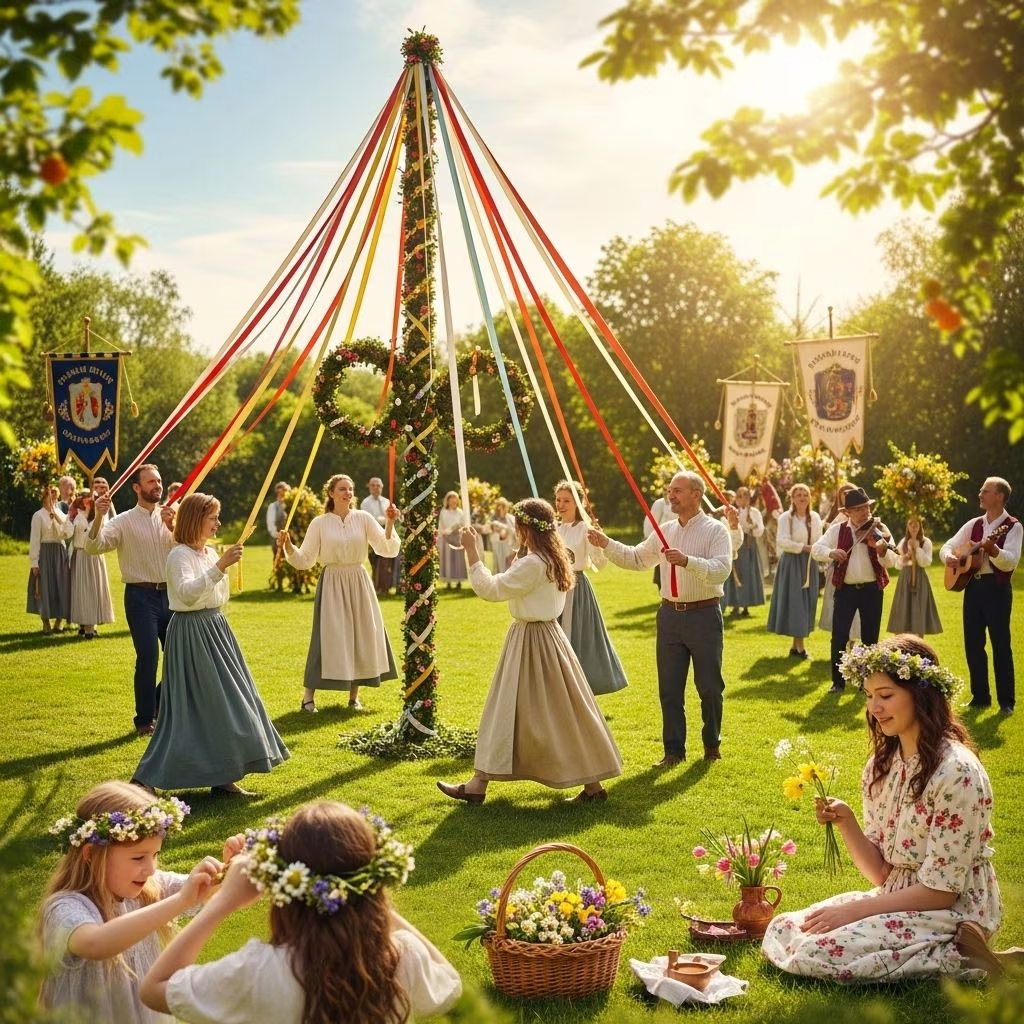
- Maypole Dancing: Villages installed tall poles adorned with flowers and colorful ribbons. Young and old would circle the maypole, weaving intricate patterns—a metaphor for unity and life’s cyclical nature.
- Symbolism: Scholars argue about its deeper meaning. Some say the maypole represents the tree of life—a nod to ancestor worship and reverence for nature. Others link it to fertility, with its upright form and floral decorations suggesting generation and growth.
The May Queen
- Role: The May Queen—a young woman chosen to symbolize spring—is crowned and leads festivities. Historically, she would preside over the maypole dance and community celebrations, embodying purity and renewal.
- Ceremony: The selection and crowning process was sometimes accompanied by plays, songs, and elaborate processions.
Jack-in-the-Green
- Jack-in-the-Green: In England, a costumed figure covered in greenery leads parades—a relic of ancient tree worship. Jack-in-the-Green signifies the living spirit of nature, animating the holiday’s processions with energy and rustic charm.
May Day customs frequently served as an outlet for joy, bringing neighbors together and allowing for courtship, singing, and relaxation after the rigors of winter.
May Day Around the World Today
Though some ancient traditions have faded, communities across continents still honor May Day’s legacy—each adapting the holiday to local culture and contemporary tastes.
United States
- May Baskets: Schoolchildren craft small baskets from paper or woven materials, filling them with flowers or candies to leave anonymously on neighbors’ doorsteps—a gesture of goodwill and seasonal cheer.
- Maypole Dances: While less common than in Europe, some schools and communities organize dances and crowning ceremonies commemorating the May Queen.
United Kingdom and Europe
- Maypole Ceremonies: Maypole dancing, May Queen contests, and Jack-in-the-Green parades remain central to village fetes and spring fairs.
- Beltane Fire Festival (Scotland): Edinburgh’s Beltane festival revives ancient fire rituals with spectacular events celebrating fertility and creativity.
- Walpurgis Night (Germany, Sweden): Communities light bonfires and hold folk gatherings, blending pagan and Christian elements.
Other Cultures and Neopagan Revival
- Neopagan Communities: Since the late 20th century, neopagans have reconstructed elements of historical May Day festivals, including contemporary Beltane celebrations, maypole rituals, and dances invoking the renewal of nature.
- May Devotions: In Catholic communities, May is observed with devotion to the Blessed Virgin Mary—featuring May crownings (placing flower wreaths on statues of Mary) and prayers marking her grace as the mother of Christ.
Controversy and Suppression: May Day Through History
May Day’s exuberant revels have occasionally clashed with religious and political authorities.
- Sixteenth Century England: May Day celebrations were deemed subversive, resulting in riots and the execution of several participants when festivities were banned. In 1517, Henry VIII ultimately pardoned hundreds of revelers sentenced to death for their involvement.
- Puritans and the English Civil War: In the mid-17th century, Puritan leaders condemned maypole dances and other customs as “heathenish vanity,” passing legislation to eliminate them from public life.
- Religious Counterpoints: Especially in the 19th and 20th centuries, Catholic authorities sought to recast May Day’s focus, emphasizing devotion to the Virgin Mary and Christian values.
May Baskets: Tokens of Springtime Goodwill
One of the most cherished and lasting May Day customs is the tradition of May baskets. These simple, homemade tokens are filled with flowers and treats, then delivered—often anonymously—to friends and neighbors.
- Origins: May baskets emerged as part of the broader gift-giving culture associated with May Day. They evoke both ancient flower festivals and the spirit of neighborly kindness.
- Contemporary Practices: In the United States, children (and adults) still delight in weaving or decorating baskets, filling them with spring’s first blooms or homemade candies, and sneaking them onto doorsteps.
- Cultural Meaning: The giving of May baskets reflects May Day’s role as a bridge between seasonal joy and community connection.
May Day as International Workers’ Day
The modern era has layered additional meaning onto May Day, as International Workers’ Day—an annual day of labor solidarity and protest inspired by the labor movement of the late 19th century.
- Origins: In 1889, socialist and labor organizations declared May 1 as a day to commemorate the struggle for workers’ rights—including the eight-hour workday movement that led to historic protests such as the Haymarket affair (Chicago, 1886).
- Global Observance: Today, May 1 serves both as a celebration of spring and as a platform for labor demonstrations, particularly in Europe, Latin America, and Asia. Parades, rallies, and speeches mark the occasion.
- Catholic Reinterpretation: In 1955, Pope Pius XII established May 1 as the feast of St. Joseph the Worker, counterbalancing socialist associations while highlighting Christian values of labor and dignity.
Frequently Asked Questions (FAQs)
Q: What is the significance of the maypole?
The maypole stands as a powerful symbol of life, growth, and unity, woven into community structure with ribbons, flowers, and dance. While interpretations vary, many see it as a celebration of fertility and the cyclical turning of the seasons.
Q: Is May Day celebrated everywhere?
May Day is observed worldwide, though the specific traditions—from maypole dances to labor rallies—differ by culture and country. Its core themes of renewal, community, and festivity are nearly universal.
Q: Why were May Day festivities suppressed?
Religious and political authorities have periodically restricted May Day rituals, viewing them as pagan or disruptive. In England, Puritans condemned maypole dancing, and at other points, local leaders controlled or abolished seasonal revelry.
Q: What is the connection between May Day and labor movements?
May Day’s modern association with workers arose in the late 19th century, especially after the Haymarket labor protest in Chicago. Today, May 1 embodies both the celebration of spring and the quest for labor rights worldwide.
Q: Are May Day traditions being revived?
Yes. Many communities and neopagan groups actively revive ancient rituals such as Beltane fires, maypole dances, and May Queen contests. These revivals honor both historical heritage and contemporary desires for connection and joy.
Conclusion: The Legacy of May Day
May Day’s enduring charm lies in its ability to refresh communities each year with a celebration of hope, life, and unity. Whether witnessed in the twirl of ribbons around a maypole, the quiet joy of receiving a May basket, or the collective power of labor demonstrations, May Day’s message remains clear: together, humanity greets the world’s renewal and affirms its enduring bonds with nature and one another.
References
- https://www.historic-uk.com/CultureUK/May-Day-Celebrations/
- https://en.wikipedia.org/wiki/May_Day
- https://www.rochestermntours.com/blog_posts/the-history-of-may-day-a-celebration-of-spring-and-tradition/
- https://www.britannica.com/topic/May-Day-international-observance
- https://irle.ucla.edu/2025/04/28/may-day-history-significance/
- https://www.nationaltrust.org.uk/discover/history/the-history-of-may-day
- https://www.ef.com/wwen/blog/efacademyblog/why-we-celebrate-may-day/