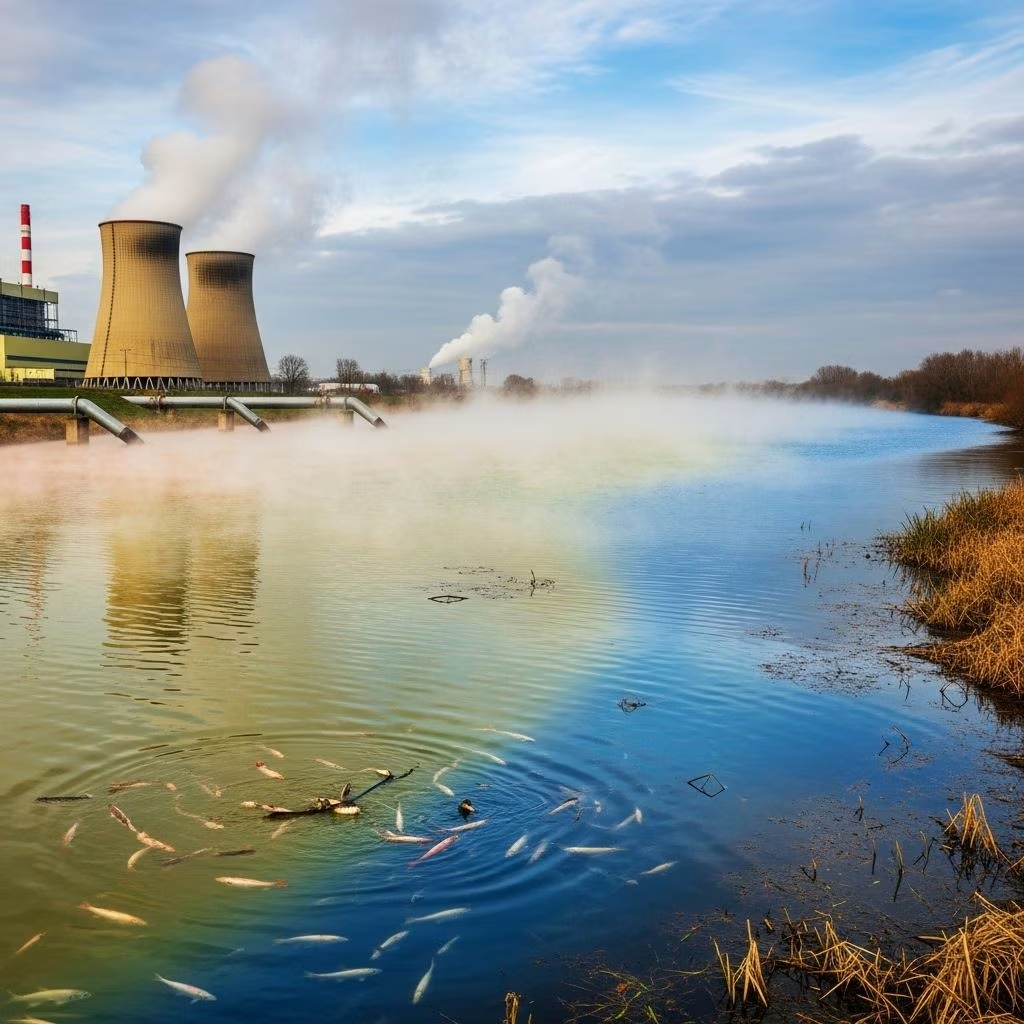
Thermal pollution refers to the undesirable alteration of natural water temperature—often due to human activities—resulting in harmful impacts on aquatic ecosystems. Unlike chemical pollution that contaminates water with substances, thermal pollution disrupts the temperature balance, threatening aquatic life and changing ecological dynamics. This comprehensive guide examines the roots, effects, and current strategies for addressing thermal pollution in today’s world.
What Is Thermal Pollution?
Thermal pollution, sometimes called thermal enrichment, occurs when the temperature of a natural water body rises or falls due to the discharge of artificially heated or cooled water. Human activities, particularly industrial processes, are the primary drivers, but there are also natural sources. When the delicate thermal balance is upset, it can have serious consequences for aquatic organisms and entire ecosystems.
- Occurs predominantly from the influx of warmed wastewater from power plants and factories.
- May also result from natural factors such as geothermal activity or wildfires, though these are less common.
- Even small changes in water temperature can disrupt dissolved oxygen levels, impacting fish, invertebrates, and plants.
Main Causes of Thermal Pollution
The causes can be broadly divided into human-induced (anthropogenic) sources and natural sources.
1. Industrial Discharge of Warm Water
Power plants (including coal, natural gas, nuclear, and biomass) and many industrial facilities use significant amounts of water for cooling. This water absorbs heat during industrial processes and is typically released back into rivers, lakes, or oceans at substantially higher temperatures.
- Once-Through Cooling: Water is drawn in, used for cooling, and directly discharged, often several degrees warmer.
- Industries involved: Oil refineries, paper mills, steel manufacturing, chemical plants, and desalination plants commonly utilize such cooling mechanisms.
2. Urban Runoff
Heated runoff from asphalt, concrete, and other paved surfaces during rain or snowmelt events flows into storm drains, eventually entering water bodies. These impervious surfaces absorb and retain heat, increasing the runoff temperature.
3. Deforestation and Land Use Changes
Trees and vegetation provide crucial shade to water bodies, moderating temperature. Deforestation removes this natural cooling, exposing water directly to sunlight, which raises surface temperatures.
4. Soil Erosion
When soil erosion occurs, water bodies can become shallower, allowing sunlight to penetrate more easily and causing increased heating.
5. Agricultural Activities
Certain agricultural practices can lead to excessive nutrient runoff, promoting algal blooms. During decomposition, these blooms generate additional heat, further raising water temperatures.
6. Natural Causes
- Volcanic activity, geothermal vents, and hot springs: Occasionally discharge heat directly into water bodies.
- Weather phenomena: Lightning strikes, heatwaves, or forest fires can locally increase water temperatures.
How Thermal Pollution Affects Aquatic Ecosystems
Thermal pollution can affect both abiotic (nonliving) and biotic (living) components of aquatic environments. Some of the key impacts include:
- Reduced Dissolved Oxygen (DO): As water temperatures rise, their capability to hold dissolved oxygen drops. Oxygen is essential for aquatic organisms—fish, invertebrates, and plants.
- Thermal Shock: Sudden temperature changes can lead to thermal shock, killing sensitive species unable to adapt quickly.
- Disruption of Reproductive Cycles: Temperature plays a critical role in the breeding cycles of many aquatic species. Elevated or erratic temperatures may disrupt spawning, hatching, and migration.
- Increased Metabolic Rates: Warmer water accelerates the metabolism of aquatic species, raising food consumption needs while depleting available oxygen, potentially leading to population stress or collapse.
- Algal Blooms: Higher temperatures and nutrient enrichment can stimulate excessive algal growth, leading to eutrophication and further oxygen depletion as algae die and decompose.
- Decline in Biodiversity: Sensitive species may vanish, leaving only heat-tolerant generalists, thus reducing species diversity and altering ecosystem dynamics.
- Fog and Ice Formation: Discharged steam or warm water can create fog or unexpected ice in cold climates, posing hazards to infrastructure and human activity.
Human Health and Societal Impacts
- Fisheries and food supply: Declining fish populations directly harm local fisheries and food security.
- Water treatment challenges: Higher temperatures can affect drinking water quality and complicate treatment processes.
- Economic cost: Reduced tourism, increased water treatment needs, and loss of biodiversity all have quantifiable economic consequences.
Examples of Thermal Pollution Hotspots
While thermal pollution is a global concern, some regions or sites serve as clear examples:
- Large river basins: The U.S. Mississippi River and Europe’s Rhine River receive considerable thermal discharges from power stations and factories.
- Urban estuaries: Cities with heavy industry such as Chicago and Shanghai see significant temperature increases in local waterways.
- Nuclear power plants: Locations adjacent to nuclear facilities often experience higher localized water temperatures due to large-scale cooling requirements.
How Is Thermal Pollution Measured?
Scientists monitor thermal pollution using temperature sensors and dissolved oxygen meters at inflow and outflow points of suspected sources. Key metrics include:
- Temperature difference from baseline (ΔT): Measurement before and after industrial discharge.
- Dissolved oxygen levels: To assess secondary impacts.
- Species monitoring: Tracking key indicator species for ecosystem health.
Solutions: How Can We Prevent or Mitigate Thermal Pollution?
Thermal pollution can be reduced through technological, policy-oriented, and ecological measures:
Technological Solutions
- Cooling Towers: Divert heated water to towers where it can lose heat to the atmosphere before being released or reused.
- Cooling Ponds: Man-made basins where hot water is stored temporarily, allowing it to cool prior to release.
- Closed-Loop Cooling Systems: Continuously recycle cooling water within the plant, avoiding direct discharge to the environment.
- Switch to Renewable Energy: Renewable energy options like wind and solar do not require water for cooling and can help alleviate thermal loading.
Ecological and Policy Measures
- Reforestation and Riparian Buffer Zones: Planting trees and shrubs along water bodies provides natural cooling and shade.
- Improved Urban Planning: Use of permeable materials, green roofs, and better stormwater management to reduce heat-carrying runoff.
- Regulations and Permitting: Implementing stricter laws and limits on allowable temperature of discharged water.
- Public Awareness and Monitoring: Engaging communities and stakeholders through education and transparent monitoring systems.
Comparison Table: Cooling Techniques for Power Plants
| Cooling Technique | Description | Impact on Waterways |
|---|---|---|
| Once-Through Cooling | Direct use and discharge of water for single-use cooling | Significant temperature increase in local water |
| Cooling Ponds | Heated water temporarily stored to dissipate heat | Moderate heat released, less impact on water bodies |
| Cooling Towers | Heat removed via evaporation to air | Minimal impact on local water temperature |
| Closed-Loop Systems | Continuous recycling of cooling water | Negligible discharge, best for ecosystem protection |
What Individuals and Communities Can Do
- Advocate for the use of green infrastructure and natural buffers to shield local waterways.
- Participate in reforestation efforts and community monitoring programs for local streams and rivers.
- Support sustainable energy solutions that reduce reliance on water-intense power generation methods.
- Practice responsible water use and prevent runoff pollution from households and local businesses.
Frequently Asked Questions (FAQs)
What is the definition of thermal pollution?
Thermal pollution is an artificial or rapid alteration in the temperature of a natural body of water, usually caused by industrial discharge of heated or cooled water, leading to negative impacts on aquatic ecosystems.
What are the main causes of thermal pollution?
The leading causes are industrial cooling processes, urban runoff, deforestation, soil erosion, certain agricultural practices, and some natural events like volcanic activity or wildfires.
Why is thermal pollution considered harmful?
It can reduce dissolved oxygen levels, disrupt reproduction and migration cycles of aquatic species, and lead to a drop in biodiversity. It may also contribute to hazardous phenomena like algal blooms and fog.
How is thermal pollution controlled?
By implementing solutions such as cooling towers, cooling ponds, closed-loop cooling systems, riparian reforestation, urban planning improvements, and regulations limiting discharge temperatures.
Can renewable energy help solve the issue?
Yes, renewables like solar and wind generate energy without direct water-cooling needs, thus significantly reducing the risk of thermal pollution compared to conventional power plants.
References
- https://www.inspirecleanenergy.com/blog/clean-energy-101/what-is-thermal-pollution
- https://www.arcadia.com/blog/causes-effects-thermal-pollution
- https://www.perchenergy.com/blog/environment/what-is-thermal-pollution-causes-impact
- https://www.ebsco.com/research-starters/science/thermal-pollution
- https://www.nextias.com/blog/thermal-pollution/
- https://www.mirasafety.com/blogs/news/environmental-consequences-of-thermal-pollution
- https://www.albert.io/blog/thermal-pollution-ap-environmental-science-review/
- https://lwrd.danecounty.gov/what-we-do/Pollution-and-Solutions/Thermal-Pollution