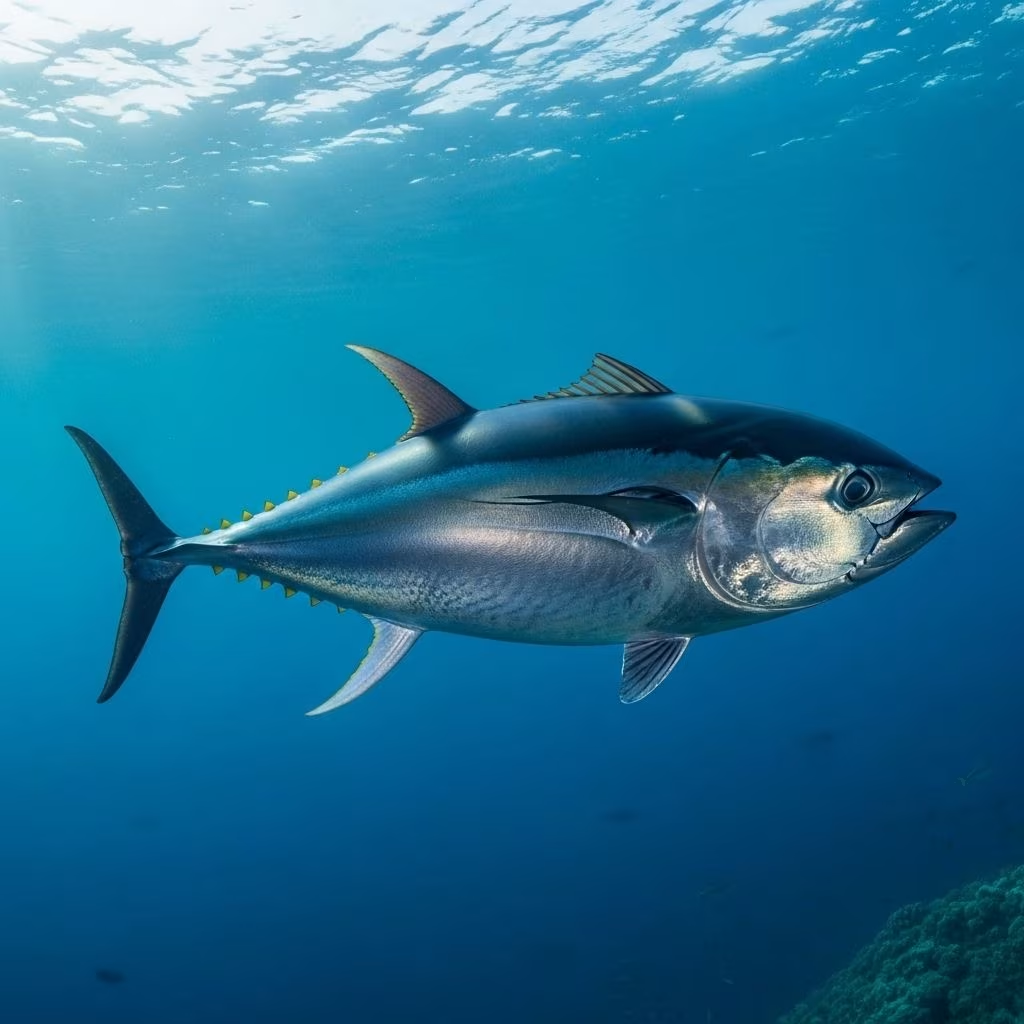
Are Bluefin Tuna Endangered?
Bluefin tuna are among the most iconic and valuable fish on the planet, renowned for their immense size, speed, and key roles in healthy marine ecosystems. However, staggering demand, relentless overfishing, and international trade have driven bluefin populations to the brink of extinction over recent decades. In this article, we explore whether bluefin tuna are still endangered, the various threats they face, and the global conservation efforts that are showing signs of hope for this ocean giant’s future.
What Are Bluefin Tuna?
Bluefin tuna refer to three closely related species found in the Atlantic, Pacific, and Southern oceans:
- Atlantic bluefin tuna (Thunnus thynnus)
- Pacific bluefin tuna (Thunnus orientalis)
- Southern bluefin tuna (Thunnus maccoyii)
These fish are top ocean predators, swimming thousands of miles between spawning and feeding grounds and growing to weights of over 1,000 pounds. Their strength and speed make them a prized catch, particularly for sushi and sashimi markets, which can drive astronomical auction prices for a single specimen.
Conservation Status: Are Bluefin Tuna Endangered?
The conservation status of bluefin tuna depends on the species and region:
| Species | IUCN Red List Status (2021/2022) | Recent Trends |
|---|---|---|
| Atlantic bluefin tuna | Least Concern | Increasing (removed from “Endangered” list in 2021) |
| Pacific bluefin tuna | Near Threatened | Population recovering; catch quotas increased in 2025 |
| Southern bluefin tuna | Critically Endangered | Recovery underway but still at risk |
While some bluefin species have shown significant recovery following international conservation efforts, the Southern bluefin tuna remains at substantial risk, and even for recovered stocks, management vigilance is crucial to prevent backsliding into decline.
Why Are Bluefin Tuna at Risk?
The endangered status of bluefin tuna is principally due to overfishing, illegal fishing, and unsustainable international demand. Their high market value, especially in Asia, has incentivized overexploitation, often far beyond recommended scientific advice. Key risk factors include:
- Overfishing: Massive commercial fleets have targeted bluefin tuna at all life stages, with many juveniles caught before they can reproduce, severely impacting population growth.
- Illegal, unreported, and unregulated (IUU) fishing: Black market and “pirate” fishing activities frequently bypass quotas and controls, undermining legal conservation efforts.
- High demand in luxury food markets: Single bluefin tuna have fetched prices topping $1.75 million due to their prized status in sushi and sashimi markets, particularly in Japan.
- Lack of biological and migratory knowledge: Historically, insufficient data on tuna migration and spawning made effective management difficult.
The Impact of Overfishing
Bluefin tuna stocks suffered dramatic collapses over the last several decades due to relentless overharvesting:
- Atlantic bluefin tuna stocks were depleted so severely that some populations came close to collapse and were once listed as Endangered by the IUCN.
- Pacific bluefin tuna declined by over 96% from historic levels, with most caught before maturity.
- Southern bluefin tuna populations dropped to just 3–8% of their unfished biomass, according to the International Union for Conservation of Nature (IUCN).
Industrial fishing methods, such as purse seine nets and longlines, as well as the fattening of wild-caught juveniles in sea cages before slaughter, further magnified pressures. Illegal fishing and weak international enforcement often meant actual fishing mortality far exceeded quota limits.
Economic Pressures and the Global Tuna Trade
Bluefin tuna’s cultural and economic value is both a blessing and a curse for their survival. Some notable points:
- The Japanese sashimi market is the largest driver of demand, sourcing bluefin tuna from around the world.
- Auctions for whole bluefin routinely generate news headlines with record-breaking prices.
- Despite strict quotas, loopholes and black markets have historically driven catches beyond agreed limits.
For example, a 500-pound bluefin tuna was sold for over $1.76 million in Tokyo, incentivizing further overfishing and illegal activity.
Recent Conservation and Recovery Efforts
Recognition of the bluefin tuna crisis prompted a wave of reforms and international collaboration:
- Regional Fisheries Management Organizations (RFMOs): Bodies such as ICCAT (Atlantic) and CCSBT (Southern) established science-based quotas and monitoring.
- Quota reductions: Severe catch reductions and stricter reporting have helped some tuna stocks rebound.
- Monitoring and enforcement: Satellite tracking, standardized reporting, and stronger market controls have reduced illegal fishing in some regions.
- International agreements: The Inter-American Tropical Tuna Commission (IATTC) and others have agreed to rebuild population targets and stop market access to illegally caught tuna.
Success Stories: Population Recovery
- Atlantic bluefin tuna populations have shown positive trends and were removed from the IUCN Endangered list in 2021. This change was due to rebuilding populations following stricter quotas, demonstrating that well-managed fisheries can recover ocean giants.
- Pacific bluefin tuna stocks have also increased, allowing an 80% increase in U.S. fishing quotas for 2025-2026, a move only permitted due to a decade-ahead-of-schedule population rebound.
- Southern bluefin tuna populations remain Critically Endangered but are slowly recovering under tightly controlled quotas set by the Commission for the Conservation of Southern Bluefin Tuna.
Why Are Bluefin Tuna Important?
Bluefin tuna are not just valuable commodities—they are essential top predators that help regulate marine ecosystems by maintaining balance among prey species. Their presence is linked to the health of marine food chains and ocean biodiversity.
Challenges That Remain
Despite recent successes, significant risks and unanswered questions remain:
- Recovery not universal: Southern bluefin remain Critically Endangered, and even seemingly recovered populations could crash again with poorly managed fishing or renewed overexploitation.
- Monitoring is difficult: Bluefin’s vast migratory ranges make tracking and management across national boundaries complex.
- Reopening of fisheries: Commercial interest is surging as populations return, risking unsustainable fishing if effective management is not maintained.
- Illegal fishing persists: Without global enforcement and oversight, “pirate fishing” remains a threat to recovery.
- Climate change: Changing ocean temperatures and prey distributions may affect bluefin reproduction and feeding patterns in unpredictable ways.
How Can Bluefin Tuna Be Protected?
- Sustainable catch quotas: Carefully managed, science-led quotas that reflect true population sizes and reproductive rates are essential.
- International cooperation: Effective recovery depends on joined-up efforts across all nations that fish or trade bluefin tuna.
- Enforcement against illegal fishing: Increased surveillance, monitoring, and penalties for illegal, unreported, or unregulated fishing can safeguard recovering stocks.
- Consumer choices: Supporting seafood from sustainable sources and certified fisheries helps reduce incentives for illegal supply chains.
- Further research: Investment in understanding bluefin tuna biology, migration, and life cycles informs better management and conservation strategies.
What Does the Future Hold?
The story of bluefin tuna reflects both the peril and promise of modern fisheries management. The resurgence of the Atlantic and Pacific populations shows how coordinated, science-led action can reverse declines, but sustainability is not guaranteed. Constant vigilance, adaptive management, and robust enforcement remain critical to ensuring bluefin tuna thrive—not just survive—for generations to come.
Frequently Asked Questions (FAQs)
Q: Are bluefin tuna still endangered?
A: Southern bluefin tuna remain Critically Endangered, the Pacific bluefin is Near Threatened but recovering, and the Atlantic bluefin has recently recovered enough to be classed as Least Concern. Recovery is uneven and ongoing management is essential.
Q: Why are bluefin tuna endangered?
A: Bluefin tuna populations declined primarily due to overfishing and high-value demand for sushi and sashimi, coupled with illegal fishing and insufficient regulation in the past.
Q: Can bluefin tuna stocks ever recover fully?
A: Yes—recovery of Atlantic and Pacific bluefin stocks shows that strict management can restore populations, but continued oversight is required to maintain gains.
Q: What can consumers do to help?
A: Choose seafood from certified sustainable sources, ask restaurants and fishmongers about the origins of their tuna, and support measures that promote ocean conservation and enforcement of fishing laws.
Q: How large can bluefin tuna get?
A: Bluefin tuna are some of the largest fish in the ocean, with mature adults weighing up to 1,500 pounds and reaching lengths beyond 10 feet.
Q: Why are bluefin tuna so expensive?
A: Their rarity, size, quality, and cultural significance—especially in Japanese cuisine—have driven prices sky-high, sometimes exceeding $1 million for a single prized specimen.
Key Takeaways
- Strong international regulations have allowed some bluefin tuna stocks to recover, but threats remain, especially for southern populations.
- Overfishing, illegal trade, and global demand were historically the main drivers of bluefin tuna’s endangered status.
- Bluefin tuna are crucial to ocean health and marine food chains as apex predators.
- Recovery demonstrates that well-enforced, science-based fisheries management works, but ongoing vigilance, enforcement, and advocacy are needed to sustain gains.
References
- https://fishingbooker.com/blog/bluefin-tuna-migration-explained/
- https://www.nationalfisherman.com/tuna-quotas-soar-by-80-in-2025
- https://www.mcsuk.org/news/bluefin-tuna-an-ocean-giant-on-the-rise/
- https://www.worldwildlife.org/species/bluefin-tuna
- https://maritimescrimes.com/2025/05/02/tuna-overfishing-how-illegal-fishing-threatens-bluefin-tuna-worldwide/
- https://www.fisheries.noaa.gov/action/closure-atlantic-bluefin-tuna-general-category-commercial-fishery-6
- https://www.fisheries.noaa.gov/west-coast/sustainable-fisheries/pacific-bluefin-tuna-commercial-harvest-status
- https://www.iss-foundation.org/about-issf/what-we-publish/issf-documents/issf-2025-01-status-of-the-world-fisheries-for-tuna-march-2025/
- https://www.federalregister.gov/documents/2025/07/07/2025-12600/atlantic-highly-migratory-species-atlantic-bluefin-tuna-fisheries-closure-of-the-harpoon-category
- https://www.montereybayaquarium.org/stories/pacific-bluefin-tuna-are-on-a-path-to-recovery