


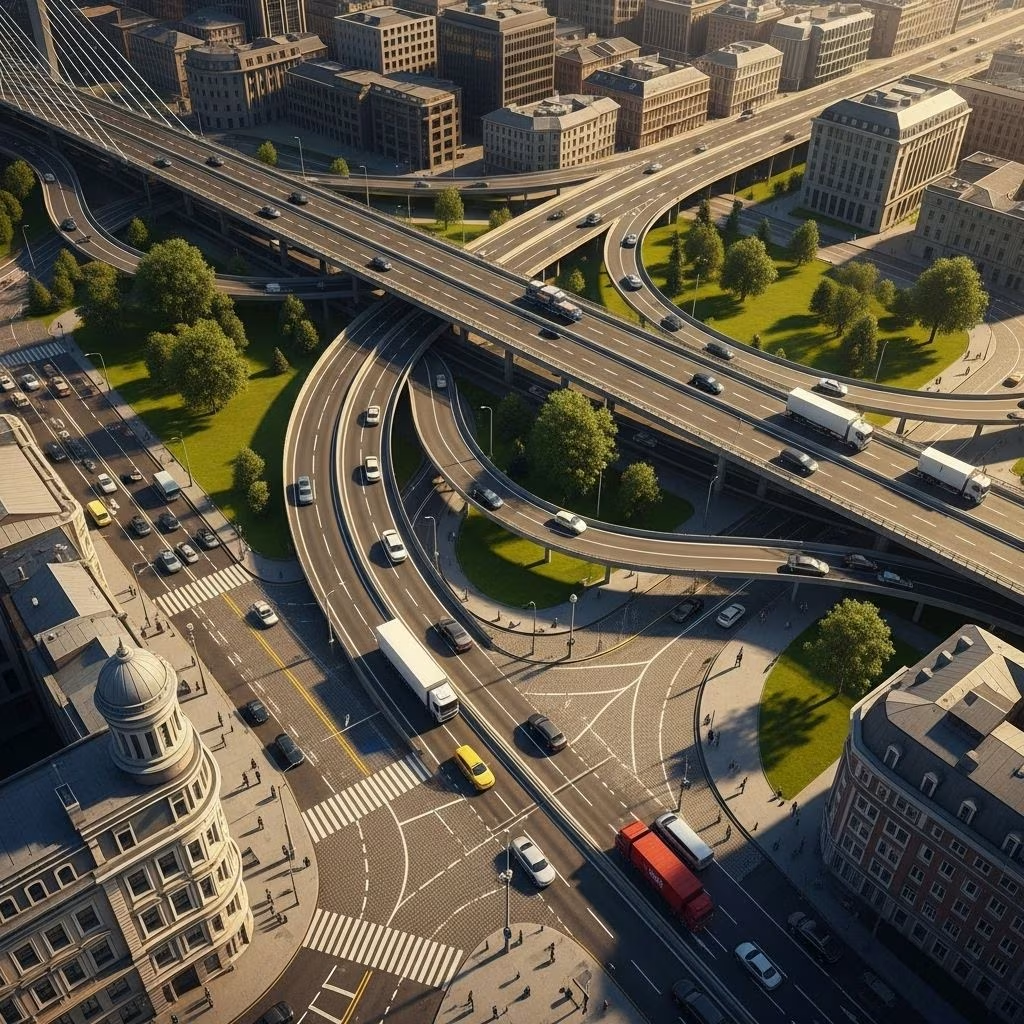
Streets That Shaped America: A Journey Through Urban Evolution
America’s streets are more than mere conduits for traffic; they are the arteries through which the lifeblood of cities and culture flows. From the ancient footpaths of Indigenous peoples to paved multi-lane boulevards, these thoroughfares have defined how Americans connect, move, and create communities. This in-depth look explores the origins, transformations, and societal impacts of ten streets that changed America, revealing how each helped to shape not just cities, but the very idea of urban life in the United States.
Broadway, New York
Broadway may be America’s most iconic street—not merely for its fame as the heart of theater—but because it has served as a crucial thoroughfare for centuries. Its origins trace back over 400 years as a Native American path winding through Manhattan’s highest, driest ground, ideal for travel and trade. Broadway followed the path of good soils, stable underfoot and naturally well-drained, a logical route for foot traffic long before the Dutch colonists claimed the region.
- Early Native Americans paved portions of the road by controlled burning, clearing brush for easier passage and commerce.
- The trail stretched all the way north toward Canada, functioning as an important trade link.
- In 1625, the Dutch established New Amsterdam and built a protective wall at the road’s southern terminus—giving birth to Wall Street—and transformed the path into a grand urban artery reminiscent of Europe.
- The road’s name, “Broadway,” comes from the Dutch term “Brede weg”, literally meaning broad way or wide street.
Broadway exemplifies the layering of history: from its beginnings as an indigenous footpath, to a main thoroughfare for horse traffic, to an urban theater district, it has continually adapted while retaining its cultural and infrastructural significance.
Boston Post Road
The Boston Post Road is one of America’s oldest highways, predating even the founding of the country. Laid out in the 17th century, it connected New York City to Boston, weaving through towns, villages, and farmland. Key to colonial communication, it served as a mail delivery corridor and was essential for early American trade and governance.
- This road contributed to the spread of news and ideas, helping to knit together disparate colonies.
- The Boston Post Road influenced subsequent highway development, setting patterns that shaped the Eastern U.S. for generations.
- Its legacy persists today in road alignments and infrastructure across multiple states.
St. Charles Avenue, New Orleans
No street better exemplifies the melding of transportation innovation and urban culture than St. Charles Avenue. This grand boulevard is home to the world’s oldest continually operating streetcar line, opening the way for electric urban transit in 1835 and fostering the growth of New Orleans as a resilient and lively city.
- St. Charles Avenue’s live oaks and grand mansions evoke the spirit of Southern hospitality and elegance.
- The streetcar helped integrate neighborhoods and preserve New Orleans’ unique urban fabric amid growth and change.
- Today, the green streetcars remain beloved icons, interweaving the past and present.
National Road
Envisioned by Thomas Jefferson and begun in 1811, the National Road was the first federally funded interstate highway, serving as a conduit for westward expansion. Stretching from Cumberland, Maryland, to Vandalia, Illinois, this road enabled travel, migration, and trade across the Appalachian barrier.
- It linked the original colonies to new western territories, shaping the settlement patterns of the Midwest.
- Businesses, towns, and industries flourished along its corridor, paving the way for the American frontier’s expansion.
- The National Road is a prototype for later national infrastructure projects, embodying the spirit of connection and mobility.
Woodward Avenue, Detroit
Woodward Avenue in Detroit is known as America’s first concrete highway and as the birthplace of the auto culture. This broad artery helped define Detroit as the capital of the automobile and jump-started a century of motorized innovation and suburban sprawl.
- Introduced divided roadways, traffic signals, and wide lanes to accommodate cars.
- Became the axis for Detroit’s remarkable growth and status as “The Motor City.”
- The influence of Woodward Avenue shaped not only Detroit, but also the configuration and aesthetics of urban infrastructure nationwide.
Eureka Valley, San Francisco
Eureka Valley, nestled within San Francisco, highlights how urban streets responded to challenging terrain and social transformation. While smaller than other entries on this list, the area’s grid adapted to steep hills, earthquake recovery, and growth from a quiet suburb to a lively, inclusive part of the city—a testament to the resilience and flexibility of the urban street grid.
- Streets here adapted to the natural topography, using innovative engineering methods to follow the land rather than dominate it.
- After the 1906 earthquake, rapid rebuilding reinforced the importance of resilient, well-planned streets for urban survival and renaissance.
- Eureka Valley later became a hub of counterculture and LGBTQ activism, demonstrating how streets reflect evolving communities and identities.
Wilshire Boulevard, Los Angeles
Known as Los Angeles’ revolutionary thoroughfare, Wilshire Boulevard weaves together the city’s neighborhoods, from downtown high-rises through Miracle Mile to the Pacific Ocean. More than a street, Wilshire was a grand experiment in designing a city around the automobile, not the pedestrian.
- Wilshire’s development led to the rise of “linear cities,” with shops and offices designed for motorists rather than foot traffic.
- Miracle Mile, a stretch of Wilshire, pioneered new retail and architectural forms suited to car-centric life.
- The Boulevard embodies LA’s embrace of the automobile and influenced countless sunbelt cities across America.
Lindbergh Boulevard, St. Louis
St. Louis’s Lindbergh Boulevard, named in honor of the famed aviator Charles Lindbergh, transformed from a rural road to a multi-lane, high-speed beltway—one of America’s first ring roads. It modeled suburbanization and bypass culture, allowing cities to grow outward, connect suburbs, and decentralize traditional city life.
- Pioneered the use of beltways that would soon encircle America’s urban centers.
- Promoted development beyond city cores, marking the transition toward suburban America.
- Set the template for postwar interstate freeways encircling and connecting metropolitan regions.
Michigan Avenue, Chicago (The Magnificent Mile)
Michigan Avenue, particularly its “Magnificent Mile” segment, is Chicago’s grandest boulevard and a model of urban renewal and commercial vibrancy. From its origins as a lakefront carriageway to its status as a shopping mecca, the avenue has played a crucial role in city planning and economic identity.
- Transformed from muddy, treacherous ground into a world-class shopping and cultural destination.
- A pivotal connector between Chicago’s parks, cultural institutions, and neighborhoods.
- Shows how streets not only channel movement but also create public space for civic pride and commerce.
High Line, New York
The High Line is a 21st-century reinvention, turning a disused elevated rail line on Manhattan’s West Side into one of the most acclaimed parks in the world. Opened in stages from 2009, it redefined old infrastructure as urban amenity, inspiring cities globally to re-examine overlooked corridors.
- Stretches 1.5 miles from the Meatpacking District through Chelsea, elevated above city streets.
- Preserves industrial heritage with wild plantings, public art, and spaces for gathering, strolling, and relaxing.
- Became a catalyst for urban revival, neighborhood investment, and new models of public-private partnership in urban design.
How These Streets Shaped American Urban Life
Each street on this list served as a stage for broader changes in American life, translating cultural shifts, technological innovations, and societal aspirations into concrete (sometimes literally) civic change. Several themes characterize the impact of these transformative thoroughfares:
- Connectivity: Establishing vital links between towns, cities, and regions.
- Innovation: From streetcars to superhighways, driving advances in engineering and transport.
- Identity: Fostering civic pride, public life, and the creation of unique urban cultures.
- Resilience: Adapting to disasters, demographic changes, and new economic realities.
- Redefinition of Space: Turning roads into destinations—places to gather, celebrate, and build community.
Table: Iconic Streets and Their Contributions
| Street | City/Region | Key Contribution | Era/Year |
|---|---|---|---|
| Broadway | New York | Ancient trading route, theater epicenter | Pre-1625 onward |
| Boston Post Road | New England | Colonial communication and mail corridor | 17th century |
| St. Charles Avenue | New Orleans | Oldest continual streetcar; Southern boulevard | 1835 onward |
| National Road | Midwest/Eastern US | First federal highway, frontier access | 1811 onward |
| Woodward Avenue | Detroit | Birthplace of motor age infrastructure | Early 20th century |
| Eureka Valley Grid | San Francisco | Topographic adaptation, social change | Late 19th/20th c. |
| Wilshire Boulevard | Los Angeles | Automobile city design, “linear city” | 1920s onward |
| Lindbergh Boulevard | St. Louis | Beltway model, suburban expansion | 1930s onward |
| Michigan Avenue | Chicago | Urban renewal, commercial corridor | 20th century |
| High Line | New York | Elevated park, adaptive reuse | 2009–present |
Lasting Effects: Urban Design, Social Life, and the Streets
These streets not only reimagined how Americans move, but also how they interact, form communities, and express identity. The following aspects reveal their lasting impact on cities and urban dwellers:
- Public Gathering: Streets became stages for festivals, protests, parades, and celebrations, providing crucial public space.
- Commercial Development: Retail and entertainment districts clustered on key thoroughfares, fueling economic vitality and urban innovation.
- Diversity and Inclusion: Over time, many streets evolved to reflect the diversity of America, offering space for underrepresented voices and movements.
- Sustainability: Recently, streets like the High Line showcase how reuse and green design can guide city resilience and livability in the 21st century.
Frequently Asked Questions (FAQs)
Q: What factors led these streets to have such a transformative effect on American cities?
A: The key factors include strategic location, technological or design innovation (such as streetcars or divided highways), and responsiveness to the needs of growing and changing populations. Most also had support from visionary leaders or powerful civic interests.
Q: Are there modern equivalents to these influential streets?
A: Yes, contemporary projects like greenways, complete streets initiatives, and adaptive reuse (e.g., the BeltLine in Atlanta or the 606 in Chicago) continue to transform how Americans use urban corridors, emphasizing sustainability, equity, and public life.
Q: How do these streets impact daily life for city residents?
A: Their influence is seen in everything from commute patterns and access to amenities, to the vibrancy of neighborhoods, availability of parks and cultural events, and the structure of commercial development.
Q: What lessons do they offer for future urban planning?
A: The stories of these streets highlight the importance of flexible, community-centered planning, investment in public spaces, and adaptation to changing transportation habits and technological shifts.
Q: Can streets still shape American culture today?
A: Absolutely. As cities rethink mobility, resilience, and sustainability, the reimagination of streets—from car-free promenades to green infrastructure—remains central to shaping urban culture and community life.


