


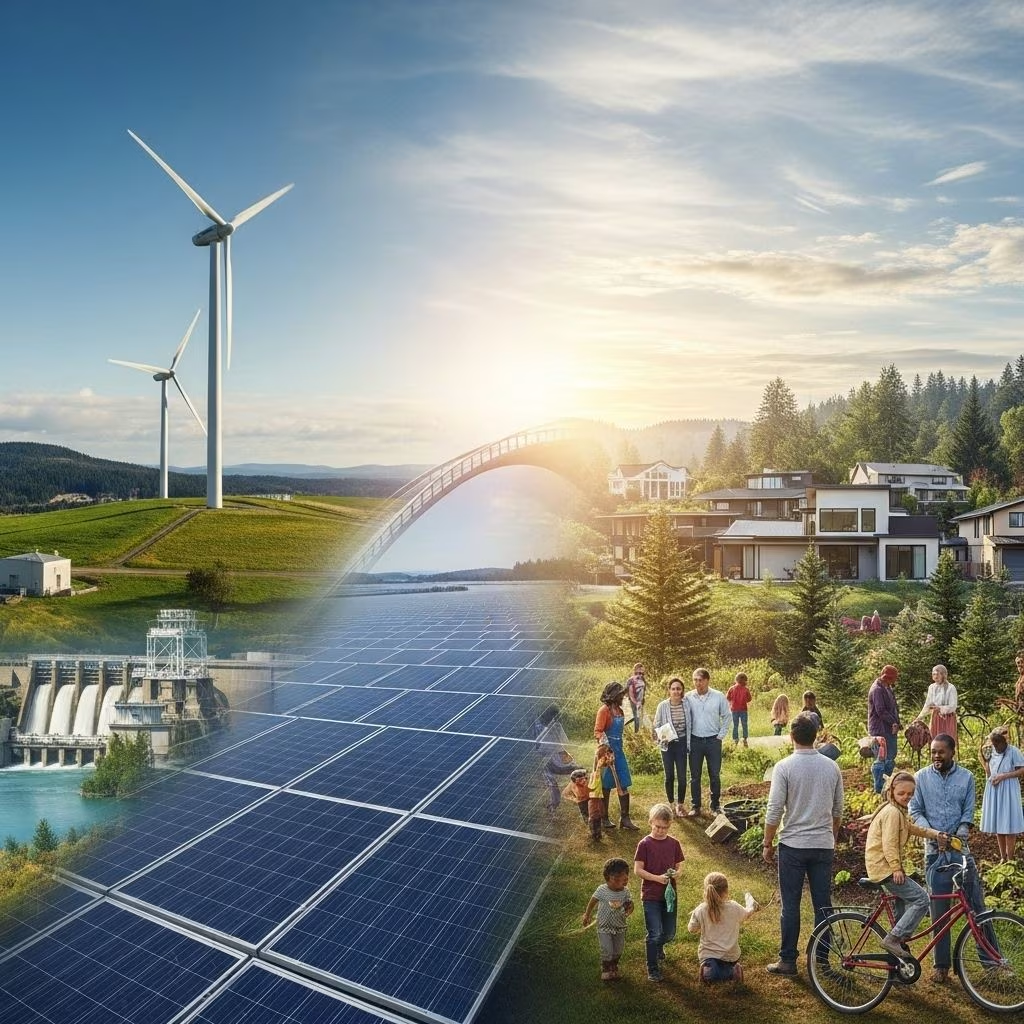
Oregon’s Groundbreaking HB 2021: A Blueprint for Climate Action and Equity
In June 2021, Oregon became a national leader on clean energy by passing House Bill 2021—a sweeping law that not only mandates the state’s largest utilities to achieve 100% clean electricity by 2040 but also prioritizes climate justice, community leadership, and robust labor standards. HB 2021 is celebrated as one of America’s most ambitious state-level climate policies, forging new territory not just in decarbonizing the power grid but in ensuring that historically marginalized communities and workers are central beneficiaries of Oregon’s clean energy future.
Key Objectives of Oregon HB 2021
- Rapid decarbonization of electricity: Requiring major utilities to phase out greenhouse gas emissions from their electricity mix on a clear timetable.
- Centering environmental justice: Ensuring policies address inequities and provide benefits to frontline and low-income communities.
- Building community power: Funding and facilitating locally led, small-scale, and community-based renewable energy projects.
- Labor protection and job creation: Setting industry-leading labor standards for new renewable energy development and grid modernization.
The Path to 100% Clean Electricity: Ambitious Targets
HB 2021 establishes some of the nation’s fastest timelines for decarbonizing electricity. Oregon’s two largest utilities—Portland General Electric (PGE) and Pacific Power—as well as five smaller electricity service suppliers, must:
| Milestone Year | Emissions Reduction Target (Below Baseline) |
|---|---|
| 2030 | 80% |
| 2035 | 90% |
| 2040 | 100% (Elimination of power sector GHG emissions) |
Baseline emissions are calculated based on average emissions levels from 2010 to 2012. Progress toward these targets is assessed via annual emissions reports submitted to the Department of Environmental Quality (DEQ).
How HB 2021 Stands Out
- Comprehensiveness: Goes beyond setting targets by banning new fossil fuel power plants, enshrining labor standards, injecting funding into communities, and requiring ongoing community engagement.
- Coalition-driven design: Shaped by broad stakeholder input including climate activists, renewable energy developers, environmental justice coalitions, labor unions, utilities, and Indigenous groups.
- Focus on justice and equity: One of the only state climate laws explicitly requiring the inclusion of environmental justice communities, low-income families, and tribes in decision-making and benefit-sharing.
Banning Fossil Fuel Expansion
To underpin its clean energy future, HB 2021 includes a statewide ban on new or expanded electricity generation from fossil fuels such as natural gas or coal. This provision ensures Oregon’s grid decarbonization is not undermined by fresh investments in polluting infrastructure, locking in the state’s commitment to renewable energy. The law also blocks new construction or expansion of power plants burning fossil fuels, a move that environmental groups have called pivotal in curbing future carbon emissions.
Setting the Bar for Labor: High-Quality Jobs and Workforce Standards
Oregon’s law establishes groundbreaking requirements to ensure the clean energy transition is also a just jobs transition:
- Large renewable energy projects must adhere to strong labor standards, including family-sustaining wages, health and retirement benefits, and apprenticeship opportunities.
- Prioritization of local hiring and workforce diversity, explicitly promoting the inclusion of disadvantaged workers, people of color, and veterans.
- Union labor is encouraged, and contractors must demonstrate compliance with wage and benefit laws.
These standards aim to protect workers and ensure that green jobs created in Oregon are high-quality, fostering long-term economic security for families and communities.
Investing in Community-Scale Renewables: $50 Million for Local Solutions
Recognizing that resilience and equity depend on local action, HB 2021 earmarks $50 million in grants for community renewable energy projects outside the city of Portland, which already has a local fund for such initiatives. These projects empower rural, Indigenous, and marginalized urban communities to steer their own energy solutions—encouraging distributed solar, microgrids, battery storage, and other community-driven technologies.
- Communities can apply for grants to fund development, planning, and construction of local clean energy infrastructure.
- The grants incentivize projects that create local jobs, provide resilience to extreme weather events, and deliver tangible energy savings to low-income residents.
Green Tariffs: Giving Cities and Towns More Choice
Another innovative element of the law is the introduction of “green tariffs”. Oregon cities and towns now have the option to negotiate directly with utilities to purchase cleaner mixes of power—even if it means paying a premium—to meet local climate goals. This mechanism encourages local governments to take bold action, independently accelerating Oregon’s overall transition to renewables.
Meaningful Community Participation and Environmental Justice
True to its climate justice roots, HB 2021 mandates that utilities convene a Community Benefits and Impacts Advisory Group. This committee is charged with:
- Assessing how utility clean energy plans affect environmental justice communities, Indigenous nations, and low-income households.
- Making recommendations to enhance positive impacts and mitigate burdens.
- Reporting biennially on energy burdens, resilience investments, equitable contracting, and progress reducing disparities.
HB 2021 requires ongoing, meaningful consultation as utilities draft and update their clean energy plans, ensuring that those historically impacted by energy inequities have a seat at the decision-making table.
Innovations in Clean Energy Planning and Oversight
Utilities must now submit detailed clean energy plans to Oregon’s Public Utility Commission. These plans are evaluated not just for emissions reductions but also for their consistency with community benefit goals and labor standards. The law restricts compliance costs, limiting ratepayer impact to 6% above annual revenue requirements, and allows for performance incentives for utilities that outperform targets.
- The Public Utility Commission and the Department of Environmental Quality share oversight responsibilities.
- An additional Department of Energy work group explores ways to spur even more small-scale and community renewable developments statewide.
Renewable Energy Credits and the Path to Compliance
While HB 2021 sets clear targets for greenhouse gas reductions, it does not require the retirement of Renewable Energy Certificates (RECs)—an approach distinct from other states. For regulatory purposes, electricity is considered to have the emissions attributes of its generation source, and compliance is demonstrated through annual reporting, not REC retirement. Some advocates have raised concerns about potential double counting or confusion when RECs are sold to voluntary buyers or used in multi-state programs.
HB 2021 in National Context
At least 17 other states and the District of Columbia have adopted 100% clean electricity or equivalent decarbonization goals. What distinguishes Oregon’s HB 2021 is its accelerated timeline, stringent labor provisions, and robust community benefits requirements. The law’s design—emerging from a broad coalition—has generated less partisan conflict than prior legislative efforts, and is seen as a model for building durable, justice-centered climate policy.
How HB 2021 Was Shaped: Coalition and Consensus
The legislative journey of HB 2021 reflects a rare level of consensus among stakeholders often at odds in energy debates. Key forces in shaping the law included:
- Environmental justice organizations, such as the Oregon Just Transition Alliance, which advocated for the prioritization of vulnerable communities.
- Labor unions, who championed family-wage job protections and local hiring.
- Renewable energy companies, which supported ambitious decarbonization targets and incentives for innovative projects.
- Utilities, pressed for flexibility but ultimately accepted robust emission reduction requirements.
- Indigenous leaders and rural advocates, who secured historic funding for local energy resilience projects and equitable access.
The resulting coalition achieved a durable compromise, proof that win-win solutions are possible in climate and energy policy.
Expected Impacts of HB 2021
While implementation is ongoing, projections suggest far-reaching impacts:
- Drastic reduction in Oregon’s carbon footprint, targeting the electricity sector (historically one of the top sources of state emissions).
- Substantial growth in renewable energy capacity—solar, wind, storage, and community energy projects—all with strong labor and equity provisions.
- Billions in statewide investments over the coming decades, supporting a green economy especially in rural and low-income communities.
- Improved climate resilience by decentralizing power, investing in microgrids, and funding local solutions for wildfire-prone regions.
Challenges and Areas for Ongoing Attention
- Ensuring transparency in emissions accounting, especially related to Renewable Energy Credits and avoiding double counting.
- Managing ratepayer impacts while accelerating grid modernization and transitioning away from fossil assets.
- Sustaining deep community engagement and making sure marginalized voices are heard through every phase of clean energy planning.
- Coordinating state and local actions so that green tariffs and city-led initiatives align with statewide climate goals.
Frequently Asked Questions (FAQs)
What is the central purpose of Oregon’s HB 2021?
HB 2021 aims to eliminate greenhouse gas emissions from Oregon’s electricity grid by 2040 while centering justice and expanding local renewable projects and job protections for workers.
Which utilities are required to comply with HB 2021?
The law applies to Portland General Electric, Pacific Power, and five smaller electricity service suppliers operating in the state.
How does HB 2021 support communities and equity?
By establishing advisory groups, mandating public input, funding community renewables, and making utilities demonstrate benefits for low-income and environmental justice communities.
Does HB 2021 increase electricity rates?
The law limits compliance-related rate increases to 6% of annual revenue requirements, balancing climate action with affordability.
Can new natural gas power plants be built under HB 2021?
No. The law bans expansion or new construction of fossil fuel power plants, ensuring all new grid capacity aligns with clean energy targets.
What labor protections does the law include?
All large-scale renewable energy projects must follow strict labor standards such as prevailing wages, local hiring, and apprenticeship requirements, prioritizing union jobs and worker safety.
Conclusion: Oregon’s Model for a Just Clean Energy Transition
Oregon’s HB 2021 breaks new ground in climate policy by tightly linking decarbonization, equity, local power, and good jobs. Its legacy will depend on how stakeholders—utilities, communities, and regulators—meet its ambitious targets and uphold its vision of environmental justice for all. As other states look to chart their own path to net-zero emissions, many will look to Oregon’s example of coalition-driven, equity-centered climate action.
References
- https://lpdd.org/resources/oregons-hb-2021-2021/
- https://www.opb.org/article/2021/05/26/big-oregon-climate-bill-of-2021-generates-little-friction/
- https://olis.oregonlegislature.gov/liz/2021R1/Measures/Overview/HB2021
- https://www.green-e.org/news/022124
- https://law.lclark.edu/live/files/35549-geis-overview-of-puc-order-declining-to-require
- https://www.oregon.gov/puc/utilities/pages/hb2021-implementation-activities.aspx
- https://www.oregon.gov/deq/ghgp/pages/clean-energy-targets.aspx
- https://oeconline.org/cleaning-up-the-electric-grid-qa/


