GripBlock Partitions: Reimagining Safer and Healthier Indoor Environments
As the world grapples with new health challenges and evolving public expectations for safety, innovative solutions are emerging to help us reimagine the built environment. One notable advancement comes in the form of GripBlock modular wood partitions—adaptable, sustainable, and rapidly deployable systems that reshape how we approach space management in places like restaurants, schools, offices, and event venues.
What Are GripBlock Partitions?
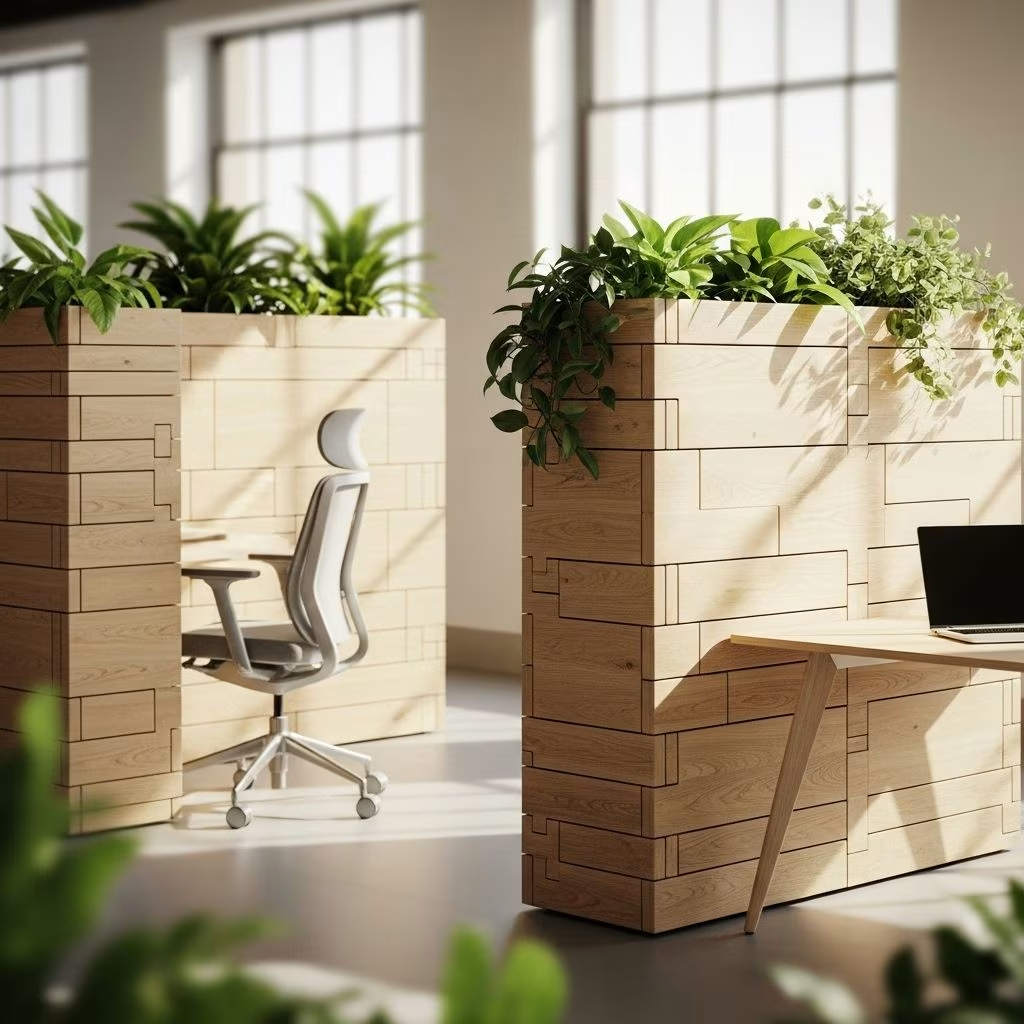
GripBlock partitions are interlocking, modular walls built using solid wood blocks that fit together without the need for screws, glue, or adhesives. Inspired by the familiar aesthetic of children’s building toys and powered by engineering-grade joinery, these partitions offer a fast, flexible, and environmentally responsible tool for dividing and configuring interior spaces on demand.
- Precision cut and certified solid wood blocks
- Interlocking engineering: assembly requires no nails, adhesives, or specialized tools
- Modular units allow for both temporary and semi-permanent installations
- Easy to disassemble, reconfigure, and reuse in different layouts
Addressing the Demand for Safer, More Flexible Spaces
The COVID-19 pandemic highlighted the urgent need to maintain physical separation in public settings. Commercial establishments, especially hospitality venues, faced pressure to protect patrons and staff while continuing operations. This ushered in a search for health-protective barriers that are practical, aesthetically pleasing, and non-invasive to existing buildings.
- Conventional barriers (e.g., plexiglass screens) often appear institutional and obstruct architectural integrity
- Many provide only visual separation without sound absorption or added thermal/ventilation properties
- GripBlock solutions stand out for blending function, design, and sustainability
Prioritizing Public Health Without Compromising Design
Unlike makeshift screens, GripBlock partitions offer more than just a physical separation. Their robust construction and strategic deployment can:
- Minimize airborne pathogen spread by creating defined zones
- Reduce cross-traffic and facilitate controlled movement patterns
- Contribute acoustic dampening for improved indoor comfort
- Integrate seamlessly with diverse aesthetics, from rustic to contemporary
How GripBlock Partitions Work
The system’s adaptability stems from its time-tested approach to joinery and modularity. The blocks, typically crafted from sustainably harvested softwood, utilize engineered grooves, ridges, or tongues that lock together in a stable formation. No special tools or skilled trades are required for most applications.
- Block sizes and shapes: Available in a range of dimensions to create partial or full walls, curved partitions, booths, kiosks, and more
- Height and thickness: Walls can range from low dividers to ceiling-height barriers; thickness depends on acoustic and spatial needs
- Structural stability: Weight and friction keep the blocks securely in place; additional anchors are optional for higher or load-bearing layouts
- Finish options: Raw, stained, or painted wood allows for custom design harmony
Installation and Reconfiguration
A hallmark of the GripBlock system is its rapid deployment. Most walls can be constructed by just a couple of people in under an hour. Disassembly is equally fast, with elements fully reusable and easily transported for other projects or venues. This capability is particularly valuable for businesses that need to alter layouts based on occupancy or event requirements.
- Zero dust, noise, or disruption compared to traditional building work
- No damage to floors, ceilings, or existing structures
- Minimal training needed to assemble or move
A Sustainable Approach to Indoor Spatial Design
As environmental concerns intensify within the design and construction sectors, GripBlock partitions align with sustainable best practices at multiple levels.
- Material sourcing: Made from certified wood, often through responsible forest management programs
- Low embodied carbon: Solid wood stores carbon, reducing the environmental footprint compared to plastics or metals
- Non-toxic assembly: No off-gassing from adhesives or synthetic finishes
- Full reusability: No waste generated when partitions are relocated or reconfigured
- End-of-life blocks can be recycled, repurposed, or composted
Benefits Over Disposable or Fixed Barriers
| Feature | GripBlock Modular Partitions | Plexiglass Barriers | Drywall/Fixed Walls |
|---|---|---|---|
| Speed of Installation | Minutes to hours | Minutes | Days to weeks |
| Reconfigurability | Highly reusable and adaptable | Limited; prone to scratching/breakage | None; demolition required |
| Environmental Impact | Low (biodegradable, carbon store) | High (plastic waste) | Medium to high (construction waste) |
| Visual Appeal | High; customizable | Low; tends to look institutional | Varies; often bland/functional |
| Acoustic Benefits | Excellent sound dampening | Poor | Good but less flexible |
Case Studies: Where GripBlock Shines
GripBlock partitions have proved their worth across diverse public and commercial spaces, offering unique advantages to each:
- Restaurants and Cafés: Create cozy nooks and maintain airflow while reducing droplet transmission between groups. The warm wood aesthetic enhances ambiance, unlike sterile barriers.
- Schools and Libraries: Divide open-plan rooms into manageable cohorts for safer learning, while absorbing noise and minimizing distractions.
- Offices and Conference Spaces: Adapt floorplans rapidly for hybrid work, meeting pods, or touchdown zones; blocks double as functional decor.
- Event Venues: Rapidly deploy temporary ticketing booths, backdrops, or zone off sections for crowd management.
- Retail Spaces: Define traffic flows or showcase displays without permanent fixtures or damaging existing fit-outs.
Feedback from Implementers
Organizations using GripBlock systems report major benefits:
- Visual warmth and comfort attract customers and support brand identity
- Speed and cleanliness minimize downtime and business disruption
- Ongoing adaptability keeps pace with regulation changes and evolving needs
Wood as a Healthy Building Material
The use of natural wood surfaces not only brings biophilic comfort and beauty to public spaces but may also have hygienic and health-promoting qualities. Modern studies indicate that bacteria and viruses generally survive for shorter periods on wood compared to common plastics and metals. Wood is naturally antimicrobial, particularly when left untreated or with minimal finishing.
- Wood surfaces inhibit the growth and transfer of microbes
- Less static charge means fewer airborne particles stick to wood
- Breathe-easy microbial management without harsh chemicals
Addressing Challenges and Common Concerns
While modular GripBlock walls offer many advantages, ongoing attention must be paid to addressing practical and safety questions:
- Stability: For extremely tall or high-traffic installations, added anchors or broader bases may be required
- Fire Safety: Untreated wood must meet code requirements for flammability; fire-retardant finishes are available where needed
- Cleaning Protocols: Regular cleaning with mild, non-corrosive agents is recommended for hygiene
- Material Sourcing: Ongoing use of FSC- or SFI-certified woods ensures environmental integrity
Looking Ahead: A Lasting Legacy of Modular, Eco-Conscious Barriers
While many health-protective measures introduced during the pandemic were intended as stopgaps, the wide-ranging capabilities of GripBlock partitions position them as permanent tools for dynamic, people-centered design. Public expectations for adaptable, attractive, and responsible spaces are likely to endure, making flexible wooden modularity a mainstay for future architecture.
- Long-term reduction in waste and expense as spaces evolve, rather than requiring demolition and rebuilding
- Promotes a return to nature-inspired materials, supporting occupant well-being
- Encourages a culture of spatial experimentation, creativity, and inclusion
- Strengthens community resilience by quickly responding to new public health challenges or changing usage requirements
Frequently Asked Questions (FAQs)
Q: How easy is it to install or reconfigure GripBlock walls?
A: These systems are specifically designed for user-friendly assembly and disassembly. Most installations require only two people and basic training, with no need for special tools or building contractors. Adjusting or moving a partition is fast and clean, saving both time and money compared to traditional construction.
Q: Are the wood blocks treated for health and safety?
A: GripBlock partitions are made from solid, responsibly harvested wood and can be specified with finishes that meet indoor air quality, fire safety, and antimicrobial requirements. Untreated or low-VOC coatings are standard, and fire retardant coatings are available where necessary to meet local code.
Q: Can these partitions integrate with existing décor or branding?
A: Yes. The surfaces can be left natural, stained, or painted in any color, and the modular shapes allow for creative layouts and architectural features that can enhance or blend into any brand environment.
Q: Are GripBlock walls suitable for outdoor or semi-outdoor use?
A: While primarily designed for interiors, with the right finishing, these systems can be adapted for temporary outdoor uses—such as pop-up cafes or market stalls—provided they are protected from prolonged exposure to moisture.
Q: How sustainable are these partitions over their life cycle?
A: Sustainably sourced wood stores carbon, and the blocks’ full reusability ensures minimal impact at every stage. At end-of-life, blocks can be repurposed or recycled, avoiding landfill waste common to plastic or drywall barriers.
Key Takeaways for Design Professionals and Facility Managers
- Modular wood partitions like GripBlock provide a unique blend of design flexibility, rapid deployment, and proven environmental benefits.
- They help create healthier, more adaptable indoor environments in response to public health demands—without generating excess waste or aesthetic compromise.
- Commercial spaces, institutions, and venues seeking to build resiliency and well-being into their operations stand to gain from investing in such innovative modular systems.