Pope Francis Calls on Nations to Listen to the Cry of the Earth
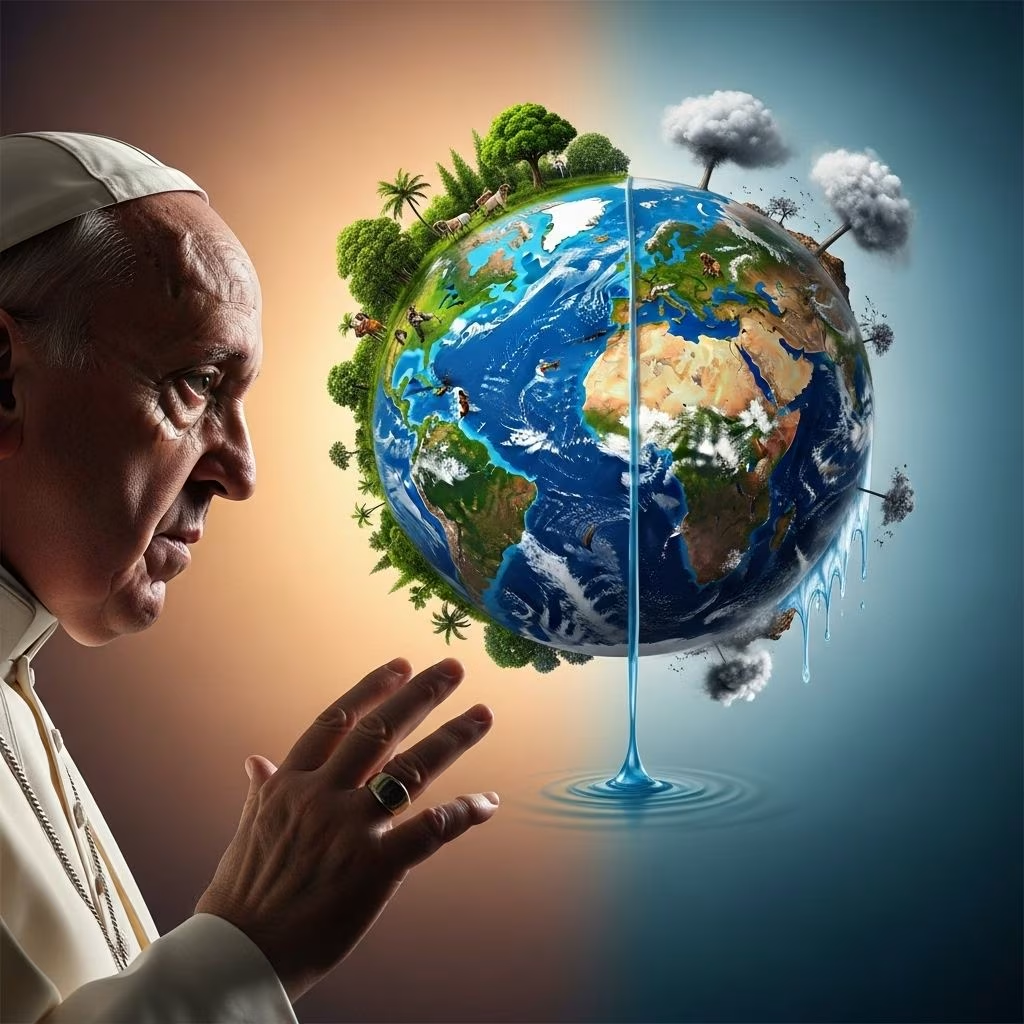
In a forceful and urgent appeal to the world, Pope Francis has called on national leaders, institutions, and individuals to recognize the grave ecological and social crises threatening the planet. Rooted in his groundbreaking 2015 encyclical, Laudato Si’, and echoed through subsequent statements, the Pope urges all to listen to the “cry of the Earth and the cry of the poor”, demanding a transformation in our relationship with nature, society, and one another.
The Environmental and Social Crisis: A Dual Emergency
Pope Francis frames the environmental challenge not as an isolated issue, but as a complex, interwoven crisis that affects human dignity, justice, and the very fabric of society. He stresses that the ecological devastation unfolding—climate change, pollution, biodiversity loss, and resource depletion—is inseparable from economic inequality, social disintegration, and moral neglect. Humanity, he argues, has “mistreated our common home as never before in the last two hundred years.”
- Pollution & Climate Change: Air and water pollution, rising greenhouse gases, and toxic waste threaten lives and jeopardize ecosystems.
- Biodiversity Loss: Rapid extinction of species and the destruction of natural habitats destabilize essential systems for life.
- Social Breakdown: Poverty, inequality, and marginalization are exacerbated by environmental harm, hitting vulnerable populations hardest.
Your health, your dignity, and your community are at stake, Pope Francis insists. He challenges the world to confront the root causes—”the human roots of the ecological crisis”—including wasteful consumption, profit obsession, indifference to the poor, and denial of responsibility across generations.
Integral Ecology: A New Paradigm for Justice
The heart of the Pope’s message is the concept of Integral Ecology—a vision for addressing interconnected crises together. Integral ecology means recognizing that:
- Nature and humanity are intimately linked; neither can flourish at the expense of the other.
- Environmental protection and social justice must go hand in hand.
- Every action affecting one part of the system reverberates throughout the whole.
“We are not faced with two separate crises, one environmental and the other social, but rather one complex crisis which is both social and environmental,” Pope Francis writes.
This approach calls for:
- Redefining the notion of progress to include the well-being of people and the planet, not just economic growth.
- Reforming institutions and policies to protect the common good and future generations.
- Embracing a culture of care, solidarity, and ethical responsibility.
Human Responsibility: The Moral and Spiritual Dimension
Pope Francis positions the ecological crisis as a profound moral and spiritual challenge. He reminds the world:
- Humans are stewards, not masters, of “our common home.”
- Every action—however small—either builds up or destroys our shared future.
- The Earth “is crying out,” as are the poor and vulnerable who bear the brunt of environmental injustice.
He explicitly invokes religious and ethical traditions, stating that faith can inspire us to “hear both the cry of the Earth and the cry of the poor,” and to “change direction” through “ecological conversion.”
Tackling Climate Change: An Imperative for Global Leaders
Pope Francis’s strongest appeals are directed toward governments and powerful institutions. He warns that failure to act decisively against climate change and ecological degradation will be judged as a “failure of conscience and responsibility.”
He calls on nations to:
- Commit to rapid reduction in greenhouse gas emissions.
- Promote clean energy and invest in sustainable infrastructure.
- Hold polluters accountable and redirect subsidies away from harmful industries.
- Protect the rights of Indigenous peoples and frontline communities.
- Ensure that climate action addresses poverty, hunger, and social inequity, not just carbon levels.
He stresses that “those who will have to suffer the consequences […] will not forget this failure,” and that leaders must exhibit “honesty, courage, and responsibility.”
Economic Systems and Consumerism: The Roots of the Crisis
Pope Francis delivers a searing critique of the economic drivers behind environmental destruction. He notes:
- Short-term profit motives often override the common good and long-term planetary health.
- Wealthy nations, corporations, and consumers bear disproportionate responsibility for resource depletion and emissions.
- Wasteful consumption is leading to an “immense pile of filth”: toxic waste, plastic, e-waste, and other pollutants inundate the planet.
He urges a shift away from “throwaway culture” toward economies that value sufficiency, repair, circularity, and simplicity.
The Social Dimension: Justice for the Poor and Future Generations
The Pope highlights that environmental harms are socially unjust, falling hardest on the impoverished, marginalized, and those least able to defend themselves.
- Poor communities suffer first and worst from pollution, food and water insecurity, and climate disasters.
- Wealth gaps are both a consequence and a cause of environmental breakdown.
- Ethical action means safeguarding the dignity and rights of the poor and ensuring an inhabitable world for generations to come.
Pope Francis calls for an “ecological conversion” that makes solidarity, care, and justice central to environmental policy.
Renewed Dialogue and Cooperation: Building Our Common Home
Addressing not only believers but “all people of good will,” Pope Francis emphasizes that ecological action requires global solidarity and participatory dialogue.
- International agreements, such as the Paris Climate Accord, must be strengthened and implemented, not delayed.
- Nations must resist turning inward and instead cooperate for the common good.
- Dialogue across faiths, cultures, and sectors is essential to forging a new development path.
He concludes with hope: “Humanity still has the ability to work together in building our common home… Truly, much can be done!”
Concrete Steps for Individuals and Communities
Although much responsibility lies with governments and corporations, Pope Francis reminds everyone that individual and community actions matter:
- Reduce personal consumption and waste. Reuse, recycle, and avoid single-use items.
- Transition to sustainable, plant-forward diets and support ethical food producers.
- Use energy efficiently and choose renewable sources where possible.
- Advocate for climate justice and support vulnerable groups in your community.
- Nurture a sense of wonder, gratitude, and connectedness with nature.
Education, reflection, and ethical choices must become part of daily life, rooted in “care for our common home.”
Table: Pope Francis’s Key Environmental Warnings and Solutions
| Problem | Impact | Papal Solution |
|---|---|---|
| Climate Change | Extreme weather, sea level rise, health crises, extinction | Drastically cut emissions, transition to renewables |
| Pollution & Waste | Poisons water, air, soil; harms health; degrades habitats | Adopt circular economies, reduce plastic and toxic waste, enforce regulation |
| Biodiversity Loss | Loss of essential ecosystems, food insecurity | Protect habitats, regulate resource use, restore degraded land |
| Poverty & Inequity | Vulnerable groups disproportionately affected, cycle of suffering | Promote justice, fair access to resources, empower the poor |
Frequently Asked Questions (FAQs)
Q: What is the main message of Pope Francis’s “Laudato Si’”?
A: The core message is a global call to care for “our common home” through integral ecology, addressing both environmental destruction and social injustice. The Pope urges action from all—governments, communities, and individuals—to protect nature, support the vulnerable, and build a just, sustainable world.
Q: How does “integral ecology” differ from traditional environmentalism?
A: Integral ecology emphasizes that environmental, social, economic, and ethical issues are interconnected. Unlike environmentalism focused solely on nature, integral ecology demands justice, solidarity, and the inclusion of all human needs and rights.
Q: Why does Pope Francis place responsibility on nations?
A: The Pope believes that systemic problems like climate change can only be solved through collective action, policy change, and political will. Nations have the resources and authority to enact far-reaching transformation and ensure justice for all.
Q: What can individuals do to help heed Pope Francis’s call?
A: Individuals can reduce waste, use energy carefully, make ethical purchases, advocate for climate justice, and support policies that protect people and the environment. Building ecological awareness and practicing solidarity in daily life are key steps.
Q: Is there hope for addressing the global ecological crisis?
A: Yes. Pope Francis insists that “all is not lost,” emphasizing humanity’s capacity for renewal, cooperation, and moral action. By working together, it is possible to build “our common home” on foundations of justice, care, and ecological resilience.
Final Reflections: Toward a Renewed Relationship with Earth
Pope Francis’s call for ecological conversion is more than a policy prescription—it is an invitation to reimagine humanity’s place in the web of life. He draws on the spiritual insight that the universe “speaks of God’s love,” and that treating the environment with reverence, gratitude, and humility opens the path to healing both society and the natural world.
Only by hearing “the cry of the Earth and the cry of the poor” can nations fulfill their responsibility to future generations and safeguard the home we all share.
References
- https://catholicclimatecovenant.org/encyclical/
- https://www.cbcew.org.uk/wp-content/uploads/sites/3/2020/05/laudato-si-summary.pdf
- https://www.earthday.org/the-popes-encyclical-on-the-environment-key-excerpts-from-laudato-si/
- https://www.catholic.com/magazine/online-edition/pope-franciss-environmental-encyclical-13-things-to-know-and-share
- https://cafod.org.uk/news/uk-news/pope-francis-encyclical
- https://www.vatican.va/content/francesco/en/encyclicals/documents/papa-francesco_20150524_enciclica-laudato-si.html
- https://en.wikipedia.org/wiki/Laudato_si’
- https://www.vaticannews.va/en/pope/news/2025-04/laudato-si-pope-francis-death-environment-advocacy.html