Principles Behind Designing a Backyard Food Forest
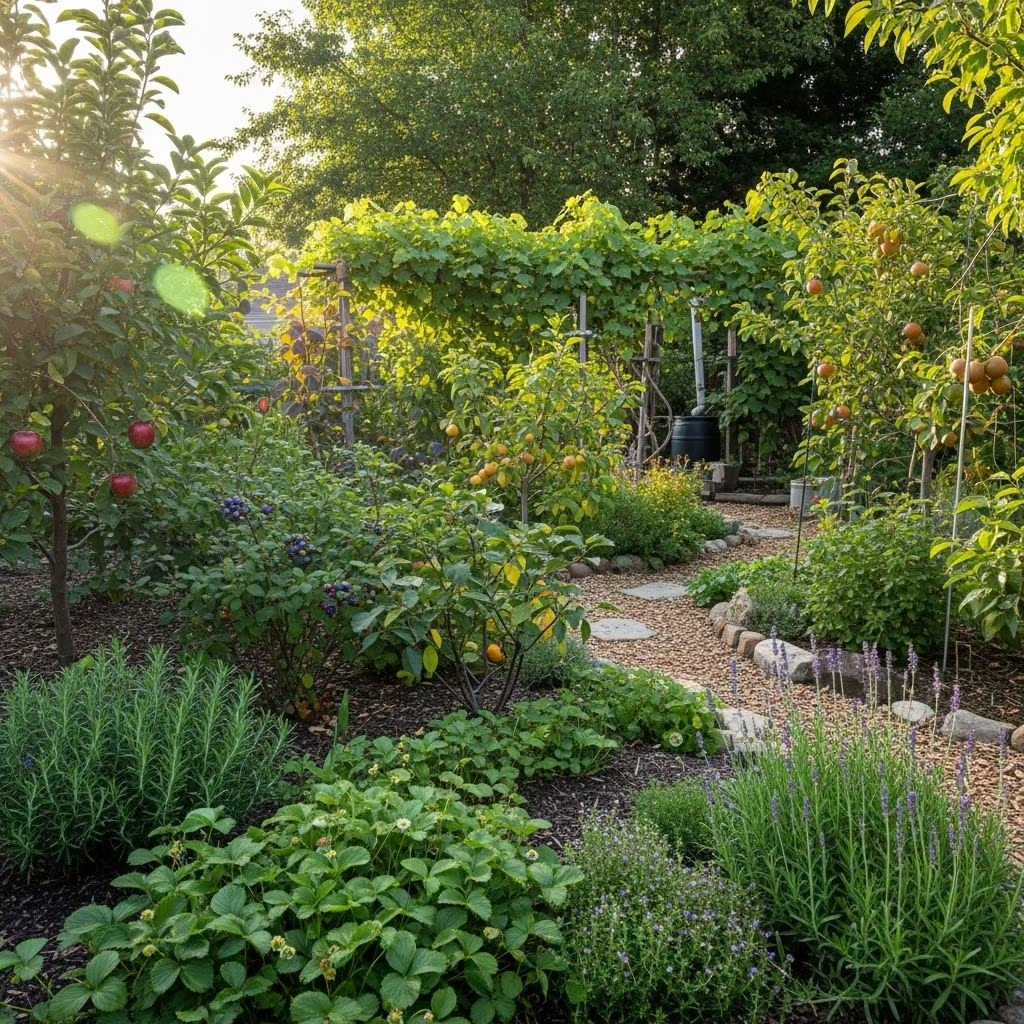
Imagine a lush and productive backyard that mimics a forest ecosystem, bursting with edible plants, medicinal herbs, perennial vegetables, and vibrant wildlife. This vision is at the heart of food forest design—a regenerative approach to gardening that draws inspiration from nature’s most resilient and self-sustaining systems. By understanding and applying the foundational principles of food forest design, you can turn your outdoor space into a haven of abundance and biodiversity, supporting both your household and the environment for years to come.
What Is a Food Forest?
A food forest, also known as a forest garden, is an intentional arrangement of edible and beneficial plants that mimics the structure, diversity, and functions of a natural woodland ecosystem. Instead of traditional rows or monocultures, food forests use multispecies layering, strategic placement, and natural processes to create a living, low-maintenance landscape that regenerates itself year after year. This method blends fruit and nut trees, shrubs, medicinal herbs, perennial vegetables, groundcovers, and root crops—often interplanted with annuals and flowers to maximize yields and ecological harmony.
- Food forests draw on permaculture concepts to develop systems that are stable, resilient, and productive.
- By copying how wild forests self-organize, food forests minimize the need for artificial inputs like pesticides, synthetic fertilizers, or frequent irrigation.
- Functional diversity—combining multiple plant species and growth forms—creates a robust, pest-resistant, and fertile environment.
The Seven Layers of a Food Forest
A core principle in food forest design is emulating the natural layers found in healthy forests. Each layer performs unique functions, making the most of available sunlight, moisture, and nutrients. While some designs use as few as five layers or as many as nine, the classic seven-layer model is most widely used.
| Layer | Description | Examples |
|---|---|---|
| Canopy | Tallest fruit/nut trees; capture sunlight and create microclimates | Apples, pears, chestnuts, mulberries |
| Low tree/Sub-canopy | Smaller fruit trees or nitrogen-fixers beneath canopy | Plums, peaches, serviceberry, hazelnut |
| Shrub | Woody perennial bushes providing fruit and protection | Currants, blueberries, gooseberries, elderberries |
| Herbaceous | Soft-stemmed perennials and annuals for food or pollinators | Mint, comfrey, fennel, yarrow, bee balm |
| Groundcover | Low-growing plants protecting soil and suppressing weeds | Strawberries, clover, creeping thyme |
| Vining | Climbing plants using tree/shrub structure for support | Grapes, kiwifruit, runner beans |
| Root | Edible or beneficial belowground crops | Garlic, onions, Jerusalem artichoke, carrots |
This layered approach:
- Maximizes sunlight capture and use of space, both above and below ground
- Encourages mutually supportive plant relationships
- Creates niches for a range of beneficial insects, birds, and soil life
Mimicking Nature’s Diversity
A thriving food forest embraces diversity, not just in species but in roles and functions. Planting a variety of types ensures resilience against disease, climate swings, and pests. Diversity also extends to the timing of yields—staggering harvests across the seasons for a steady supply of food.
- Diversity brings resilience. If one crop fails, others can fill the gap, reducing risk and increasing overall yield.
- Ecological niches are filled with compatible plants: dynamic accumulators, nitrogen fixers, insect habitat, pollinator attractors, ground protectors, and more.
- Multifunctionality is key. One species may provide shade, mulch, food, and support for vines all at once.
Planning: Assessing Your Site and Your Needs
Before planting, a detailed site assessment is essential. This foundational step ensures your food forest not only thrives ecologically but also remains both beautiful and practical for your household’s needs.
- Map the sun: Observe and record sunlight patterns throughout the seasons. Some plants require full sun; others can handle partial shade.
- Check the soil: Test for pH, fertility, and drainage. Amend with organic matter, minerals, and mulch as needed.
- Identify existing vegetation: Some mature trees can be incorporated or serve as nurse plants; others may need removal or pruning.
- Understand your climate: Note your USDA hardiness zone, temperature extremes, rainfall, wind direction, and microclimates.
- Water availability: Plan irrigation for establishment years and consider harvesting rainwater using swales or mulch basins if appropriate.
- Wildlife dynamics: Fence vulnerable areas from deer, rabbits, or other critters as needed.
- Access and layout: Allow for clear pathways, tool storage, and composting zones.
Just as important is understanding what you want from your food forest:
- What are your favorite fruits, nuts, herbs, and vegetables?
- How much time do you have for maintenance?
- Are you prioritizing food production, wildlife support, beauty, shade, or another goal?
Design Patterns: From Big Picture to Details
After your site assessment, it’s time to lay out the structure. Begin by sketching a plan on paper or using garden design software. Place your largest elements (trees and shrubs) first, then add understory layers.
- Group plants into guilds: communities of species that cooperate, such as a fruit tree supported by nitrogen-fixing plants, pollinator-attracting flowers, and mulch-producing groundcovers.
- Maintain access: Ensure that no area is cut off by dense growth. Plan paths from the outset.
- Edge effect: Maximize productivity by increasing the edges between plant communities—where sunlight, humidity, and species diversity are greatest.
- Alley cropping: Alternate strips of perennial and annual production for diversity and easy harvest.
- Microclimates: Use canopy layering and windbreaks to buffer extreme weather and moderate soil temperatures.
Practical design tips:
- Site long-lived trees where they have space to mature without shading out everything else.
- Install tool sheds, water barrels, and compost bins early for easy access.
- Position frequently harvested plants close to your house; less frequented crops can go further away.
- Observe nature closely—success comes from adapting plans as you see what thrives and what struggles.
Soil Health and Mulching
Healthy soil is the invisible engine of a productive food forest. Fostering a living, nutrient-rich, well-aerated soil ecosystem minimizes disease and maximizes productivity.
- Test soil before planting to guide amendments.
- Apply mulch materials (wood chips, leaves, straw, cardboard) in thick layers around young plantings to retain moisture, feed soil organisms, and suppress weeds.
- Rotate use of mineral-rich amendments such as greensand, rock phosphate, lime, and kelp meal, as indicated by soil tests.
- Encourage continual cycling of nutrients through composting, chop-and-drop mulching, and the use of dynamic accumulators (plants that bring up nutrients from deep in the soil).
Supporting Wildlife and Ecosystem Services
Food forests are more than food plots—they are vibrant ecological systems. Designing for wildlife connectivity increases pollination, natural pest control, and ecosystem health.
- Plant flowering species—such as yarrow, bee balm, comfrey, and calendula—that bloom at different times to support pollinators from spring through autumn.
- Include water sources (bird baths, ponds) and dense shrubs for nesting habitats.
- Native plants and perennial wildflowers attract beneficial insects and build a healthy ecosystem web.
Maintenance: Observation, Adaptation, and Ongoing Care
While food forests can become self-sustaining over time, the early years require regular observation and adaptive management. Pruning, mulching, watering, and pest management are all part of the establishment phase. Over time, tasks shift from planting and establishing to harvesting and gentle guiding of the system’s natural dynamics.
- Prune or limb up trees to allow more light to reach lower layers.
- Regularly check for pests and diseases; encourage beneficials before reaching for interventions.
- Replace struggling plants, expanding your “genetic seed bank” as you learn what thrives.
- Maintain paths and access ways for ease of harvest and continued enjoyment.
Design Inspiration: Food Forest Examples & Patterns
There is no single template for a food forest—each reflects its unique location, climate, and gardener. Below are a few effective design patterns and real-world inspirations:
- Bowl or gradient shape: Place tall trees to the north or west edge (N. Hemisphere), then taper to lower trees, shrubs, and groundcovers to minimize shading and maximize sunlight for all layers.
- Keyhole beds: Provide easy access into dense plantings.
- Alley-cropped strips: Alternate perennials and annuals within the forest space.
- Forest-edge mimicry: Plant diverse, dense edges to boost productivity and wildlife support.
Common Mistakes to Avoid
- Planting too many trees too close together; prioritize quality over quantity to avoid crowding and disease.
- Ignoring site-specific conditions such as soil, sun, climate, or water flow when choosing species.
- Failing to plan for future tree growth and shade impacts on other plants.
- Neglecting maintenance during establishment years, leading to overrun weeds or poor survival rates.
Benefits of a Food Forest
- Low-maintenance once established, requiring less watering, fertilizing, and weeding than annual gardens.
- Continuous yields from early spring to late autumn—sometimes year-round in milder climates.
- Improves soil, water retention, and local biodiversity.
- Resilient to pests, diseases, and climatic shocks due to ecological diversity.
- Provides beauty, educational opportunities, and habitat for pollinators and wildlife.
Frequently Asked Questions (FAQs)
Q: How much space do I need to start a food forest?
A: Food forests can be established in spaces as small as a backyard or even a large garden bed. The principles work on any scale, though your choice of species and tree spacing will depend on the available area.
Q: Can food forests be created in urban settings?
A: Absolutely. Many backyard and even front-yard food forests thrive in urban and suburban neighborhoods, using compact designs, dwarf cultivars, and intensive layering techniques to maximize yield in small spaces.
Q: How long does it take to see results from a food forest?
A: Perennial food forests take time to establish, typically providing substantial yields in 3–7 years. Annuals and faster-growing perennials offer harvests in the first season or two, while trees build the long-term structure and abundance.
Q: What maintenance is required?
A: Early maintenance involves planting, mulching, watering, and weeding; later years focus on selective pruning, soil building, and harvesting. Over time, food forests become easier to manage than conventional annual gardens.
Q: Is it expensive to get started?
A: Costs vary; you can minimize expenses by growing from seed, propagating from cuttings, and trading with neighbors. Start small with key species important to your family, expanding as your budget and skills grow.
Final Thoughts
Designing a backyard food forest is both art and science—melding ecological principles with your needs and imagination. By taking cues from the abundance of wild forests, you build a resilient, beautiful, and productive landscape. With observation, thoughtful planning, and patience, any outdoor space can be transformed into a thriving food forest, providing food, habitat, and inspiration for generations to come.
References
- https://joegardener.com/podcast/food-forest-basics/
- https://realizehomestead.com/food-forest-crash-course/
- https://permacultureapprentice.com/food-forest-with-swales-layout-pfdc/
- https://www.youtube.com/watch?v=Ic93km06DLQ
- https://www.freepermaculture.com/food-forest/
- https://permies.com/wiki/167916/Food-Forest-Garden-Plan-Grow