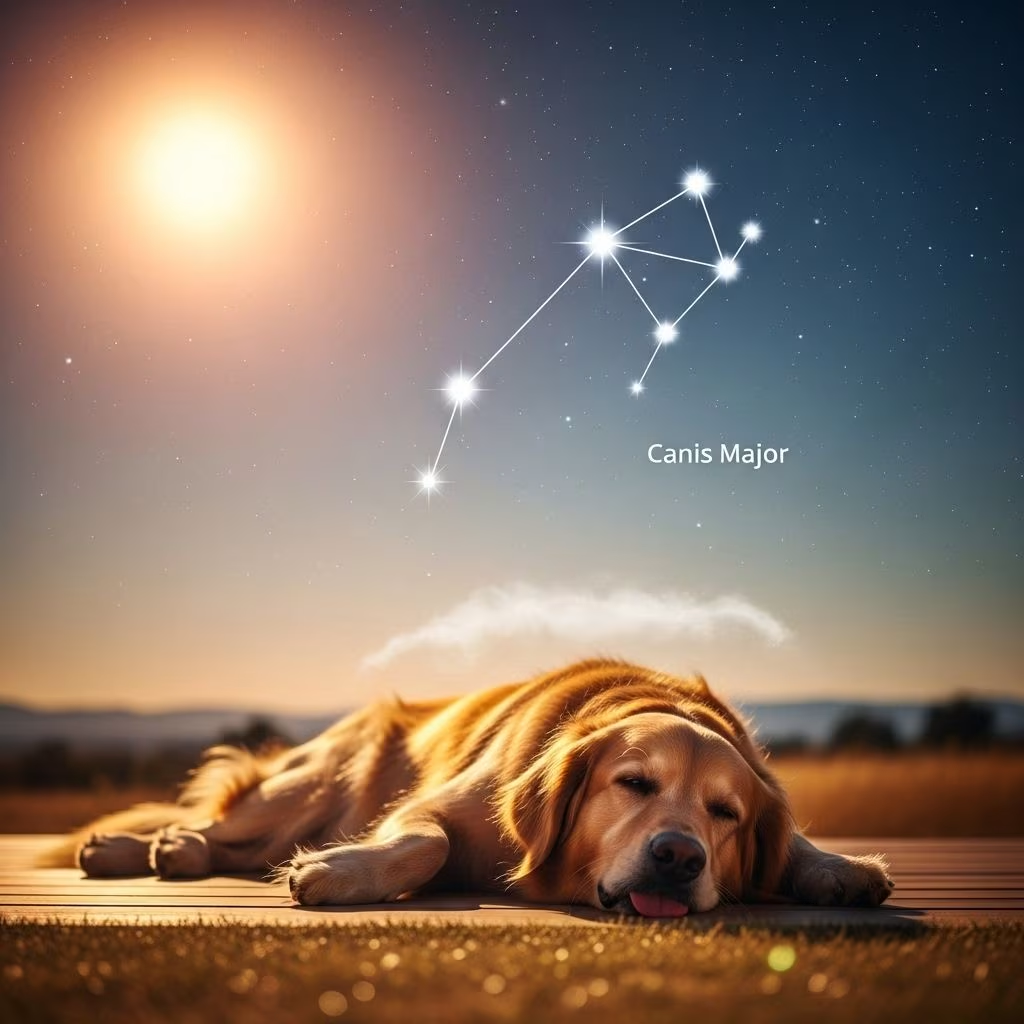
The Real Meaning Behind the Dog Days of Summer
Every year, as summer reaches its peak in the Northern Hemisphere, a familiar phrase makes the rounds in casual conversation, newscasts, and weather reports: the “dog days of summer.” While the words often evoke images of dogs languishing in the oppressive heat, the real story behind this expression is rich with ancient astronomy, cultural lore, and fascinating misconceptions.
What Are the Dog Days of Summer?
The “dog days of summer” typically refer to the hottest, sultriest days of the year, usually falling between early July and mid-August. In the United States and much of the Northern Hemisphere, these weeks are notorious for high temperatures and stifling humidity. Yet, the true origin of this phrase extends far beyond the summer swelter—deep into the annals of human history and the night sky.
- Modern Usage: Today, “dog days” simply means the period with the year’s most extreme summer heat. It’s a time associated with sluggishness and lethargy, both in people and animals.
- Traditional Range: The dog days typically run from July 3 to August 11, aligning with what are usually the hottest weeks of the year in the Northern Hemisphere.
- Misconceptions: Many believe the phrase refers to dogs becoming lazy or agitated in the heat, or that the weather becomes “not fit for a dog.” In truth, these associations are more cultural than etymological.
The Astronomical and Etymological Roots
The true source of the dog days expression comes not from canine behavior, but from the stars—specifically, Sirius, also known as the Dog Star. Sirius is the brightest star in the constellation Canis Major (Latin for “Greater Dog”), and its appearance in the summer sky has mesmerized ancient cultures for thousands of years.
- Sirius: The name Sirius comes from the Greek word Seirios, meaning “scorching” or “glowing.” In the ancient Mediterranean world, Sirius rises and shines brightest just as the most intense heat of summer sets in.
- Canis Major: The Dog Star is part of the Canis Major constellation, which follows Orion—one of the sky’s most prominent star patterns.
- Heliacal Rising: The “heliacal rising” occurs when Sirius first becomes visible above the eastern horizon at dawn, just before sunrise, after a period of being obscured by the Sun’s glare. This event marked the beginning of the “dog days” for many ancient civilizations.
Ancient Beliefs and Astronomical Calendar
For the ancient Greeks, Romans, and Egyptians, the annual rising of Sirius was more than a striking celestial event—it carried deep symbolic importance and practical consequences.
- Ancient Greece: The Greeks believed the heliacal rising of Sirius brought with it increased heat, drought, sudden thunderstorms, and even unrest among humans and animals.
- Ancient Rome: The Romans adopted the Greek understanding and named this period dies caniculares—”the days of the dog star.” Roman culture associated this time with fever, catastrophe, lethargy, and even “mad dogs.” They considered it a season of misfortune and instability.
- Ancient Egypt: In Egypt, Sirius was known as Sothis and was actually a harbinger of hope—the star’s rising corresponded with the annual flooding of the Nile River, signaling the start of the agricultural year and renewal of the land.
These ancient societies didn’t just mythologize Sirius—they built their calendars and rituals around its appearance. For example, the Greeks even believed illness and madness arose due to the star’s scorching influence. In Egypt, this astronomical event was so significant that Sothis became revered as a divine being, connected to the goddess Isis.
How the Dog Days Shifted Over Time
The correlation between the dog days, Sirius, and summer heat is rooted in ancient observations, but the precise dates have changed over millennia due to precession—the gradual shift of Earth’s rotational axis over a 26,000-year cycle. This means the timing of Sirius’s heliacal rising moves relative to our calendar.
- In ancient times, the dog days began when Sirius appeared at dawn, typically in mid-to-late July.
- Due to the precession of Earth’s axis, Sirius now rises later in some northern latitudes, and the alignment no longer coincides exactly with the hottest days.
- In different cultures and eras, the dog days could fall at varying points in the summer, and in a few thousand years, the “dog days” would shift to other seasons entirely.
Fun Fact: In Sweden (rötmånaden) and Finland (mätäkuu), the dog days are called “rot month”—so named because heat causes food to spoil rapidly, and wounds are more prone to infection in summer’s warmth.
Dog Days in Language and Folklore
As the phrase traveled from Latin and Greek into English, French, and beyond, its meaning evolved and embedded itself in weather lore and popular language. The dog days became synonymous with sultry, exhausting conditions—prime time for thunderstorms, fevers, and sour moods, as well as lazy afternoons and sun-drenched landscapes.
In English, the phrase is a direct translation of Latin dies caniculares and Greek kynádes hēmérai. Its popularity can be traced through centuries of poetry, weather almanacs, and folk proverbs, such as:
Dog days bright and clear
Indicate a happy year;
But when accompanied by rain,
For better times, our hopes are vain.
In modern times, the phrase rarely carries the dire warnings or mystical anxieties of the past. Instead, it’s a nod to the sweltering, often uncomfortable, dogged weeks at summer’s apex.
The Role of Sirius in Different Cultures
| Culture | Name for Sirius | Symbolic Meaning |
|---|---|---|
| Ancient Greek | Seirios (Scorcher) | Portent of heat, disaster, fevers |
| Ancient Rome | Canicula / Sirius | Hot, unlucky season, madness, disease |
| Ancient Egypt | Sothis | Sign of Nile flooding, fertility, renewal |
| English & European folk | Dog Star | Lazy, sultry, stormy days |
Dog Days: Myths, Misconceptions & Fun Facts
- Not About Actual Dogs: Despite the canine reference, the phrase “dog days” is not about dogs overly lounging or going mad from the heat. The connection is strictly celestial.
- Varied Global Dates: The timing of dog days can differ dramatically depending on latitude and epoch. For example, in Athens, Sirius now rises in mid-August; farther south, it appears earlier; farther north, later.
- Supernatural Warnings: In Roman and Greek societies, the period was considered risky—children and livestock were said to be in greater danger, foods spoiled easily, and tempers ran high.
- Changing Constellations: The dog days period will shift out of summer entirely in about 13,000 years due to astronomical precession.
Modern Interpretations of the Dog Days
While scientific understanding has replaced the superstitious fears and star worship that once accompanied Sirius’s rise, the dog days still serve as a cultural touchstone for the oppressive heat and indolence of late summer. Weather outlets reference it, poets still invoke it, and the phrase endures as a marker of the season’s peak.
- Weather Lore: Farmers and gardeners might note the dog days as a time when crops require extra attention, and heat-related illnesses can be more prevalent.
- Social Meaning: The term connotes not only weather, but also a seasonal lull—a period when businesses slow, schools break, and people seek respite from the relentless sun.
- Stargazing: For astronomy enthusiasts, it’s a chance to spot Sirius just before dawn, connecting modern viewers with traditions thousands of years old.
Dog Days and the Natural World
The effects of the dog days are not just human; they are observed in the natural world as well. Animals, plants, and even microbes respond to the summer’s intense heat:
- Dogs and other mammals are often less active, seeking cool, shady spots to conserve energy.
- Many plants enter a semi-dormant state to survive the lack of rainfall common during this time.
- Bacteria and fungi multiply rapidly in the warmth, hence the folk names for “rot month” in Scandinavian countries.
- Lakes and rivers become more prone to algae blooms and reduced oxygen levels, impacting aquatic life.
Legacy and Lasting Influence
From inspiring poetry and proverbs to shaping ancient calendars and modern meteorological jargon, the dog days of summer persist as a symbol of nature’s intensity and humanity’s enduring fascination with the heavens. What began as a simple astronomical observation has evolved into a global expression, bridging cultural boundaries and reminding us of our place beneath the same star-studded sky.
Frequently Asked Questions (FAQs) About the Dog Days of Summer
Q: What are the exact dates of the dog days of summer?
A: Traditionally, the dog days are considered to span from July 3 to August 11 in the Northern Hemisphere. However, the timing of Sirius’s rising can cause slight variations by region and year.
Q: Is there any scientific reason the dog days are so hot?
A: No, the coinciding of Sirius’s rise and extreme summer heat is a historical coincidence. The hottest days result from seasonal weather patterns, not the effect of Sirius itself.
Q: Where did the superstition about ill luck and dog days come from?
A: Ancient Greeks and Romans believed the rising of Sirius was linked to drought, sickness, and misfortune, because it overlapped with the time of year when heat posed real dangers to health and agriculture.
Q: Do dog days matter in the Southern Hemisphere?
A: The effect is less pronounced, as Sirius’s rising does not always align with the hottest part of the year. The cultural significance is mainly a Northern Hemisphere phenomenon.
Q: How can I spot Sirius during the dog days?
A: Look for Sirius rising just before sunrise in the southeastern sky. It’s the brightest star visible and appears close to the horizon, following the pattern of Orion’s “belt.”
References
- https://www.thepioneerwoman.com/home-lifestyle/a43594427/dog-days-of-summer-meaning/
- https://gardenofgods.com/why-we-call-this-time-of-year-the-dog-days-of-summer-its-surprising-astrological-connection-and-more-fun-astrological-happenings-in-august/
- https://www.farmersalmanac.com/why-are-they-called-dog-days-of-summer
- https://en.wikipedia.org/wiki/Dog_days
- https://blog.myollie.com/dog-days-of-summer-meaning/
- https://www.youtube.com/shorts/zLXWfZvTgpM