


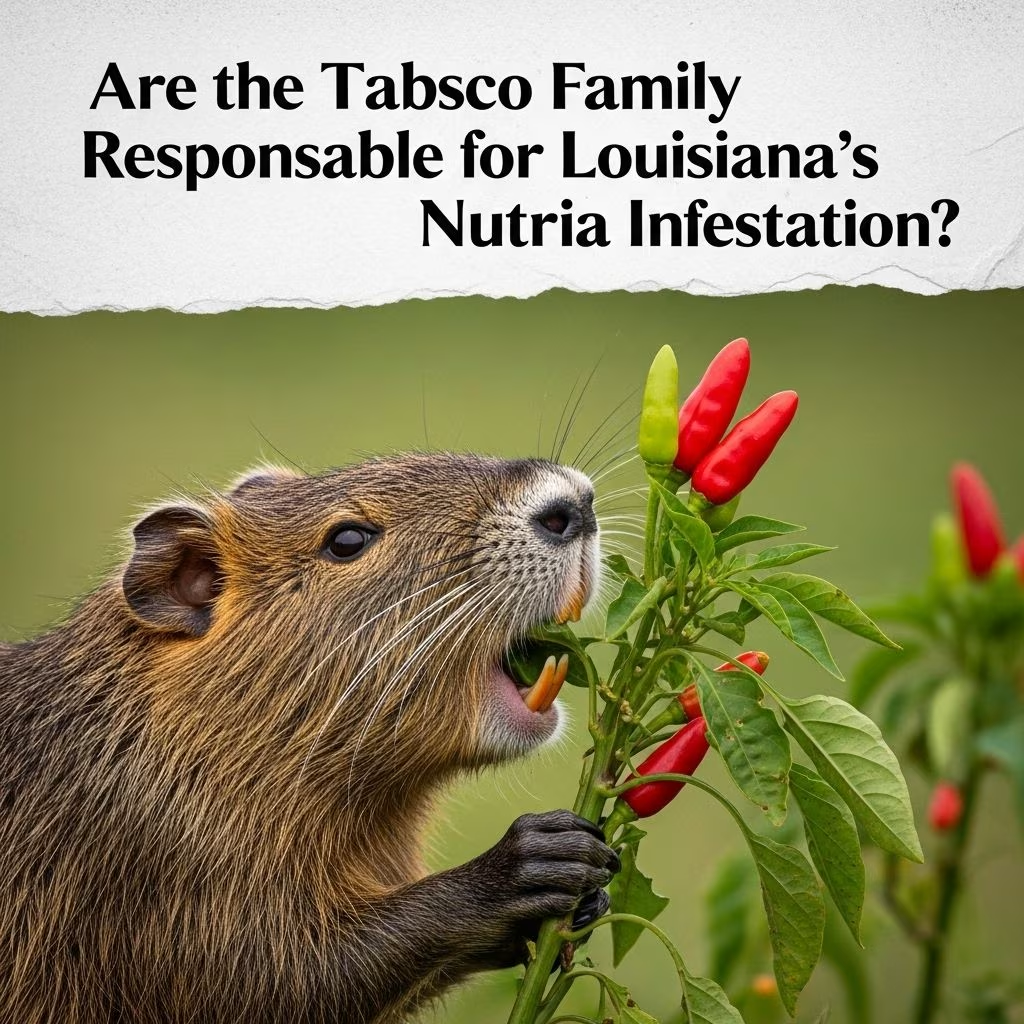
Are the Tabasco Family Responsible for Louisiana’s Nutria Infestation?
Nutria, a large semiaquatic rodent native to South America, have established themselves as one of Louisiana’s most notorious invasive creatures. Their spread has led to dramatic ecological consequences, extensive folklore, and even finger-pointing at well-known families such as those behind Tabasco sauce. This article delves into the origins of the nutria problem, evaluates claims about who is responsible, and examines the broader environmental impact across Louisiana and beyond.
What Is a Nutria?
The nutria (Myocastor coypus), also known as coypu, is a rodent that can reach over three feet in length, weigh between 12 to 16 pounds, and is distinguished by its orange, hook-shaped teeth and a round, hairless tail. Often mistaken for beavers or muskrats, nutria have an unmistakable look and leave a significant mark wherever they are found.
- Native habitat: South America
- Physical features: Orange teeth, large size, round tail
- Diet: Aquatic vegetation (roots and stems)
- Behavior: Highly destructive, voracious appetites
Nutria are prolific breeders. Typically, they mature at six to eight months, breed throughout the year, and can produce three litters annually, with each litter containing four to five young. This reproductive efficiency makes population control exceptionally challenging.
The Origins of Louisiana’s Nutria Explosion
Nutria in Louisiana: A Timeline
| Year | Event |
|---|---|
| 1930s | Nutria are first brought to Louisiana for fur farming. |
| 1937 | Legend holds E.A. McIlhenny imported 13 nutria to Avery Island. |
| 1940 | Story of nutria escaping during a hurricane and populating wetlands. |
| 1958 | Louisiana institutes a bounty program ($5 per tail) to curb nutria numbers. |
| Present | Estimated millions of nutria infest the state, causing major environmental damage. |
Prior to the 1930s, nutria had not been recorded in Louisiana. Their introduction ties back to the global fur trade, where the demand for nutria pelts led entrepreneurs to seek opportunities in the state’s rich wetlands.
Did the Tabasco Family Start the Nutria Invasion?
It is widely reported—by both local and national media—that Edward Avery McIlhenny, the president of the Tabasco corporation at Avery Island, is responsible for introducing nutria to Louisiana. The often-repeated narrative claims that McIlhenny imported 13 South American nutria in 1937, intended for fur farming, and some escaped during a 1940 hurricane, setting in motion a chain reaction that led to today’s infestation.
- Edward Avery McIlhenny: Native of Iberia Parish, Tabasco executive. Credited (sometimes blamed) for introducing nutria.
- Avery Island: Site alleged to be ‘ground zero’ for nutria in Louisiana.
- Media amplification: The story has appeared in The Advocate, Times-Picayune, National Geographic, NPR, and many others.
The Myth and the Facts
While McIlhenny’s role is prominent in popular history, the reality is more complex. Nutria were being imported for fur farming by several individuals and businesses across the state and the Gulf region around the same time. Fur was a lucrative industry, and nutria appeared to be an economical alternative to native furbearers, especially as muskrat populations waned.
- Multiple fur farmers operated in the region, not just McIlhenny.
- Nutria escapes likely occurred from several sites.
- Historical records are muddy, and no single individual can be definitively credited—or blamed—with causing Louisiana’s nutria problem.
The hurricane escape story remains part factual, part myth. Hurricanes did cause animal escapes, but the spread was also fueled by the animals’ ability to thrive in southern Louisiana’s unique ecology, regardless of initial site.
The Nutria Infestation: Environmental Disaster in the Bayou
Why Are Nutria a Problem?
Nutria’s biological efficiency and appetite for wetland vegetation make them a significant ecological threat. As they spread, they consume and uproot plants that help anchor the delicate soils of Louisiana’s marshes.
- Accelerated coastal erosion: Nutria destroy vegetation, leaving soil vulnerable.
- 100,000+ acres affected: The rodents have seriously degraded Louisiana’s wetlands.
- Threat to native species: Nutria outcompete native wildlife for food and space.
- Residential encroachment: Nutria have been increasingly spotted in urban and suburban environments, even inside homes.
Nutria infestations are not unique to Louisiana. Their populations have expanded to states such as Texas, California, and parts of the Northwest United States. In California, the damage nutria cause to wetlands is considered as dangerous as that caused by wildfires.
How Big Is the Nutria Problem?
- An estimated 25 million nutria now inhabit southern Louisiana, with populations spreading north.
- Infestations can reach up to 300 nutria in a two-mile stretch of canal.
- Nutria have been found in toilets and sewers within New Orleans and other cities.
- The animals have forced local governments to classify them as a nuisance species.
Economic and Social Consequences
- Impact on fisheries and hunting: The loss of native wetland species disrupts traditional livelihoods.
- Bounty programs: At one point, Louisiana paid $5 per nutria tail; this helped lower populations but posed new issues with disposal of carcasses and oxygen depletion in waterways.
- Potential for human consumption: Ideas circulate periodically about using nutria as a lean protein source, but cultural acceptance is limited.
Nutria Beyond Louisiana: A National Problem
The nutria issue is no longer just Louisiana’s problem. The rodents have migrated as far as California and the Pacific Northwest, triggering renewed alarm and management efforts.
| State | Present Nutrira Status | Main Concerns |
|---|---|---|
| Louisiana | Millions; severe wetlands damage | Coastal erosion, habitat loss |
| Texas | Growing populations | Wetland and riverbank degradation |
| California | Detected since 2017, active eradication | Threat to Sacramento–San Joaquin Delta wetlands |
| Pacific Northwest | Slow spread | Ecological impact |
Nutria Control Efforts
Management Strategies
- Bounty programs: Financial incentives for hunting nutria remain in place in some areas.
- Eradication campaigns: States like California have launched dedicated Nutria Eradication Programs, deploying teams for active removal.
- Habitat restoration: Replanting wetland vegetation helps stabilize soils and outcompete nutria.
Despite these efforts, nutria’s reproductive rates and adaptability continue to challenge wildlife managers. The initial lag phase of an infestation quickly gives way to rapid population growth, complicating eradication and control.
Myths and Misunderstandings: The Tabasco Family’s Legacy
Why Has McIlhenny’s Name Stuck?
Several factors help explain why Edward Avery McIlhenny’s name endures as the person “responsible” for the nutria invasion:
- His prominence as head of Tabasco, a globally recognized brand.
- Regional and national media repeated and amplified the story over decades.
- The narrative is simple and memorable—one man, one moment, huge consequences.
- Local folklore, coupled with Cajun and Creole culture’s taste for storytelling.
Yet, this narrative oversimplifies a complicated history, omitting other people and broader economic factors behind the nutria’s introduction.
Was It Just McIlhenny?
Historical evidence points to a wider phenomenon. Fur farming in the early-to-mid 20th century saw nutria brought in from South America by several actors aiming to capitalize on their pelts. Escapes from these operations occurred—due to hurricanes, flooding, carelessness, and even deliberate releases when hopes for profit faded—meaning the blame for infestation cannot rest with any one person or family.
Frequently Asked Questions (FAQs)
Why were nutria originally brought to Louisiana?
Nutria were imported for commercial fur farming. Their pelts were in high demand and appeared to offer a profitable alternative to native furbearers such as muskrats, which were declining.
Do nutria have any natural predators in Louisiana?
Few predators actively hunt adult nutria. Alligators, large raptors, and sometimes people now contribute to population control, but their rapid breeding continually outpaces natural predation.
Is the Tabasco family truly responsible for the infestation?
While Edward Avery McIlhenny played a role in early importation, many others were involved in bringing nutria for fur farming. Blaming the Tabasco family alone ignores the broader context of economic and ecological history.
How have local communities responded?
Residents, hunters, and pest control professionals regularly trap, hunt, and eradicate nutria to protect property, wetlands, and urban areas—all with varying degrees of success.
Are nutria only a problem in Louisiana?
No. Nutria infestations have spread to Texas, California, the Pacific Northwest, and beyond. Each state faces its own environmental and policy challenges due to this invasive species.
Key Takeaways
- Nutria are an invasive, destructive rodent originally imported for fur farming in southern Louisiana.
- Edward Avery McIlhenny of the Tabasco family is often cited as the main culprit, but the real story involves multiple actors and complex economic motives.
- Nutria have devastated Louisiana’s wetlands, contributing to coastal erosion, loss of native species, and economic disruption.
- Management efforts continue, ranging from bounties to organized eradication teams.
- Nutria’s story exemplifies the broader risks and uncertainties of introducing non-native species for commercial gain.
References
- https://www.jjext.com/13387-2
- https://64parishes.org/nutria-nuisance
- https://tomhuttonmd.com/category/nutria/
- https://wildlife.ca.gov/Conservation/Invasives/Species/Nutria/Infestation
- https://www.latimes.com/archives/la-xpm-1998-jul-28-mn-7871-story.html
- https://www.youtube.com/watch?v=XzmqGA4-Rw4
- https://www.youtube.com/watch?v=TuQHU-BNMTE


