


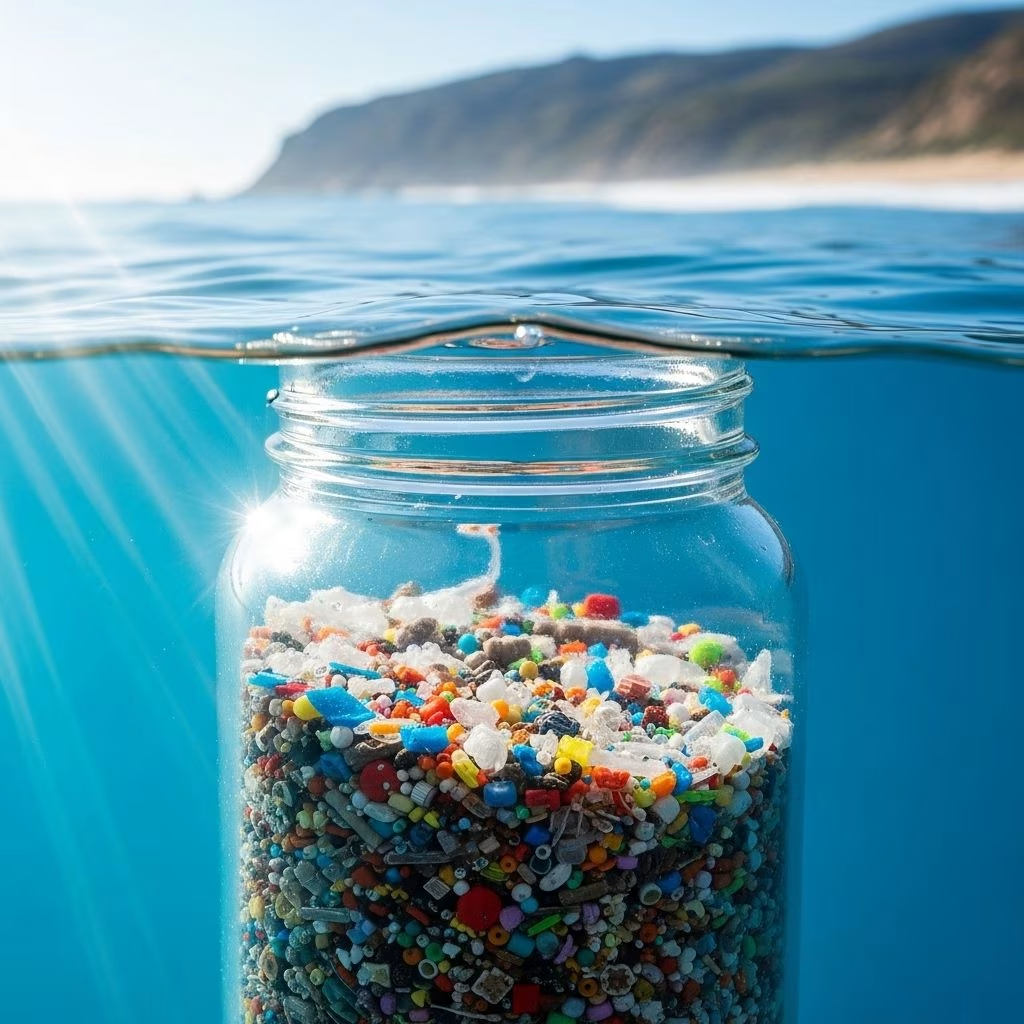
What Are Microplastics?
Microplastics are tiny plastic particles, typically less than 5 millimeters in diameter, that originate from both intentional manufacturing and the breakdown of larger plastic items. These minute fragments are found nearly everywhere — from oceans and rivers to soil, air, and even inside living organisms. Their persistence and ability to travel vast distances have made microplastics a major environmental concern in recent decades.
Definition and Classifications
Microplastics are broadly defined as plastic particles between 1 nanometer (nm) and 5 millimeters (mm) in size. Anything smaller than one nanometer falls into the category of nanoplastics, a subset that is gaining attention for its unique properties and potential risks.
- Primary microplastics: Manufactured as small particles for specific applications.
- Secondary microplastics: Formed when larger plastic items degrade due to environmental factors.
Sources and Pathways of Microplastics
Understanding where microplastics come from is crucial to tackling their proliferation. These particles enter ecosystems through a variety of avenues, often starting as everyday products and ending up dispersed throughout nature.
Primary Microplastics: Directly Manufactured
- Personal care products: Microbeads in facial scrubs and exfoliants.
- Cosmetics: Glitter, beads, and other small additives.
- Industrial abrasives: Used for polishing, cleaning, and sandblasting.
- Plastic pellets (nurdles): Raw material for plastic manufacturing.
Secondary Microplastics: Fragmentation of Larger Plastics
- Degraded packaging: Bags, bottles, containers from food and drink packaging.
- Synthetic textiles: Microfibers released during washing of clothes.
- Tire wear: Particles shed from tires as vehicles drive.
- Fishing gear: Nets, lines, and ropes damaged by use and exposure.
- Cigarette filters: Plastic fibers broken down in the environment.
Unusual and Emerging Sources
- City and road dust: Tiny particles from road markings, urban runoff, and building renovations.
- Marine coatings: Paints and sealants used on boats and ships.
- Agricultural products: Seed coatings made of plastic.
Types and Forms of Microplastics
The diversity of microplastics extends beyond their size and origin; these particles come in various shapes, chemical compositions, and physical characteristics.
| Type | Description | Typical Sources |
|---|---|---|
| Fragments | Irregular, broken pieces from larger items | Food containers, packaging |
| Fibers | Thread-like particles | Synthetic textiles, cigarette filters |
| Foam | Spongy, cellular particles | Foam cups, insulation |
| Pellets (Nurdles) | Small, round plastic units | Raw material for manufacturing |
| Films | Thin, sheet-like plastics | Plastic bags, product wrapping |
Chemical Composition
- Polyethylene (PE)
- Polystyrene (PS)
- Polypropylene (PP)
- Polyurethane (PU)
- Polyvinyl chloride (PVC)
- Polyethylene terephthalate (PET)
Environmental Distribution and Persistence
Microplastics can be found in every corner of the planet, from the deepest ocean trenches and Arctic snow to remote mountain regions and agricultural soils.
- High concentrations in oceans: According to the United Nations, up to 51 trillion microplastic particles currently pollute the world’s seas.
- Widespread presence: Detected in rivers, lakes, agricultural fields, and atmospheric dust.
- Ubiquitous in wildlife: Found inside the bodies of fish, birds, marine mammals, and even insects.
Microplastics are not biodegradable. Once released, they persist for decades or centuries, accumulating and dispersing through food chains and environmental cycles.
Impacts on the Environment and Human Health
The proliferation of microplastics poses significant risks to ecosystems and human well-being. While the exact long-term effects continue to be studied, research has confirmed several areas of concern.
Ecological Effects
- Disruption of food webs: Microplastics are ingested by organisms at all levels, from plankton to whales, interfering with feeding, growth, and reproduction.
- Accumulation of toxins: Plastics can absorb pollutants like heavy metals and pesticides, which then enter organisms that consume them.
- Physical harm: Sharp or irregularly shaped microplastics can damage internal tissues of animals.
Human Health Concerns
- Ingestion and inhalation: Microplastics are found in drinking water, food, and air, leading to accidental intake.
- Potential toxicity: Some plastics contain harmful additives (like phthalates or bisphenol A) and can leach chemicals after ingestion.
- Bioaccumulation: Persistent particles may accumulate in organs or tissues with unknown health consequences.
Current Research and Knowledge Gaps
The study of microplastics is evolving rapidly, revealing new findings each year. While there is general consensus on the existence and spread of microplastics, much remains to be clarified about their precise impacts and how best to control them.
- Sampling techniques: Accurate measurement and identification of different microplastic types are still being refined.
- Long-term exposure studies: Ongoing research aims to understand chronic effects on health and ecosystems.
- Nanoplastics: As analytical techniques improve, scientists are beginning to study particles even smaller than microplastics and their unique risks.
Solutions and Strategies for Reducing Microplastics
Global action on microplastics requires coordinated strategies from governments, industries, and individual consumers. Efforts have been launched around the world to address this issue at its source and minimize future pollution.
Government and Regulatory Actions
- Bans on microbeads: Many countries have banned or restricted microbeads in cosmetics and personal care products.
- Innovative policies: Incentives for recycling, restrictions on single-use plastics, and stricter emission controls on industrial sources.
- Standardized monitoring: Improved guidelines for sampling, analysis, and reporting of environmental microplastics.
Industry Innovations
- Development of biodegradable alternatives: Research into materials that break down safely in nature.
- Upgraded production processes: Minimizing shedding of microfibers, improved tire wear, and eco-friendly coatings.
- Reduction in packaging: Increasing the use of reusable or compostable containers.
Individual and Community Actions
- Choose natural fibers: Opt for clothing made from cotton, wool, or other non-synthetic materials.
- Avoid products with microbeads: Read labels carefully when selecting personal care items.
- Reduce single-use plastics: Bring reusable bags, bottles, and utensils.
- Support cleanups: Participate in local river, beach, or park clean-up efforts.
Frequently Asked Questions (FAQs)
Q: How do microplastics affect marine life?
Microplastics are often mistaken for food by marine organisms, leading to physical harm, reduced nutrition, and the transfer of toxins through the food chain.
Q: Can microplastics be filtered out of drinking water?
Various water treatment processes can remove some microplastics, but very small particles may pass through. Researchers are developing more effective filtration and removal technologies.
Q: Are biodegradable plastics a solution to microplastic pollution?
Biodegradable plastics may help reduce long-term persistence, but current formulations do not always break down quickly or completely, especially in marine environments.
Q: What are the most common sources of microplastics in daily life?
Laundering synthetic clothes, tire abrasion, city dust, personal care products like scrubs, and degraded packaging are leading sources.
Q: How widespread are microplastics in the natural world?
Microplastics are found in oceans, rivers, soil, air, Arctic snow, and wildlife globally, including areas considered pristine.
Conclusion: Addressing the Microplastic Challenge
Microplastics present a formidable environmental and health challenge, one that will require science, technology, policy, and everyday action to solve. By understanding their origins, behaviors, risks, and the collaborative steps necessary to address their spread, humanity can work toward minimizing their impact and fostering a cleaner, healthier planet for generations to come.
References
- https://epa.illinois.gov/topics/water-quality/microplastics.html
- https://www.europarl.europa.eu/topics/en/article/20181116STO19217/microplastics-sources-effects-and-solutions
- https://en.wikipedia.org/wiki/Microplastics
- https://europlas.com.vn/en-US/blog-1/all-types-of-microplastics-you-should-know
- https://pmc.ncbi.nlm.nih.gov/articles/PMC10072287/
- https://oceanservice.noaa.gov/facts/microplastics.html
- https://iee.psu.edu/news/blog/microplastics-sources-health-risks-and-how-protect-yourself
- https://www.epa.gov/water-research/microplastics-research
- https://www.horiba.com/usa/scientific/resources/science-in-action/where-do-microplastics-come-from/


