


Introduction
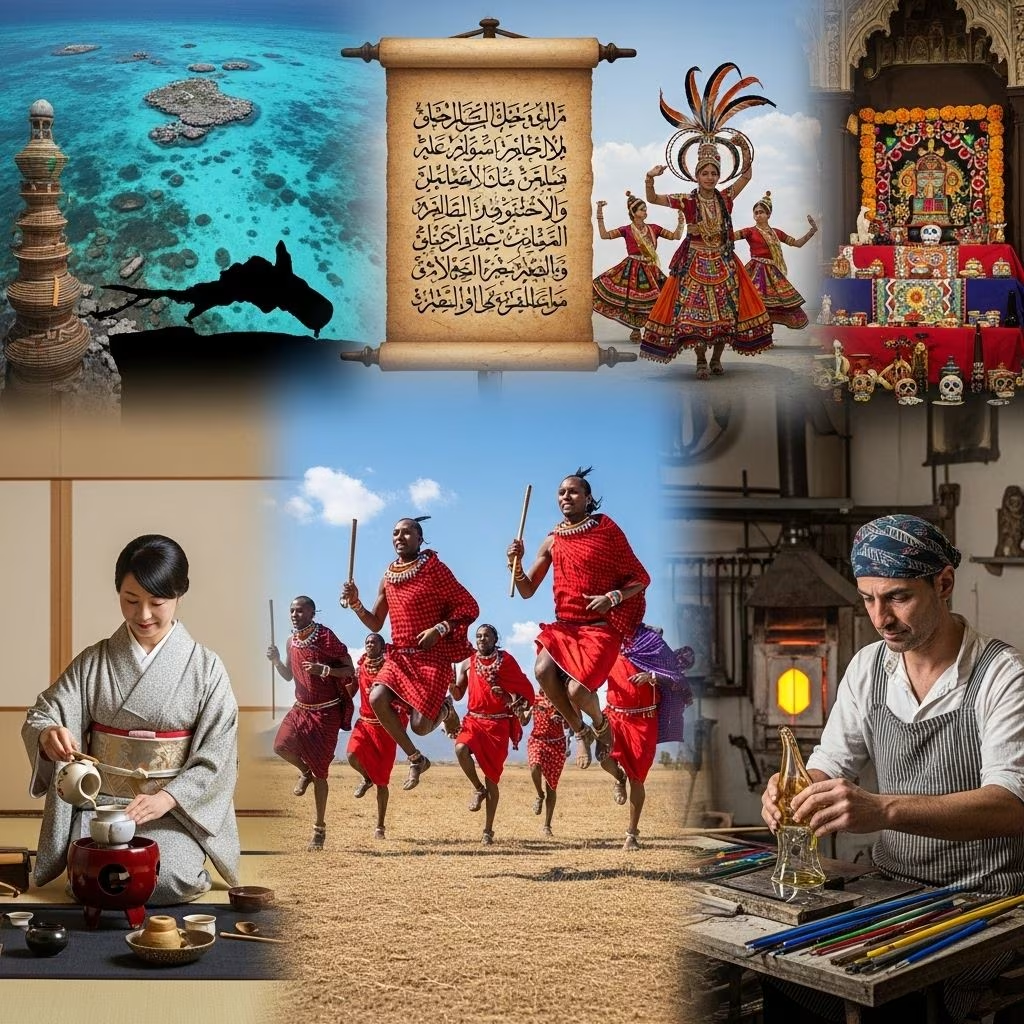
Intangible cultural heritage refers to the living traditions, practices, expressions, knowledge, and skills passed down through generations. Unlike monuments or artifacts, these intangible elements are embedded in oral traditions, social rituals, festive events, craftsmanship, performing arts, and traditional knowledge. Recognizing their fragility and invaluable contribution to humanity, UNESCO has made safeguarding intangible cultural heritage a global priority, ensuring that diverse cultural expressions are maintained amid rapid globalization and societal change.
What Is Intangible Cultural Heritage?
According to UNESCO, intangible cultural heritage encompasses:
- Practices – such as traditional craftsmanship, culinary arts, or medical knowledge.
- Representations and Expressions – including language, stories, music, and dance.
- Knowledge and Skills – from farming techniques to spiritual beliefs and rituals.
- Instruments, Artefacts, and Cultural Spaces associated with these elements.
For an element to be considered as intangible cultural heritage by UNESCO, it must be:
- Inclusive – promoting dialogue and respect across communities.
- Representative – reflecting the cultural identity of the group concerned.
- Community-based – recognized and sustained by the involved community, group, or individuals.
The UNESCO Intangible Cultural Heritage Lists
Established under the UNESCO Convention for the Safeguarding of the Intangible Cultural Heritage adopted in 2003, the Lists aim to ensure the viability of traditions at risk of disappearing. As of 2023, the Lists comprise 678 elements from 140 countries, highlighting practices from every corner of the globe.
| List Name | Description | Purpose |
|---|---|---|
| Representative List of the Intangible Cultural Heritage of Humanity | Showcases practices and expressions that demonstrate the diversity of cultural heritage. | Raises awareness and appreciation for cultural practices worldwide. |
| List of Intangible Cultural Heritage in Need of Urgent Safeguarding | Focuses on practices facing imminent risk of disappearance. | Mobilizes efforts and resources for safeguarding endangered elements. |
| Register of Good Safeguarding Practices | Highlights successful projects and programmes that safeguard intangible heritage. | Shares best practices internationally. |
Why Protect Intangible Cultural Heritage?
- Strengthening Identity: Intangible traditions foster a sense of identity and belonging for communities, especially minorities and indigenous peoples.
- Social Cohesion: Rituals, festivals, and shared customs unite groups, encouraging dialogue and understanding.
- Supporting Sustainability: Many intangible traditions reflect sustainable practices in agriculture, environmental management, and resource use.
- Economic and Social Value: Cultural tourism, traditional crafts, and performances often support local economies and provide livelihoods.
Recent Additions and Endangered Traditions
The United Nations, through UNESCO, updates its Lists annually. In December 2022, 39 new elements were added, including four identified as requiring urgent safeguarding. Among the latest additions are:
- Narrative Pottery
- Bell-shaped Garments
- Human Towers (Castells) of Catalonia, Spain
Selected Traditions in Need of Urgent Protection
- Viet Nam: Art of Pottery-Making of Chăm People
This tradition is practiced by Chăm women, who mold clay by hand using ancestral knowledge. The process blends artistry and individual creativity, passed through generations, and is crucial for social and economic autonomy. - Chile: Quinchamalí and Santa Cruz de Cuca Pottery
Known for its distinctive sculptural and narrative style, this pottery underscores women’s roles in community autonomy and artistic innovation. - Albania: Xhubleta – The Bell-shaped Garment
A unique, handcrafted dress for women and girls in northern Albania, featuring a dramatic undulating bell form, essential to highland identity and local craftsmanship. - Türkiye: Traditional Ahlat Stonework
Practiced in Eastern Anatolia, this involves extracting and crafting volcanic stones into intricate monuments, reflecting historical continuity and artisanal skill.
Regional Examples of Intangible Cultural Heritage
Africa: Nigerian Traditions Inscribed by UNESCO
- The Oral Heritage of Gelede
Celebrated among the Yoruba people, Gelede combines music, masked dance, and ritual to honor women’s wisdom, fertility, and social harmony. It’s observed in March and May to usher in the rainy season, with elaborate masks and costumes symbolizing community values.
Key Features:- Recognized for oral transmission and communal participation
- Celebrates the role of elderly women and spiritual forces
- Ifa Divination System
A central practice of the Yoruba, Ifa divination uses an extensive oral corpus called Odu Ifa. Priests (Babalawo) interpret spiritual guidance through castings of palm nuts, deeply influencing communal decision-making and spiritual life. - Ijele Masquerade
Among the Igbo people, the Ijele is Africa’s largest masquerade, towering over 15 feet. It integrates music, dance, and drama in ceremonies marking important events, visually expressing historical, spiritual, and social narratives.
South America: Peru’s Intangible Heritage Elements
Peru, rich in living traditions, boasts celebrations, oral histories, musical performances, and artisanal crafts recognized by UNESCO. As of 2023, fourteen Peruvian elements are on the Representative List, demonstrating the diversity of cultural practices maintained across the Andes, Amazon, and coastal regions. Examples include:
- Scissors Dance (La Danza de las Tijeras)
- The Q’eswachaka Bridge-building Tradition
- Festivals Celebrating Inti Raymi
Asia: Human Towers and Beyond
- Human Towers (Castells) in Catalonia, Spain
A tradition where hundreds collaborate to build multi-tiered human towers. These biannual events unite communities, with strict codes of solidarity and inclusivity. - China: Kun Qu Opera
A classic Chinese performing art, blending singing, dancing, and literature, listed by UNESCO for its vulnerability in contemporary times. - Southeast Asia: Tugging Rituals and Games
Found in Vietnam, Cambodia, the Philippines, and South Korea, these games reinforce agricultural cycles and communal cooperation.
Safeguarding Strategies and Community Roles
UNESCO emphasizes that all safeguarding efforts must be community-driven. Success stories consistently highlight strong local engagement, oral transmission, and adaptation to present-day realities.
- Transmission through Families and Schools – Ensuring knowledge is shared with younger generations through storytelling, teaching, and active participation in rituals.
- Festivals and Public Performances – Communities organize events for collective celebration and education.
- Documentation and Digital Archiving – Recording oral histories, performances, and craft methods to aid in future preservation.
- Empowering Women and Elders – Many traditions rely on matriarchs or spiritual leaders as guardians and transmitters of knowledge.
- Integration with Sustainable Development – Linking heritage safeguarding with ecological, social, and economic measures for broad impact.
Threats Facing Intangible Cultural Heritage
- Urbanization and Globalization – Loss of traditional spaces, linguistic decline, and younger generations migrating to cities.
- Conflict and Displacement – Wars and humanitarian crises displace communities and disrupt customary practices.
- Economic Pressures – Modern industries may overshadow small-scale crafts and practices.
- Climate Change – Environmental shifts threaten rituals tied to seasonal events, agricultural cycles, or local biodiversity.
Indigenous Knowledge and Conservation
UNESCO increasingly recognizes indigenous knowledge as integral to both cultural and ecological conservation. Traditional land management, farming, and spiritual beliefs profoundly inform sustainable approaches to nature. Initiatives encourage safeguarding indigenous heritage by:
- Recognizing land rights and community autonomy.
- Incorporating indigenous perspectives into conservation policy.
- Investing in research and capacity-building.
Spotlight: How Elements Are Selected
To be inscribed on UNESCO’s Lists, a cultural element must be nominated by the concerned community, with government support, and evaluated by the Intergovernmental Committee for the Safeguarding of the Intangible Cultural Heritage. Selection criteria include evidence of cultural value, community involvement, and proposed safeguarding measures.
Selection Criteria Table
| Criterion | Description |
|---|---|
| Community recognition | Element is actively practiced and valued by the community. |
| Heritage transmission | Tradition is transmitted orally, by demonstration, or through apprenticeship. |
| Safeguarding plan | Clear strategies for preservation and promotion are in place. |
| Inclusivity | Broad participation from all community segments is evidenced. |
| Cultural significance | Element embodies key aspects of the community’s identity. |
International Impact and Collaboration
The Convention and UNESCO’s Lists inspire countries worldwide to catalog, document, and celebrate their intangible heritage. They also spur international cooperation, cross-border exchanges, and the development of policies that ensure the future of endangered traditions.
- Global Awareness: The Lists raise the status of living heritage and promote respect for different ways of life.
- Training and Funding: UNESCO assists countries and communities through training, capacity-building, and financial support for safeguarding projects.
- Research and Monitoring: Continuous academic and community research help adapt safeguarding measures over time.
Frequently Asked Questions (FAQs)
Q: How does UNESCO define intangible cultural heritage?
Intangible cultural heritage consists of living expressions—practices, knowledge, and skills handed down through generations, forming part of a community’s cultural identity.
Q: How are traditions selected for UNESCO’s Lists?
Elements are nominated by countries with robust community involvement and must meet criteria for significance, inclusivity, and a strong safeguarding plan. Final approval rests with the Intergovernmental Committee for the Safeguarding of the Intangible Cultural Heritage.
Q: Why is it important to safeguard intangible heritage?
Protection preserves cultural diversity, social cohesion, and local identity, and often supports sustainable development and environmental stewardship.
Q: What are some examples of intangible cultural heritage?
Notable examples include Catalan human towers, Ifa divination, Peruvian scissors dance, and Vietnamese Chăm pottery-making, among hundreds of others worldwide.
Q: How can individuals or communities participate in safeguarding intangible heritage?
Participation includes documenting traditions, intergenerational teaching, celebrating cultural festivals, supporting local artisans, and collaborating with national and international heritage programs.
Conclusion
Intangible cultural heritage is a living thread that weaves together the world’s cultural fabric. UNESCO’s proactive safeguarding ensures that these diverse expressions—whether spiritual, artisanal, festive, or linguistic—remain vibrant, evolving, and available for future generations to cherish, learn from, and adapt. As these efforts gain ground, respect for heritage is increasingly viewed as a cornerstone of sustainable, peaceful, and pluralistic societies.
References
- https://www.weforum.org/stories/2023/02/unesco-cultural-heritage-list/
- https://www.fmacce.gov.ng/intangible-cultural-heritage
- https://en.wikipedia.org/wiki/List_of_Intangible_Cultural_Heritage_elements_in_Peru
- https://en.wikipedia.org/wiki/UNESCO_Intangible_Cultural_Heritage_Lists
- https://ich.unesco.org/en/lists
- https://www.unesco.org/en/intangible-cultural-heritage/committee-2023
- https://www.iowapublicradio.org/news-from-npr/2023-12-08/55-cultural-practices-added-to-unescos-list-of-intangible-cultural-heritage
- https://creativesunite.eu/article/unesco-adds-56-new-practices-to-intangible-cultural-heritage-list
- https://www.afar.com/magazine/whats-on-unescos-lists-of-intangible-cultural-heritage


