


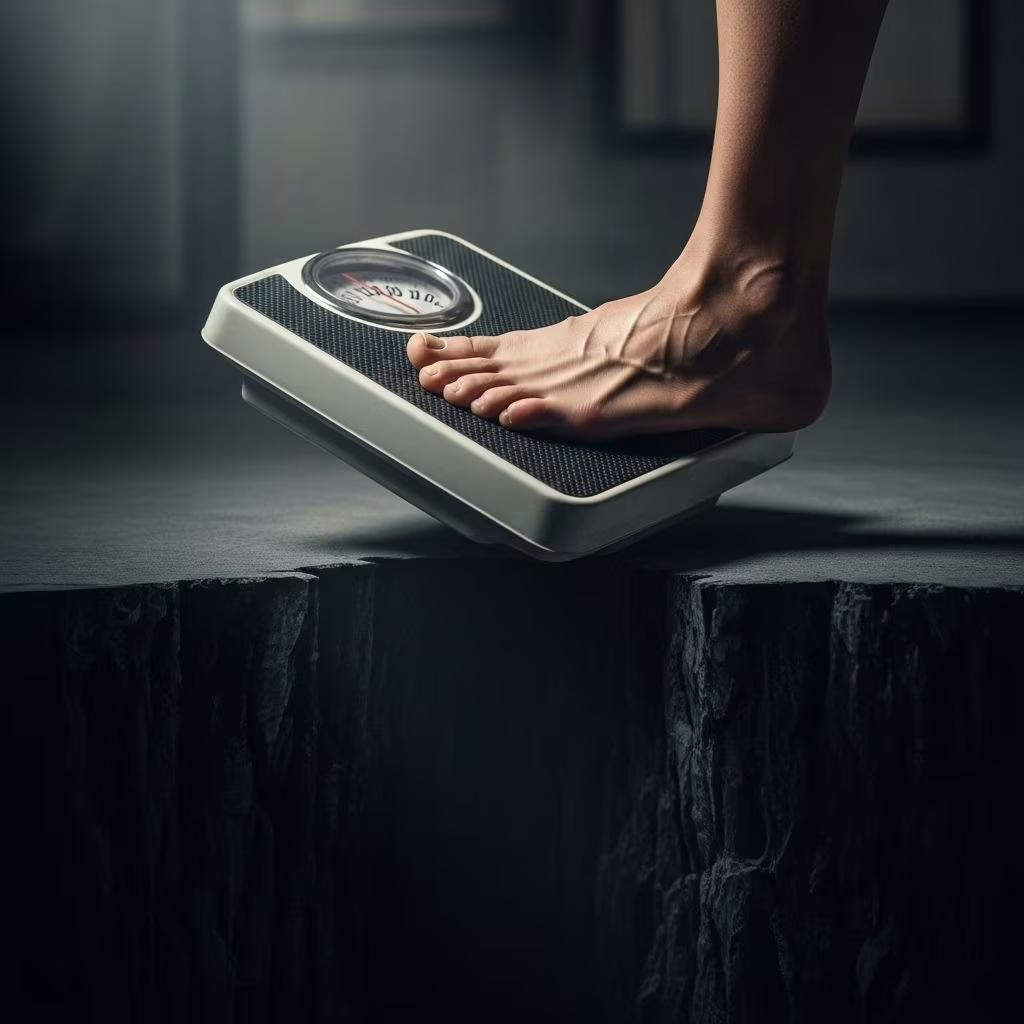
Many people use the bathroom scale as a primary tool for tracking their health and weight loss progress. But for some, that little device becomes more than a measurement tool—it can morph into a source of anxiety, guilt, or even obsession. If the numbers on the scale dictate your mood or self-worth, it may be time to reassess your relationship with it.
Understanding the Role of the Scale in Your Life
Weighing yourself can provide an easy, tangible measure of body changes over time. But is it always helpful? For some, the act of stepping on the scale becomes emotionally charged—shaping self-esteem, dictating daily mood, and sometimes contributing to unhealthy behaviors around food and exercise. Recognizing whether your relationship with the scale is healthy is an important step toward achieving more balanced physical and mental well-being.
Are You Obsessed? Signs Your Relationship with the Scale Might Be Unhealthy
- Daily or multiple daily weigh-ins, even when your weight hasn’t had time to reasonably change.
- Mood swings depending on whether the number goes up or down.
- Allowing the scale to dictate your self-worth or confidence, rather than focusing on how you feel or on other aspects of well-being.
- Skipping or drastically changing meals post-weigh-in as a response to the number you see.
- Exercising obsessively or punishing yourself with harsh workouts after a higher-than-expected weigh-in.
- Fear or anxiety leading up to stepping on the scale.
- Avoiding social situations or fun activities out of shame about a number on the scale.
If any of the above sound familiar, your relationship with the scale may be less about health, and more about control or perfectionism. The good news: you’re not alone, and there are ways to break free from this pattern.
Why the Scale’s Number Isn’t the Whole Story
When you step on a scale, you’re measuring all your body’s weight at that moment, not just fat. The number changes for many reasons unrelated to your actual body fat or health improvements. These can include:
- Natural hormonal fluctuations (especially in women)
- Water retention from salty meals or dehydration
- Muscle gain from regular exercise (muscle weighs more than fat)
- The timing of meals and digestion
- Clothing and time of day
It’s common—and normal—for there to be daily and weekly fluctuations, sometimes by several pounds. Judging success only by this number can set you up for a rollercoaster of frustration and disappointment.
Table: Common Causes of Weight Fluctuation
| Cause | How It Affects the Scale |
|---|---|
| Hydration/Loss of Water | Temporary gains or drops of up to several pounds in a day |
| Hormones | Can increase weight due to water retention, especially premenstruation |
| Digestive System | Weight changes after eating, drinking, or digestion |
| Muscle vs. Fat | Muscle gain may offset fat loss, masking body changes |
| Time of Day/Clothes | Weighing at different times or wearing clothes adds inconsistency |
How Obsession with the Scale Can Harm Your Health
Constant self-weighing is not just a neutral habit. Research suggests that frequently focusing on the number can negatively impact mental health and healthy behaviors:
- Worsening body image: Repeated weighing draws focus to physical appearances, which can amplify insecurities rather than resolve them.
- Triggering or reinforcing eating disorders: For those at risk or with eating disorder histories, the number can drive disordered behaviors like restriction, binging, or purging.
- Anxiety and depression: Not meeting weight expectations may lead to negative self-talk or depressed mood.
- Unhealthy exercise patterns: Making workouts about punishment or a reaction rather than health.
- Obsession and control: Feeling compelled to gain reassurance from the scale, only to spiral if the number isn’t what you want.
A meta-analysis found that, while self-weighing isn’t always psychologically harmful, it can reduce self-esteem and increase stress for some people, particularly in certain circumstances or among those with pre-existing vulnerabilities. The impact of the scale depends heavily on individual mindset, personality, and overall context surrounding weight and health goals.
Is It Ever Healthy to Use the Scale?
Not everyone develops an unhealthy relationship with the scale. Some people use it as a neutral tool—tracking weight as one metric among others, and aren’t emotionally affected by fluctuations. Used wisely, the scale can provide a useful data point, particularly for long-term trends. Experts offer several considerations for keeping the scale in perspective:
- Weigh yourself at consistent times: For accuracy, step on the scale at the same time of day under similar conditions (like after waking, before eating, in consistent clothing).
- Track long-term trends: Focus on progress measured in months, not days or weeks. Fluctuations are normal; patterns matter more than single numbers.
- Record numbers without judging them: Try to treat the number purely as data, not as a measure of self-worth.
- Monitor for unhealthy thinking: If you notice guilt, shame, or obsessive thoughts, it may be time to reevaluate your approach or take a break from the scale.
Alternatives to the Scale: Other Ways to Measure Success
Because health is about far more than just a number, consider using these non-scale measures:
- How your clothes fit: Notice changes in comfort and fit over time.
- Physical performance: Are you getting stronger, running farther, feeling more energetic during workouts?
- Body measurements: Track waist, hips, arms, and other body parts.
- Energy, mood, and sleep: Are you more energized and sleeping better on most days?
- Self-confidence and happiness: Notice improvements in overall mood or self-esteem.
These non-scale measures can often reflect real, meaningful changes that the scale misses. For some, shifting focus to these metrics helps build a more sustainable motivation for healthy habits.
How to Break Free from a Toxic Scale Relationship
If you find that your scale is doing more harm than good, here are actionable steps to foster a healthier perspective:
- Take a scale holiday: Put the scale away for a set period—anywhere from a week to a month—to reduce focus on the number and practice tuning into how you actually feel.
- Reflect on your goals: Ask yourself why you want to lose weight or track progress. Is it for health, or for meeting an unrealistic standard? Let intention, not fear, drive your actions.
- Work with a professional: Consider consulting a therapist or registered dietitian, especially if you have a history of eating disorders or chronic dieting.
- Practice self-compassion: Remember, everyone has fluctuations and setbacks. Beating yourself up rarely helps long-term success.
- Seek alternative joys: Engage in activities that build body appreciation without focusing on weight—yoga, hiking, dancing, or other enjoyable movement.
Over time, most people find that focusing on how they feel—physically, emotionally, and in daily life—is a much more rewarding, long-term motivator for health than the bathroom scale.
Myths and Realities: What the Experts Say
Myth 1: Weighing Yourself Daily Is the Best Way to Lose Weight
Reality: Research shows frequent weighing might help some with self-monitoring, but for many, it increases stress without real benefit. For lasting results, a balanced approach respecting both physical and emotional health works best.
Myth 2: The Scale Shows Only Body Fat
Reality: The scale reflects every part of your body, not just fat. You may gain weight due to water retention or muscle gain, not just fat increase. That’s why other measurements are important, too.
Myth 3: A Lower Number Is Always Healthier
Reality: Weight loss at the expense of mental health, energy, strength, or immune function is never healthy. Wellness encompasses much more than a single metric.
FAQs: Frequently Asked Questions
Q: How often should I weigh myself?
A: There is no universal rule. For some, once per week or even once per month is sufficient; for others, weighing at all may not be beneficial. The key is whether stepping on the scale helps or harms your mental health and motivation.
Q: What should I do if the scale is making me anxious?
A: Consider reducing frequency, focusing on non-scale victories, or putting the scale away for a period. If anxiety persists, speak with a mental health professional or dietitian experienced in body image concerns.
Q: Can I still have a healthy lifestyle without ever weighing myself?
A: Absolutely! Many people maintain healthy habits, body composition, and well-being without ever using a scale. Use how you feel, fitness milestones, and other measures as your guide.
Q: Is self-weighing ever recommended for people with eating disorders?
A: Generally, no. For those actively struggling or in recovery from eating disorders, experts advise avoiding the scale entirely, except as part of a structured, therapeutic plan.
Taking Action: Creating a Healthier Perspective
If you decide to keep the scale in your wellness toolkit, consider reframing its purpose: use it as one metric among many, and never as a sole indicator of worth or success. Commit to celebrating the real victories that the scale can’t measure—improved strength, confidence, joy in movement, and freedom from negative self-talk.
- Remember: Fluctuations are normal, and progress isn’t always linear.
- Stay alert for negative patterns—if the scale starts to shape your self-perception, it may be time to take a step back.
- Your value and health cannot be summed up by a single number.
Reclaim your sense of worth. The scale is there if you need it—but your well-being, happiness, and health journey are about so much more than what it says.
References
- https://www.maplecanyontherapy.com/blog/ditch-the-scale
- https://healthpsychologycentre.com.au/to-weigh-or-not-to-weigh/
- https://pmc.ncbi.nlm.nih.gov/articles/PMC4917920/
- https://pmc.ncbi.nlm.nih.gov/articles/PMC4729441/
- https://www.psychologytoday.com/us/blog/here-we-are/202003/why-i-broke-up-with-my-scale
- https://www.carrienet.com/assessment-relationships/
- https://journals.sagepub.com/doi/abs/10.1177/08862605251325912


