


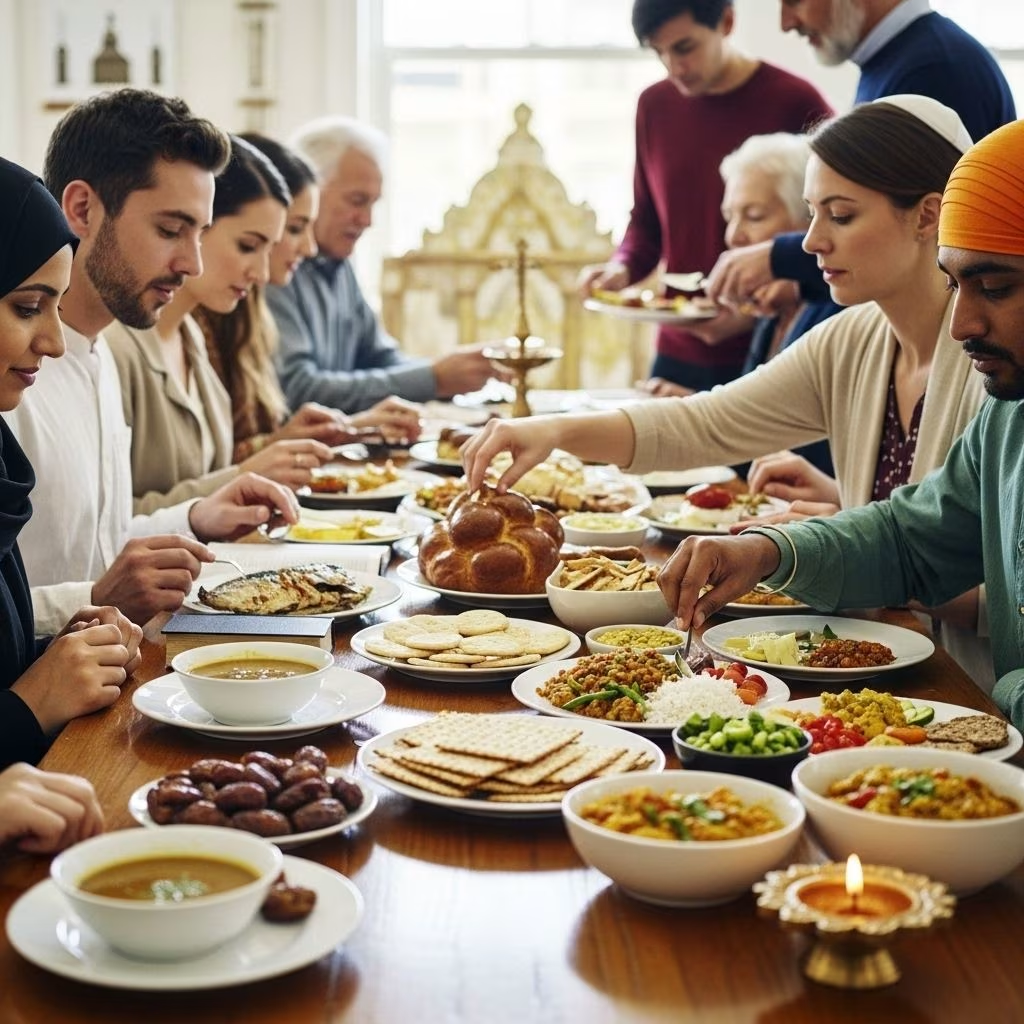
Diets and Religion: How Faith Shapes Food Choices & Fasting
Around the world, religion plays a critical role in shaping dietary habits, fasting traditions, and food-related rituals. Whether through sacred texts, centuries-old customs, or guidance from spiritual leaders, the influence of faith on what, how, and when people eat is profound. This article explores how various major religions impact food choices and nutrition, the key restrictions and recommendations they provide, and the rationale behind their dietary rules.
Introduction: The Intersection of Food and Faith
Food is much more than fuel—it’s a source of celebration, identity, and spiritual practice. For billions worldwide, dietary choices are intricately linked to faith. Religious dietary laws often reflect beliefs about purity, health, community, and the nature of the divine. Understanding these connections is vital, whether you’re seeking dietary guidance, organizing events for diverse groups, or aiming to respect and support friends’ and colleagues’ food choices.
- Fasting and feasting mark sacred times in many religions.
- Specific foods might be celebrated as divine gifts or prohibited as impure.
- Faith-based diets can influence physical health, social bonds, and spiritual growth.
Christianity: A Diverse Landscape of Food Traditions and Fasts
Christianity encompasses a vast array of denominations and traditions, leading to considerable diversity in dietary customs. While no single Christian diet exists, several major groups practice unique food rules, especially related to fasting and particular holy days.
Catholicism
- Meat is traditionally avoided on Fridays during Lent, with fasting required on Ash Wednesday and Good Friday.
- Lent (about six weeks before Easter) involves abstaining from rich foods and focusing on repentance.
- Outside prescribed fasts, most foods are permitted.
Eastern Orthodox Christianity
- Multiple fasting periods (including weekly) often mean avoiding meat, fish, dairy, eggs, alcohol, and olive oil.
- Strict fasts can resemble vegan diets, especially before important holidays.
Protestantism
- Generally, no universal dietary restrictions; fasting is a personal choice.
- Some groups (such as Salvation Army) abstain from alcohol by religious preference.
Seventh-Day Adventists
- Typically lacto-ovo vegetarians: avoid meat, poultry, fish, and alcohol, but consume eggs and dairy.
- Known for promoting healthful living and longevity.
Mormonism (Church of Jesus Christ of Latter-day Saints)
- No alcohol, tea, or coffee.
- Routine fasting is common.
- Otherwise, most foods are permitted in moderation.
Jehovah’s Witnesses
- Prohibit dishes containing blood and rare meat.
- Forbid alcohol; other foods allowed.
| Denomination | Main Restrictions | Special Fasting Periods |
|---|---|---|
| Catholic | No meat on fasting days | Lent, Ash Wednesday, Good Friday |
| Eastern Orthodox | No animal products, alcohol, olive oil on fast days | Advent, Lent, Wednesdays and Fridays |
| Protestant | Usually none; some avoid alcohol | Personal choice, some local fasts |
Judaism: Kosher Laws and Sacred Food Traditions
In Judaism, dietary laws are foundational for religious identity and spiritual practice. Kosher rules delineate which foods are permitted, how they’re prepared, and which combinations are approved or forbidden.
- No pork or shellfish; only animals slaughtered and prepared by kosher methods may be eaten.
- Separation of meat and dairy products is strictly enforced.
- Holiday fasts (e.g., Yom Kippur) or periods like Passover involve additional dietary regulations, such as avoiding leavened bread.
- Kosher foods require special supervision from harvest to packaging.
Jewish fasting (such as the Day of Atonement) calls for complete abstention from food and drink for 25 hours, with exceptions for health. Passover celebrates deliverance from slavery with unleavened bread and symbolic foods.
| Restriction | Description |
|---|---|
| Kosher slaughter | Animals killed humanely and drained of blood |
| No pork/shellfish | Prohibited by scripture |
| Meat and dairy | Cannot be consumed in the same meal |
Islam: Halal, Haram, and Sacred Fasts
Islam’s dietary guidance stems from the Qur’an and Hadith. Foods fall under categories of halal (permissible) and haram (forbidden). The most familiar Islamic fasting period is Ramadan, profoundly shaping food culture in Muslim communities.
- Alcohol and pork are strictly forbidden.
- Foods should be halal: properly slaughtered animals, no blood, no carrion.
- Ramadan fasting: no food or drink from dawn to sunset for a month, followed by celebratory feasts.
- Exceptions made for health, age, pregnancy, etc.
Halal certifications on food products assure adherence to Islamic law. Social and spiritual aspects of fasting—self-control, empathy for the needy—are emphasized as much as dietary compliance.
| Halal | Haram |
|---|---|
| Meat from properly slaughtered animals | Pork, carrion, blood |
| Vegetables, grains, dairy | Alcohol or intoxicants |
Hinduism: Lacto-Vegetarianism and Ritual Fasting
Hindu dietary practices are rooted in beliefs about non-violence (ahimsa), purity, and spiritual discipline. Though not all Hindus are vegetarians, lacto-vegetarian diets are common, meaning abstention from eggs, meat, and fish while including dairy.
- No beef; many avoid all animal flesh.
- Brahmins and some communities observe special rituals around food preparation and storage.
- Numerous fasting days, especially aligned with lunar phases and festivals (e.g., Diwali).
- Fasting often means simple plant foods or complete abstention for a set period.
ISKCON (Hare Krishna)
- Devotees follow lacto-vegetarian diets, but also avoid onions, garlic, and sometimes mushrooms.
- Milk and dairy are permitted, but cheese cannot use animal rennet.
- No alcohol, caffeine, or foods processed by non-devotees.
| Permitted | Prohibited |
|---|---|
| Dairy, grains, fruit | Meat, eggs, fish, onions, garlic |
Buddhism: Mindful Eating and Minimal Restrictions
Buddhist dietary practices are diverse, reflecting regional customs and sectarian teachings. Many Buddhists are vegetarians, especially in Mahayana traditions, while others consider dietary choices a matter of personal conscience.
- Vegetarianism is common, but not universal.
- Mahayana Buddhists often avoid onions and garlic, believed to hinder spiritual clarity.
- Tibetan and Theravada traditions may permit occasional meat.
- Monks and nuns in some sects eat only before noon; after that, only water until the next day.
- Alcohol consumption is discouraged, but not strictly prohibited for lay Buddhists.
Jainism: Extreme Non-Violence and Rigorous Dietary Laws
Jain dietary rules are among the strictest, based entirely on the principle of non-violence to all living beings. Jains are strict vegetarians, often avoiding root vegetables since harvesting them harms the entire plant. Honey is prohibited due to its impact on bees.
- No fish, meat, eggs, or poultry.
- No root vegetables (potatoes, onions, carrots, garlic, etc.).
- Honey and fermented foods are avoided.
- Fasting is observed during festivals like Paryushan—with rigorous rules (no green/raw vegetables, eating only before sunset).
Modern Health Impacts of Religious Diets
Research increasingly explores the nutritional consequences of religious dietary habits. Health benefits are often linked to moderation, plant-based eating, and periodic fasting, all common in faith traditions. On the other hand, overly restrictive diets or extended fasts may risk nutrient deficiencies if not balanced properly.
- Vegetarian diets (Adventist, Jain, some Buddhist, Hindu) can lower cholesterol and aid heart health if well designed.
- Regular fasting (Orthodox, Islamic, Mormon) may improve metabolic health but requires careful hydration and nutritional planning.
- Kosher and halal requirements encourage high standards in food safety and preparation.
Comparative Table of Major Religious Dietary Rules
| Religion | Main Restrictions | Fast/Feast Traditions |
|---|---|---|
| Christianity | Meat/alcohol on party fasts (varies by denomination) | Lent, Ash Wednesday, Good Friday |
| Judaism | Kosher laws (no pork/shellfish) | Yom Kippur, Passover, Sabbath feasts |
| Islam | Halal; no pork/alcohol | Ramadan (dawn-to-sunset fast), Eid feasts |
| Hinduism | Lacto-vegetarianism, no beef; fasting days | Festival fasts (Diwali, Navratri) |
| Buddhism | Vegetarian preferred, onion/garlic avoided | Vesak, periodic retreats |
| Jainism | Strict vegetarian, no root vegetables or honey | Paryushan (8-day fast) |
Frequently Asked Questions (FAQs)
Q: Why do religions restrict certain foods?
A: Religious food laws reflect beliefs about purity, discipline, health, or respect for creation. Restrictions can encourage mindfulness, spiritual focus, or group identity.
Q: Is vegetarianism required in any major world religion?
A: It’s strictly prescribed in Jainism and common in Hinduism, certain Buddhist traditions, and some Christian denominations.
Q: Do religious fasts have proven health benefits?
A: Scientific evidence suggests that periodic fasting can support metabolic health, but extremes or poorly planned diets may pose risks.
Q: Can someone follow a religious diet for health reasons instead of faith?
A: Yes, many people adopt faith-inspired diets (like kosher, halal, or vegetarian) for personal wellness, ethics, or cultural reasons.
Q: How should hosts accommodate guests with religious food restrictions?
A: Communicate ahead, offer clearly labeled vegetarian, kosher, halal, and allergen-safe options, and respect fasting schedules where possible.
Conclusion: Food, Faith, and Community
Religion’s influence on diet is enduring and ever-evolving. For practitioners, faith-based food practices can be vital expressions of spirituality and culture. For communities and hosts, embracing this diversity helps foster respect, inclusion, and deeper understanding of the world’s rich tapestry of beliefs. Whether feasting or fasting, every meal can be a celebration of both body and soul.
References
- https://thrivemeetings.com/2018/01/religious-dietary-restrictions-guide/
- https://www.griffith.edu.au/data/assets/pdf_file/0038/427799/Faith-and-Food-A-Guide-to-Religious-Dietary-Requirements-1.pdf
- https://events.clicla.me/EventTool/uploads/15069Nutrition%20and%20religion%20Chouraqui%20JP%20et%20al%202020.pdf
- https://pmc.ncbi.nlm.nih.gov/articles/PMC10755456/
- https://www.publichealth.hscni.net/sites/default/files/FaithsPosterA2.pdf
- https://en.wikipedia.org/wiki/Comparison_of_Islamic_and_Jewish_dietary_laws
- https://www.bda.uk.com/practice-and-education/nutrition-and-dietetic-practice/the-nutrition-and-hydration-digest/menu-coding-therapeutic-diets-and-patient-groups/religious-cultural-personal-lifestyle.html


