


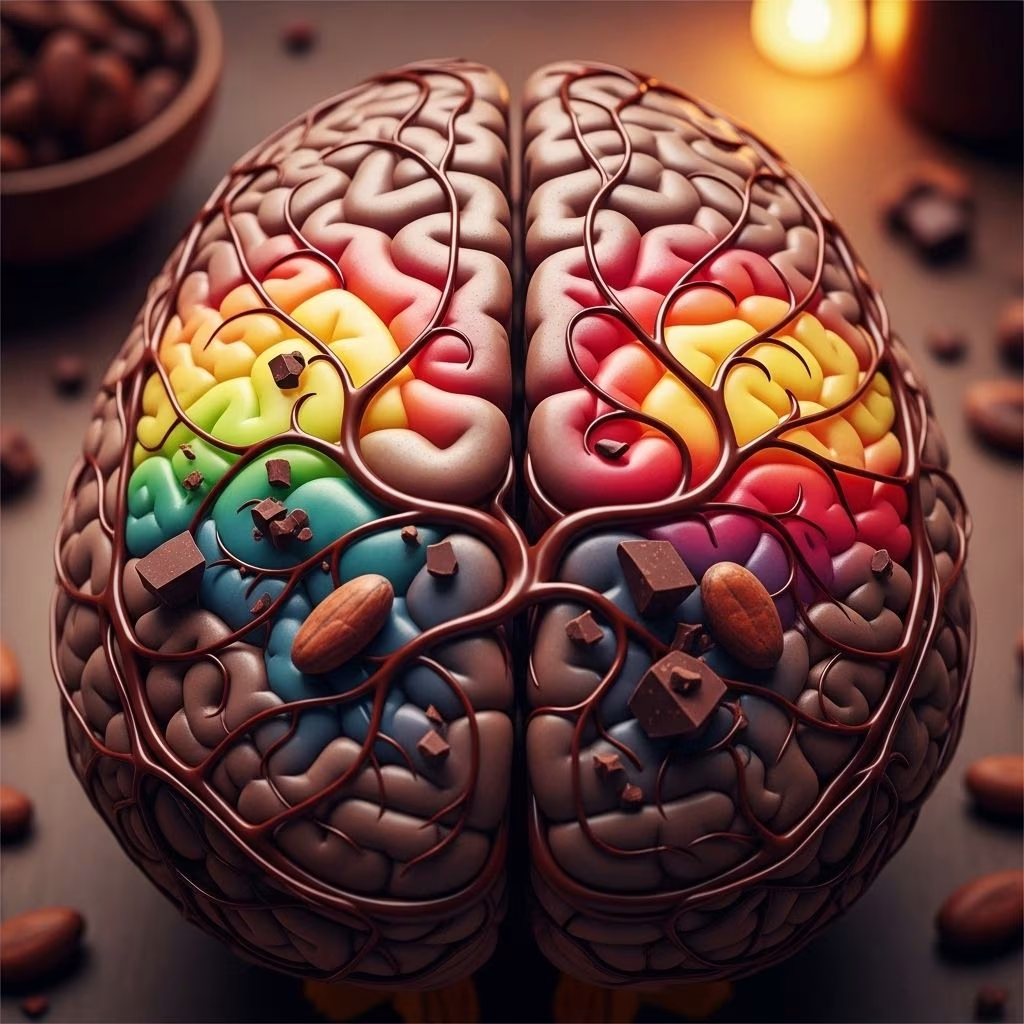
Chocolate Cravings: Unraveling the Brain’s Sweet Secrets
For countless people, chocolate is not just a treat—it’s an obsession. The urge for chocolate can strike unexpectedly, often overwhelming willpower. Recent scientific discoveries provide compelling answers as to why: chocolate cravings are rooted in sophisticated brain circuitry that governs pleasure, motivation, and emotional reward. This article explores groundbreaking research that shows how our brains respond to chocolate and what these insights tell us about eating behavior, desire, and even addiction.
Contents
- Why Do We Crave Chocolate?
- The Neural Basis of Chocolate Cravings
- Pleasure Versus Wanting: Decoding Motivation
- Chocolate, Brain Circuits, and Addiction
- The Emotional and Sensory Chemistry of Chocolate
- Resisting Temptation: Brain Regions of Self-Control
- Implications for Behavior and Health
- Frequently Asked Questions
Why Do We Crave Chocolate?
Among all tempting foods, chocolate ranks as the world’s most craved indulgence. Surveys routinely find chocolate at the top of the list for foods people find hardest to resist. This craving isn’t merely about taste. Research shows that chocolate uniquely combines sweetness, fat content, creamy texture, and aroma—a perfectly engineered profile that activates multiple reward pathways in the brain.
While nutritional factors play a minor role—such as magnesium content—scientists emphasize that chocolate’s irresistibility stems from how it stimulates the brain’s pleasure and reward networks. These networks are highly responsive to palatable foods, especially those rich in sugar and fat, like chocolate.
The Neural Basis of Chocolate Cravings
Which Brain Regions Are Involved?
- Striatum: Traditionally known for controlling movement, it is now recognized as crucial for reward-seeking and craving, particularly for palatable foods like chocolate.
- Orbitofrontal Cortex (OFC): Weighs reward value and motivation, shifting patterns as food changes from desirable to aversive.
- Insula: Associated with sensory experience and cravings, especially the urge to eat more.
- Midbrain: Engaged during intense desire or craving phases.
- Prefrontal Cortex: Involved in decision-making and self-control, especially when resisting further consumption.
Groundbreaking studies using animal models and human brain imaging have revealed that these areas work in concert to encode the desire, emotional value, and motivational drive to obtain chocolate.
The Striatum: Where Craving Begins
One of the most striking findings comes from research at the University of Michigan. By directly stimulating a specific part of the striatum in rats with enkephalin—a natural opioid peptide—the rats doubled their chocolate intake. Importantly, their enjoyment of the chocolate didn’t increase. Instead, their motivation and drive to eat skyrocketed.
- Increased enkephalin levels in the striatum directly correlated with faster and more intense chocolate consumption.
- The pleasure derived from eating did not change, as observed from identical facial responses, suggesting craving and pleasure are not always linked.
Human Imaging Studies: Mapping Craving and Satiety
Studies using positron emission tomography (PET) scanned self-professed ‘chocoholics’ as they ate chocolate beyond satiety. The limbic system, midbrain, and insula showed heightened activity when the desire for chocolate was high. As the subjects reached satiation—no longer wanting chocolate—brain activity shifted to the prefrontal cortex, highlighting the brain’s role in controlling decision-making and self-regulation.
The orbitofrontal cortex (OFC) showed a unique pattern: its medial area was active when eating was pleasurable, while its lateral section activated when the food became less attractive, even aversive. This suggests that the brain tracks both approach (desire) and avoidance (repulsion) with different neural circuits.
Pleasure Versus Wanting: Decoding Motivation
Do we crave chocolate because it tastes better, or because we want it more? This distinction is critical for understanding food craving and addiction. Research shows that the brain separates “liking” (pleasure) from “wanting” (motivation). When scientists boosted certain chemicals in the striatum of rats, they saw a spike in motivated eating—that is, the rats wanted chocolate more, but they didn’t like it more.
| Metric | High ‘Wanting’ (Craving) | High ‘Liking’ (Pleasure) |
|---|---|---|
| Behavior | Increased drive to consume chocolate | Facial expressions of enjoyment |
| Brain Region | Striatum, Midbrain | Medial Orbitofrontal Cortex, Subcallosal Area |
| Example | Eat more regardless of taste | More lip smacking, expressing bliss |
Human studies confirm this: even after chocolate stopped tasting good, the motivation to continue eating was tied to different neural activity than the pleasure of the first bites.
Chocolate, Brain Circuits, and Addiction
Understanding chocolate cravings reveals key overlaps with addiction biology. The same brain circuits that crave chocolate are implicated in drug addiction and excessive behaviors:
- Strong cravings for chocolate activate the midbrain and insula—regions linked to cravings for substances like cocaine.
- Overindulgence triggers the prefrontal cortex, which also mediates the decision to stop using addictive drugs.
- Altered responses in the orbitofrontal cortex are seen both in compulsive eaters and those with substance addictions.
Chocolate’s effect on the brain serves as an accessible model for understanding the balance between reward-seeking and self-control—a process key to both healthy habit formation and the development of addictions.
The Emotional and Sensory Chemistry of Chocolate
Cravings are not solely about hunger. Chocolate’s emotional and sensory effects are powerful:
- The combination of aroma, flavor, and texture is uniquely potent for stimulating “wanting” circuits in the brain.
- Images and smells of chocolate increase both self-reported cravings and neurophysiologic arousal, particularly for people prone to binge eating.
- Memories related to positive chocolate experiences ‘live’ in the ventromedial prefrontal cortex, quickly reactivating cravings even in the absence of real chocolate.
Eating chocolate can induce the release of natural opioids (like endorphins), further reinforcing its emotional appeal and making restraint more difficult for some people.
Resisting Temptation: Brain Regions of Self-Control
With all the brainpower pushing us toward chocolate, how does the brain resist temptation? Research shows that:
- Widespread activation of the prefrontal cortex can actually reduce the ability to resist chocolate, highlighting the complex nature of self-control.
- During overconsumption, the prefrontal cortex is forced to work harder to “put on the brakes.” When this system is weak or overwhelmed, cravings win out.
- Motivational and cognitive control circuits must interact efficiently for effective restraint.
People with stronger cognitive control, or higher activity in related brain areas, may find it easier to say no to chocolate—even when faced with tempting cues.
Implications for Behavior and Health
Understanding the neuroscience of chocolate cravings offers more than trivia for consumers. There are real-world implications:
- Recognizing that craving and pleasure are distinct can help individuals build strategies to manage temptations.
- Awareness of food cues—such as images or smells that trigger responses—can empower mindful eating.
- The findings illuminate why some people may be at higher risk for binge eating, emotional eating, or food-related addictions, and provide new avenues for intervention.
- Modulating brain circuits, either through behavioral strategies or future therapies, might help treat compulsive overeating and related conditions.
Frequently Asked Questions About Chocolate Cravings
Q: Are chocolate cravings purely psychological?
A: While stress and emotion play a role, chocolate cravings are strongly driven by brain circuits linked to motivation and reward, responding to both real and imagined sensory cues.
Q: Do all people experience chocolate cravings the same way?
A: No. Genetics, brain chemistry, past experiences, emotional state, and exposure to cues all influence the intensity and frequency of chocolate cravings. Individuals with certain personality traits or tendencies may crave chocolate more intensely.
Q: Can cravings be controlled?
A: Yes, but the ease of control depends on the balance between motivation circuits (like the striatum and insula) and self-control circuits (like the prefrontal cortex). Strengthening cognitive control through strategies or practice can help manage urges.
Q: Is chocolate addiction real?
A: Chocolate stimulates brain pathways also engaged in substance addiction, leading to intense desire and compulsive eating in some people. While not identical to drug addiction, the parallels in brain circuitry are striking.
Q: What can I do to reduce unwanted cravings?
- Be mindful of triggers such as images, smells, or stress that may intensify cravings.
- Distract yourself with alternative rewarding activities, like physical exercise or engaging hobbies.
- Use cognitive behavioral techniques to identify and reframe craving thoughts.
- Employ portion control—allowing small, planned chocolate treats rather than total deprivation.
Key Takeaways
- Chocolate cravings are rooted in specific brain circuits governing reward, motivation, and sensory pleasure.
- The urge to eat chocolate can be separated from the actual pleasure of eating it—the brain’s “wanting” and “liking” pathways are distinct.
- Understanding the brain’s response to chocolate provides a window into broader issues like addiction, emotional eating, and the challenges of self-control.
This article synthesizes current neuroscience research on chocolate cravings, highlighting the interplay of biology, emotion, and behavior in our love affair with one of the world’s most tempting treats.
References
- https://www.latimes.com/science/la-xpm-2012-sep-20-la-sci-sn-craving-chocolate-brain-activity-20120920-story.html
- https://www.science.org/content/article/your-brain-chocolate
- https://academic.oup.com/brain/article/124/9/1720/303201
- https://www.nature.com/articles/srep41736
- https://pmc.ncbi.nlm.nih.gov/articles/PMC6197906/
- https://pmc.ncbi.nlm.nih.gov/articles/PMC12305740/
- https://www.psychologytoday.com/us/blog/comfort-cravings/201402/why-do-we-crave-chocolate-so-much
- https://now.tufts.edu/2014/02/11/craving-brain
- https://healthcare.utah.edu/the-scope/womens-7/all/2021/02/e10-7-domains-of-chocolate


