


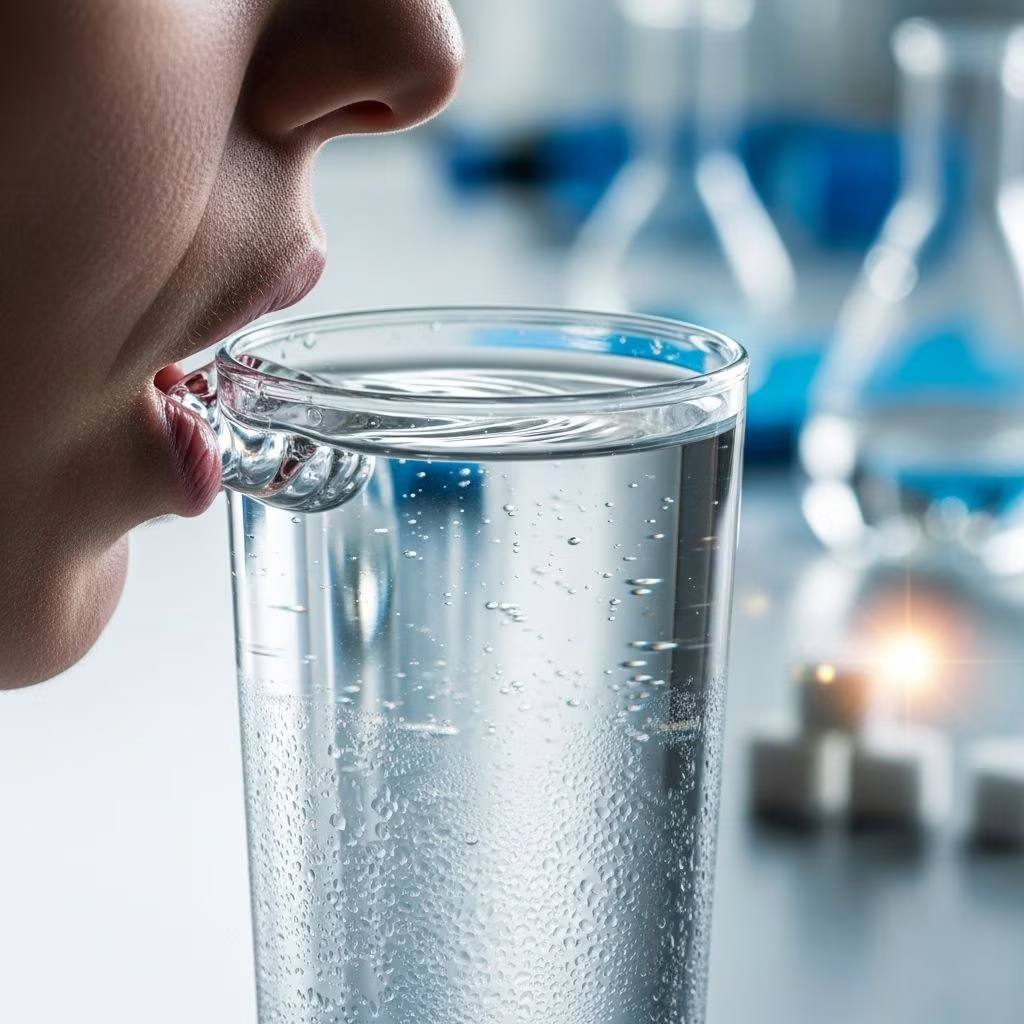
Sugar Water Gargle: Surprising Science Behind Boosting Willpower
Modern research into self-control has revealed an unexpected way to restore depleted willpower: gargling sugar water. While glucose has traditionally been thought to fuel the brain and refresh self-control, new studies show that merely rinsing the mouth with a glucose solution—without swallowing—can produce significant improvements in self-control tasks. This phenomenon has been dubbed the “gargle effect.” Below we explore the core findings, implications, and practical uses of this research for anyone interested in weight loss, quitting smoking, or generally improving motivation and focus.
The Background: Willpower as a Depletable Resource
For years, psychologists have researched willpower as a finite resource—much like fuel—that gets depleted with use. Classic experiments have shown people perform worse on self-control tasks after an initial challenging activity.
- Participants might spend time crossing out specific letters on a page or resisting tempting snacks, which taxes their ability to exert self-control in immediate subsequent tasks.
- Traditionally, researchers believed that this ‘resource depletion’ was linked to decreased glucose availability in the brain; glucose is the primary energy substrate for neural activity.
However, recent research has questioned whether actual glucose consumption is necessary for restoring self-control, and instead suggests a more complex link between exposure to glucose and motivation.
Key Studies: Gargling Glucose Improves Self-Control
Several major studies have tackled the effect of glucose on willpower, yielding some surprising results:
- University of Georgia Study: Leonard Martin and colleagues tested 51 students through a two-part experiment. First, students completed a tedious task by crossing out every ‘E’ in a statistics book—a self-control-depleting exercise. Next, they faced the Stroop task, which required overriding the automatic urge to read words and instead name ink colors—a well-known measure of cognitive control.
- Half the students rinsed their mouths with sugar-sweetened lemonade during the Stroop test, while the other half used an artificially sweetened (Splenda) version. The sugar-water group performed significantly better, responding faster and with greater accuracy. Notably, the sugar was never swallowed, so no glucose entered their bloodstream.
- Another study by Sanders et al., replicated this ‘gargle effect.’ Their version involved rinsing (not swallowing) glucose and then performing self-control tasks. Results again demonstrated improved performance exclusively for the group exposed to glucose in the mouth—not for those using artificial sweeteners.
- Hagger and Chatzisarantis extended this approach, running five separate experiments with different self-control measures: resisting cookies, expressive reading of boring text, hand-squeezing, and more. In every scenario, only participants who gargled the glucose solution after an initial taxing task saw restored self-control, indicating the effect depended on prior depletion.
Summary Table: Gargle Effect Studies on Willpower
| Researcher(s) | Method | Self-Control Task | Result |
|---|---|---|---|
| Martin et al. (UGA) | Mouth rinse: sugar vs. artificial sweetener | Stroop Task | Sugar rinse group performed better, no ingestion needed |
| Sanders et al. | Rinsed (not swallowed) glucose vs. Splenda | Stroop Task | Glucose rinse improved response speed and accuracy |
| Hagger & Chatzisarantis | Series of 5 experiments, glucose gargle after depletion | Multiple self-control tasks | Improvement observed only after taxing initial task |
How Gargling Glucose Works
Why does mouth exposure to glucose boost self-control, even when no sugar is actually ingested? Multiple explanations have emerged:
- Mouth Receptors and Brain Activation: Glucose binds to specific receptors in the mouth, triggering neural activity in areas critical for self-control and reward—the anterior cingulate cortex and the striatum. This activation can rapidly restore focus and motivation, even though blood glucose levels remain unchanged.
- Emotive Enhancement: According to Leonard Martin, “The glucose seems to be good at getting you to stop an automatic response… and substitute the harder one in its place.” In other words, glucose exposure helps shift attention back to personal goals, aiding the pursuit of challenging tasks.
- Reward and Task Perception: Some researchers theorize that gargling glucose triggers reward-related signals in the brain, making tasks seem more worthwhile, and thus fueling motivation to perform better.
One important distinction: the effect is only seen after an individual’s self-control resources have been taxed. If someone hasn’t performed an initial willpower-depleting task, gargling glucose seems to have little impact.
Practical Applications: Dieting, Addiction, and Sports
This new research offers intriguing possibilities for tackling real-world self-control challenges:
- Dieting: Dieters often face depleted willpower when trying to resist cravings and adhere to healthy plans. Glucose mouth rinses (or possibly glucose-infused chewing gum) could provide quick, non-caloric boosts in moments of temptation.
- Smoking Cessation: People quitting smoking frequently struggle with depleted self-control. Similar mouth exposure strategies may offer relief, strengthening resolve to avoid cigarettes.
- Sports Performance: Previous research in sports science shows a mouth rinse with glucose enhances cycling performance. Athletes may benefit strategically by using glucose rinses before crucial bouts of effort without ingesting unnecessary calories.
- Everyday Focus: For anyone confronting a tedious or draining work, study, or life task, gargling glucose may offer a quick cognitive reset without the drawbacks of eating sugar.
The convenience and simplicity of a glucose gargle—compared to energy drinks or snacks—could make it a practical aid for millions facing frequent self-control struggles.
The Debate: Glucose, Motivation, and Brain Activation
These findings mark a significant departure from the classic view that self-control directly depends on available energy (i.e., glucose) in the brain. New evidence suggests motivation and the allocation of resources—rather than their absolute availability—are key drivers of willpower depletion and restoration:
- Not Only Energy: Some researchers argue that simply ingesting glucose is insufficient for restoring willpower. Swishing glucose—activating receptors but not raising blood sugar—produces the effect, emphasizing a role for brain signaling over energy supply.
- Beliefs Matter: A related body of research reveals that individuals’ beliefs about willpower being a limited resource can also influence glucose’s effect: those convinced they have finite reserves are more responsive to glucose ingestion or exposure than those who see willpower as non-limited.
- Future Research: Ongoing studies are needed to map exactly how glucose exposure alters brain activity, motivation, and subsequent self-control. Brain-imaging will clarify which regions are activated and whether these correspond to improved cognitive flexibility or reward sensitivity.
Collectively, the latest science indicates that depleted willpower is more about shifting motivation and focus than refueling the brain’s energy. The mouth-to-brain signal appears to be a shortcut for re-engaging with difficult or less immediately rewarding tasks.
Key Takeaways From Research
- Gargling sugar water—not swallowing—is sufficient for short-term self-control enhancement.
- The primary mechanism seems to be brain reward and motivation activation rather than metabolic energy replenishment.
- The “gargle effect” works mainly after willpower has been depleted by prior effort.
- Practical applications include dieting, quitting smoking, sports performance, and everyday cognitive self-control.
Frequently Asked Questions (FAQs)
Q: Does swallowing the sugar water work better than gargling?
A: Research shows that simply rinsing the mouth with glucose is sufficient to enhance self-control. Swallowing does not appear necessary and immediate effects occur too fast for metabolic processes.
Q: How quickly does the gargle effect take place?
A: The improvement in self-control tasks is observed almost immediately—within minutes—after gargling glucose solution. This suggests a neural signaling process rather than energy metabolism.
Q: Will gargling sugar water help with all types of self-control?
A: Most studies show benefits after prior mental effort has depleted willpower. There may be less effect if willpower is not already taxed.
Q: Are there side effects or risks with using a glucose mouth rinse?
A: Short-term use for testing self-control appears safe, but repeated exposure may raise oral health concerns (such as dental cavities). Always spit out the solution and rinse your mouth afterward.
Q: Can artificial sweeteners produce the same effect?
A: No; studies consistently show artificial sweeteners like Splenda fail to replicate the effect seen with natural glucose solutions.
Q: Could the gargle effect improve workplace productivity?
A: Potentially yes. For people facing mentally demanding, repetitive tasks, a glucose mouth rinse may briefly boost focus and motivation.
Conclusion: Changing How We Understand Willpower
Decades of research painted willpower as a limited biological resource, equivalent to a fuel tank that runs dry after hard mental labor. However, mounting evidence reveals that psychological motivation and brain signaling, not just metabolic energy, dictate our capacity to persevere. The simple act of gargling a sugar solution—not swallowing—can restore motivation, enhance self-control, and help us tackle everyday challenges. Whether you’re fighting cravings, trying to form new habits, or simply struggling through a tough assignment, the mouth-brain “gargle effect” offers a new tool for enhancing your willpower—no sugar rush required.
References
- https://www.bps.org.uk/research-digest/labs-worldwide-report-converging-evidence-undermines-low-sugar-theory-depleted
- https://www.sciencedaily.com/releases/2012/11/121107200200.htm
- https://news.uga.edu/study-finds-that-glucose-mouth-rinse-boosts-self-control/
- https://www.pnas.org/doi/10.1073/pnas.1313475110
- https://pubmed.ncbi.nlm.nih.gov/23090756/
- https://pmc.ncbi.nlm.nih.gov/articles/PMC4380463/
- https://www.prevention.com/weight-loss/a20436685/health-news-roundup-gargling-with-sugar-water-shown-to-boost-willpowe/
- https://www.biospace.com/gargling-sugar-water-helps-with-self-control-university-of-georgia-study


