


How Smartphone Apps Can Help You Lose Weight
In the digital age, weight loss is getting a high-tech assist from the smartphone in your pocket. Recent research and user experiences increasingly support the value of smartphone apps as effective tools for shedding pounds, maintaining healthy habits, and fostering lasting behavioral changes. But what is it about these apps that makes them so practical for weight loss, and how can you use them to best support your health goals?
The Science Behind Smartphone Weight Loss Apps
Multiple studies have confirmed that using a smartphone app to track food, activity, and weight can significantly enhance weight loss success compared to traditional self-monitoring tools or no tracking at all. A systematic review and meta-analysis found that people using smartphone-based interventions lost, on average, nearly 2 kg more at three months, and up to 2.8 kg more at six months, than non-users. The effect was even greater—up to 3.8 kg more—when the app was paired with trackers and behavioral support components.
- Self-monitoring is the foundation of most effective weight loss apps.
- Apps with built-in trackers, reminders, or supportive feedback increase user engagement.
- Regular, active use is key: more engaged app users consistently lose more weight over time.
How Weight Loss Apps Work: The Core Features That Matter
Most successful weight loss apps share several core features that mirror, and sometimes enhance, the elements of in-person weight loss programs:
- Food and Activity Logging: Recording daily meals and physical activity makes you more mindful and accountable.
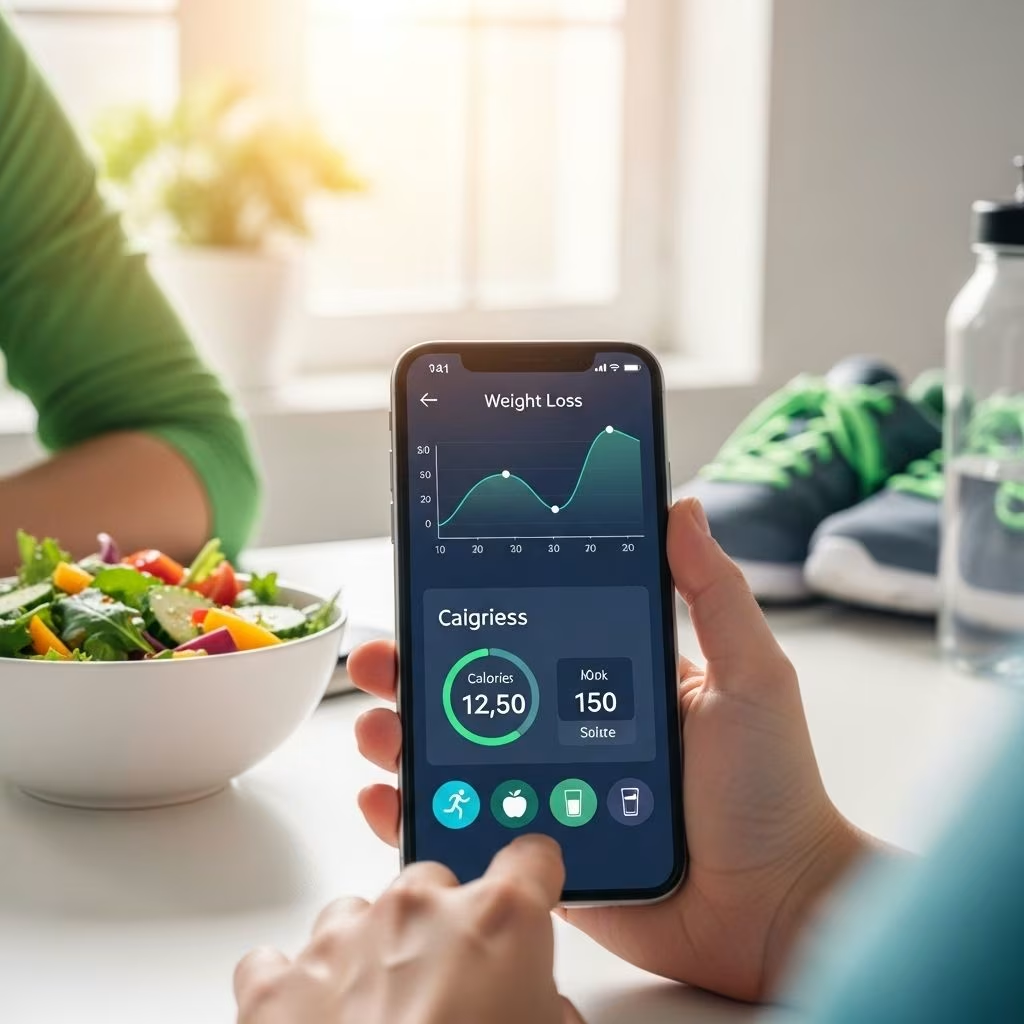
- Progress Visualization: Weight trends, daily caloric intake, and exercise patterns are often displayed in charts or graphs, helping you see your progress at a glance.
- Goal Setting and Reminders: Setting daily/weekly goals and receiving notifications keeps you on track.
- Personalized Feedback: Some apps provide feedback from a dietitian or coach, or use AI to give instant tips.
- Social Features: Community support, sharing victories, and participating in group challenges can enhance motivation.
- Integration with Devices: Many apps sync with wearable trackers and smart scales for seamless data capture and analysis.
Typical User Flow with a Weight Loss App
| Step | Action | Benefit |
|---|---|---|
| Download & Setup | Enter basic info, set starting metrics and goals | Personalized baseline and motivation |
| Daily Logging | Track meals, physical activity, and sometimes mood or sleep | Encourages consistency, boosts awareness |
| Engagement | Receive reminders, access tips, interact with a community or coach | Increases accountability and motivation |
| Progress Review | View trends, weekly summaries, reward milestones | Reinforces positive behaviors, guides course corrections |
The Behavioral Science Advantage
While self-monitoring is a proven strategy for weight loss, the real power of smartphone intervention emerges when apps incorporate elements of human behavior change:
- Behavioral Coaching: Apps that connect users to health coaches or dietitians—via chat, video, or feedback—deliver superior results. For example, combining app use with coaching resulted in double the weight loss compared to standard outpatient visits alone in one major study.
- Social Support: Functions that encourage sharing progress and tips with groups or friends increase accountability and enjoyment.
- Goal Reinforcement: Frequent reminders and prompts to review goals and behaviors support long-term adherence.
Why Digital Tracking Works Better—And for Whom
Weight loss apps are especially effective for certain groups and habits:
- People who regularly engage with the app—logging most days and participating in discussions—see the greatest weight loss.
- More frequent interaction leads to better outcomes: Even a 10% increase in app usage corresponded to significantly higher weight loss at 3, 6, and 12 months.
- Apps can be equally effective for adults of all ages and show promise for younger users as well.
Notably, app-only interventions can be less expensive and more accessible than ongoing face-to-face or group programs, especially for those with busy schedules or less access to in-person support.
What Features Do (and Don’t) Matter?
Recent large reviews highlight a surprising conclusion: adding more features doesn’t always translate to greater weight loss. Instead, the consistency of self-monitoring and the presence of supportive behavioral interventions are what really drive results.
- Self-monitoring tools—like food diaries and activity trackers—are vital.
- Personalized coaching and social interaction boost effectiveness more than the number of app features.
- The simplicity of logging—made easier by barcode scanners, speech-to-text, or automated tracking—encourages long-term use.
Fancy tools and gamified features are less important than building consistent, daily habits.
Real-Life Success: Evidence From Recent Studies
Let’s look at some real-world, evidence-based outcomes from research on digital weight loss interventions:
- Meta-Analyses: Reviews of over thirty trials confirm that mobile apps are associated with greater average weight loss than no intervention or traditional methods, with effects persisting up to a year.
- Community-Based Interventions: When users in a study received a Fitbit activity tracker AND participated in an app-based, coach-led group, they lost nearly twice the weight of the control group over six months.
- Active Use Yields Best Results: In a pool of over 50,000 app users, those recording their intake and activity most consistently achieved meaningful weight loss (4-5% of starting weight at 3 to 6 months), while occasional users lost much less.
Practical Strategies for Succeeding With Weight Loss Apps
While choosing any reputable app for weight loss can be helpful, how you use it matters most. Consider these tips:
- Pick an app that makes daily food and activity logging quick and intuitive.
- Set reminders to log consistently, even when your motivation dips.
- Engage with any offered coaching or community features.
- Sync your app with wearables—like smart scales or fitness trackers—for streamlined data entry and richer feedback.
- Schedule a weekly progress review to celebrate successes and identify opportunities for improvement.
Limitations and Considerations
While the benefits of app-based interventions are well-documented, there are some important cautions and boundaries to keep in mind:
- Not a Substitute for All Medical Care: People with chronic health conditions should seek expert medical guidance rather than relying on an app alone.
- App effectiveness depends on your engagement—passive or sporadic use yields minimal results.
- Privacy can be a concern; review your app’s data policy before extensive use.
- Some people may find frequent weight or calorie tracking discouraging. Personalize your approach for sustainability.
Frequently Asked Questions (FAQ)
Q: Are weight loss apps effective for everyone?
A: Studies show most people benefit from using weight loss apps, especially when they log consistently and use social or coaching features. However, individual results may vary based on motivation, app engagement, and personal health conditions.
Q: Which app features are most important for weight loss?
A: Food and physical activity logging, reminders, goal tracking, and access to real-world support (such as coaching or a group) are the features most strongly linked to greater weight loss.
Q: How much weight can I realistically expect to lose?
A: Systematic reviews suggest those who actively use smartphone-based programs lose an average of 1 to 4 kg over 6 months, with greater success linked to more frequent app engagement and added behavioral support.
Q: Are app-based interventions better than face-to-face programs?
A: App-based interventions are often more accessible, affordable, and convenient, and research indicates similar weight loss results when combined with coaching or group support. Face-to-face programs may provide greater accountability for some individuals.
Q: What if I lose motivation and stop logging?
A: It’s normal for motivation to fluctuate. Setting app reminders, involving friends or a health coach, and establishing a non-judgmental approach to setbacks can help you get back on track.
Takeaway: Using Smartphone Apps for Weight Loss
Smartphone-based weight loss apps offer a practical, evidence-supported route for those seeking to manage their weight, increase mindful eating, and build healthier habits. To maximize your success, focus on regular self-monitoring, take advantage of community or coaching features, and be patient with your progress. With the right digital support, your smartphone could become your most valuable weight loss partner.
References
- https://mhealth.jmir.org/2022/4/e35479
- https://lewis.gsu.edu/2021/12/17/can-smartphone-apps-help-you-lose-weight/
- https://pmc.ncbi.nlm.nih.gov/articles/PMC10034244/
- https://pmc.ncbi.nlm.nih.gov/articles/PMC11091450/
- https://www.nature.com/articles/s41366-023-01415-0
- https://www.frontiersin.org/journals/endocrinology/articles/10.3389/fendo.2020.00412/full


