


What If Obesity Isn’t Just About Diet and Exercise?
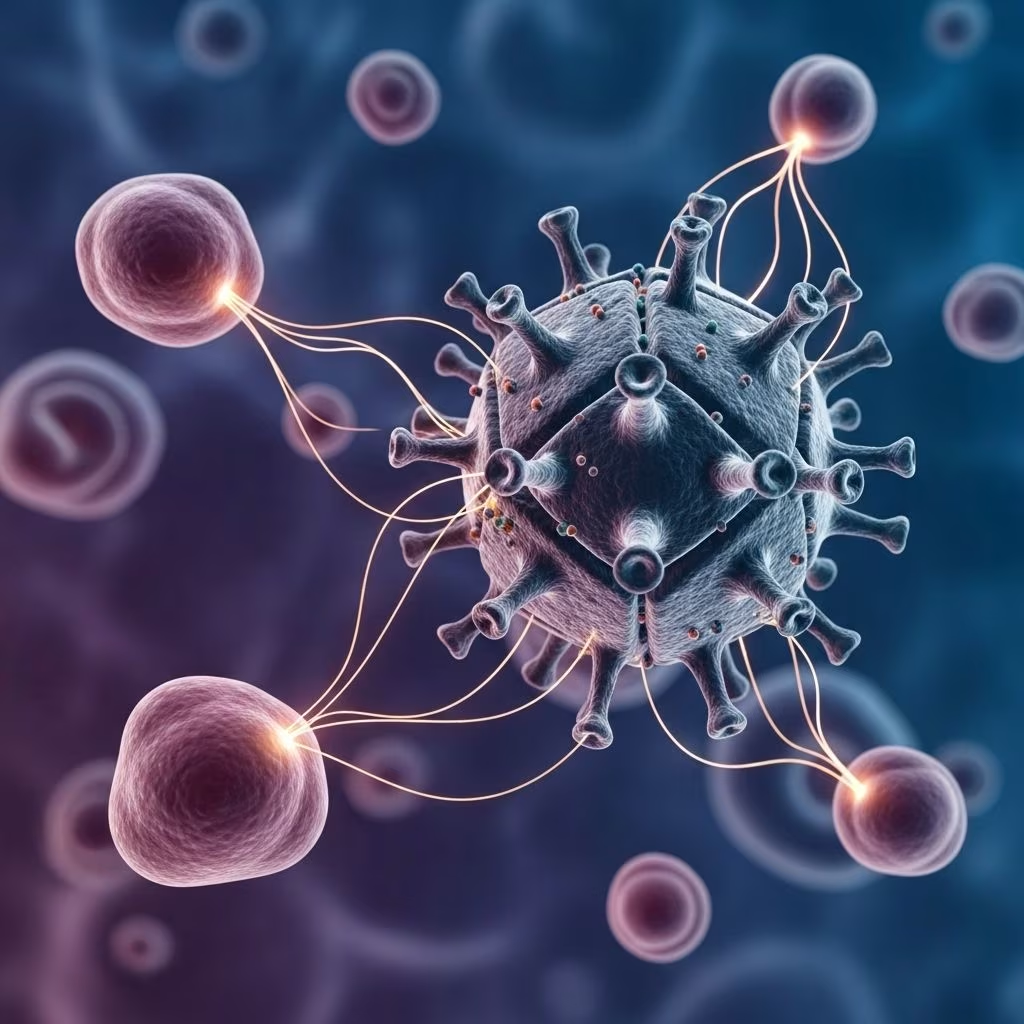
For decades, the dominant narrative around obesity has focused on lifestyle: poor diet, lack of exercise, and environmental factors. While these remain uncontested drivers, mounting research is revealing a surprising biological player—some cases of obesity may be influenced by viral infection, specifically a common virus known as adenovirus-36 (Adv36).
This emerging science doesn’t turn its back on established drivers of excess body fat, but it does force us to expand how we think about weight gain and metabolic health. Could there be an infectious side to the obesity epidemic?
When Obesity Defies Expectations
Traditional explanations—overeating, sedentary lifestyle, and genetics—don’t fully explain this one undeniable fact: countries with fewer Western lifestyle factors are facing surges in obesity rates that often rival or exceed those of industrialized nations. The steep, sudden global rise suggests a possible environmental change affecting vast populations nearly simultaneously.
- Urbanization alone can’t account for skyrocketing rates seen in diverse cultural and economic settings.
- Obesity is rising even in places with limited access to fast food, junk food, or cars.
- The search for a new culprit led scientists to consider infectious agents as possible contributors.
Introducing Adenovirus-36: The ‘Obese’ Virus
Adenoviruses are a large family of viruses typically associated with the common cold. But one member, Adv36, has been drawing attention since the mid-1990s for its unlikely connection to obesity. University of Wisconsin researchers discovered that experimental infection of animals with Adv36 consistently resulted in significant weight gain—often without increased food intake or reduced activity.
- Chickens and mice infected with Adv36 developed 50–150% more body fat than controls.
- 60–70% of infected animals became obese, compared to uninfected peers.
- Monkeys, when naturally exposed or experimentally infected, also gained substantial weight—sometimes 100% of monkeys in controlled experiments became heavier after infection.
The most striking discovery: infected animals didn’t eat more food or move less than uninfected animals. The virus seemed to change how their bodies processed and stored fat.
What Happens in Humans?
Could Adv36 affect people in the same way? To answer this, researchers began testing for Adv36-specific antibodies (showing prior or current infection) in both adults and children. The results revealed:
- Among people with obesity in American studies, 30% tested positive for Adv36, compared to only 11% of those without obesity.
- Infected individuals often weighed up to 50 pounds more than uninfected peers, on average.
- International data (over 15,000 individuals in nine countries) show Adv36 infection rates range from 6% to 65%, with an average of around 40% in the general population.
- Childhood obesity also correlates with Adv36 infection—every major study to date found some link between Adv36 and excess body fat in children.
All but one major research group has confirmed the pattern: Adv36 infection is significantly more common among people with obesity than those at healthy weights.
How Does Adv36 Cause Weight Gain?
This is where the story becomes especially compelling. Unlike classic cold symptoms, Adv36 operates at the cellular level—altering how fat is made and stored by hijacking the machinery of fat cells (adipocytes). Here’s what scientists have discovered about its mechanism:
- Adv36’s genetic material enters fat cells, prompting them to absorb more glucose and fat from the bloodstream.
- The virus also stimulates adult stem cells in fat tissue to turn into mature fat cells, increasing both the size and number of fat cells.
- Key viral protein: The E4orf1 protein, produced by Adv36, appears to be critical for this ‘adipogenic’ (fat-forming) effect. It disrupts metabolic processes and can promote weight gain even when food intake remains unchanged.
This means a person infected with Adv36 may develop more fat cells that are larger and more adept at storing energy. The result is a body that stores more fat more efficiently, regardless of diet or activity.
Adv36 and the Global Obesity Epidemic
The implications are wide-ranging. If Adv36 or similar viruses contribute even partly to obesity, this could help explain why:
- Obesity rates climbed so rapidly in populations worldwide—even among those without obvious changes in caloric intake or activity levels.
- Some individuals struggle with unexplained weight gain or difficulty losing weight, despite concerted lifestyle changes.
- Obesity is increasingly recognized as multifactorial: a product of genetics, environment, lifestyle, and now, potentially, infectious disease.
Key Studies and Major Findings
| Study Subject | Experiment | Main Findings |
|---|---|---|
| Chickens & Mice | Infected with Adv36 | Gained 50–150% more body fat; no increased food intake |
| Monkeys | Natural and experimental infection | All infected gained significant weight after infection |
| Humans | Adv36 antibody blood test | 30% of people with obesity tested positive, vs. 11% of lean controls; average infected person weighed ~50 lbs more |
| Children | Antibody studies across 6 studies | Adv36 was consistently associated with excess body fat |
Can You Catch Obesity?
This critical question often follows any talk of a ‘fat virus.’ Here’s what the evidence indicates:
- Adv36 spreads like common cold viruses: through respiratory droplets (coughing, sneezing) or via contact if hygiene is poor.
- But, catching weight gain directly from another person is very unlikely:
- Weight gain appears slowly (over months or years), often long after the actual viral infection passes.
- The window for being contagious is limited—just like with other cold viruses, the body eventually clears Adv36.
- The biological changes to fat and metabolism can endure long after the infection is gone, leaving a lasting metabolic imprint.
Is There a Treatment or Vaccine for Adv36?
Currently, there are no approved treatments or vaccines that specifically target Adv36 infection in humans. The reality is that once someone has had the virus, the same challenges of healthy weight management—through diet, physical activity, lifestyle modification, medical or surgical intervention—still apply.
However, research into viral causes of obesity could open new therapeutic doors:
- As we learn what viral proteins drive fat gain, scientists may target these with treatment or immunization strategies.
- Understanding Adv36’s pathways may inspire novel anti-obesity and anti-diabetic drugs designed to counteract the virus’s effects on fat storage and glucose handling.
Does Adv36 Explain All Obesity?
No. The research is clear—Adv36 is not the sole cause of obesity. The condition remains complicated, involving an array of genetic, behavioral, environmental, and now infectious factors. Most experts view Adv36 as one of several contributors that, for some people, may tip the balance toward excess body fat.
Key perspectives on Adv36’s role:
- It is likely one factor among many, with diet and exercise still playing the primary roles for most individuals.
- Adv36 and similar viruses may partly explain why some people seem more predisposed to gaining weight in the same environments.
- More research is needed to clarify who is most at risk from Adv36 and to quantify how much of current global obesity trends can be traced to viral infection.
Obesity, Viruses, and Metabolism: A Broader Perspective
Research into infectobesity—the idea that infectious agents can influence body weight—raises broader questions:
- Are other viruses or microbes involved in altering human metabolism?
- How do these agents interact with genes, gut bacteria, and lifestyle?
- Could understanding these pathways help break cycles of weight gain and metabolic disease in ways never before possible?
While more answers will come from ongoing and future studies, the field is poised for major discoveries that may someday change how we view—and treat—unexplained weight gain.
Frequently Asked Questions (FAQs)
What is adenovirus-36 (Adv36)?
Adv36 is a human adenovirus typically responsible for mild respiratory and gastrointestinal symptoms. Unique among cold viruses, it has been linked in research to increased fat storage and weight gain in animals and humans.
Can I ‘catch’ obesity like a cold?
While Adv36 spreads through respiratory droplets, current evidence indicates it is not likely that you can ‘catch’ obesity directly from another person. The virus causes changes that result in weight gain long after the infection itself is gone.
How do I know if I have had Adv36?
There are research-grade blood tests to check for Adv36 antibodies, but these are not routinely available to the public. Most people won’t experience noticeable illness beyond normal cold-like symptoms.
Is there any way to prevent or treat virus-related obesity?
At present, no specific treatment or vaccine exists for Adv36 in humans. Long-term prevention strategies focus on maintaining good hygiene to reduce risk of infection, as well as continuing proven healthy habits (balanced diet, frequent activity) for managing body weight.
Does this mean diet and exercise don’t matter?
Absolutely not. The best evidence still supports healthy eating and regular activity as the foundation of weight control for most people. Adv36 and related findings simply suggest there is a new, biological layer to consider in individuals struggling with unexplained weight gain.
Conclusion
Obesity is a complex, multifaceted condition—and growing recognition of viruses like Adv36 as contributing factors is reshaping our understanding of body weight. While not the sole or even the main cause, Adv36’s ability to increase both the number and size of fat cells requires us to consider infectious disease when confronting the obesity epidemic.
Ultimately, more research—and perhaps advances in antiviral or immunological treatments—may offer new possibilities for prevention and intervention. For now, knowledge is power: understanding all the potential drivers of weight gain, including infectious ones, may help us fight obesity with increased empathy, deeper insight, and better strategies in the future.
References
- https://www.obesityaction.org/resources/obesity-due-to-a-virus-how-this-changes-the-game/
- https://www.lung.org/blog/research-diabetes-obesity-infections
- https://pmc.ncbi.nlm.nih.gov/articles/PMC4517116/
- https://www.news-medical.net/news/20250725/New-study-uncovers-how-prior-obesity-impacts-viral-consequences.aspx
- https://jlpm.amegroups.org/article/view/10137/html
- https://www.massgeneralbrigham.org/en/about/newsroom/articles/obesity-may-increase-susceptibility-to-contracting-covid-19
- https://www.nature.com/articles/s41366-021-00805-6


