


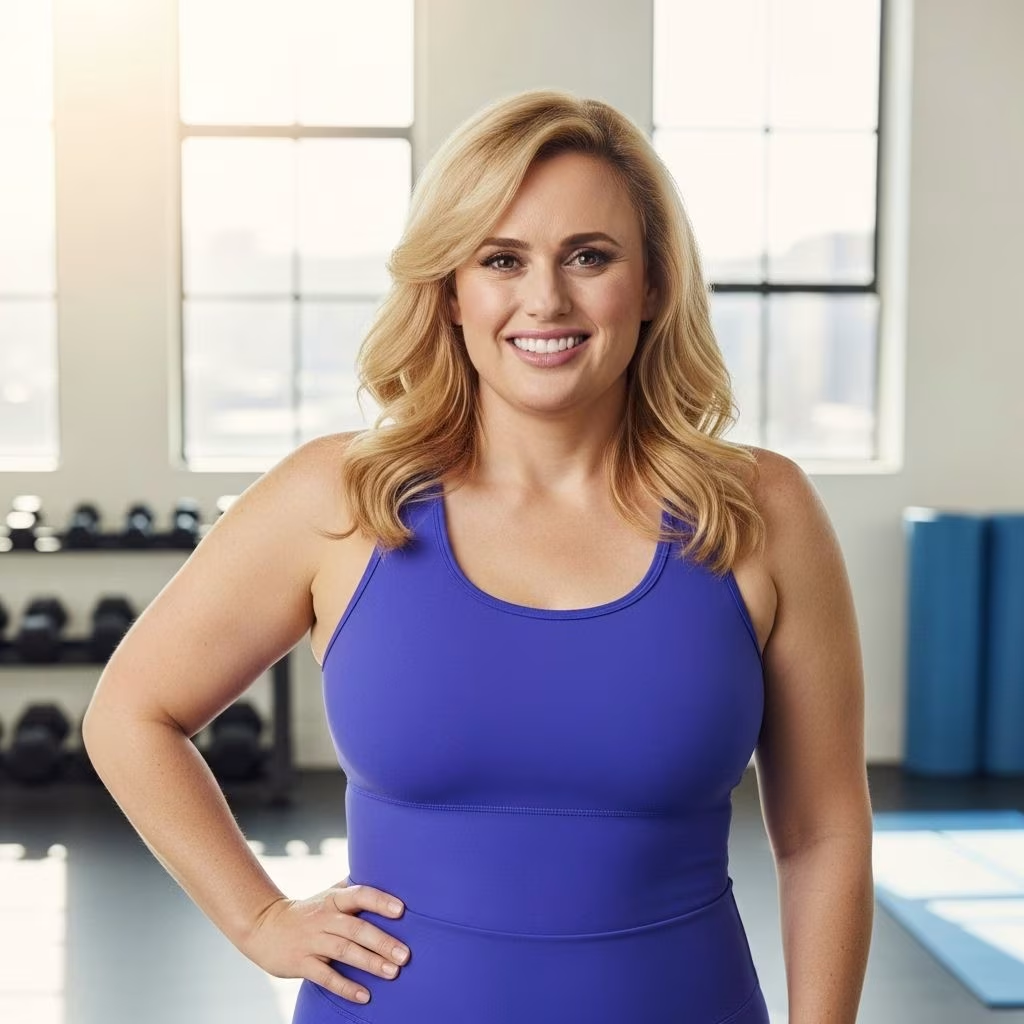
Rebel Wilson’s Year of Health: A Transformative Journey
Rebel Wilson shocked, inspired, and motivated millions by declaring 2020 her “Year of Health,” a period marked by extraordinary self-discipline, transparency, vulnerability, and dramatic results. The beloved actress, celebrated for her comedic roles, bravely opened up about the reasons behind her decision to lose weight, the psychological hurdles she faced, and the long-term lifestyle habits she built along the way. This article dives deep into Rebel Wilson’s journey—her motivations, setbacks, relationship with food, adoption of new health strategies, and, ultimately, her powerful impact on body image conversations worldwide.
What Sparked Rebel Wilson’s Year of Health?
Approaching her 40th birthday, Rebel Wilson saw the need for a significant life change. In candid interviews, she described a pivotal doctor’s visit that revealed how her health was affecting her prospects for in-vitro fertilization (IVF) as she hoped to preserve her eggs for future motherhood. Diagnosed with polycystic ovary syndrome (PCOS) at 21, Wilson had long managed her symptoms with birth control pills, without being informed that weight loss could help her condition. This lack of information, she later reflected, “almost cost me two decades of health.” A physician’s blunt assessment—”You have a better chance if you were healthy”—offered a profound wake-up call.
Her health goals were not just medical; Wilson also cited feeling alone and wanting more for herself emotionally and physically. “I was totally single, but it wasn’t because of my size; it was because of how I felt about myself,” she revealed, tying her sense of wellness to her self-worth and the quality of her relationships.
Setting Ambitious and Honest Goals
From the beginning, Rebel was refreshingly specific about her ambitions. In her own words, “With my ‘Year of Health’ mission I’m trying to get to 75kg’s (approximately 165 lbs.), and career-wise, I am trying to get one of my movies into production before the end of the year. Both of these things are requiring a daily effort and there’s constant setbacks—but I’m working hard.” Over the months, she kept fans updated about her progress, setbacks, and evolving mindset, reinforcing that the journey was as important as the outcome.
- Goal weight: 75 kg (165 lbs)
- Dedicated timeline: 2020 as a focused “Year of Health”
- Public accountability: Sharing real-time updates through social media
Wilson’s approach provided a striking alternative to typical celebrity transformations: she prioritized realism, long-term change, and candidness about mental health.
The Transformation: Diet, Exercise, and New Strategies
The visible changes in Rebel Wilson’s physique were the result of methodical planning and consistency. Her strategy was guided not by quick fixes but by sustainable changes.
Daily Habits for Lasting Change
- Exercise: Rebel committed to over two hours of workouts per day, focusing on high-protein nutrition to help sustain her energy and muscle mass while losing fat. Her regimen included cardio, strength training, and regular walks, notably in the Alps and other scenic locations.
- Sleep: She prioritized eight hours of sleep every night, acknowledging that recovery and rest are indispensable for overall health and weight management.
- Journaling: Initiating “Purge Emotional Writing,” Wilson journaled for twelve minutes daily to process her emotions and reflect on progress, setbacks, and motivations, using it as an essential self-care tool.
- Self-parenting: When struggling to stay on track, she looked at a childhood photo, asking herself if she’d want that little girl to be fed only sweets. “I was trying to re-parent myself so that hopefully I could become an actual parent in real life,” she wrote.
Nutrition and Relationship with Food
Rebel Wilson characterized her “relationship with food” as “complicated,” citing years of using food for comfort and celebration. She has shared that she often viewed herself harshly, confessing: “At 39 years old, I’ve trashed my body with junk food…because deep down I think of myself as trash.” The process of weight loss became as much about self-respect as it was about physical health.
Medical Support and GLP-1 Medications
Rebel was also transparent about using advanced tools like GLP-1 medications, including Ozempic, to support weight maintenance. She noted that these drugs, which help control appetite and blood sugar, can be “good” for those with a “bottomless appetite for sweets.” Wilson warned, however, against young fans fixating on appearances or celebrity diets, urging them instead to cultivate self-acceptance and health at their own pace. She explored “microdosing” GLP-1s on the advice of her celebrity doctor, particularly before significant events, balancing them with her new micro-habits introduced through her partnership with Noom.
| Strategy | Description | Rebel’s Insight |
|---|---|---|
| High-Protein Diet | Focus on protein-rich foods while reducing sugars and ultra-processed items. | Crucial for muscle maintenance during rapid weight loss. |
| Cardio & Strength Training | Over two hours of movement daily, designed to be sustainable in the long run. | Noted that extreme regimens can lead to burnout or injury. |
| GLP-1 Microdosing | Low doses of new weight-loss drugs to help with appetite and metabolic balance. | Important supplementary tool, not a replacement for habits. |
| Emotional Writing | Journaling to process feelings and reinforce positive behaviors. | Essential for self-awareness and breaking negative patterns. |
| Consistent Sleep | Prioritizing eight hours per night for recovery and hormonal balance. | Directly improved ability to exercise and resist cravings. |
The Psychological Battle: Self-Esteem and Self-Compassion
Despite outward success, Rebel Wilson has repeatedly emphasized that weight loss is not only about food and workouts—it is primarily an emotional and psychological challenge. Through her memoirs and social media, she has written about periods of doubt, shame, and frustration: “Even if you have to crawl towards your goals, keep going…it will be worth it…Some days are frustrating as hell, you feel like giving up, you get annoyed at the lack of progress…but good things are coming your way.”
Rewriting Her Inner Narrative
- Confronting negative self-talk: Wilson tackled long-standing issues with self-image and worth, realizing that food was less a reward and more a form of self-punishment.
- Emphasizing progress: She shifted the focus from quick fixes to sustainable, incremental improvements.
- Seeking joy and self-acceptance: Wilson openly encouraged her followers to “embrace their appearance” and resist trying to conform to unrealistic standards, like those set by Victoria’s Secret models.
Her openness inspired many to reevaluate their own definitions of success, value, and happiness, paving the way for wider conversations around mental health and body positivity.
Advice From a Trainer: The Marathon, Not the Sprint
Wilson’s trainer, Jono Castano, was vocal about setting realistic expectations. He discouraged fad diets and short-term transformations, emphasizing that lasting change takes time: “You shouldn’t always look at the easiest option… Two months is not enough time to be able to change your body. When your goal is like that and you don’t achieve it, it can cause a lot of mental problems. My advice is to keep your goals realistic, short, and then achieve them and progress from there.”
- Take regular progress photos instead of fixating on the scale.
- Monitor not just weight, but also body fat and muscle mass.
- Set incremental, attainable goals, recalibrating as needed.
- Understand that setbacks are a part of genuine progress.
Tracking Progress: Before-and-After Isn’t Everything
Rather than relying exclusively on the numbers, Wilson’s approach included frequent visual check-ins and self-reflection. This method respects the complexity of body composition, recognizing that muscle gain can offset fat loss on the scale and yet be a sign of healthy transformation.
Dealing With Public Reaction: Representation and Personal Choice
Wilson’s dramatic transformation, and her later partnership with Noom as a wellness ambassador, sparked debate. Some cultural observers wondered whether her weight loss represented a “betrayal” of body-positivity movements. Wilson responded candidly, likening it to joining a group at the movies and then choosing to skip candy for health reasons: “The person who is trying to better themselves is improving their life. Why would anyone come at someone who is genuinely trying to make their life better?”
The New Era: GLP-1 Medications and Celebrity Influence
- GLP-1 drugs such as Ozempic, Wegovy, and Mounjaro have changed the conversation around weight loss in Hollywood.
- Wilson admits she wishes she’d known about GLP-1s sooner, yet insists lifestyle change is still essential, and that medication is only part of the picture.
- She encourages fans and the public to make individualized, informed choices, resisting pressure from the media or celebrity trends.
After the Year of Health: Maintaining Balance
After her headline-making transformation, Rebel Wilson has continued to share her evolving relationship with food, exercise, and self-worth. In March 2024, she affirmed that returning to a balanced, sustainable schedule—especially amid career demands and new motherhood—would continue to be her focus.
She also emphasizes the importance of flexibility: During an intense period preparing for her wedding, she briefly increased her GLP-1 dose to help her feel and look her best, then scaled back as she took on comedic roles or shifted lifestyle priorities. “I don’t necessarily care about my weight right now. I live for two things: not feeling lonely and feeling great about myself.”
Frequently Asked Questions (FAQs)
Q: Why did Rebel Wilson decide to lose weight?
A: Rebel Wilson’s motivation stemmed from a desire to improve her fertility, manage symptoms of PCOS, and increase self-esteem and self-worth ahead of turning 40.
Q: What strategies did Rebel Wilson use in her weight loss journey?
A: She prioritized a high-protein diet, regular exercise, emotional self-care through journaling, consistent sleep, periods of GLP-1 medication under medical guidance, and sustainable micro-habits for daily wellness.
Q: Did she experience setbacks or challenges?
A: Yes, Wilson has candidly described setbacks, frustrations, and the psychological challenge of reshaping her habits and self-image, encouraging others to persist despite disappointments.
Q: Does Rebel Wilson endorse weight-loss drugs for everyone?
A: No. While she finds GLP-1s helpful for herself, she discourages obsession with appearance and urges individuals to consult with professionals, focusing instead on health and self-acceptance.
Q: What advice does Rebel’s trainer offer?
A: Her trainer advises that weight loss is a gradual process, recommending regular self-monitoring, realistic goals, and avoiding drastic, short-term regimens.
Inspiring a New Conversation About Health and Self-Worth
Rebel Wilson’s “Year of Health” stands out not only for its dramatic physical results but also for its lasting impact on public attitudes toward health, beauty, and self-respect. By sharing her story, setbacks, and victories, she reminds us all: the most sustainable changes come from within, and true transformation is as much mental and emotional as it is physical.
References
- https://www.womenshealthmag.com/weight-loss/a30811784/rebel-wilson-weight-loss/
- https://www.usatoday.com/story/life/health-wellness/2025/09/18/rebel-wilson-glp-1-microdosing/86207598007/
- https://scalar.usc.edu/works/trailer-wire/felix?id=rebel-wilsons-thin-transformation-her-2025-holiday-weight-loss-secrets
- https://regulations.ucf.edu/recent-notices/?id=rebel-wilson-weight-loss-how-she-dropped-80-pounds-without-losing-herself-68d80154aa778


