


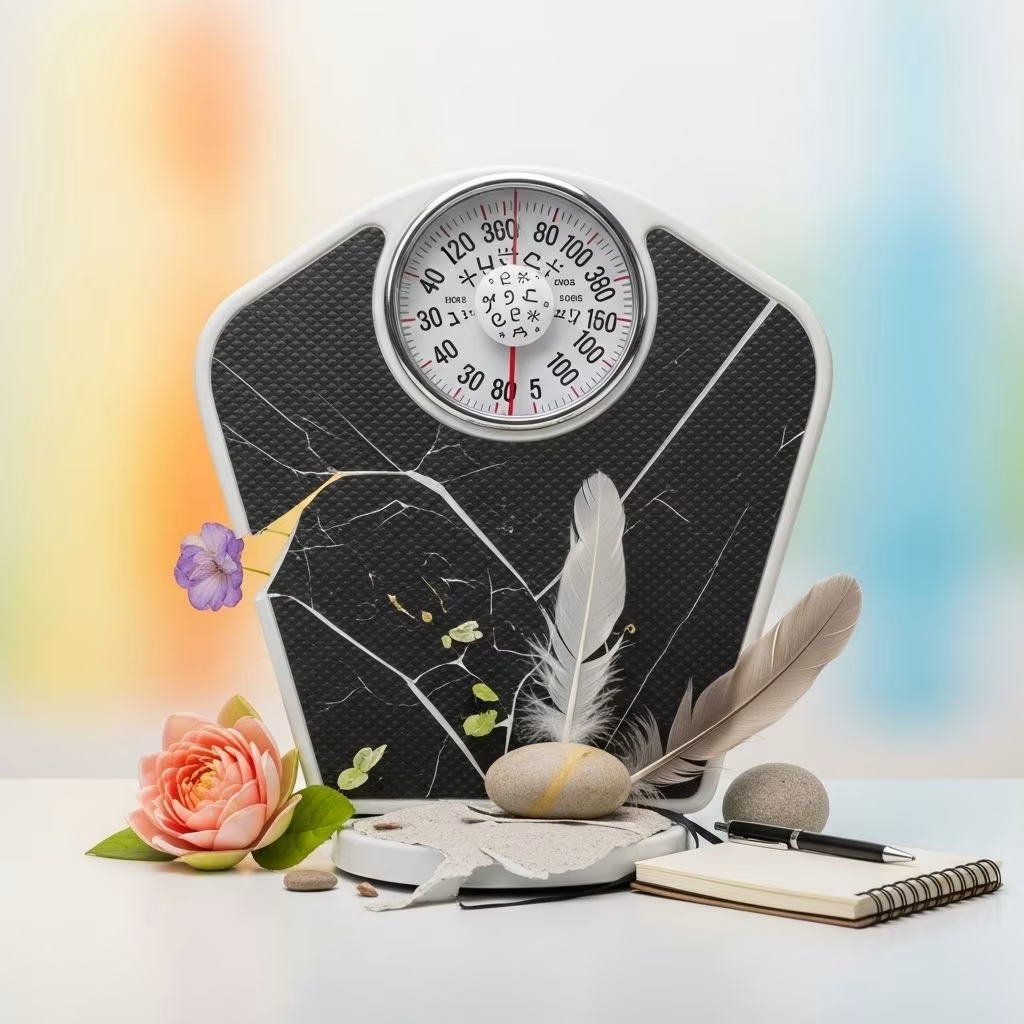
For decades, the allure of thinness has promised people not just a new look but a new life. The belief echoes through media, social circles, and private thoughts: Everything will be better when I’m thin. But does a smaller body really deliver happiness, fulfillment, and self-love? Or are these hopes misplaced, robbing us of joy in the present?
Understanding the ‘Thin Equals Happy’ Illusion
Our culture has woven a powerful narrative linking thinness to ultimate happiness. Many pursue weight loss with the expectation that it will bring love, confidence, and a sense of belonging. This dream is fueled by countless advertisements, success stories, and before-and-after images that reinforce the idea that a slim body is the gateway to a better life.
However, research and personal stories reveal a more nuanced reality. While reaching a healthy weight can have physical benefits, it often does not fulfill the emotional or existential longings projected onto thinness. In fact, the pursuit itself can overshadow the importance of self-acceptance and present-moment joy.
- Cultural standards often value thinness over well-being.
- External validation seems linked to weight—but genuine self-worth must come from within.
- Promises of happiness through appearance often lead to disappointment, not lasting fulfillment.
What Losing Weight Can—and Cannot—Do
There are legitimate reasons to seek a healthy weight: improving mobility, reducing strain on the heart and joints, and having access to a broader range of fashion choices. Medical evidence supports the benefits of weight loss for certain health risks, presenting it as a positive physical goal for many.
However, losing weight does not magically:
- Erase feelings of inadequacy or self-doubt.
- Create loving relationships out of thin air.
- Guarantee respect—either from others or from yourself.
- Eliminate the root of emotional struggles or poor self-image.
| Weight Loss Benefit | What It Cannot Achieve Alone |
|---|---|
| Improved physical health | Automatic self-love and happiness |
| Greater comfort in movement | Resolution of emotional issues |
| Reduced disease risk | Guaranteed romantic or social fulfilment |
| Fashion flexibility | Inner peace |
False Promises: The ‘Cherished’ Illusion
Many hope that becoming thin will finally make them feel cherished—worthy of love, admiration, or attention. This idea is deeply embedded, suggesting that worthiness is earned through appearance. Yet the truth is that no number on the scale can bestow genuine self-worth or guarantee the affection of others.
People of all sizes face challenges around acceptance and love, both from themselves and from others. Attaching hope for happiness solely to weight loss often leads to:
- Ongoing dissatisfaction—even after reaching weight goals
- Perpetual cycles of restrictive dieting and disappointment
- Narrow focus on appearance at the expense of holistic well-being
Beginning Real Transformation: Living as If You Love Yourself
The key to fulfillment isn’t in the mirror but in the daily actions you take to honor and care for yourself, regardless of size. Real change begins when you:
- Commit to kindness—Treat yourself with the same compassion you extend to friends.
- Act on your own behalf—Make decisions that support your well-being, not just your appearance.
- Prioritize self-care daily—Devote time to activities that recharge you emotionally and physically.
- Vigilance for self-advocacy—Refuse to let shame or external standards dictate your happiness.
Reframing the Pursuit: Healthy Goals, Not Impossible Promises
Achieving your natural weight can be a worthy pursuit when motivated by self-care and health, not external validation. Letting go of the myth that thinness guarantees happiness frees you to focus on living fully, starting right now.
- Lose weight for health, mobility, and comfort—not to prove worthiness.
- Recognize that challenges—work, relationships, life’s uncertainties—exist at any size.
- Allow yourself joy, love, and confidence today instead of deferring them to the future.
How to Cherish Yourself at Any Size: Practical Steps
- Practice mindfulness. Notice your thoughts around food, appearance, and worth. Gently redirect negative judgments to kinder perspectives.
- Set boundaries. Limit exposure to media or people who reinforce unhealthy body ideals. Surround yourself with body-positive influences.
- Seek support. Whether through friends, counseling, or support groups, share your journey with those who respect you for who you are beyond appearance.
- Honor your body. Engage in movement and nourishment that makes you feel alive and cared for—not punished or deprived.
- Schedule regular self-care as non-negotiable time in your routine, just as you would for work or family obligations.
Common Traps: Why the ‘When I’m Thin’ Mindset Persists
Despite evidence and lived experience, the belief endures. Why?
- Social validation—Society rewards appearance, reinforcing the cycle.
- Diet culture—A multi-billion-dollar industry capitalizes on insecurities, making thinness appear crucial to happiness.
- Deferral of joy—It can feel safer to focus on a future self instead of engaging with the complexity and imperfection of the present.
- Comparison—Social media and pop culture create unrealistic standards and highlight superficial success stories.
Reclaiming Joy and Self-Worth—No Matter Your Body Size
Imagine living today with the self-acceptance and joy you expect to feel if you reached your goal weight. What would change if you refused to withhold love, fun, or self-care until after weight loss?
- You deserve love and happiness now—not someday.
- Your value is constant, regardless of appearance or size.
- Start acting in alignment with your worthiness today, and happiness follows.
Breaking Free: Real Stories and Reflections
Many who have lost significant weight report that, while their health improves, inner struggles remain unless those are addressed directly.
“I believed that once I was thin, everything would fall into place. But the hard feelings about myself didn’t melt away with the pounds. I had to learn to appreciate myself—at every size.”
This testimony is echoed in many personal narratives: Lasting happiness comes not from the scale, but from the ongoing work of self-acceptance and authentic living.
Frequently Asked Questions (FAQs)
Why does focusing solely on weight loss often disappoint?
Because external changes rarely address core feelings of inadequacy or self-doubt. When fulfillment is tied only to appearance, underlying issues persist after the weight is lost.
How can I pursue health without falling into the thinness trap?
Set goals based on energy, mobility, and how you feel—instead of numbers on the scale. Reflect regularly on your deeper motivations and prioritize well-being over image.
What are some practical strategies for self-acceptance?
- Speak to yourself kindly, as you would to a friend.
- Celebrate small victories, including those unrelated to weight.
- Challenge negative self-talk when it arises.
- Make time for activities that nurture your spirit and creativity.
Summary Table: Healthy Motivations vs. Thinness Myths
| Healthy Motivation | Thinness Myth |
|---|---|
| Seeking increased energy and stamina | Believing that being thin will solve all problems |
| Improving health markers (blood pressure, mobility, etc.) | Assuming thinness guarantees self-love or happiness |
| Enjoying greater body comfort and movement | Expecting universal acceptance only at a certain weight |
| Practicing self-care through nutrition and movement | Withholding joy or self-acceptance until a goal weight is reached |
Conclusion: Embrace Your Worth—Today
Being thin may bring physical benefits, but it will never fulfill the deeper needs for happiness, love, or self-respect unless these are nurtured independently of appearance. You deserve to cherish yourself now and always, at every stage. The journey begins not with the next diet but with a daily commitment to live as if you love yourself—because you do.
References
- https://www.prevention.com/weight-loss/a20452261/itll-be-better-when-im-thin/
- https://www.prevention.com/weight-loss/g20494908/how-to-start-losing-weight/
- https://www.mayoclinic.org/healthy-lifestyle/weight-loss/in-depth/weight-loss/art-20047752
- https://www.prevention.com/weight-loss/a20475840/dieting-truths/
- https://www.prevention.com/weight-loss/a20441297/getting-past-size-zero-envy/
- https://www.prevention.com/weight-loss/a20509771/5-things-losing-weight-will-never-fix/
- https://www.prevention.com/weight-loss/g20511161/number-one-major-weight-loss-tip/
- https://www.prevention.com/weight-loss/a20445011/weight-loss-success-stories-18/
- https://pmc.ncbi.nlm.nih.gov/articles/PMC8017325/
- https://www.mdanderson.org/cancerwise/weight-loss-injections-and-cancer–6-questions–answered.h00-159702279.html


