


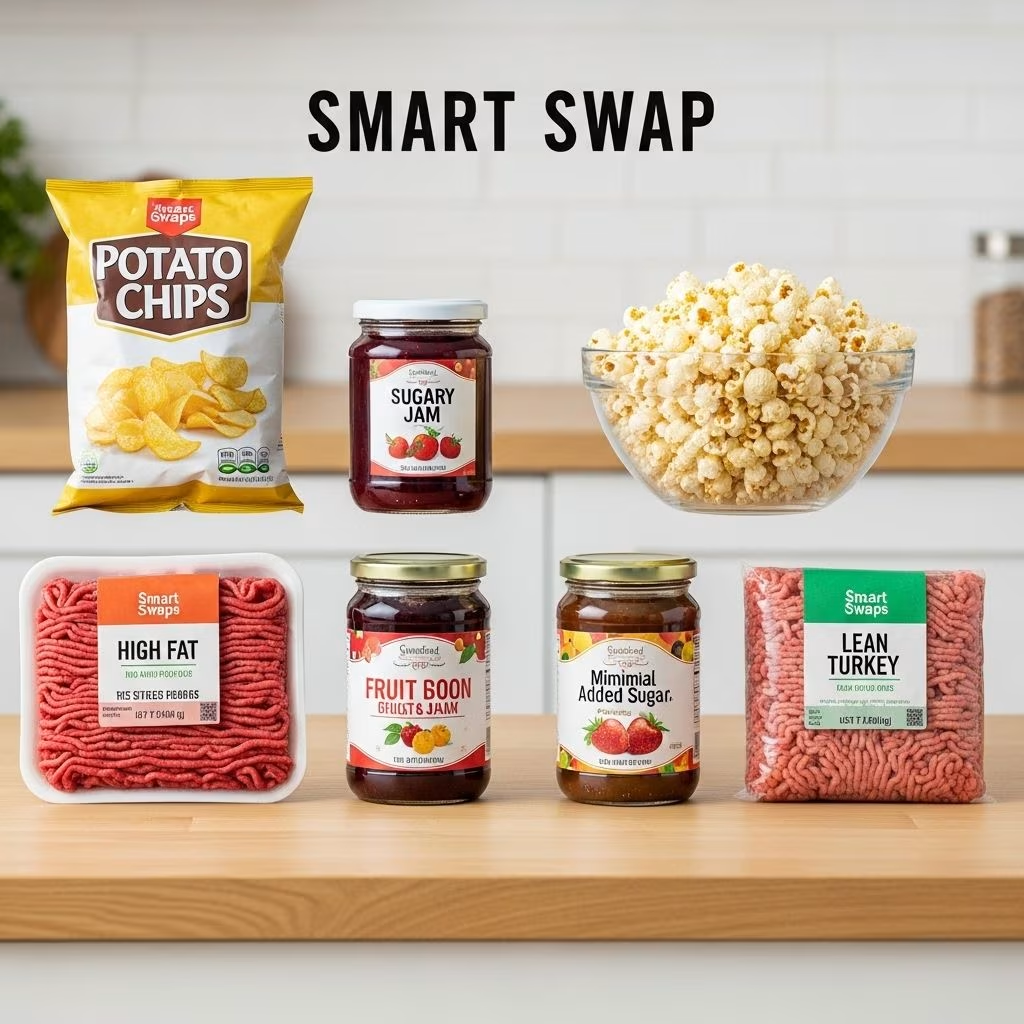
6 Smart Grocery Swaps for Weight Loss and Savings
Swapping processed foods for fresh, nutrient-rich alternatives isn’t just about cutting calories—these choices also offer financial savings. By making a few simple adjustments in your cart, you can upgrade your diet, lose weight, and pocket as much as $60 each month. Below, discover six strategic grocery swaps that provide quick wins for both your waistline and wallet.
Why Grocery Swaps Matter for Weight Loss
Many popular supermarket foods seem healthy at first glance, but contain hidden calories, sugars, or fats. By focusing on key swaps, you can:
- Reduce empty calories—replace high-calorie snacks with filling, vitamin-rich produce.
- Increase fiber and nutrients for greater satiety and better overall health.
- Save on weekly grocery bills by choosing less-processed options.
Let’s walk through the six highly effective swaps that deliver tangible weight loss results.
Swap #1: Replace Pita Chips with Bell Pepper Strips
Pairing hummus with pita chips is common, but just 10 chips can add 130 calories and 5 grams of fat to your snack. Instead, trade them for crisp raw bell pepper strips, which:
- Deliver the same crunch with far fewer calories—just 30 calories per cup and no added fat.
- Boost vitamin C intake and supply filling fiber to help you eat less overall.
- Cost significantly less: A bag of pita chips typically exceeds $3, while a bell pepper can be as little as $1.
Dietitian Elana Natker says, “Crunchy raw veggies give the crisp of a chip, but also provide vitamins and filling fiber to satisfy you more quickly.”
| Snack | Calories | Fat (g) | Fiber (g) | Price (per serving) |
|---|---|---|---|---|
| Pita Chips (10 chips) | 130 | 5 | 1 | $0.75 |
| Bell Pepper Strips (1 cup) | 30 | 0 | 2 | $0.25 |
- Cash saved per swap: $2
- Monthly savings: $8
Swap #2: Trade Granola for Old-Fashioned Oatmeal
Granola, often marketed as a healthy cereal option, is loaded with sugar—sometimes it’s the second ingredient on the box. A half cup typically packs in 240 calories, 14 grams of sugar, and 7 grams of fat.
- Oatmeal offers double the portion (1 cup cooked) for just 150 calories and 1 gram of sugar.
- Greater satiety from fiber helps tame cravings and reduces total caloric intake.
- Old-fashioned oats cost about $0.40 less per serving than boxed granola.
Registered dietitian Tamara Duker Freuman notes, “Oats are one of the major heart-healthy foods, but you may be diluting their benefits by getting them from granolas instead of a minimally processed bowl of oatmeal. Granola should be considered a treat food, not a breakfast staple.”
| Breakfast | Calories (per serving) | Sugar (g) | Fat (g) | Price |
|---|---|---|---|---|
| Granola (1/2 cup) | 240 | 14 | 7 | $0.75 |
| Old-Fashioned Oats (1 cup cooked) | 150 | 1 | 2.5 | $0.35 |
- Cash saved per swap: $3.20
- Monthly savings: $13
Swap #3: Switch Baby Carrots for Organic Rainbow Carrots
Baby carrots are popular for their convenience, but they aren’t actually “babies”—they’re cut and shaped from full-size carrots. This process adds costs (and a chlorine bath to prolong shelf life). Opting for whole organic rainbow carrots:
- Gets you more volume for less: A two-pound bag of whole carrots ($1) versus one pound of baby carrots ($1.29).
- Offers a broader spectrum of disease-fighting antioxidants and up to 60% more than conventional carrots due to organic farming methods.
- Reduces exposure to pesticide residues and provides diverse phytonutrients by choosing different carrot colors—purple, yellow, red, and white.
According to Elana Natker: “Each color provides slightly different phytonutrients, so you get a slight nutrition advantage that way.” And organic choices help lower intake of potentially harmful additives.
| Carrot Option | Price (per lb) | Antioxidants | Phytonutrient Variety |
|---|---|---|---|
| Baby Carrots | $1.29 | Conventional | Orange only |
| Organic Rainbow Carrots | $0.50 | 60% higher | Multiple colors |
- Cash saved per swap: $0.30
- Monthly savings: $1.50
More Swaps for Smarter Grocery Shopping
Beyond the top three swaps, consider additional ways to boost your grocery game:
- Buy whole produce instead of pre-cut, packaged versions to cut down cost and chemicals.
- Choose wild-caught or sustainably farmed fish for higher omega-3 content versus heavily processed breaded fish sticks.
- Opt for plain Greek yogurt topped with fresh fruit over sugary flavored yogurt cups.
Seasonal Shopping Tips
Take advantage of produce in season for maximum nutrition and minimal cost. Explore farmers’ markets or local grocers for deals on:
- Leafy greens
- Squash varieties
- Berries and stone fruits
Is Organic Always Better?
Going organic can offer substantial nutrition benefits, especially for root vegetables and produce you’re likely to eat raw. Studies show organic carrots, for instance, carry fewer pesticide residues and up to 60% more antioxidants. When budgets are tight, focus your organic purchasing on the “Dirty Dozen” fruits and vegetables most likely to carry pesticide residues.
- Dirty Dozen examples: Strawberries, spinach, apples, grapes, tomatoes.
- Clean Fifteen examples: Avocados, sweet corn, pineapples (preserve cash by buying conventional varieties of these).
How Grocery Swaps Add Up—Your Monthly Savings
Replacing processed snacks and convenience foods with their whole counterparts doesn’t just lead to healthier meals; it also puts more money back in your pocket. The swaps detailed above result in cumulative monthly savings of up to $60. Here’s how the numbers break down:
- Pita chips to bell peppers: $8 per month
- Granola to oatmeal: $13 per month
- Baby carrots to rainbow carrots: $1.50 per month
- Additional strategic swaps (e.g., swapping out processed dressings, packaged snacks): $37.50+ per month
These totals reflect weekly purchases over four weeks. Small changes can create a big impact over time.
Frequently Asked Questions (FAQs)
Q: Are grocery swaps really effective for weight loss?
A: Yes, replacing processed foods with fresh, less calorie-dense options increases feelings of fullness, reduces total daily calorie intake, and often boosts fiber and micronutrients too. Studies show these swaps can lower saturated fat intake and support healthier food choices over time.
Q: How often should I make these swaps?
A: Ideally, incorporate these swaps into every weekly shop. Consistency is key to generating sustainable results for both health and budget.
Q: Does choosing organic always mean a better choice?
A: Not always. Organic produce typically offers higher antioxidants and lower pesticide residues, but you should prioritize based on your budget and the produce most likely to carry chemicals (see the Dirty Dozen list).
Q: Are swaps beneficial beyond weight loss?
A: Absolutely. Along with heart health, reducing processed food consumption can improve gut health, boost energy, and reduce your long-term risk for chronic disease.
Q: Where can I find deals on whole, unprocessed foods?
A: Try discount grocers, farmers’ markets, or bulk food stores. Planning meals based on weekly store specials further maximizes savings.
Actionable Tips for Smarter Grocery Shopping
- Make a shopping list and stick to it to reduce impulse buys.
- Shop the perimeter of the grocery store for fresh produce, meats, and dairy.
- Buy in bulk when possible to save money on whole grains, legumes, and nuts.
- Prepare snacks in advance—slice veggies, batch-cook oatmeal, or portion yogurt into grab-and-go containers.
- Take advantage of store loyalty programs and digital coupons for added savings.
The Bottom Line
With small grocery swaps, you can lower your calorie intake, save money, and gain better nutrition with every shopping trip. These healthy, wallet-friendly choices add up to big results—without extra cost or complicated recipes. Start simple, stay consistent, and enjoy the benefits to your body and budget.
References
- https://www.prevention.com/weight-loss/a20456544/grocery-swaps-for-weight-loss/
- https://pmc.ncbi.nlm.nih.gov/articles/PMC6555993/
- https://www.prevention.com/weight-loss/a20449716/food-swaps-to-cut-calories/
- https://www.prevention.com/weight-loss/g20446179/shopping-mistakes-making-you-gain-weight/
- https://www.prevention.com/weight-loss/a43905863/lose-weight-safely/
- https://www.prevention.com/weight-loss/g27323543/low-calorie-snacks/
- https://www.prevention.com/weight-loss/a20458256/why-you-overeat/
- https://www.prevention.com/weight-loss/g20432475/15-ways-to-cut-hundreds-of-empty-calories-a-day/
- https://diabetes.org/food-nutrition


