


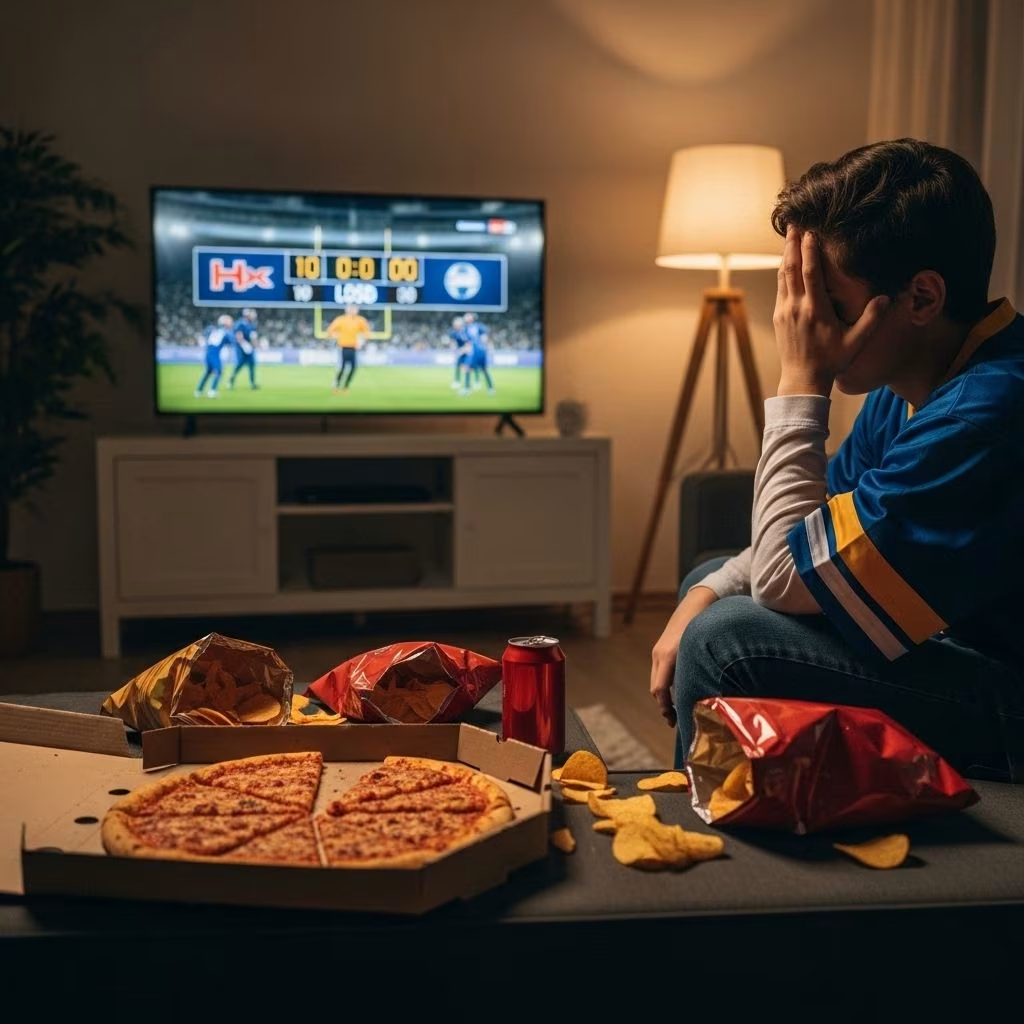
Why a Team Loss Can Make You Head for the Fridge
Ever found yourself raiding the snack cupboard for chips or ice cream after your favorite sports team loses a close game? If so, you’re not alone. New research confirms that sports fans are much more likely to indulge in high-calorie, fatty foods following their team’s defeat than after a stirring victory. This article unpacks the science behind this phenomenon, explaining why passionate fans struggle to resist comfort food after a loss, exploring the emotional and psychological connections, and providing strategies to make healthier choices on game days.
The Research: Losses and Emotional Eating Go Hand in Hand
Two studies led by the INSEAD Business School tracked thousands of Americans’ eating habits and compared them to the performance of their local football teams. The analysis revealed a consistent, measurable relationship between a team’s result and fans’ dietary choices.
- After a loss: Fans’ saturated fat consumption jumped by 16% and overall calorie intake increased by 10% the next day.
- After a win: Fans ate healthier, with lower calorie intake and a marked drop in fatty food consumption.
- This pattern was strongest after unexpected or narrow defeats—games where fans were emotionally invested and the outcome was uncertain until the last moments.
- For control, researchers confirmed that people in areas without a local football team or where teams were idle did not experience the same dietary fluctuations, ruling out unrelated Monday effects or random food binges.
Table: Change in Eating Habits Based on Game Outcome
| Game Result | % Change in Saturated Fat Intake | Calorie Intake |
|---|---|---|
| Home Team Loss | +16% | +10% |
| Home Team Win | -9% | Lower than average |
| No Game Played | No significant change | No significant change |
Researchers Pierre Chandon and Yann Cornil concluded that the emotional aftermath of a game can directly sway people’s eating patterns, pushing distraught fans toward unhealthier food choices, especially after distressing losses.
The Psychology: Why Do We Eat After Our Team Loses?
This isn’t just a coincidence or a minor blip in willpower. The phenomenon is deeply rooted in identity, self-esteem, and emotional coping.
- Fans Identify With Their Team:
For passionate supporters, their favorite team is a part of their own personal identity. People say “We lost,” not “They lost.” When the team fails, it feels like a personal loss, challenging their sense of self and causing a drop in self-worth. - Defeat Triggers Emotional Eating:
A team’s loss can deliver a subtle but significant blow to a fan’s ego. Fans often seek comfort in food—usually foods rich in fat and sugar—as an instinctive way to self-soothe and escape negative emotions. - The Role of Surprise and Closeness:
The effect is most pronounced when the defeat is unexpected, comes down to the wire, or is against a similarly ranked opponent. The emotional punch is more intense, magnifying comfort-seeking behaviors.
This coping mechanism is not unique to sports defeats—it’s part of a broader emotional eating pattern triggered by any event that threatens personal identity or causes negative feelings.
Broader Effects of Sports Outcomes on Behavior
Researchers note that a team’s performance doesn’t just affect fans’ eating:
- Other studies show links to increased risky driving, spikes in heart attacks, and higher rates of domestic violence after unexpected losses.
- These behaviors are all thought to stem from psychological distress, emotional dysregulation, and a search for solace following a perceived personal setback.
Experiments: The Link Between Victory, Defeat, and Food Choices
To test whether this was more than just a statistical coincidence, researchers conducted controlled experiments:
- Writing Exercise: French participants wrote about past experiences when their favorite team either won or lost.
- Food Choice Test: Afterwards, offered a snack, those who relived a loss overwhelmingly chose chips and candy (comfort foods), while those who recalled a win picked healthier grapes and tomatoes.
The conclusion: Reliving or anticipating a loss increases the urge to eat unhealthier foods as an emotional crutch.
Not Just Football: Does This Apply to Other Sports and Events?
While the studies focused on football fans in the United States, experts suggest similar patterns are likely in:
- Basketball, baseball, soccer, hockey, and international sports events
- Political contests, reality TV competitions, or any high-stakes situation linked to personal or community identity
The intensity of the emotional investment, rather than the type of sport, seems to be the key factor.
Underlying Mechanisms: Emotional Coping, Self-Control, and Food
What exactly causes fans to eat more (and worse) after a loss? Researchers propose several psychological principles:
- Identity Threat: The team’s loss feels like a direct blow to personal self-esteem, triggering distress.
- Hedonic Eating: Fans seek pleasurable foods to counter negative emotions—this is a classic example of emotional eating.
- Lowered Self-Control: After an ego threat, the ability to resist temptation and make healthy food choices wanes.
- Hope and Self-Regulation: Fans who maintain hope or positively reframe the outcome may be better able to stick to healthier eating habits.
Unexpected Wins and Losses: When the Effect Is Strongest
It turns out the shock of an upset—either a surprising defeat or a last-minute win—has an outsized impact on eating behavior. Close games loaded with drama create a powerful emotional cocktail, amplifying both elation and distress.
- Close, tough losses: Fans are most prone to binge on unhealthy snacks.
- Unexpected or dramatic wins: Fans eat better, feeling uplifted and more in control.
Self-Affirmation: An Unexpected Antidote
Is there a way to break the cycle? The researchers found a surprisingly effective way to reduce emotional eating after a defeat—and it’s simpler than you might think:
- Self-Affirmation Exercise:
After a crushing loss, if fans wrote down what is most important to them—core values, vital personal relationships, or meaningful aspects of life—the urge to binge eat evaporated. - This “self-affirmation” activity helped fans regain a broader perspective, reducing the identity threat and making unhealthy eating less appealing.
- Even fans of perennially losing teams, researchers suggest, can benefit from this simple strategy.
How to Try It Yourself
- After a tough loss, write a short list of personal values or things you care deeply about.
- Remind yourself that your identity is multidimensional and more than just your fan loyalty.
- This practice can reinforce self-control and help you make healthier choices—no matter what the scoreboard says.
Practical Tips: Game-Day Eating Without the Self-Sabotage
- Be Mindful: Anticipate your emotional triggers before game day. Know that you might crave comfort food after a close or important match.
- Plan Healthy Snacks: Stock up on fresh fruits, nuts, veggies, or low-calorie treats for both wins and losses. Make the healthy option the easy one.
- Try Self-Affirmation: When the final whistle blows, take a few moments to reflect on your values or text a friend about what matters most—beyond the team.
- Be Accountable: Track your food intake, and notice patterns around game days.
- Celebrate Wins With Activity: Instead of just food, reward yourself by going for a walk, calling a friend, or enjoying another healthy ritual.
Frequently Asked Questions (FAQs)
Why do fans eat more unhealthy food when their sports team loses?
When a beloved team loses, fans experience an emotional blow that feels personal. This triggers stress and lowers self-control, making comfort foods rich in fat and sugar more appealing as a coping mechanism.
Does this only happen with sports teams?
While most research focuses on sports fans, similar patterns can occur after any emotionally charged event tied to personal identity, including politics or competitive entertainment.
Is there a way to avoid emotional eating after a loss?
Yes. Research shows that writing down your core values or what’s important to you after a loss (self-affirmation) can help restore perspective and reduce the urge to eat for comfort.
Does everyone respond this way?
Not everyone engages in emotional eating after a loss, but it’s common among intense fans—especially after close or unexpected defeats. Individual differences, past eating habits, and personal coping styles matter as well.
Are there other unhealthy behaviors linked to team losses?
Yes. Research shows increases in reckless driving, risks of heart attack, and higher rates of domestic conflict after major team defeats. These are all believed to be linked to the psychological impact of a loss.
Conclusion: Understanding the Power of Emotional Eating on Game Day
The outcome of a sports game can impact more than just your mood—it can subtly influence what and how much you eat the next day. While a team victory may spur healthier choices, a tough loss can make fans crave comfort food. Understanding this link can empower sports fans to make conscious, mindful decisions, employ self-affirmation techniques, and rewrite their game-day eating habits for the better.
References
- https://whyy.org/articles/football-fans-engage-in-emotional-eating-after-teams-loss-study-finds/
- https://www.psychologicalscience.org/news/releases/for-disappointed-sports-fans-defeats-increase-consumption-of-fat-and-sugar-2.html
- https://www.psychologicalscience.org/news/sports-fans-tend-to-eat-more-saturated-fat-sugar-after-a-big-loss.html
- https://pmc.ncbi.nlm.nih.gov/articles/PMC8637198/
- https://health.clevelandclinic.org/your-nfl-teams-loss-can-go-right-to-your-gut
- https://www.tandfonline.com/doi/abs/10.1080/14413523.2023.2260940
- https://www.emerald.com/ijsms/article/doi/10.1108/IJSMS-07-2024-0165/1251094/Influence-of-game-context-on-sport-fan-dietary
- https://pmc.ncbi.nlm.nih.gov/articles/PMC3535467/


