


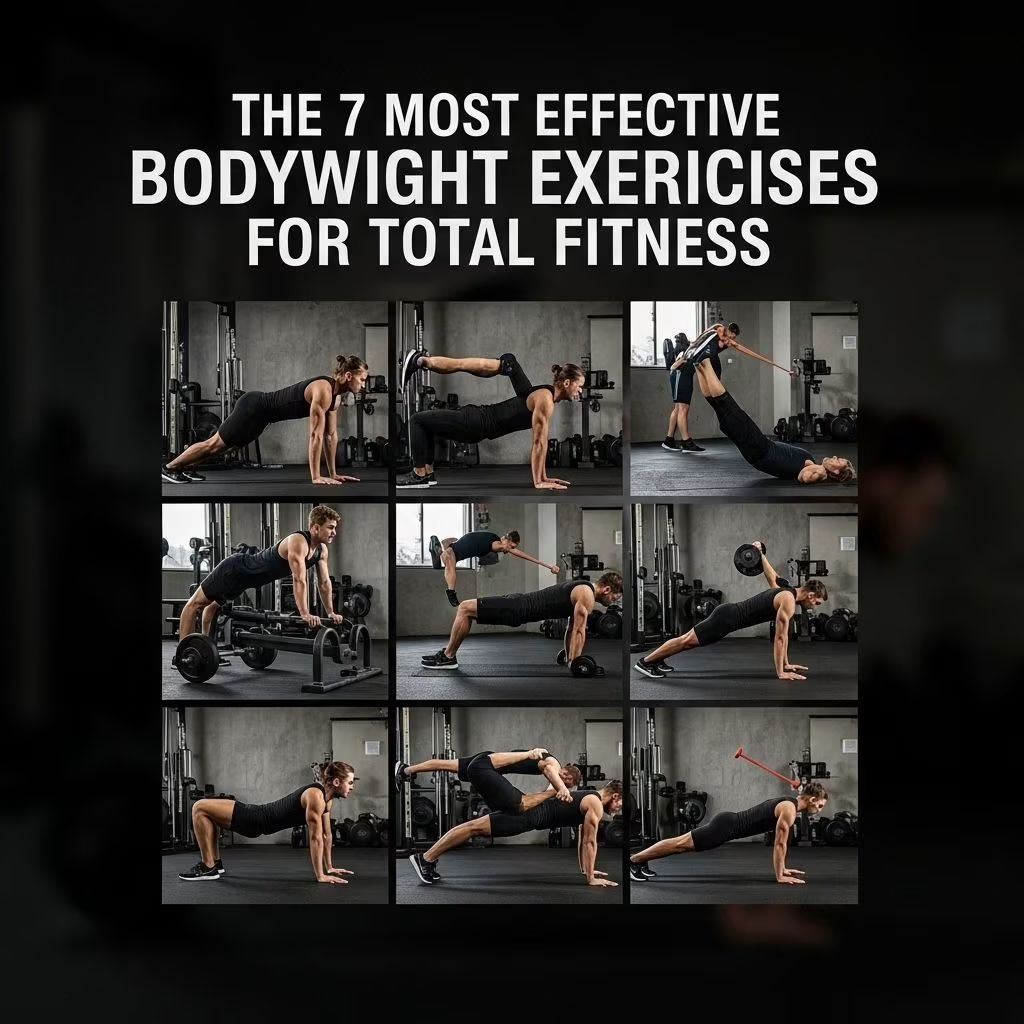
Bodyweight exercises stand out as some of the most accessible, efficient, and effective ways to achieve total-body fitness. Whether you’re seeking to build strength, increase flexibility, or support weight loss, these moves require zero equipment and can be performed anywhere. In this comprehensive guide, uncover why these exercises work, how to do them, and tips for making the most of your at-home workouts.
Why Bodyweight Exercises Matter
Bodyweight exercises form the foundation of fitness programs for people at all levels. They harness the resistance offered by your own body to deliver real results, including stronger muscles, better balance, and greater joint mobility. Here are a few compelling reasons to make bodyweight workouts part of your routine:
- Convenience: No equipment or gym membership needed.
- Scalability: Easy to make harder or easier, so they suit beginners and advanced athletes alike.
- Functional Strength: Mimic real-life movements, improving balance, agility, and core stability.
- Low Joint Impact: Generally safer for joints compared to heavy weightlifting.
- Efficient Calorie Burn: Engage multiple muscle groups in every move, boosting metabolism and supporting weight loss.
The 7 Most Effective Bodyweight Moves
The exercises below target every major muscle group and can be performed as a full routine or incorporated into your current fitness plan. Mastering these movements will lay a strong foundation for strength, weight management, and total body health.
1. Pushups
The classic pushup is a powerhouse for strengthening the chest, shoulders, triceps, and core. It also builds shoulder stability and enhances functional upper-body strength.
- How to do it: Start in a plank position with hands slightly wider than shoulder-width apart. Keep your core engaged, lower your chest to just above the floor, then press back to the starting position.
- Benefits: Improves upper body muscle tone, endurance, and stabilizes the shoulders.
- Variations: Drop to knees for an easier version; elevate feet or try diamond pushups for a challenge.
2. Squats
Squats are the cornerstone of lower body exercises, working the glutes, quads, hamstrings, and core—while also increasing hip mobility and balance.
- How to do it: Stand with feet shoulder-width apart, toes pointed forward. Initiate the movement by pushing hips back and bending knees, keeping chest lifted. Lower thighs parallel to the ground, then return to standing.
- Benefits: Strengthens legs, boosts calorie burn, and improves athletic performance.
- Variations: Try jump squats for power, or single-leg squats to increase intensity.
3. Lunges
Lunges build stability and strength by working the glutes, quads, hamstrings, and calves. They also challenge balance and can help correct muscle imbalances.
- How to do it: Stand tall. Step forward with left foot and lower body until both knees form 90-degree angles. Push off front foot to return to standing. Alternate legs.
- Benefits: Enhances lower body coordination and flexibility while developing unilateral (one side at a time) strength.
- Variations: Explore reverse lunges, walking lunges, or lateral (side) lunges.
4. Planks
Planks activate the entire core, including the abdominals, lower back, and stabilizing muscles around the hips and shoulders. They improve posture and overall body tension.
- How to do it: Place forearms on the floor, elbows under shoulders. Extend legs behind, keeping only forearms and toes in contact with the ground. Hold your body in a straight line, engaging the core without letting hips sag or rise.
- Benefits: Builds rock-solid core strength and endurance while supporting low back health.
- Variations: Try side planks, plank with leg lifts, or mountain climbers for dynamic core work.
5. Glute Bridges
Glute bridges efficiently strengthen the posterior chain—mainly the glutes and hamstrings—while also promoting lower back stability.
- How to do it: Lie on your back, knees bent, feet flat on floor hip-width apart. Press through your heels, squeeze your glutes, and lift hips toward ceiling. Lower slowly back to start.
- Benefits: Activates glutes, supports hip function, and counteracts the effects of prolonged sitting.
- Variations: Try single-leg glute bridges or pause at the top for added intensity.
6. Burpees
Burpees are a high-intensity full-body exercise combining strength, coordination, and cardiovascular fitness into one movement.
- How to do it: Stand tall. Drop into a squat, place hands on floor, jump feet back into plank, perform a pushup (optional), hop feet forward, and explosively jump up, reaching arms overhead.
- Benefits: Torches calories, boosts metabolism, and builds explosive power and endurance.
- Variations: Slow the pace to modify, or add a tuck jump for even more intensity.
7. Triceps Dips
Triceps dips tone the backs of your arms and also target the shoulders and chest.
- How to do it: Sit on the floor with knees bent and hands behind you. Lift hips off the ground, supporting body with hands and feet. Bend elbows to lower your body, then straighten arms to push up.
- Benefits: Tightens and strengthens arms, improves tricep definition.
- Variations: Raise one leg, or use a sturdy chair or bench for greater range of motion.
Tips for an Effective Bodyweight Workout
- Warm Up: Spend 5–10 minutes on dynamic stretches or light cardio to prime your muscles and prevent injury.
- Quality Over Quantity: Focus on perfecting your form—it’s more important than doing extra reps with poor technique.
- Vary Intensity: Increase repetitions, add explosive movements, slow your tempo, or try more challenging variations as you progress.
- Rest and Recover: Include rest days or alternate intensity levels to allow muscles to recover and grow stronger.
Sample Bodyweight Workout Routine
Combine these exercises for an efficient full-body routine. Complete each move for 10–15 reps (or 30–60 seconds), then rest for 30 seconds before starting the next. Repeat the circuit 2–4 times, based on your fitness level.
| Exercise | Target Muscles | Suggested Reps/Duration |
|---|---|---|
| Pushups | Chest, shoulders, triceps, core | 10–15 reps |
| Squats | Glutes, quads, hamstrings, core | 15 reps |
| Lunges | Glutes, quads, calves | 10 per leg |
| Plank | Core, shoulders | 30–60 seconds |
| Glute Bridges | Glutes, hamstrings, lower back | 15 reps |
| Burpees | Full body, cardio | 10–12 reps |
| Triceps Dips | Triceps, shoulders, chest | 12 reps |
Common Mistakes to Avoid
- Holding Your Breath: Remember to breathe steadily, exhaling during effort and inhaling during release.
- Rushing Through Repetitions: Controlled, slow movements engage muscles more deeply and reduce risk of injury.
- Neglecting Form: Use mirrors or record yourself to check for proper alignment, especially with squats, lunges, and pushups.
- Skipping the Warm Up or Cool Down: Proper preparation and stretching reduce soreness and support long-term progress.
Benefits of Bodyweight Training
- No Barriers: Can be done anywhere—home, outdoors, or while traveling.
- Progress at Your Pace: Increase difficulty as you get fitter with advanced variations or by reducing rest periods.
- Burn Calories and Lose Weight: When combined in circuits, bodyweight moves elevate your heart rate and promote fat loss.
- Improve Mobility and Joint Health: Many exercises encourage greater range of motion and help prevent stiffness from sedentary routines.
Customizing Your Routine for Goals
- For strength: Perform each move slowly, emphasizing muscular tension and control.
- For endurance: Do higher rep counts or extend the time for each exercise with shorter rest intervals.
- For fat loss: Combine exercises into a circuit for more intensity; add short bursts of cardio like jumping jacks or mountain climbers.
- For flexibility: Finish with yoga-inspired stretches or foam rolling to improve mobility and prevent tightness.
Frequently Asked Questions (FAQs)
Q: How often should I do bodyweight workouts?
A: Aim for at least 2–4 sessions per week. For best results, alternate muscle groups or include rest days to allow time for recovery.
Q: Can I build real muscle with only bodyweight exercises?
A: Yes! Bodyweight training is a form of resistance exercise that can stimulate muscle growth—especially when you progressively overload muscles with more reps, tough variations, or slower tempos.
Q: What if I’m a complete beginner?
A: Modify moves to your ability, such as performing pushups on knees, reducing range of motion, or doing planks on elbows instead of hands. Focus on good form first, then increase intensity as you grow stronger.
Q: Do these exercises also help with weight loss?
A: Absolutely. When combined into circuits or performed with minimal rest, bodyweight exercises can elevate the heart rate to burn calories efficiently while building lean muscle mass that boosts your metabolic rate.
Q: How can I make bodyweight exercises more challenging?
A: Explore harder variations (single-leg, explosive, or plyometric movements), increase the number of sets or repetitions, or decrease rest time between exercises.
Final Thoughts
Bodyweight exercises offer lasting benefits, from cultivating functional strength to boosting mood and energy. These moves not only tone and sculpt your body but also improve everyday movement and overall health. With consistency, variety, and attention to form, you can achieve remarkable fitness anywhere, anytime—no equipment necessary.
References
- https://www.menshealth.com/uk/building-muscle/a756325/10-best-bodyweight-exercises-for-men/
- https://www.womenshealthmag.com/fitness/a65502841/4-week-bodyweight-challenge-workouts/
- https://www.prevention.com/weight-loss/a20459187/most-effective-bodyweight-exercises/
- https://www.prevention.com/fitness/workouts/
- https://www.youtube.com/channel/UC9M3b9q8SsPraJVWacDU68Q
- https://www.youtube.com/watch?v=cOwCQVe7VOk


