


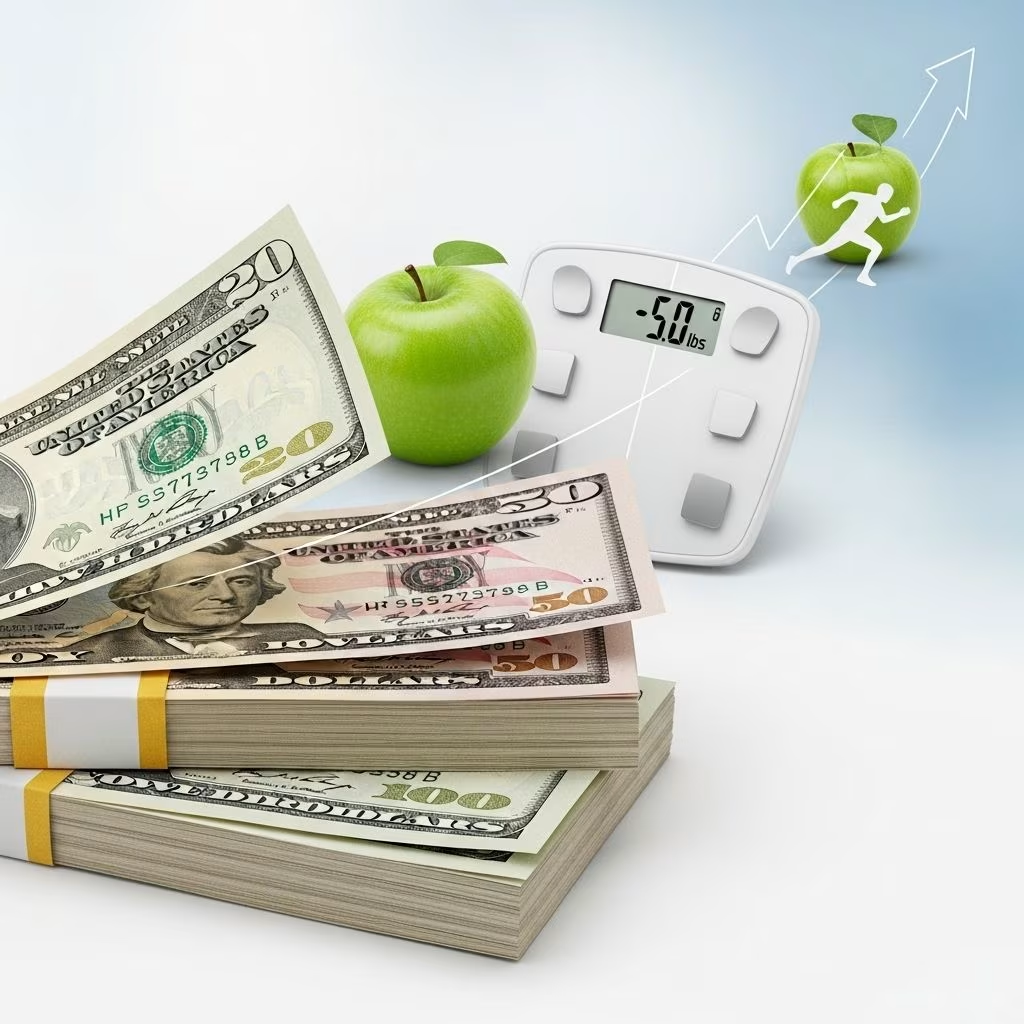
When seasonal treats and everyday temptations make it tough to stick to your diet or exercise routine, what could spark renewed dedication? For some, the answer is simple: money. In recent years, cash rewards have emerged as a powerful motivator for people seeking to lose weight and adopt healthier lifestyles. But do these incentives really work, why are they effective, and how can you use them wisely? This comprehensive guide explores the science behind financial incentives for weight loss, highlights popular programs that pay you for getting healthier, and provides expert advice on staying on track long after the payout.
Why Does Money Motivate Weight Loss?
Imagine being bombarded by advertisements for calorie-laden treats or scrolling through social feeds filled with seasonal delights. It’s easy for motivation to fade. Yet, the prospect of cold, hard cash for losing weight or sticking with fitness goals can reignite determination in surprising ways.
According to a review of 11 studies conducted by researchers at the University of Toronto, adults who received cash or gym membership reimbursements consistently increased their physical activity levels. Another study by the Mayo Clinic found participants who received financial incentives lost an average of nine pounds—significantly more than the two-pound average in the non-incentivized group.
Why does money win out when long-term health or improved appearance might not? Marc Mitchell, a prominent researcher, explains, “Financial incentives work because of the immediate positive feedback they offer, whereas the other perks of physical activity—health, longevity, a more attractive appearance—are usually delayed.” Immediate rewards create a tangible connection between effort and outcome, making it easier to stay focused on healthy choices.
Top Programs That Pay You to Lose Weight
Several innovative platforms now exist to help turn your health goals into financial rewards. Here are three standout options popular with weight loss hopefuls:
- DietBet
DietBet lets users join an existing group challenge or start one with friends. At the outset, everyone contributes money (as little as $25) to a collective pot. Participants who lose 4% of their starting weight in four weeks qualify as winners and split the pot evenly. The group accountability and potential payout create lasting motivation for many users.
- HealthyWage
This site offers structured individual and team challenges. For example, in the 10% Challenge, you pay $150 upfront and earn $300 if you lose 10% of your body weight within six months. The BMI Challenge requires you to pay either $100 or $300 upfront, with the chance to earn $300 or $1,000 for reducing your BMI from over 30 to below 25 in a year. HealthyWage uses personalized calculators, letting you wager on your weight loss and win even larger sums based on your goals and timelines.
- Stickk
Stickk operates on a different principle: potential loss. You set a health or weight loss goal and specify a monetary “commitment contract.” If you fail to meet your objective, your designated funds are withdrawn—sometimes even sent to a charity or organization you oppose for added extra motivation. This approach leverages loss aversion to keep you on track.
The Science Backing Financial Incentives for Weight Loss
Numerous studies have explored whether paying people to lose weight leads to measurable results. The consensus: while individual experiences vary, monetary rewards frequently yield positive outcomes.
Key Findings from Research
- University of Toronto Review: Financial incentives led to increased physical activity and weight loss when compared to control groups.
- Mayo Clinic Study: Cash-incentivized groups lost significantly more weight than those without a payout.
- Extended Follow-Up Trials: A 12-month intervention with incremental cash payouts for weight milestones resulted in an average 8 kg weight loss and a BMI decrease of almost 3 points for obese women. Notably, the benefits also included improved waist-hip ratios, fat mass, and metabolic markers.
- Group and Individual Models: United States and European studies have compared flat cash payments, lottery prizes, and investment accounts as incentives. Across models, incentivized participants generally achieved higher weight loss than controls.
However, it’s important to note that not all research is completely conclusive. Some studies have found mixed or modest effects, suggesting that incentive structure, payout amounts, and participant demographics all play roles in determining success.
How Much Money Does It Take to Motivate Real Change?
The threshold for effective financial motivation can vary, but several studies highlight the importance of the value and format of the incentive:
- Incentives as low as $5 per 1% body weight lost were sufficient to drive changes in some U.S. studies.
- Incremental rewards that increase with greater progress (e.g., $30, $50, $70, $100 for every few percent of weight lost) help sustain engagement over time.
- In group-based employer programs, pooled incentives of up to $500 per month shared among successful participants markedly boosted weight loss efforts.
| Incentive Type | Example Payout | Typical Participant Outcome | Key Motivation |
|---|---|---|---|
| Individual Flat Rate | $100/month for meeting goals | Consistent weight loss if target met | Direct, predictable reward |
| Group Pool (Employer-based) | $500/month divided among achievers | Higher engagement, group motivation | Team pressure, shared gains |
| Progressive Ladder | $30 – $100 per phase | Incentives rise with progress | Reward growth, sustained effort |
| Loss Aversion (Stickk) | Variable (user-set forfeit) | Avoids loss, rather than seeks gain | Fear of losing money is powerful |
How Employers Use Cash for Healthy Habits
Businesses are increasingly using financial incentives in workplace wellness programs to lower health insurance costs and boost employee well-being. Recent estimates suggest that up to 58% of large employers now incorporate these initiatives.
Examples include:
- Monthly Cash Rewards: Employees receive $100 each month they hit weight loss goals.
- Group Incentives: Pooled rewards encourage teamwork, with larger payouts divided among those who succeed.
- Insurance Premium Discounts: Achieving certain health benchmarks can lead to lower out-of-pocket costs for employees.
When designed with appropriate structure and meaningful rewards, these programs have been linked to higher engagement and measurable health improvements.
Key Benefits and Limitations of Financial Incentives
Monetary incentives can be extremely motivating, but they’re not a magic bullet. For best results, consider the following pros and cons:
- Pros:
- Provides immediate, tangible motivation.
- Turns abstract health goals into actionable targets.
- Can drive engagement with exercise, nutrition, and healthy behaviors.
- Team and group challenges add extra social support and accountability.
- Cons:
- Results may fade when cash incentives disappear.
- Some individuals may become reliant on external rewards.
- Not all studies find long-term maintenance.
- Payout size, format, and program design impact effectiveness.
Expert Tips: Keep the Weight Off After the Payoff
While cash payouts can spark powerful initial motivation, maintaining weight loss after reaching your goal often requires additional strategies. Nutrition and behavioral experts recommend the following:
- Set Ongoing Goals: Once you achieve an initial milestone, shift your focus to new targets—such as training for a race or mastering a new fitness class. This keeps motivation fresh.
- Embrace Non-Monetary Rewards: Treat yourself to mini-rewards like new workout gear, a massage, or music downloads to mark smaller victories along the way.
- Track Your Progress: Use digital tools or journals to monitor weight, exercise, and habits. Self-awareness is essential for maintenance.
- Seek Social Support: Participation in communities, fitness groups, or regular check-ins with a buddy can help prevent backsliding.
- Link Habits to Personal Values: As you build lasting routines, focus on benefits beyond cash—like energy, confidence, and overall well-being.
Frequently Asked Questions (FAQs)
Q: Is joining a weight loss incentive program safe for everyone?
A: Most programs are safe for healthy adults. However, consult your healthcare provider before starting any structured plan—especially if you have underlying health conditions or a lot of weight to lose.
Q: What happens if I don’t meet my goal in a program like DietBet or Stickk?
A: Generally, if you fall short of your target, the money you contributed becomes forfeit (DietBet) or is donated to your chosen recipient/cause (Stickk). The aim is to use this loss aversion as increased motivation.
Q: Are group-based or individual programs better?
A: Both have benefits. Group challenges may enhance support and team motivation, while individual plans allow for more personal accountability. Choose the structure that best fits your personality and goals.
Q: Can I combine financial incentives with other weight loss strategies?
A: Yes—combining monetary challenges with healthy eating, exercise plans, and professional guidance increases your chances of lasting success and well-being.
Conclusion: Is Money the Missing Link in Your Weight Loss Journey?
Financial rewards for losing weight are not just a trendy gimmick—they’re rooted in sound behavioral psychology and supported by a growing body of research. While money alone won’t fix every obstacle or guarantee lifelong health, it can provide the *spark* needed to get started and maintain discipline through the toughest phases. Whether you join a popular platform like DietBet or HealthyWage, participate in a workplace wellness program, or set up your own reward system, the real secret lies in transforming short-term motivation into sustainable habits for the future.
Ready to bet on yourself? With thoughtful planning, realistic goals, and the right incentives, you can make healthy changes that pay off—in more ways than one.
References
- https://www.prevention.com/weight-loss/a20459399/money-for-weight-loss/
- https://pmc.ncbi.nlm.nih.gov/articles/PMC8283650/
- https://www.prevention.com/weight-loss/a20445930/more-employees-being-paid-to-lose-weight/
- https://www.prevention.com/weight-loss/a20451891/money-and-weight-loss/
- https://www.prevention.com/weight-loss/a20510054/lose-weight-save-money/
- https://www.prevention.com
- https://www.prevention.com/weight-loss/a20434000/this-is-what-its-like-to-have-a-weight-loss-coach/
- https://www.prevention.com/weight-loss/g20438484/i-photographed-everything-i-ate-for-a-month/
- https://www.nm.org/healthbeat/healthy-tips/how-your-body-fights-weight-loss
- https://www.cdc.gov/healthy-weight-growth/losing-weight/index.html


