


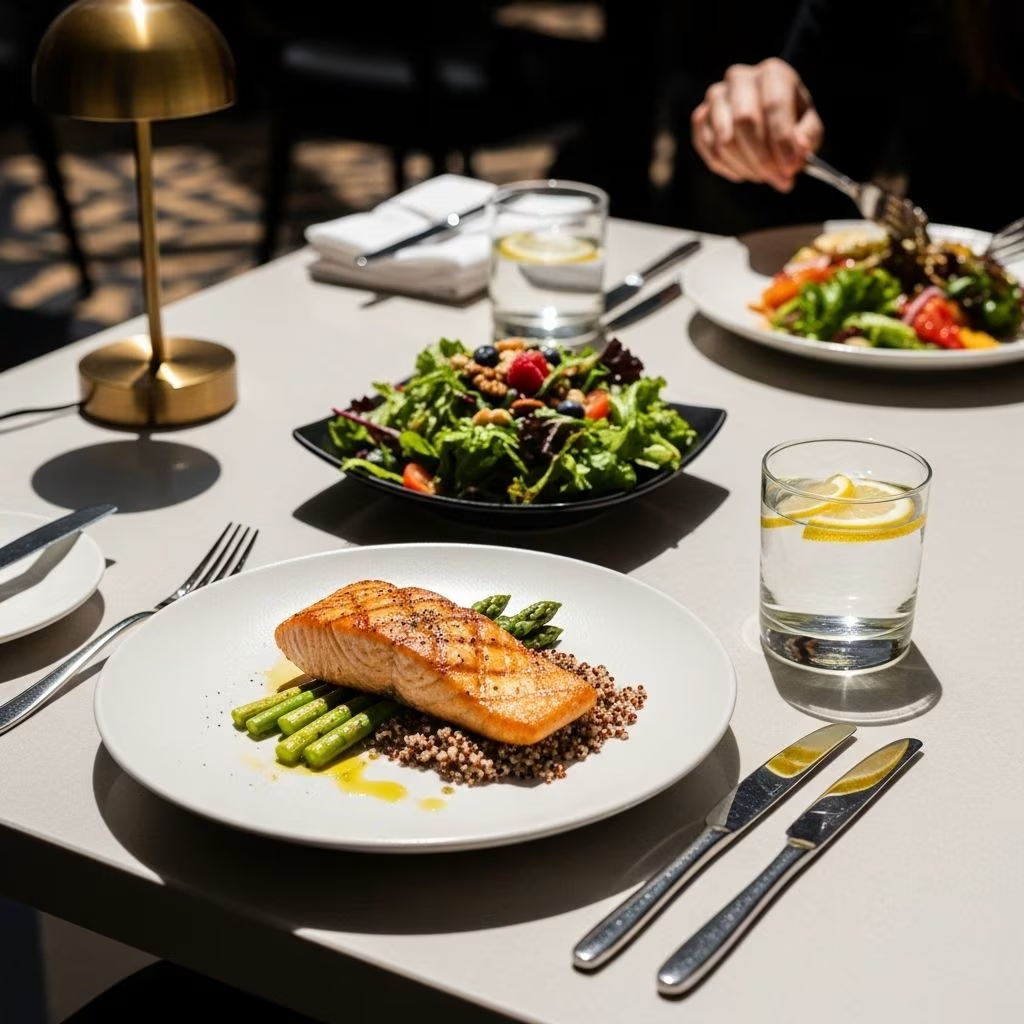
6 Smart Strategies to Prevent Overeating at Restaurants
It’s easy to lose control over what — and how much — you eat when dining out. Restaurants use subtle cues, oversized portions, and enticing ambiance to encourage overeating, leaving even the most health-conscious diners struggling to stick to their goals. The good news: with a few insider strategies, you can enjoy your meal out and leave feeling satisfied, not stuffed.
Why Do We Overeat at Restaurants?
Overeating at restaurants is more common than you think. Research from the Archives of Pediatrics & Adolescent Medicine shows that much of the blame falls on environmental and psychological factors engineered to boost food sales. Large portions, sensory distractions, and social influences all play a role in how much you consume — often without you realizing it.
- Portion sizes at restaurants are frequently two to three times larger than standard servings.
- Ambiance factors such as music, noise, and lighting can affect how quickly and how much you eat.
- Social cues — like friends’ orders — influence your choices and willpower.
1. Insist on Ordering First
The moment the waiter arrives, make a point to order your meal before anyone else at the table has spoken. Studies show that hearing indulgent choices from others tends to erode resolve, making you more likely to abandon your healthy intentions for something more decadent. Here’s why ordering first works:
- You set the tone for the table, potentially influencing others to make smarter choices, too.
- Your own decision is less likely to be swayed by tempting descriptions of others’ meals.
- If you can’t order first, choose your selection in advance, close the menu, and recite your order to yourself until it’s your turn — this repetition helps reinforce your commitment.
2. Tune Down the Tunes
Believe it or not, the volume and tempo of restaurant music impacts how much you eat. According to research from Cornell University’s Food and Brand Lab, diners in environments with dim lighting and gentle music consume up to 200 fewer calories — nearly 18% less food — than those surrounded by bright lights and loud tracks. This is because soft music leads you to eat more slowly and enjoy your food, whereas loud, fast-paced tunes can spur rapid, mindless eating.
Tip: Don’t hesitate to politely ask your server if the restaurant can reduce the music volume at your table. Your waistline — and your dining experience — will thank you.
3. Bypass the Bar
The bar area is a trap for excess calories. Not only are drinks packed with hidden sugars and empty calories, but the bar’s lively energy can lower your inhibitions — leading you to snack on salty appetizers or order more food than planned. Cocktails and beer can dramatically spike your meal’s calorie count before you even take your first bite of food.
- If your party is gathering before dinner, opt for a zero-calorie drink — like sparkling water with lime.
- Ask to be seated directly at your table rather than waiting at the bar to reduce temptation.
- Reserve alcohol for after you order your food, when your choices are likely to be more mindful.
4. Avoid Watching Screens While Dining
Television screens, especially those showing major sporting events, are a known distraction that can disrupt satiety signals. Research consistently shows that eating with distractions leads to mindless overeating, because you simply lose track of how much food you’ve consumed.
- Request a table away from TVs if possible.
- Put your phone away during meals — scrolling and checking messages can have the same effect.
- Engage in conversation with your dining companions to help you eat more slowly and mindfully.
5. Set Aside a Sensible Portion
Restaurants are known for supersized portions that often double (or even triple) what nutrition experts recommend for a meal. Common practice among diners is to finish everything on the plate — regardless of hunger. Here’s how to take control:
- When your meal arrives, visually divide it in half immediately. Eat one half and save the rest for later.
- Ask the server to box up half (or even two-thirds) of your entrée before it arrives at the table to eliminate temptation. You’ll have a ready-made meal for tomorrow.
- Use your hand or everyday objects to estimate sensible serving sizes (e.g., a serving of meat is roughly the size of your palm; a serving of rice is about the size of a tennis ball).
Bonus: Men or individuals with higher energy needs may require slightly larger portions — but nearly no one needs the entirety of a standard restaurant plate.
6. Eat Mindfully and Savor Your Meal
Slowing down is one of the most effective ways to keep from overeating. It takes up to 20 minutes for the brain to register signals of fullness after you begin eating. Fast-paced, distracted dining can cause you to eat past comfortable satiety — but simple mindful eating habits can help:
- Put your fork down between bites; chew your food slowly and deliberately.
- Take small sips of water throughout your meal to enhance feelings of fullness.
- Pause about halfway through your meal to assess your hunger level. Give yourself 5–10 minutes before considering a second helping.
- Avoid the “clean plate club” mentality; it’s fine to leave food on your plate or take it home.
Additional Tactics for Restaurant Success
- Study the menu and decide in advance. Making a plan before you walk in helps you resist impulsive, less healthy options.
- Fill up on fiber-rich sides like salads or steamed veggies, which promote satiety with fewer calories.
- Steer clear of calorie bombs like bread baskets, fried starters, and decadent desserts unless you’ve accounted for them in your meal plan.
- Listen to your body’s cues — eat because you’re hungry, not just because food is available.
Table: Common Restaurant Pitfalls and Solutions
| Restaurant Trigger | How To Outsmart It |
|---|---|
| Oversized Portions | Request a to-go box, split with a friend, or set aside extras before eating |
| Loud Music / Lighting | Ask to lower volume, select quieter seating |
| Alcohol | Choose water or sparkling water, limit to one drink, avoid pre-dinner cocktails |
| Distractions (TV/Phones) | Pick table away from screens, stash phones, focus on conversation |
| Peer Influence | Order first and with confidence, stick to your pre-chosen meal |
Frequently Asked Questions (FAQs)
Why do I always eat more at restaurants than at home?
Restaurant settings are designed to encourage guests to stay longer, order more, and eat larger portions. Subtle cues — like enticing menu descriptions, larger dishes, and a celebratory atmosphere — all increase the likelihood of overeating without meaning to.
How can I stick to my healthy eating plan when dining with friends?
Prepare in advance by reviewing the menu and selecting your meal before you arrive. Ordering first minimizes peer pressure, and politely explaining your goals to companions can help them support your choices.
Is it disrespectful to not finish my restaurant meal or to take leftovers home?
Absolutely not — taking leftovers home or stopping when you’re full is a smart, health-conscious practice. Most restaurants expect guests to bring food home, and many portions are designed with this in mind.
What should I do if I ate too much?
Don’t dwell on a single meal. Drink water, listen to your body, and get back to your habits with your next meal. Overeating occasionally won’t derail your overall progress.
Are some cuisines or restaurants better for portion control?
Generally, places that allow you to customize your meal — like those with salad bars, bowl options, or tapas — make it easier to control portions. Buffets and family-style dining tend to increase the risk of overeating.
Key Takeaways for Healthy Restaurant Dining
- Order first, make decisions in advance, and stick to your choice.
- Reduce external distractions by lowering music, avoiding screens, and engaging in mindful conversation.
- Control portions by boxing up food, sharing dishes, and gauging hunger cues throughout your meal.
- Eat slowly, savor flavors, and enjoy the dining experience — without the post-meal regret.
Adopting these strategies empowers you to reclaim control over your restaurant dining experience, supporting your nutrition and weight loss goals while ensuring you still enjoy every bite. Small changes can make a significant impact — helping you leave the table happier, healthier, and perfectly satisfied.
References
- https://www.prevention.com/weight-loss/a20453040/healthy-living-and-overeating/
- https://www.prevention.com/weight-loss/a20465396/prevent-overeating-at-restaurants/
- https://www.houstonmethodist.org/blog/articles/2022/jan/how-to-stop-overeating-10-tips-to-avoid-eating-too-much/
- https://www.prevention.com/weight-loss/a20452542/healthy-restaurant-eating/
- https://www.prevention.com/weight-loss/a20476525/causes-of-overeating/
- https://www.prevention.com/weight-loss/a20466030/how-the-food-industry-is-taking-control-of-food-and-making-us-overeat/
- https://www.prevention.com/weight-loss/a20429707/how-to-beat-a-food-addiction/
- https://www.prevention.com/weight-loss/a20472840/how-to-prevent-binge-eating/
- https://www.prevention.com/food-nutrition/healthy-eating/a65664887/ultra-processed-foods-weight-loss-gut-health-study/
- https://www.prevention.com/weight-loss/g24805401/fat-burning-foods/


