


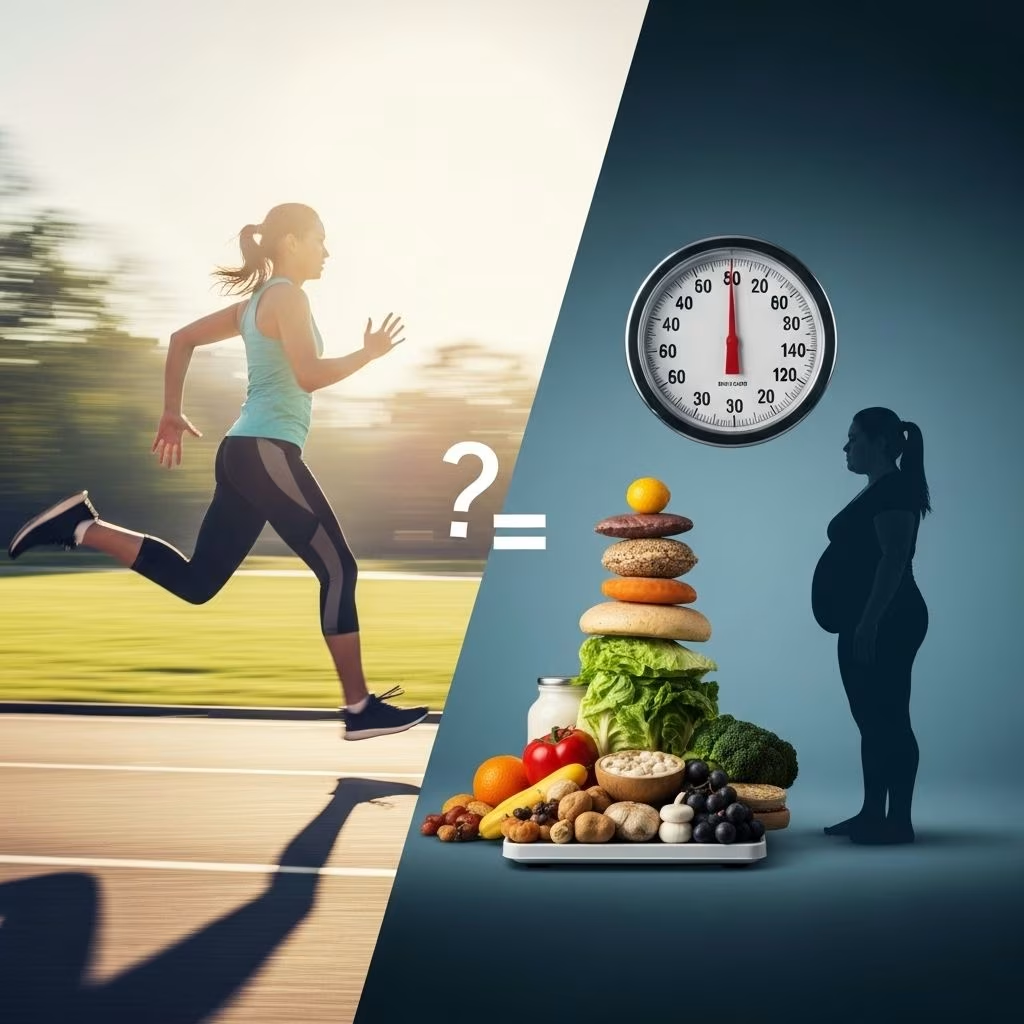
Move More, Weigh More? Unpacking the Paradox
Over the past decade, more Americans than ever meet the recommended physical activity guidelines. Exercise rates have surged in numerous counties across the country, reflecting improved public awareness and lifestyle changes. Yet, contrary to expectations, obesity rates have risen simultaneously—even in communities where more people are moving more often. This paradox challenges our assumptions about the interplay between exercise and weight management.
This article explores the latest research, reveals why moving more does not always translate to weighing less, and provides actionable strategies for achieving lasting health improvements.
Recent Trends: More Movement Across America
A nationwide analysis published in Population Health Metrics reveals significant increases in physical activity rates:
- In Morgan County, Kentucky, the proportion of women meeting recommended exercise levels grew from 25% to 44% in ten years—an unprecedented 18% jump.
- Similar double-digit increases have occurred in counties from coast to coast, with more residents embracing regular movement.
State and local campaigns, such as Eat Smart, Move More, Weigh Less, have played key roles by promoting evidence-based behavioral changes, educating communities, and making physical activity more accessible.
The Paradox: Rising Obesity Despite More Exercise
Despite these gains in physical activity, a troubling trend persists. Obesity rates have climbed in nearly every county—even where exercise has increased the most. Researchers like Laura Dwyer-Lindgren, MPH, highlight that “obesity has increased in nearly every county, including those where physical activity has also increased.”
This observation prompts crucial questions:
- Is exercise alone enough to counteract the nation’s obesity epidemic?
- What other factors are at play—and how can individuals and communities address them?
Understanding the Science: Why Exercise Isn’t Always Enough
How Physical Activity Actually Affects Weight
Exercise undeniably boosts overall health. Regular movement reduces the risk of heart disease, diabetes, and other chronic conditions. But research shows the relationship between exercise and weight loss is more complex than the basic “calories in vs. calories out” model.
| Factor | Impact on Weight Loss |
|---|---|
| Physical Activity | Supports weight management but often yields modest short-term weight loss |
| Dietary Habits | Plays a more direct role in reducing calorie intake and supporting sustained weight loss |
| Behavioral Factors | Influence both eating and activity patterns; mindfulness and portion control are crucial |
Evidence-Based Weight Management Programs
Programs like Eat Smart, Move More, Weigh Less integrate nutrition education, mindful eating, and physical activity for a holistic approach. Key behavioral indicators from these initiatives include:
- Increasing mindfulness about what and how much you eat (over 90% of participants report improvement)
- Eating smaller portions and fewer calories
- Tracking physical activity and striving for daily movement
Behavior Changes: Data from North Carolina
A major study of the ESMMWL program in North Carolina revealed measurable lifestyle changes among more than 1,000 participants:
| Key Behavior | % Improved Due to Program |
|---|---|
| Mindful eating | 91.8% |
| Smaller portions | 88.6% |
| Fewer calories | 87.6% |
| Mindful physical activity | 85.6% |
| Less fast food | 76.4% |
| More vegetables daily | 73.4% |
| More fruit daily | 73.3% |
| Meals prepared at home | 66.2% |
| 30+ minutes activity/day | 57.4% |
| Fewer sugary drinks | 56.8% |
This data shows the biggest changes—and most successful weight loss—come from combining increased movement with improved dietary and lifestyle habits.
Why Does Obesity Persist?
- Diet remains a challenge: Nationwide, calorie intake and consumption of processed foods have climbed, counteracting the benefits gained through increased movement.
- Exercise intensity is often modest: While more people are moving, many are not reaching levels of physical activity needed to create significant calorie deficits.
- Modern environments promote sedentary behavior: Desk jobs, screen time, and urban design limit opportunities for incidental movement.
The Limits of Exercise Alone
A study published in the Journal of Physical Activity and Health found participants lost 6% of their body weight in 16 weeks when physical activity was combined with calorie control and behavioral support. When weight loss plateaued, program leaders encouraged portion control, tracking steps, and positive self-talk to drive further progress.
- Many individuals believe that working out more will automatically lead to weight loss.
- Without dietary changes and psychological support, exercise alone may have limited impact.
Strategies for Lasting Results
Taking a Holistic Approach
Based on nationwide findings and expert recommendations, effective weight management means integrating movement with smart eating and mindful habits:
- Track Both Food and Activity: Use apps, journals, or online programs to monitor progress.
- Eyeball Portions: Learn to recognize appropriate serving sizes (e.g., half a baseball for pasta, a checkbook for fish).
- Choose Whole Foods: Emphasize vegetables, fruits, lean proteins, whole grains, and healthy fats over processed foods.
- Include All Types of Movement: Household chores, walking, climbing stairs, and active breaks all count toward daily activity goals.
- Practice Positive Self-Talk: Replace self-defeating attitudes (“I blew it today”) with affirmations that celebrate healthy choices.
- Limit Sugary Drinks and Fast Food: Reducing intake of empty-calorie beverages and highly processed meals helps control total calorie intake.
- Eat Mindfully: Pay attention to hunger cues, eat slowly, and avoid distractions during meals.
Physical Activity Guidelines and Their Evolution
Current US Physical Activity Guidelines emphasize that any movement is beneficial: “Move more, sit less—some movement is good and more is better.” Health gains are realized by replacing sedentary time with activity, even below traditional exercise recommendations.
- Minimum recommendation: 150 minutes of moderate exercise per week
- Additional benefits for more vigorous activity, but even small increments make a difference
Frequently Asked Questions (FAQs)
Q: Why doesn’t more exercise always lead to less weight?
A: Physical activity improves health and may support modest weight loss. However, increased calorie intake or low-intensity movement can offset these benefits. Sustainable weight change requires a combination of regular exercise, dietary management, and behavioral support.
Q: How much exercise do I really need to lose weight?
A: The standard guideline is at least 150 minutes of moderate physical activity each week. Greater duration and intensity may result in more weight loss, but adding dietary changes is essential for best results.
Q: Can simple lifestyle changes make a difference?
A: Yes. Adopting mindful eating practices, tracking activity, and making small changes—like taking the stairs or walking during phone calls—can build healthy habits and support weight management over time.
Q: Is there an ideal weight loss program?
A: The most effective programs, like Eat Smart, Move More, Weigh Less, combine education, behavioral support, and ongoing progress tracking. Individual plans that address both diet and physical activity consistently outperform exercise-only programs.
Q: What can communities do to help?
A: Local programs can increase access to affordable exercise options, promote nutrition education, and create environments that encourage active living (walkable neighborhoods, safe parks, workplace wellness initiatives).
Key Takeaways
- Increasing physical activity has clear health benefits, but is not enough on its own to reverse obesity trends.
- Multi-pronged strategies—combining movement, healthy eating, and mindful behaviors—yield the best results for both weight and overall wellness.
- Anyone can start now: Small increases in movement and simple dietary swaps add up over time.
Further Reading and Resources
- Eat Smart, Move More, Weigh Less: Statewide initiatives offering online courses and local workshops.
- US Physical Activity Guidelines: Recommendations for all age groups and abilities.
- Evidence-based weight loss programs: Look for approaches that include both movement and nutrition components.
References
- https://www.dchealthmatters.org/promisepractice/index/view?pid=3902
- https://www.ncoa.org/article/evidence-based-program-eat-smart-move-more-weigh-less/
- https://pmc.ncbi.nlm.nih.gov/articles/PMC3136981/
- https://www.prevention.com/weight-loss/a20466904/weight-loss-tips-7/
- https://pmc.ncbi.nlm.nih.gov/articles/PMC7577219/
- https://www.prevention.com/weight-loss/a20465419/move-more-weigh-more/
- https://www.prevention.com/weight-loss/a20430136/100-ways-to-move-more-bonus-tips/
- https://www.prevention.com/fitness/a20485587/benefits-from-walking-every-day/
- https://www.prevention.com/weight-loss/g29761485/medical-weight-loss/


