


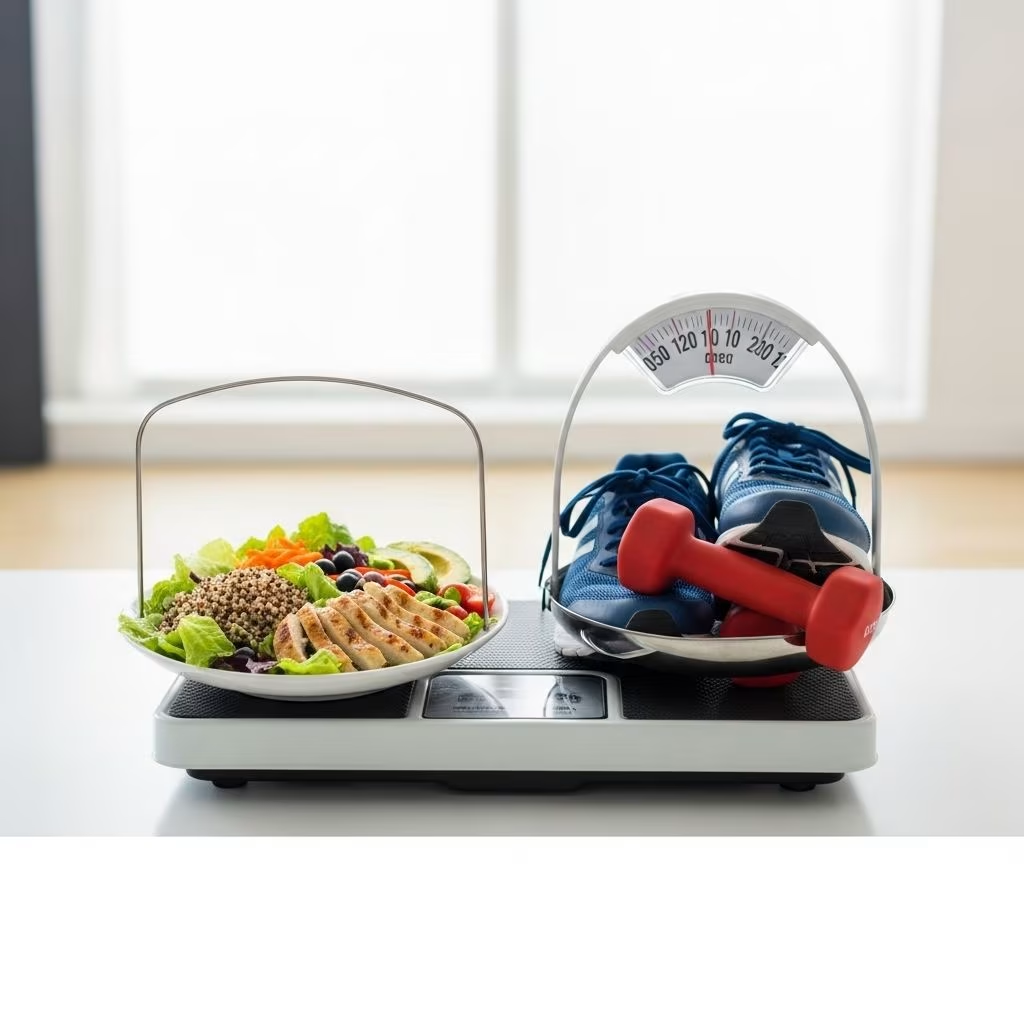
If you’ve searched for tips on losing weight, you’ve likely seen the rule: weight loss is 80% diet and 20% exercise. But does this widely shared formula hold up to scientific scrutiny? Experts weigh in, explaining why nutrition is often the biggest driver in achieving your goals—and why exercise still matters.
Where Did the 80/20 Weight Loss Rule Come From?
The notion that losing weight is 80% about what you eat and only 20% about how much you move has become popular, but its origins are somewhat ambiguous. While it’s tempting to look for a magic ratio, this rule is best understood as a general guideline—not a scientific law—meant to emphasize the outsized impact of nutrition on weight management compared to exercise alone.
- Diet holds more weight because reducing calorie intake is often simpler and more effective than burning equal calories via exercise.
- The rule underscores a key truth: Consuming fewer calories than you use (i.e., a negative energy balance) is the foundation of weight loss.
- Experts agree a combination of diet plus exercise is best, but the pareto principle helps shift focus to the area that most commonly yields results for most people.
Why Your Meals Are So Important for Weight Loss
To shed pounds, the most crucial step is achieving a caloric deficit: burning more calories than you consume. “You can lose weight without exercise, but you cannot lose weight if your nutrition counteracts your energy expenditure through exercise,” explains registered dietitian Albert Matheny.
How Much of a Calorie Deficit Do You Need?
- One pound equals about 3,500 lost calories. To lose a pound per week, experts recommend a deficit of about 500 calories per day (totaling 3,500 in a week).
- Following an 80/20 approach, that would mean burning approximately 750 calories weekly with exercise and cutting around 3,000 calories from your diet.
Why Diet Makes More Impact Than Exercise
- It’s easier to cut calories by skipping high-calorie foods than to burn the same amount with physical activity. For instance, to create a 500–700 calorie deficit through exercise, you might need to run 7–10 miles—that’s an intense commitment not feasible for most people daily.
- Many people overestimate calories burned during exercise and underestimate calories consumed, making diet management the more reliable strategy for sustained weight loss.
- Drastic increases in physical activity, like marathon training, often disappoint in terms of scale movement unless dietary habits are also improved.
Example: Diet vs. Exercise Deficit
| Method | Calories Reduced per Week | Effort Needed |
|---|---|---|
| Dietary Changes | ~3,000 | Smaller portion sizes, swapping high-calorie foods |
| Exercise Alone | ~750 | Several extra intense workouts |
Why Exercise Is Still Vital for Long-Term Weight Loss
Although food intake drives most weight change, physical activity remains essential—not just for burning calories, but for maintaining results, supporting mental health, preserving muscle, and boosting metabolism.
The Benefits of Exercise During Weight Loss
- Helps preserve lean muscle mass, especially when paired with strength training.
- Speeds up metabolism, particularly after fat loss or when the body enters starvation mode (a plateau when the body adapts to lower calorie intake).
- Prevents weight regain. Research shows that those who maintain weight loss long term are more likely to include regular activity in their routines.
- Improves mood, reduces stress, and enhances cardiovascular health.
Dr. Holly Lofton, director of the weight management program at NYU Langone Medical Center, adds: “It’s much easier to create a 500-calorie deficit through diet than it is to burn 500 calories through exercise, but combining both strategies means smaller, sustainable changes, and better results.”
Recommended Types of Exercise
- Cardiovascular Training: Activities like brisk walking, running, cycling, or swimming boost calorie burn.
- Strength Training: Building muscle helps your body burn more calories, even at rest.
- Flexibility and Balance Work: Yoga, Pilates, and stretching support overall fitness and can prevent injury.
Why Focusing Only on Exercise Often Backfires
Many people believe that running marathons or attending frequent boot camps will shed pounds, but experts warn that exercise alone is rarely sufficient without dietary improvement.
- Exercise tends to increase hunger, making it easy to “undo” an hour’s work by eating a large meal or extra snacks.
- Compensatory eating is common—eating extra because you’ve worked out hard.
- Without attention to food intake, exercise-based weight loss is often much less than people expect—and can be discouraging.
How to Apply the 80/20 Rule Without Obsessing Over Numbers
You don’t have to stick rigorously to an 80/20 split to be successful. Instead, let the concept guide your focus:
- Prioritize healthy eating—plan meals, watch portions, and be mindful of liquid calories.
- Be consistent with exercise, choosing both cardio and strength workouts.
- Use physical activity as a bonus tool to break plateaus and boost metabolic health.
Realistic Weekly Plan for the 80/20 Approach
| Day | Calorie Reduction via Diet | Exercise Activity |
|---|---|---|
| Monday | -400 cal (healthy swaps, no dessert) | Brisk walk (burns ~150 cal) |
| Tuesday | -400 cal (smaller breakfast, more veggies) | Strength training (burns ~150 cal) |
| Wednesday | -400 cal | Rest day / light stretching |
| Thursday | -400 cal | Cardio class (burns ~250 cal) |
| Friday | -400 cal | Brisk walk |
| Saturday | -400 cal | Strength training |
| Sunday | -400 cal | Rest day or active fun (e.g., hike) |
Why Weight Loss Plateaus Happen—And How Exercise Helps
As you lose weight and eat less, your metabolism naturally slows—a phenomenon called adaptive thermogenesis. That’s why hitting a plateau is almost inevitable in any significant weight loss journey.
- Exercise, especially strength training, helps counteract this slowdown and “reboots” your metabolism, helping you break through stubborn plateaus.
- Staying active maintains your muscle, which is crucial because muscle burns more calories than fat, even while at rest.
- Adding short workouts when weight loss stalls (even 10–20 minutes) can get results moving again.
Combining Diet and Exercise: Realistic Tips to Succeed
- Plan meals ahead for the week, balancing proteins, healthy fats, and complex carbs.
- Avoid “diet fatigue” by allowing 1–2 small treats per week; this is mentally more sustainable.
- Set exercise goals you enjoy. If you hate running, try cycling, swimming, or brisk walking.
- Track both food intake (journaling or apps) and physical activity to stay mindful.
- Be patient: healthy, sustainable loss is typically 1–2 pounds per week.
What’s the Bottom Line?
While what you eat matters more than how you work it off, combining smart nutrition and regular exercise will push you past plateaus, boost your health, and help you achieve—and maintain—your ultimate goals.
Frequently Asked Questions (FAQs)
Q: Can I lose weight just by exercising?
A: Technically, yes—but unless your diet supports a calorie deficit, it’s very difficult. Studies and experts agree that relying on exercise alone (without adjusting food intake) usually brings slow, limited results.
Q: What if I can’t exercise regularly?
A: You can still lose weight by managing your calories through diet, but adding even modest activity helps maintain muscle, mental health, and can help you break plateaus.
Q: Is the 80/20 rule always correct for everyone?
A: No, it’s a helpful guideline, but some people may find different proportions work better for their bodies, goals, lifestyle, and preferences. The most important factor is achieving a consistent calorie deficit.
Q: What are the best exercises to pair with a weight loss diet?
A: A mix of cardio (walking, running, cycling, swimming) and strength training (using bodyweight or weights) is ideal, since both promote fat loss and preserve muscle. Choose activities you enjoy for better consistency.
Q: How do I get past a weight loss plateau?
A: Try mixing up your exercise routine, adding more strength training, ensuring you’re not underestimating calories in, or slightly reducing calorie intake further. Stay consistent, and remember plateaus are a normal part of the process.
Q: Are there health benefits to exercise even if I don’t lose weight?
A: Absolutely! Regular activity improves heart health, mobility, mental well-being, and reduces disease risk whether or not the scale shifts.
This article is informed by expert insights and clinical guidelines. Always speak with your healthcare provider before beginning any dietary or exercise program.
References
- https://www.prevention.com/weight-loss/a20474357/weight-loss-80-percent-diet-and-20-percent-exercise/
- https://www.prevention.com/weight-loss/a20474562/best-weight-loss-exercises/
- https://www.prevention.com/weight-loss/g20482528/this-is-your-perfect-day-for-weight-loss/
- https://www.prevention.com/weight-loss/
- https://www.prevention.com/weight-loss/diets/a60578947/how-to-lose-weight-fast-safely/
- https://www.prevention.com/weight-loss/a30188568/lose-weight-without-exercise-0/
- https://www.prevention.com/health/a65401665/expert-walking-tips-weight-loss/
- https://www.prevention.com/weight-loss/diets/g20440614/25-best-weight-loss-tips-ever/
- https://www.prevention.com/weight-loss/a20465042/lose-weight-over-40/
- https://www.prevention.com/fitness/a37857801/7-day-weight-loss-preparation-guide/


