


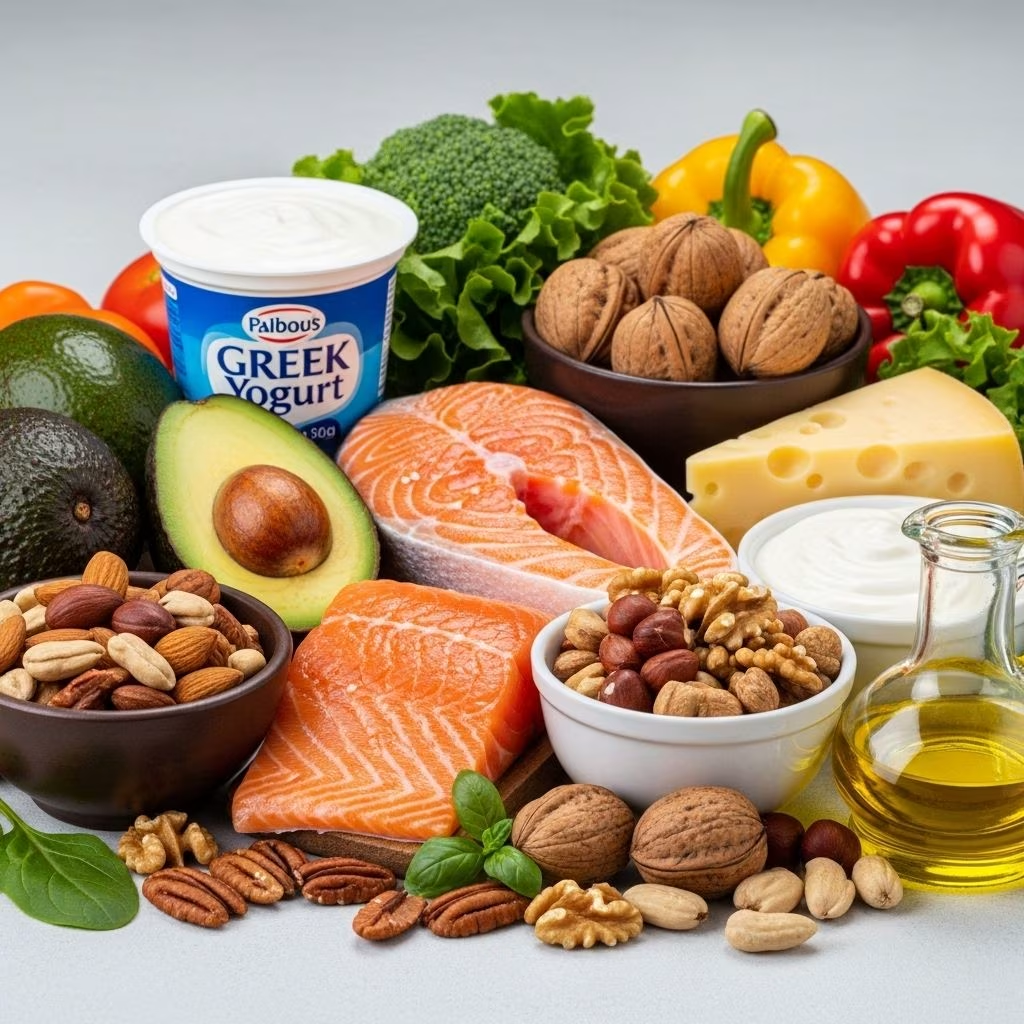
The Low-Fat Foods Conundrum
For decades, food companies have promoted low-fat foods as the holy grail of healthier eating and successful weight loss. Grocery shelves overflow with products labeled ‘low-fat’, ‘reduced fat’, or ‘fat-free’. Many individuals assume these items are unequivocally better for their waistlines. Yet, mounting research—and a critical look at nutrition labels—reveals that the reality is far more complicated than marketing suggests.
Low-Fat Does Not Always Mean Low-Calorie
One of the prevailing myths about low-fat foods is that reducing fat automatically means reducing calories. A recent study published in Appetite shattered this assumption. Researchers analyzed over 5,700 packaged foods and found that 61% of products billed as low-fat did not contain at least 25% fewer calories than their full-fat counterparts.1 The paradox arises because companies compensate for lost flavor and texture by adding other calorie-dense ingredients, especially sugar.
- Low-fat products often swap out fat for added sugars and starches.
- The caloric reduction is frequently too small to significantly aid weight loss.
- Some low-fat foods can be higher in sugar than full-fat versions, negating perceived health benefits.
- Fat content alone is a poor predictor of overall nutrition or calorie count.
How Low-Fat Labels Influence Eating Behavior
The presence of a low-fat label does more than influence purchasing decisions—it alters consumption patterns. Multiple studies show that low-fat labeling creates a ‘health halo,’ leading people to underestimate calories and eat up to 50% more than they otherwise would.
This effect stems from:
- Perceived Virtuousness: Consumers believe low-fat foods are ‘safe’ and allow themselves larger portions.
- Lack of Satiating Fat: Fat helps provide satiety, slowing digestion, and curbing appetite. Without it, the urge to snack increases.
- Added Sugars: Higher sugar content may trigger cravings and spike insulin, increasing hunger later.
In short, choosing low-fat foods often leads to eating more calories overall, defeating the purpose of the purchase.
Nutrition Labels: The Key to Better Choices
Experts caution against relying solely on product claims such as ‘low-fat’ emblazoned on the front of packaging. Alyssa Schermel, MSc, recommends that consumers “read the label, and look for foods higher in fiber and lower in sodium and sugar. Also look for foods that are less processed.”1 This advice shifts the focus away from macronutrient content to overall nutritional value.
- Skip front-of-package claims.
- Check the Nutrition Facts panel for total calories, sugar content, fiber, and sodium.
- Review the ingredients list for signs of added sugars or artificial additives.
- Prioritize foods that are less processed and closer to their natural state.
Why Fat Isn’t the Enemy
Years of public health messaging made dietary fat a villain, but newer research reveals the crucial role certain fats play in health and satiety. Fat provides essential fatty acids, helps absorb fat-soluble vitamins, and slows meal digestion. The main concern is *not* total fat, but the type and amount of fat consumed.
| Type of Fat | Food Sources | Effect on Body |
|---|---|---|
| Saturated Fat | Butter, cheese, red meat | Raise LDL cholesterol, increase heart disease risk when consumed in excess |
| Unsaturated Fat | Olive oil, avocado, nuts, seeds | Promotes heart health, helps control hunger, offers essential nutrients |
| Trans Fat | Processed snacks, margarine | Increases inflammation, harms cardiovascular health |
Health authorities no longer recommend extremely low-fat diets. Instead, the focus is on limiting unhealthy fats, moderating saturated fat, and prioritizing unsaturated fats.
Hidden Dangers of Added Sugars
To maintain flavor in low-fat products, manufacturers frequently turn to added sugars. Excess sugar is linked to a host of chronic conditions:
- Obesity
- Type 2 diabetes
- Increased risk of heart disease
- Fatty liver disease
- Accelerated tooth decay
Some ‘diet’ yogurt brands and snack bars, for example, contain as much sugar per serving as a candy bar. The practice of compensating for reduced fat with more sugar can actually undermine metabolic health.
Why We Got Fatter Despite the ‘Low-Fat’ Craze
Contrary to popular belief, Americans never truly adopted a low-fat diet. While the government and health organizations did recommend focusing on reducing saturated and trans fats, overall fat intake in the American diet has increased consistently since the late 1970s.3
Instead, the sources of dietary fat shifted:
- Increased use of vegetable oils and processed fats
- Greater consumption of ultra-processed foods
- Portion sizes of all foods, including those labeled low-fat, grew substantially
- Calorie-dense, low-nutrient foods became more prominent
The obesity epidemic cannot be entirely blamed on the ‘low-fat’ movement. Rather, it’s a result of increased total calorie consumption, higher intakes of processed foods, and misleading marketing.
Smart Strategies for Weight Loss and Healthy Eating
In summary, the path to sustainable weight loss and better health does not run through low-fat labels or restrictive fad diets. Effective strategies include:
- Assess Whole Nutritional Value: Fat is one nutrient among many—prioritize whole foods rich in fiber, vitamins, minerals, and protein.
- Read Labels Judiciously: Seek foods with lower sugar, lower sodium, and minimal processing.
- Portion Awareness: Control serving sizes, especially for packaged snacks—even those marketed as ‘healthy.’
- Limit Added Sugars: Watch for hidden sugars in yogurts, cereals, breads, and sauces.
- Choose Healthy Fats: Incorporate nuts, seeds, oily fish, and olive oil for essential nutrients and lasting fullness.
- Prioritize Satiety: Meals combining healthy fats, protein, and fiber help keep hunger at bay and reduce risk of overeating.
- Focus on Whole Foods: The fewer additives and less processing, the better for both satiety and nutrition.
Debunking Common Myths About Low-Fat Foods
- Myth: Low-fat foods guarantee weight loss.
Fact: Low-fat does not always mean low-calorie. Many products are just as energy-dense as their full-fat equivalents. - Myth: Eating less fat leads to better heart health.
Fact: Type of fat matters much more than total fat. Unsaturated fats are heart-healthy; trans fats are harmful. - Myth: You can eat unlimited portions of foods with a ‘health halo’.
Fact: Labels can be misleading and encourage over-consumption. - Myth: Americans eat less fat since the 1980s.
Fact: Overall fat intake has risen, driven by processed foods and larger servings.
Frequently Asked Questions (FAQs)
Q: Are low-fat foods harmful for weight loss?
A: They can be, if sugar and calories are added to compensate for flavor. Always check nutrition labels for overall calorie count and sugar content before assuming a low-fat option is healthier.
Q: Should I avoid all fats in my diet?
A: No. Healthy fats are essential for nutrient absorption, cell function, and satiety. Focus on unsaturated fats from whole foods rather than processed or trans fats.
Q: How can I identify hidden sugars in low-fat foods?
A: Read the ingredient list for terms such as “corn syrup,” “fructose,” “sucrose,” or “fruit juice concentrate.” Compare the grams of sugar listed on the Nutrition Facts panel between similar products.
Q: Is fat more fattening than other nutrients?
A: Fat contains more energy per gram (9 kcal/g) than carbs or protein (4 kcal/g each), but consumption patterns and total calories matter most. Overeating any macronutrient can lead to weight gain.
Q: What’s the best way to shop for healthy foods?
A: Ignore front-of-package claims. Go straight to the Nutrition Facts and ingredient list. Favor products high in fiber, low in added sugars and sodium, and minimally processed.
Conclusion: The Case for Mindful Eating and Smart Choices
The deceptive simplicity of low-fat food marketing masks a more complex nutritional reality. Rather than relying on label claims, consumers should cultivate an understanding of overall nutritional balance—reading labels, watching for sugars, and favoring whole, minimally processed foods. Lasting health and effective weight management depend on the quality of what’s on your plate, not just the quantity of fat listed on the label.
References
- https://www.prevention.com/weight-loss/a20485369/how-low-fat-foods-are-lying-to-you/
- https://ftgyms.com/articles/the-low-fat-label-deception-why-you-should-focus-on-calories-not-fat-content
- https://www.cspi.org/sites/default/files/attachment/bigfatlies.pdf
- https://www.prevention.com/health/g20509585/7-worst-things-people-lie-to-their-doctors-about/
- https://www.prevention.com
- https://www.prevention.com/food-nutrition/healthy-eating/a65664887/ultra-processed-foods-weight-loss-gut-health-study/
- https://pmc.ncbi.nlm.nih.gov/articles/PMC5466941/
- https://www.prevention.com/weight-loss/g27323543/low-calorie-snacks/
- https://santiamhospital.org/26-fat-fighting-foods-to-energize-you/


