


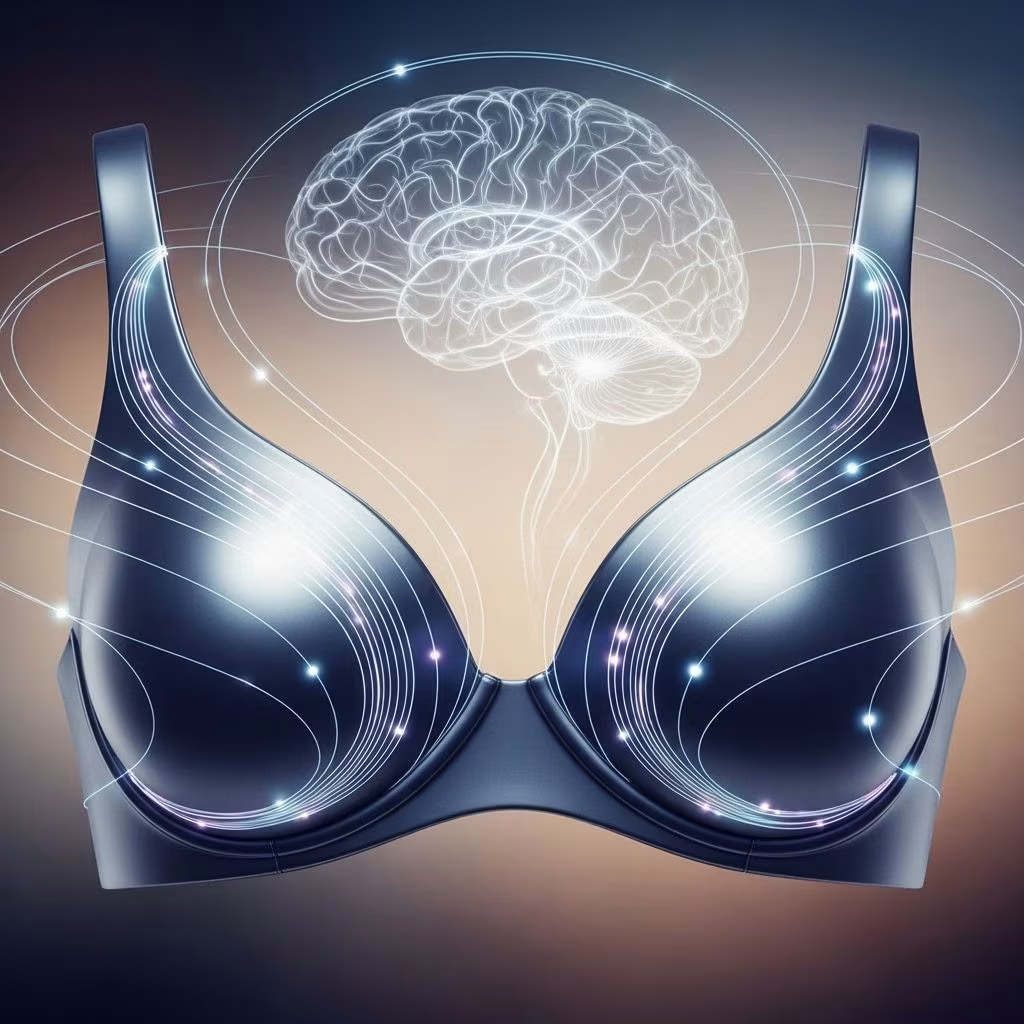
Microsoft’s Vision: A Bra That Could Help You Lose Weight
Science fiction meets everyday fashion in the form of a bra designed to do more than just support: Microsoft’s experimental emotion-sensing bra harnesses wearable technology to monitor physiological signs of emotional distress, offering timely alerts intended to prevent emotional overeating. This innovative research may chart the future of weight management, even if it’s not destined for store shelves just yet.
From Lingerie to Lifeline: Why a Bra?
Microsoft’s researchers—collaborating with academic partners—selected the bra as the test-bed for their technology due to its proximity to the heart, making it ideal for embedding sensors to track heart and breathing rates. Unlike wristbands or necklaces, a bra can house sensors with minimal interference to everyday wear, allowing unobtrusive, continuous monitoring.
- Location advantage: The chest offers accurate electrocardiogram (ECG) and respiration measurements.
- Pervasive use: Many women already wear bras, so integrating sensors into an existing garment improves comfort and acceptance.
- Shielding sensors: The bra’s construction allows hidden placement of tech components.
The Science Behind the Smart Bra: How It Works
At the heart of the project lies a suite of physiological sensors:
- Heart rate monitors: Capture changes signaling stress, anxiety, or emotional arousal.
- Skin conductance sensors: Detect sweat and changes in skin activity, often linked to emotional states.
- Breathing rate monitors: Measure respiratory changes during heightened emotion.
- Accelerometers: Track movement and posture.
The sensors continuously gather biometric data. A miniature computer positioned discreetly between the cups aggregates this information, sending it via wireless connection to a smartphone app. The app interprets the data, identifying physiological patterns that suggest a state of heightened emotional arousal—common triggers for unplanned or stress-related eating.
Real-time Alerts: Preventing Emotional Overeating
The system’s core feature is real-time feedback. When it detects patterns associated with stress, boredom, or sadness, the bra’s companion app notifies the wearer with a prompt—before a snack attack can take hold. This alert serves as a digital ‘pause’ button, encouraging the user to reflect before acting on emotional urges. The aim: create an opportunity for conscious choice and healthier behaviors in moments of vulnerability.
Understanding Emotional Eating
Emotional eating refers to consuming food for reasons other than physical hunger, such as stress, anxiety, or boredom. It’s a well-documented contributor to unhealthy eating behaviors and weight gain. Emotional states can override the body’s natural hunger cues, leading to overeating, particularly of calorie-dense, highly palatable foods. Typical triggers include:
- Stress (work pressure, relationship issues, etc.)
- Sadness or depression
- Boredom or lack of stimulation
- Celebratory occasions or social expectation
Microsoft’s smart bra targets this phenomenon by flagging the physiological footprints of these emotional states before they influence eating behavior.
Study Findings: How Well Did the Bra Perform?
The research team conducted trials with the prototype, placing emotion-detecting sensors in bras worn by female participants during regular daily activities. The sensors tracked physiological markers and relayed data to the smartphone app.
Key results:
- More than 70% accuracy: The emotion-sensing bra detected physiological changes associated with emotional states over 70% of the time.
- Alerts correlated with measured physiological arousal (e.g., stress, anxiety).
- Participants reported that real-time prompts made them more aware of their emotional triggers but did not always prevent overeating.
Limitations and Criticisms
Despite these promising results, the technology faces substantial hurdles:
- Limited emotional spectrum: Not all emotions that trigger eating cause measurable physical arousal (e.g., boredom may not spike heart rate or skin conductance).
- Non-emotional triggers: Environmental and social cues—like holiday gatherings or seeing favorite foods—often spark overeating, which the bra’s sensors cannot detect.
- User adaptation: Persistent alerts could lead to fatigue, where users begin to ignore or dismiss notifications over time.
- Physical comfort: Embedding electronics in a bra must account for comfort, washability, and safety for sustained adoption.
According to Dr. Tracey LeDoux, associate professor at the University of Houston and expert in overeating and obesity, “There are plenty of things that cue overeating that have nothing to do with emotion, like the holiday season or certain social settings, and a bra wouldn’t warn you about that… Some emotions that prompt us to eat, like boredom, don’t cause a heightened state of arousal, and would also go undetected.”
Not Coming Soon: Microsoft’s Research Rationale
While the smart bra captured the imagination of the press and public alike, Microsoft stated that it has no plans to bring such a product to market. A spokesperson clarified that the project was part of broader research into affective computing—technology that can sense and respond to human moods—as opposed to a commercial product launch.
The insights gained may inform the next generation of wearable health technologies designed to promote well-being more holistically, rather than focusing solely on weight loss.
Wearable Tech and Mood: Is the Bra Just the Beginning?
The “smart bra” is part of a growing field of wearable technologies aimed at tracking health signals and behavior patterns. Emerging devices target heart health, sleep, fitness, and even mental well-being. Here’s how emotion-sensing technology may be used in the future:
- Other clothing: Integrating sensors into shirts, belts, or undergarments for gender-inclusive monitoring.
- Mood-aware devices: Smartwatches or bands that adjust notifications or suggest breathing exercises during detected stress.
- Personalized health feedback: Apps that deliver advice or encouragement based on detected emotional and physical states.
- Preventive interventions: Early alerts for mental health conditions, prompting at-risk users to seek support.
Practical Takeaways: How to Tackle Emotional Eating Today
Until emotion-detecting bras (or similar technology) become widely available, experts recommend self-awareness and behavioral strategies as the best tools for preventing emotional eating. Here’s what you can do:
- Recognize physical hunger: Eat when experiencing true physical hunger signals (e.g., growling stomach, mild lightheadedness).
- Pause and reflect: Before reaching for a snack, ask yourself if you are responding to emotional cues rather than hunger.
- Identify triggers: Keep a journal of emotional states and eating patterns to spot trends.
- Find alternatives: Develop non-food coping strategies for stress and boredom, such as walking, music, or connecting with friends.
- Practice mindful eating: Focus on food while eating, eating slowly and savoring flavors to stay attuned to hunger and fullness cues.
Frequently Asked Questions (FAQs)
What was Microsoft’s emotion-sensing bra designed to do?
The bra was developed as a research prototype to detect physiological signals of emotional distress—such as stress or anxiety—and deliver real-time alerts to help the wearer avoid emotional eating episodes.
How do the sensors in the bra work?
The bra embeds sensors for heart rate, skin conductance, and breathing rate. These sensors detect physiological changes associated with emotional states and transmit the data wirelessly to a smartphone app for analysis and alerting.
How accurate was the emotion-sensing bra in detecting emotional states?
During trials, the prototype detected physiological signs of emotional distress more than 70 percent of the time, offering a significant but not flawless success rate.
Will the emotion-sensing bra be available for purchase?
No. Microsoft has stated there are no plans to commercialize the project. The research serves as part of a broader investigation into devices that are sensitive to human emotions (affective computing), rather than as a consumer product.
Can a wearable device like this really help with weight loss?
Experts note that while awareness of emotional states is valuable, overeating is influenced by many factors beyond emotions. Social settings, environment, habit, and non-physiological cues may also drive overeating. The current technology cannot capture all such triggers.
What are alternatives to using a device to prevent emotional eating?
Self-monitoring, practicing mindful eating, identifying emotional triggers, and developing coping strategies are currently the most effective, evidence-based methods to prevent emotional eating and manage weight.
Other Examples of Smart Bras and Wearable Innovations
The Microsoft emotion-sensing bra is not alone in the burgeoning landscape of wearable health tech embedded in traditional attire:
- Tweets for awareness: Some experimental bras (e.g., the “Tweeting Bra”) send tweets when unclasped, reminding the wearer to perform breast self-exams—highlighting wearables’ potential for health promotion beyond weight control.
- Cancer detection: Other smart bras under research attempt to detect early signs of breast cancer using thermal or electrical signals.
- Fitness monitoring: Many sports bras now house heart rate monitors for seamless integration in exercise routines.
Table: Pros and Cons of Emotion-Sensing Wearable Technology
| Potential Benefits | Major Limitations |
|---|---|
| Enhanced awareness of emotional states that prompt unhealthy eating. | Cannot detect triggers unrelated to physiological arousal (e.g., boredom, social events). |
| Discreet, unobtrusive tracking for personal feedback. | Physical comfort and durability concerns for embedded electronics. |
| Encourages development of mindful habits before unhealthy behaviors. | Risk of user fatigue if alerts are too frequent or inaccurate. |
| Potential for integration with other health monitoring technologies. | Not yet suitable for mass-market release; limited evidence of efficacy in everyday contexts. |
Looking Ahead: The Future of Mood-Sensing Wearables
Although Microsoft’s emotion-sensing bra may never see store shelves, the underlying science and engineering open new possibilities for the intersection of wearable technology and health behavior change. As engineers, psychologists, and designers continue to collaborate, tomorrow’s wearables may go far beyond step counting—offering nuanced support for mental, emotional, and physical health in real time. For now, the best strategies remain self-awareness, mindful eating, and personalized behavior change, but much more is on the horizon as technology evolves.
References
- https://www.rferl.org/a/25218974.html
- https://www.prevention.com/weight-loss/a20463739/microsoft-designing-a-bra-that-can-help-you-lose-weight/
- https://www.mddionline.com/components/microsoft-smart-bra-can-measure-stress-levels
- https://triplepundit.com/2013/microsofts-stress-detecting-bra-attempts-curb-emotional-eating/


