


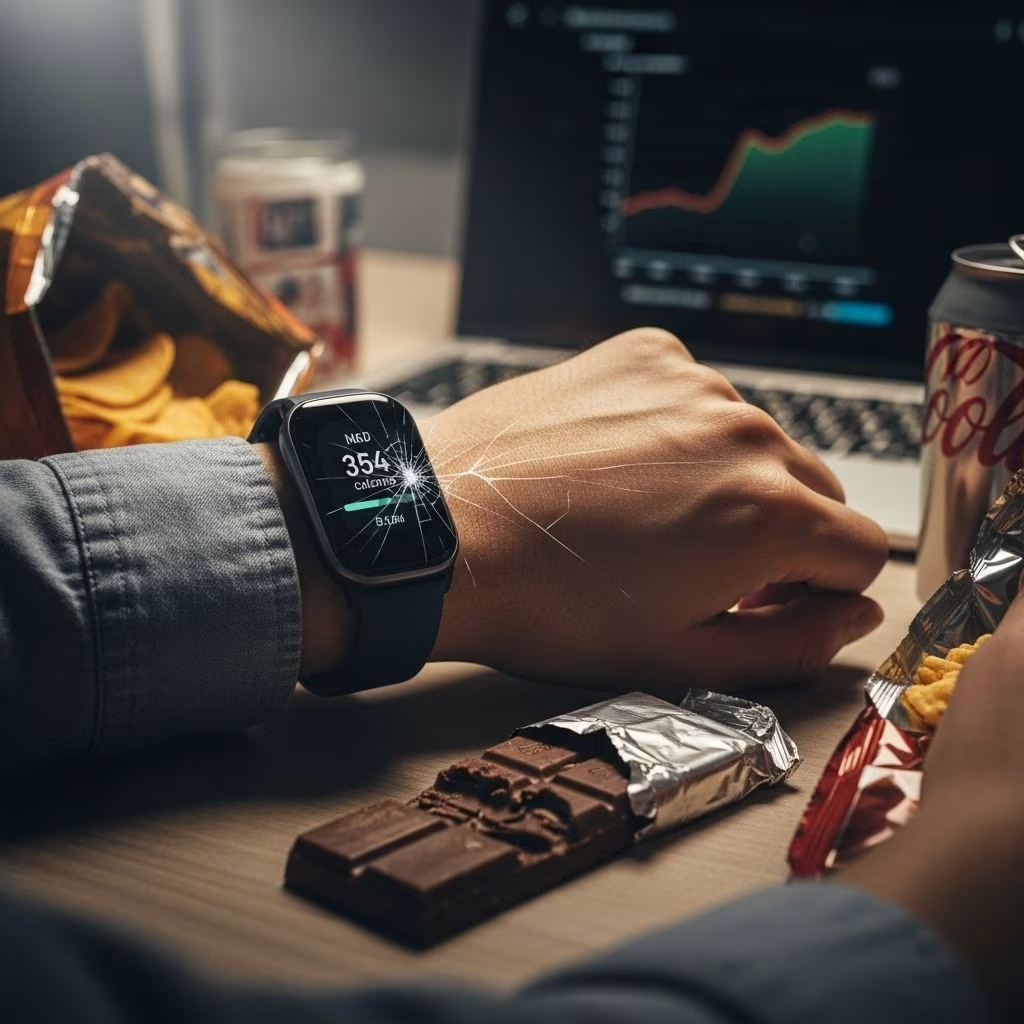
Fitness trackers promise to fuel your motivation, track your progress, and keep you accountable on the journey to better health. But what happens when this sleek technology doesn’t deliver results—in fact, when it actually backfires and contributes to weight gain? Surprising as it may seem, using a fitness tracker isn’t always the guaranteed path to shedding pounds. Delve into the complex web of psychology, physiology, and behavior that explains why your wearable device may be causing the opposite of what you’d hoped, and discover more effective strategies to take control of your health.
Fitness Trackers and the Weight Loss Myth
Millions of people strap on fitness trackers with the belief that these devices will automatically help them lose weight and improve their health. However, research and professional observations suggest that technology alone is often insufficient to bring about sustainable weight loss and, in some cases, can inadvertently encourage weight gain.
- Fitness trackers are incredibly popular—with an estimated 1 in 5 Americans using one, according to recent surveys.
- While trackers boost awareness of activity, studies reveal that users often lose less weight compared to those who do not use such devices.
- Tracking is only one part of a comprehensive approach needed for lasting health improvements.
3 Reasons Your Fitness Tracker May Lead to Weight Gain
1. The ‘Reward Mentality’: Overcompensating for Calories Burned
The feedback loop of fitness trackers can trick you into sabotaging your progress. Many users fall into the trap of believing that any extra physical activity means they deserve a treat—leading to excess calorie consumption that wipes out any gains from exercise.
Common ways the ‘reward mentality’ shows up:
- Overestimating calories burned: Most trackers use algorithms to estimate caloric expenditure, but these numbers can be inaccurate, often overstating how many additional calories you ‘earned.’
- Treating yourself after workouts: The belief that “I exercised, so I can splurge” frequently results in consuming more calories than burned—derailing weight loss or even leading to weight gain.
- Ignoring diet quality: Becoming so focused on activity numbers that the quality of food choices gets sidelined.
As Mayo Clinic dietitian Katherine Zeratsky explains, “You don’t want to override a calorie deficit by rewarding yourself with a rich dessert or meal”.
Break the Cycle: Smarter Strategies
- Focus on the quality of food, not just calories in and out.
- Remember, weight loss is primarily driven by dietary habits, not just physical movement.
- Reward yourself with non-food treats, like a relaxing bath or time with friends, rather than extra snacks.
2. Calorie Data Isn’t as Accurate as You Think
Fitness trackers rely on sensors and algorithms to estimate how many calories you’ve burned, but these devices are often less accurate than users believe.
- Device inaccuracy: Multiple studies show calorie burn estimates can be off by as much as 20% or more—meaning your tracker may vastly misrepresent your true energy expenditure.
- Individual differences: Algorithms are based on generalized population models and can’t perfectly account for your unique genetics, metabolism, or exercise intensity.
- False sense of security: When you believe the numbers are accurate, you might eat more than your body actually needs.
For example, you might see that you’ve burned “500 calories” during a brisk walk, but actual burned calories may be far less—leading you to eat extra snacks and inadvertently exceed your daily needs.
How to Use Trackers More Effectively
- Use calorie estimates as a general guide, not an unassailable truth.
- Prioritize how you feel and how your clothes fit over what your device tells you after a workout.
- Maintain a consistent, balanced nutrition plan regardless of what your tracker says.
3. Behavior and Biology: Trackers Don’t Address Underlying Issues
Obesity and weight gain are biologically complex. Fitness trackers focus on movement, but lasting weight loss is also governed by internal signals, hormones, psychology, medication, and genetic factors. This means that simply increasing your steps might not address the root causes causing weight fluctuations.
- Brain signaling changes: Significant weight gain alters pathways in the brain, making it harder to shed pounds by willpower or movement alone.
- Lack of individualization: Fitness trackers don’t typically account for medical conditions or medications that affect weight.
- Neglecting emotional triggers: Anxiety, stress, habits, or emotional relationships with food go unaddressed by mere activity tracking.
Dr. Louis Aronne, MD, a weight management expert, notes, “Just giving someone a fitness tracker is not going to work a significant percentage of the time—it doesn’t deal with the issues.”
What To Do Instead
- Consider consulting professionals—physicians, registered dietitians, or therapists—for a comprehensive approach.
- If repeated tracker use hasn’t led to meaningful weight loss, explore individualized medical or psychological interventions.
- Remember, wearable tech should be a tool, not the whole plan.
Understanding the Science: Self-Monitoring, Lapses, and Long-Term Results
Self-monitoring, a core principle in many weight loss programs, plays a key role in both short-term and long-term weight management. However, simply wearing a tracker is not a universal solution. The way users interact with the device and respond to its data can have profound effects on outcomes.
- Lapses in self-monitoring: Research indicates that longer lapses in using trackers or self-weighing are linked to weight gain. Short lapses (<3 days) matter less, but prolonged disengagement can lead to clinically significant weight increases.
- Declining engagement: Over time, tracker use and engagement tend to drop, reducing their effectiveness as self-monitoring tools.
- Positive reinforcement matters: When used consistently and with the right mindset, trackers offer useful data and can promote accountability.
Key Takeaways: How to Make Your Fitness Tracker Work for You
- Recognize its limits: Remember that a tracker won’t automatically lead to weight loss—it’s a tool, not a solution.
- Focus on consistency, not perfection: Occasional lapses are normal; the danger lies in long-term disengagement.
- Use data wisely: Interpret calories burned with skepticism. Use step counts or activity minutes as sources of motivation, not permission to overeat.
- Address holistic health: Nutrition, sleep, stress management, and emotional well-being are essential. Trackers cannot address all of these alone.
- Seek help for deeper challenges: If you have trouble losing weight despite consistent tracking, consider deeper physiological or psychological factors—these may need expert intervention.
Frequently Asked Questions (FAQs)
Q: Can fitness trackers help with weight loss?
A: Fitness trackers can increase physical activity awareness and promote engagement in healthy habits, but research shows they are not a guaranteed tool for weight loss. Success largely depends on consistent use, behavioral changes, and complementary nutrition strategies.
Q: Why do some people gain weight after using a fitness tracker?
A: Weight gain can result from overcompensation (rewarding exercise with extra calories), reliance on inaccurate calorie data, or neglecting the psychological, genetic, or medical factors influencing weight. Trackers alone may not address these root causes.
Q: Are the calorie counts on fitness trackers reliable?
A: Calorie estimates from fitness trackers vary widely by device and are often inaccurate. They should be used as loose guides—not precise measures—for planning nutrition and activity.
Q: What should I do if my tracker isn’t helping me lose weight?
A: Consider a holistic approach that includes medical evaluation, nutrition guidance, stress management, and behavioral support. Use your tracker as a source of motivation and insight—not as your sole strategy.
Q: Is it okay to stop using my fitness tracker?
A: If wearing the tracker causes stress, discouragement, or obsessiveness, it can be helpful to take a break or shift focus to non-technological self-monitoring. Success is not solely dependent on wearable technology.
Tips for Sustainable and Healthy Weight Management
- Combine fitness tracking with mindful eating and a balanced diet.
- Set non weight-related goals, such as mood improvement or building strength, for more holistic motivation.
- Look for patterns in behavior and triggers that lead to lapses, not just data points or numbers.
- Celebrate consistency and effort, not just calorie burn or step counts.
- Engage support systems, whether through friends, family, or professional guidance.
In Summary
Fitness trackers can be valuable health tools—but only when used as part of a larger, personalized strategy that addresses biological, psychological, and lifestyle components of weight management. Don’t let a step count or calorie number dictate your health journey. Focus on building sustainable habits, and seek professional support if you find yourself stuck, frustrated, or discouraged by technology. Success isn’t measured by steps alone, but by the choices and awareness you cultivate every day.
References
- https://pmc.ncbi.nlm.nih.gov/articles/PMC7995618/
- https://www.youtube.com/watch?v=-U0UY50gOxw
- https://www.prevention.com/weight-loss/a20487788/3-reasons-why-your-fitness-tracker-is-making-you-gain-weight/
- https://pmc.ncbi.nlm.nih.gov/articles/PMC9034426/
- https://www.prevention.com/fitness/a65182571/fitness-tracker-trap/
- https://www.health.harvard.edu/blog/activity-tracker-may-not-be-the-key-to-weight-loss-2016102610553
- https://www.goodrx.com/well-being/movement-exercise/gaining-weight-while-working-out


