


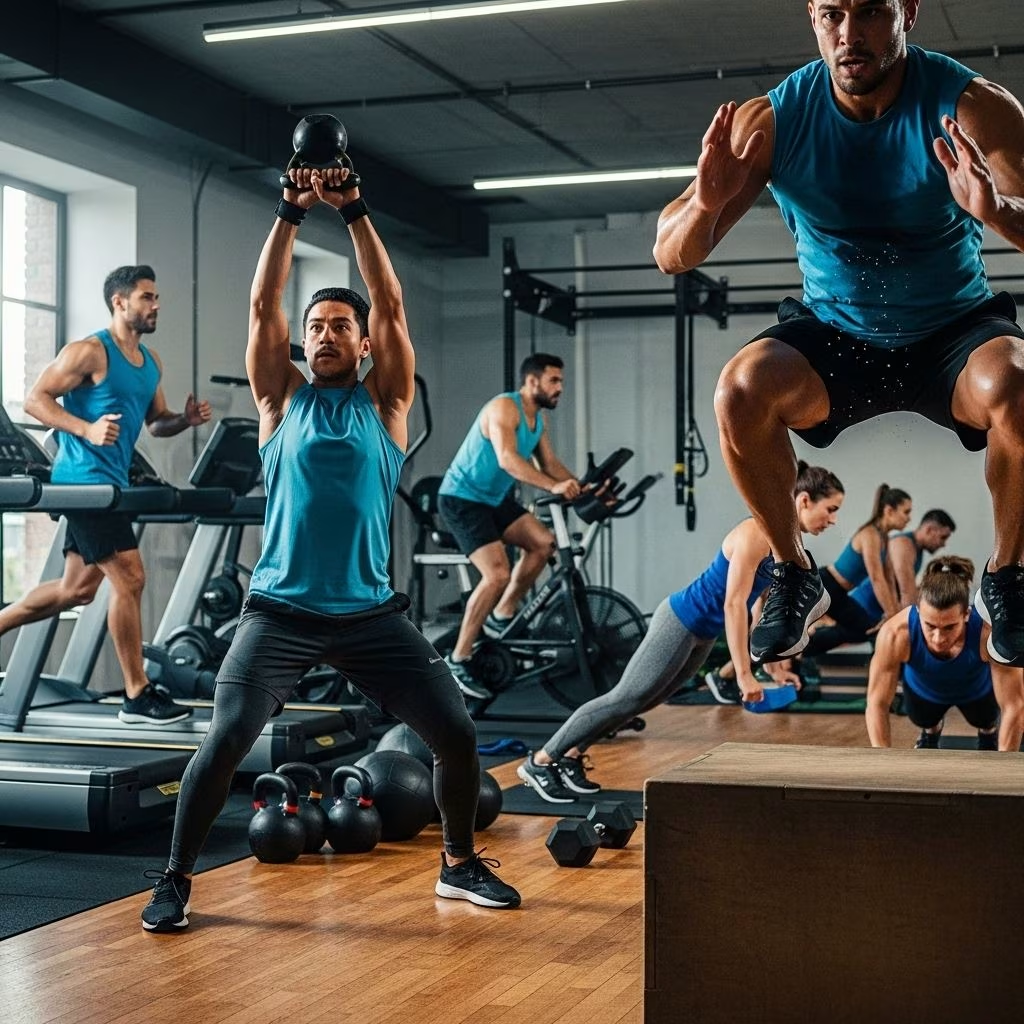
Which Exercises Burn the Most Calories? A Comprehensive Guide
When it comes to losing weight or improving fitness, the type of exercise you choose plays a major role in how many calories you burn. Whether you’re looking for the fastest way to torch calories, boost your cardiovascular health, or simply find the most efficient fat-burning workouts, understanding which exercises offer the highest calorie expenditure can help you reach your goals.
This article breaks down the most effective exercises for calorie burn, explains the science behind their effectiveness, and provides expert tips to maximize your workout efficiency. You will also find actionable advice for incorporating these moves into your routine and frequently asked questions for tailored guidance.
Why Calorie Burn Matters
At the core of every weight loss journey is the calorie deficit: burning more calories than you consume. Exercises that use multiple large muscle groups and elevate the heart rate tend to burn more calories, pushing your body to work harder and create that deficit. However, factors such as body weight, muscle mass, intensity, and workout duration all play a role in determining your exact calorie burn during any activity.
- Body weight: Heavier individuals typically burn more calories per minute.
- Exercise intensity: The harder you work, the more energy you expend.
- Muscle engagement: Full-body exercises involving large muscles burn more calories.
- Workout duration: Time spent actively moving increases total calorie burn.
Now, let’s break down the best exercises for maximizing calorie burn and examine what makes them so effective.
Top Calorie-Burning Exercises (and Why They Work)
Below is a breakdown of some of the highest calorie-burning exercises, including both cardio and strength-based movements, supported by expert advice and scientific research.
| Exercise | Average Calories Burned* (per hour) | Key Benefits |
|---|---|---|
| Running | 500–1,000 | Full-body engagement, speed/pace variety, builds endurance |
| Swimming | 400–700 | Low-impact, total body, cardiovascular & strength benefits |
| Cycling | 500–700 (steady); higher for sprints | Leg strength, cardiovascular fitness, scalable intensity |
| Rowing | 400–600 | Full-body, endurance, muscular strength |
| Boxing | 500–800 | Upper body & core, balance, coordination |
| High Intensity Interval Training (HIIT) | Varies; up to 700+ | Intermittent effort, after-burn effect, time efficient |
| Kettlebell Swings | Up to 20 calories/minute | Compound, explosive, strength and cardio blend |
| Jump Rope | ~13 calories/minute | Coordination, agility, portable cardio |
*Calorie burn estimates are for the average adult and will vary by individual.
Running
Running remains one of the most effective exercises for burning calories quickly. Depending on your pace, weight, and endurance level, you can expect to burn between 500 and 1,000 calories per hour. Since running works nearly every major muscle group—legs, core, and sometimes arms—it’s a full-body, high-impact exercise with substantial calorie-torching potential.
- Speed, incline, and interval variations can increase total burn.
- Outdoor and treadmill running both offer advantages for calorie expenditure.
Swimming
Swimming not only minimizes joint stress but effectively scorches calories due to the resistance of water. A 30-minute swim can burn 200 to 300 calories, and sustained effort for an hour may reach 400–700 calories or more, especially with strokes like butterfly or freestyle. It’s ideal for cardiovascular fitness, endurance, and building lean muscle.
- Engages all major muscles, especially core, shoulders, and back.
- Great for people with joint sensitivities or injuries.
Cycling
Cycling is a versatile workout that ranges from moderate rides to intense, high-speed intervals. A steady session can burn 500–700 calories per hour. Pushing intensity with hill climbs, sprints, or intervals—whether outdoors or on a stationary bike—boosts the total calorie burn. For maximum impact, try alternating high-effort sprints with slower recoveries.
- Enhances lower body strength and power.
- Excellent option for both group classes and outdoor solo rides.
Rowing
A vigorous hour of rowing can burn between 400 and 600 calories. Rowing uses legs, core, back, and arms in a rhythmic push-pull motion, providing an effective blend of cardiovascular and muscular conditioning.
- Low-impact full-body workout.
- Efficient calorie burn, even with shorter workouts.
Boxing
Boxing combines high-intensity cardio with strength and coordination training. In a one-hour session, expect calorie expenditures in the 500–800 range. Shadowboxing, working with a heavy bag, and sparring all elevate heart rate while engaging the core and upper body.
- Improves balance, core strength, and overall conditioning.
- Great stress relief and confidence builder.
Compound Movements & Strength Training
Compound exercises recruit multiple muscle groups at once, making them extremely efficient for calorie burning and muscle building. According to trainers, leg-dominant movements like squats, deadlifts, and thrusters utilize the largest muscles, which helps increase total energy expenditure. Progressive overload—gradually increasing resistance and volume—continues to drive calorie burn and muscle adaptation.
- Squats: Targets glutes, quads, hamstrings, and core.
- Deadlifts: Engages legs, back, and core, building full-body strength.
- Thrusters: Combines a squat and overhead press for maximal calorie output.
Key Points on Compound Movements
- Include compound moves to stimulate metabolism and maximize afterburn (excess post-exercise oxygen consumption – EPOC).
- Start with bodyweight exercises; add resistance as you gain strength.
- Focus on proper form to minimize injury risk.
The Power of Intervals and HIIT
High-Intensity Interval Training (HIIT) revolutionizes calorie burning. Alternating short bursts of all-out effort with brief periods of rest keeps the heart rate high and triggers the after-burn effect, causing you to burn calories even after workout completion. A typical 20–30 minute HIIT session can burn as many calories as an hour of steady-state cardio, and often more, due to the cumulative high heart rate and variation in intensity.
- “Sprint” intervals (e.g., 20 seconds on, 10 seconds off) dramatically raise calorie expenditure.
- HIIT sessions are time-efficient and can be performed with bodyweight or equipment.
Popular HIIT Exercise Examples
- Burpees: Engages upper and lower body; a 180-pound person burns ~1.43 calories per burpee, aiming for 10 or more per minute.
- Mountain Climbers: High-intensity, full-body move focusing on core, arms, and legs.
- Kettlebell Swings: Can torch up to 20 calories per minute, working legs, glutes, back, and shoulders.
- AirDyne Bike Sprints: In rare cases, may burn 80+ calories a minute at absolute max effort (typically fewer for most users).
Unique Exercises That Burn Extra Calories
Beyond traditional gym staples, a variety of creative or less common activities provide exceptional calorie-burning benefits. Consider incorporating these moves into your routine for variety and effectiveness.
- Jump Rope: Moderate-intensity skipping (~100–120 skips/min) burns about 13 calories per minute. It challenges coordination and can be performed almost anywhere.
- Fat-Tire Biking: Riding on specialized thick-tire bikes, especially in challenging terrain, can burn up to 1,500 calories per hour. This intense workout depends on fitness, resistance, and terrain.
- “Cindy” CrossFit WOD: Cycles through 5 pull-ups, 10 push-ups, and 15 air squats repeatedly for 20 minutes, averaging about 13 calories per minute.
- Battling Ropes: Research shows battling ropes lead to an average burn of 10.3 calories per minute, plus improved total oxygen consumption.
- Plank to Pike: Combines strength and cardio while targeting the core, shoulders, and upper body. Options exist for mats or pilates reformers, with pushups added for extra intensity.
How to Maximize Calorie Burn in Your Workouts
To get the greatest calorie-burning benefit from your exercise regime, use the following science-backed strategies:
- Increase intensity: Push your body outside its comfort zone with sprints, intervals, or challenging resistance.
- Combine movements: Pair cardio and strength moves (e.g., thrusters, burpees) for greater full-body engagement.
- Minimize rest periods: Keep rests short (10–30 seconds) to maintain an elevated heart rate.
- Use large muscle groups: Exercises involving legs, back, and chest consume more energy than those isolating smaller muscles.
- Train with variety: Mix up your routine to prevent plateaus and keep motivation high.
Additional Tips for Effective Calorie Burning
- Track your effort with a heart rate monitor or calorie tracking app for accuracy.
- Listen to your body: Gradually increase intensity/duration to avoid injury and promote consistency.
- Fuel appropriately: Eat balanced meals for energy and post-exercise recovery.
- Hydrate before, during, and after workouts.
- Allow rest and recovery for muscle repair and optimal performance.
Frequently Asked Questions (FAQs)
Q: Which exercise burns the most calories in the shortest time?
A: High-intensity exercises like running sprints, HIIT circuits, or kettlebell swings usually burn the most calories per minute. For instance, running and HIIT can burn up to 15–20 calories per minute at maximum intensity, while some people can approach 20+ calories per minute with kettlebell swings or AirDyne sprints.
Q: Is cardio or strength training better for burning calories?
A: Both have important roles. Cardio typically burns more calories during the workout, while compound strength training boosts metabolism, helping you burn more calories at rest and after exercise (the “after-burn” effect). Combining both yields the best results.
Q: How many calories do you need to burn in a workout to lose weight?
A: Weight loss requires a calorie deficit. Burning an extra 250–500 calories per workout, alongside healthy dietary changes, can help achieve a weekly 1–2 pound loss safely. Individual needs will differ based on age, gender, and metabolism.
Q: Do shorter, high-intensity workouts really work for calorie burning?
A: Yes, short HIIT or circuit workouts can rival or surpass longer steady-state cardio sessions in calorie burn, thanks to elevated post-exercise oxygen consumption (EPOC) and intense muscle recruitment.
Q: How do I know if I’m burning enough calories?
A: Use fitness trackers, calorie burn calculators, or consult an exercise professional for personalized estimates. Keep in mind that consistency and effort matter most over time.
Key Takeaways
- Choosing exercises that engage large muscle groups and maintaining high intensity is crucial for maximizing calorie burn.
- Mixing cardio with compound strength movements provides the best health and weight loss benefits.
- Consistency, progressive overload, and enjoyment are key to long-term results—find activities you love to stay motivated.
Incorporate a blend of high-calorie-burning exercises like running, swimming, cycling, HIIT, compound movements, and mix in unique activities for variety and motivation. Remember, burning calories effectively starts with smart movement—and finishes with consistency and determination.
References
- https://www.prevention.com/weight-loss/a41046481/what-exercise-burns-the-most-calories/
- https://www.prevention.com/fitness/a20450377/exercises-that-burn-more-calories-than-running/
- https://www.usatoday.com/story/life/health-wellness/2025/09/24/what-exercise-burns-the-most-calories/86287614007/
- https://www.youtube.com/channel/UC9M3b9q8SsPraJVWacDU68Q
- https://www.youtube.com/watch?v=7-Ye2cpz3fo
- https://www.youtube.com/watch?v=cOwCQVe7VOk


