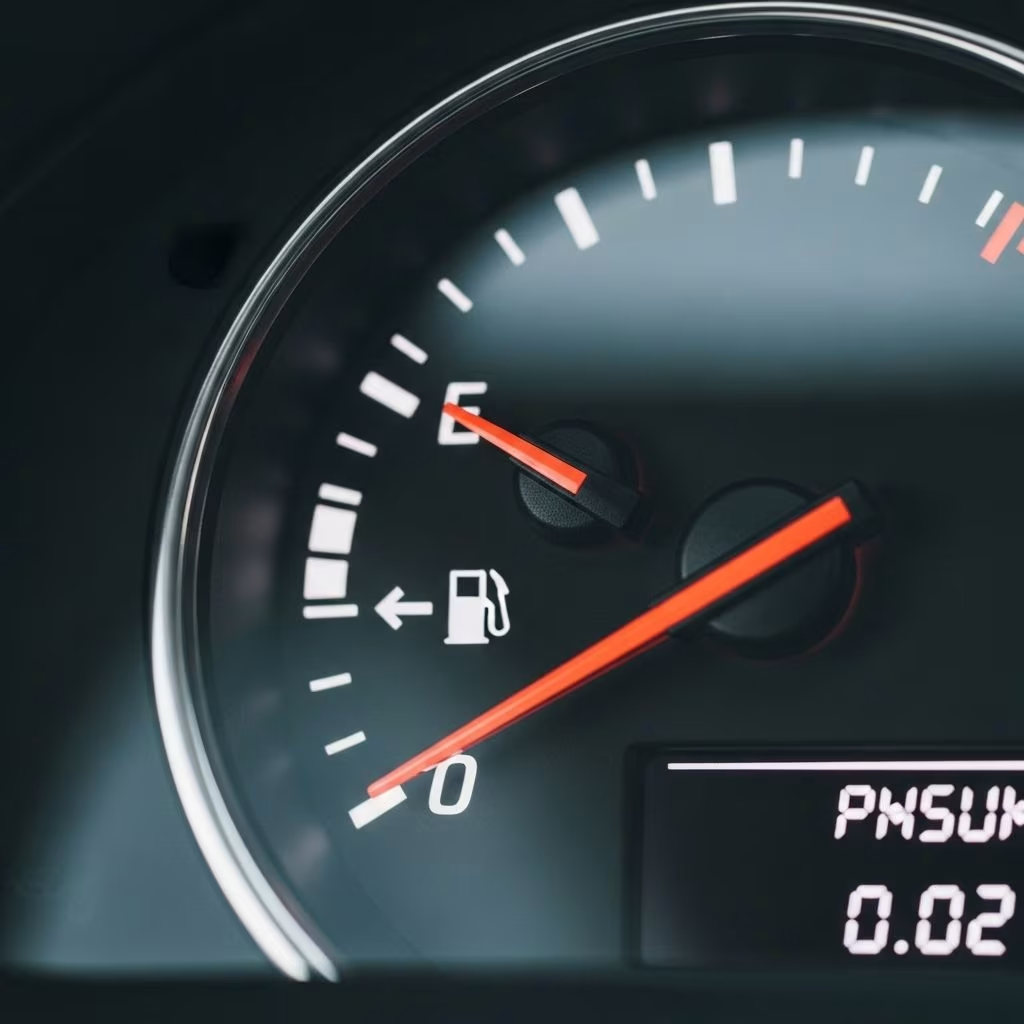
What Does the Arrow on Your Gas Gauge Really Mean?
If you’ve ever driven a car, you might have glanced at your dashboard fuel gauge and spotted a tiny arrow next to the fuel pump symbol. For years, this symbol has been quietly serving drivers, yet many people have no idea what it actually indicates. Whether you’re behind the wheel of your usual ride or renting a car on vacation, knowing the purpose of this arrow could save you time, frustration, and even embarrassment at the fuel pump.
The Quiet Secret of the Dashboard Arrow
The arrow on your fuel gauge is far from decorative. It indicates which side of your car the fuel filler cap is located on. If the arrow points left, your fuel cap is on the left side; if it points right, it is on the right side. This small feature is especially beneficial when driving an unfamiliar vehicle, such as a rental or loaner car, eliminating the guesswork and the awkward maneuvering at gas stations or—worse—having to reposition your car after pulling up to the wrong pump.
- Arrow points left: Fuel cap is on the driver’s side.
- Arrow points right: Fuel cap is on the passenger side.
This concise, universally-understood visual cue saves time and frustration for millions of drivers worldwide.
The Story Behind the Gas Gauge Arrow
You might be surprised to learn that the arrow’s invention was the result of an unexpectedly rainy day and a practical inconvenience. In April 1986, Ford designer Jim Moylan found himself caught in a downpour, pulling up to a gas station in a company car. Unaware of which side the fuel filler was on, he guessed incorrectly and had to scramble around the car—getting soaked in the process. This frustrating moment sparked a simple yet effective idea: why not indicate the filler location directly on the instrument panel?
Moylan dashed inside and wrote a memo to Ford management proposing the addition of a fuel tank arrow on dashboard gauges. The idea was embraced and implemented, first appearing on the 1989 Ford Escort and Mercury Tracer models. It wasn’t long before other automakers followed suit. Within a few years, the fuel filler arrow became an industry standard, to the extent that some drivers can’t recall a time before its inclusion.
An Early Take: Mercedes-Benz’s Arrow
The concept of indicating the fuel filler location wasn’t wholly new, however. As early as 1976, Mercedes-Benz experimented with a dashboard warning light shaped like an arrow, which pointed toward the side of the vehicle with the gas cap. Despite its efficiency, this particular detail didn’t gain widespread adoption, and Mercedes eventually dropped it in favor of the now-standard printed arrow in the late 1990s.
Why Fuel Caps Aren’t Always on the Same Side
With so many features of modern cars standardized by government regulations—such as seat belts, air bags, or controls—you might wonder why the side placement of the fuel filler cap varies. The answer lies in a balance between safety, engineering freedom, and regulatory minimums:
- Regulations require that the fuel filler be located on the car’s widest side and away from crumple zones, ensuring protection in case of a collision.
- Automakers have leeway to choose either the left or right side since there are no explicit mandates about standardizing filler cap location.
- This flexibility accommodates design constraints, production efficiencies, and regional preferences for left- or right-hand drive markets.
Years ago, some cars—such as the classic 1964 Plymouth Fury—had their fuel caps in the rear bumper, cleverly hidden behind the license plate. While visually appealing, this design posed serious safety risks; minor rear-end collisions could result in fuel spills and potential fires. As a result, fuel cap locations migrated to the sides of vehicles.
| Era | Fuel Filler Placement | Comments |
|---|---|---|
| 1960s | Rear (often behind license plate) | Stylish but unsafe; phased out due to risk |
| 1970s-80s | Side (left or right) | Increased safety; no standard side required |
| 1990s–Present | Side (left/right, with dashboard arrow indicator) | Industry-wide inclusion of arrow; safer and more convenient |
The Case for and Against Standardizing Fuel Cap Sides
- Pros of Standardization: Predictability for drivers; potentially smoother gas station flow.
- Cons: Limits manufacturer design, complicates global vehicle distribution, and may not improve efficiency in practice.
Why Don’t Most People Notice the Arrow?
Despite being present on millions of vehicles, only a minority of drivers are aware of the gas gauge arrow’s function. Indeed, AAA studies and other surveys have found that as few as 10% of drivers realize the arrow’s significance. Most drivers go years without noticing, only to experience a “lightbulb moment” when the feature is pointed out.
The arrow often goes unnoticed as drivers focus more on fuel levels than auxiliary dashboard symbols. Its small size and subtlety may make it invisible to the unobservant, but once you know it’s there, you’ll never forget it.
Busting Gas Gauge Myths
- Myth: All vehicles have the fuel cap on the driver’s side.
Fact: It can be on either side; always check the arrow. - Myth: The gas gauge is strictly analog.
Fact: Modern digital dashboards also include the arrow indicator. - Myth: The arrow is required by law.
Fact: The fuel gauge arrow is not mandated by governmental regulation; it is an industry-adopted convention.
Fueling Tips Every Driver Should Know
Whether you’re commuting daily or planning your next road trip, practicing smart fueling habits can make a difference for both your vehicle’s health and your wallet.
Why You Shouldn’t Top Off Your Gas Tank
It’s tempting to “top off” after the gas pump auto-shuts, but doing so can actually harm your car’s carbon filter or canister. These filters are designed to capture vapor, not liquid fuel. Overfilling can cause gasoline to enter the canister, reducing its effectiveness and eventually requiring costly repairs.
- Once the pump clicks off, stop fueling. Don’t add more!
- This keeps your emissions system functioning and extends filter life.
Why Fuel Octane Matters
Your car’s engine is designed for a specific fuel octane rating. Using a lower octane than recommended can reduce performance and, over time, damage your engine. These ratings are specified in your owner’s manual or on a sticker by the gas cap.
- Regular: 87 octane (typical for many cars)
- Midgrade: 89 octane
- Premium: 91 or higher octane (performance/luxury cars)
Always select the fuel that matches your engine’s requirements for optimal longevity and performance.
Tire Pressure and Fuel Efficiency
Proper tire pressure isn’t only about safety—it also affects how efficiently your car uses fuel. Under-inflated tires increase rolling resistance, meaning your engine has to work harder and burn more gas. Check your tire pressure regularly, referencing the recommended PSI found in your owner’s manual or on the sticker inside your driver’s side door well. Always check pressure when tires are cold for accurate readings.
Frequently Asked Questions
Q: How can I quickly find out which side my fuel filler cap is on without leaving my car?
A: Look at your dashboard’s fuel gauge. The small arrow next to the gas pump symbol points toward your car’s filler cap location. If it’s on the left, your cap is on the driver’s side; if right, it’s on the passenger side.
Q: Is the arrow present on all cars?
A: Almost all cars manufactured in the past several decades include this feature, but a few older or classic models may not have it. Always check if you’re unsure.
Q: Will topping off my gas tank once or twice cause issues?
A: Occasionally doing so may not immediately harm your vehicle, but regular topping off can quickly degrade the carbon filter system, leading to expensive repairs.
Q: Why don’t all manufacturers put the gas cap on the same side?
A: Automakers choose the side based on design needs, manufacturing consistency, and for global distribution efficiency. There is no regulation dictating a specific side.
Q: How do digital dashboards display the fuel fill indicator?
A: Digital dashboards include the fuel fill arrow in their interface—often directly within the digital fuel gauge, just as with analog versions.
Takeaways for Smarter, Hassle-Free Refueling
- Next time you enter a vehicle, glance at the gas gauge arrow—especially when driving rentals, new cars, or someone else’s vehicle.
- Stop fueling when the pump auto-shuts. Protect your emissions system and vehicle performance.
- Keep your tires properly inflated and always use the recommended fuel octane for your car.
- Appreciate the small touches—like the dashboard arrow—that make everyday driving smoother and more intuitive.
From humble beginnings inspired by a rainy inconvenience to modern industry standard, the dashboard fuel fill arrow is a testament to how small ideas can drive big improvements for everyone on the road. Next time you fuel up, you’ll know just where to pull in—and you can marvel at how such a tiny indicator quietly shapes the driving experience.
References
- https://www.motorbiscuit.com/what-does-arrow-on-your-dashboard-gas-gauge-actually-mean/
- https://999ktdy.com/what-does-the-tiny-arrow-next-to-the-gas-gauge-symbol-on-your-dashboard-mean/
- https://www.youtube.com/watch?v=6TKFSY0YFAw
- https://www.kia-forums.com/threads/fuel-door-indicator-arrow.350533/
- https://www.pathfindertalk.com/threads/fuel-gauge-instrumentation-arrow-pointing-to-right-wrong-side.662/