What To Do If You’re Bitten by a Snake: Essential Safety, Myths, and Facts
Every year, thousands of people in the United States alone encounter snakes—sometimes with serious, even life-threatening consequences. Whether you’re an avid gardener, a hiker, or someone simply enjoying the outdoors, understanding what to do if bitten by a snake, separating fact from fiction, and knowing how to prevent snake bites are all crucial for your safety.
Understanding the Risks: Where and Why Snake Bites Occur
Snake encounters are possible in nearly every part of the United States. Venomous snakes—such as copperheads, rattlesnakes, coral snakes, and water moccasins (cottonmouths)—are found across the country, but risk is particularly high in eastern and southern states .
- Annual U.S. statistics: About 7,000 to 8,000 people are bitten by venomous snakes yearly.
- Worldwide incidence: Globally, the World Health Organization estimates as many as 2.4 million venomous snake bites occur annually.
- Most bites occur when people attempt to capture or kill snakes, rather than through accidental encounters.
While the fatality rate is low—averaging five or six deaths per year in the U.S.—snake bites always require urgent medical attention .
Types of Venomous Snakes in the U.S.
Being able to recognize local venomous species is vital for safety and swift medical response.
- Copperheads: Found in the eastern U.S.; known for their copper-reddish head and hourglass markings.
- Coral snakes: Brightly colored with red, yellow, and black bands; often confused with nonvenomous king snakes.
- Rattlesnakes: Characterized by a rattle at the tail; inhabit rocky areas, forests, grasslands, and deserts.
- Water moccasins (cottonmouths): Semi-aquatic; found near water in the southeastern U.S.
Note: Venomous snakes are present on every continent except Antarctica .
First Aid: What To Do Immediately After a Snake Bite
If bitten by a snake, it’s vital to act quickly and correctly. Your primary goal should be to get to emergency care as fast as possible. Here’s what you should do while en route:
- Call 911 immediately.
- Keep calm: Panic and movement will spread the venom more readily through your bloodstream .
- Remove tight clothing and jewelry: As swelling may rapidly occur, remove rings, watches, and anything constricting near the bite .
- Immobilize the bitten limb: Keep the area below the level of the heart to slow venom spread .
- Minimize movement: Avoid walking or running unless absolutely necessary .
- Take periodic wound photos: Photograph the bite site every 15 minutes to document progression for medical staff .
- Clean the wound: If practical, wash gently with soap and water .
- Cover with a clean, moist dressing.
Do not:
- Apply a tourniquet.
- Cut the wound or attempt to suck out the venom.
- Apply ice packs.
- Take any medications—especially anti-inflammatories or stimulants—unless specifically directed by a healthcare provider.
- Elevate the bite above heart level.
These outdated or dangerous methods can cause far more harm than good .
Recognizing the Signs and Symptoms of Venomous Snake Bites
While some snake bites are “dry” (no venom injected), most bites from venomous snakes produce symptoms that can appear almost immediately:
- Sudden and severe pain or burning at the bite site.
- Swelling and discoloration of surrounding tissue.
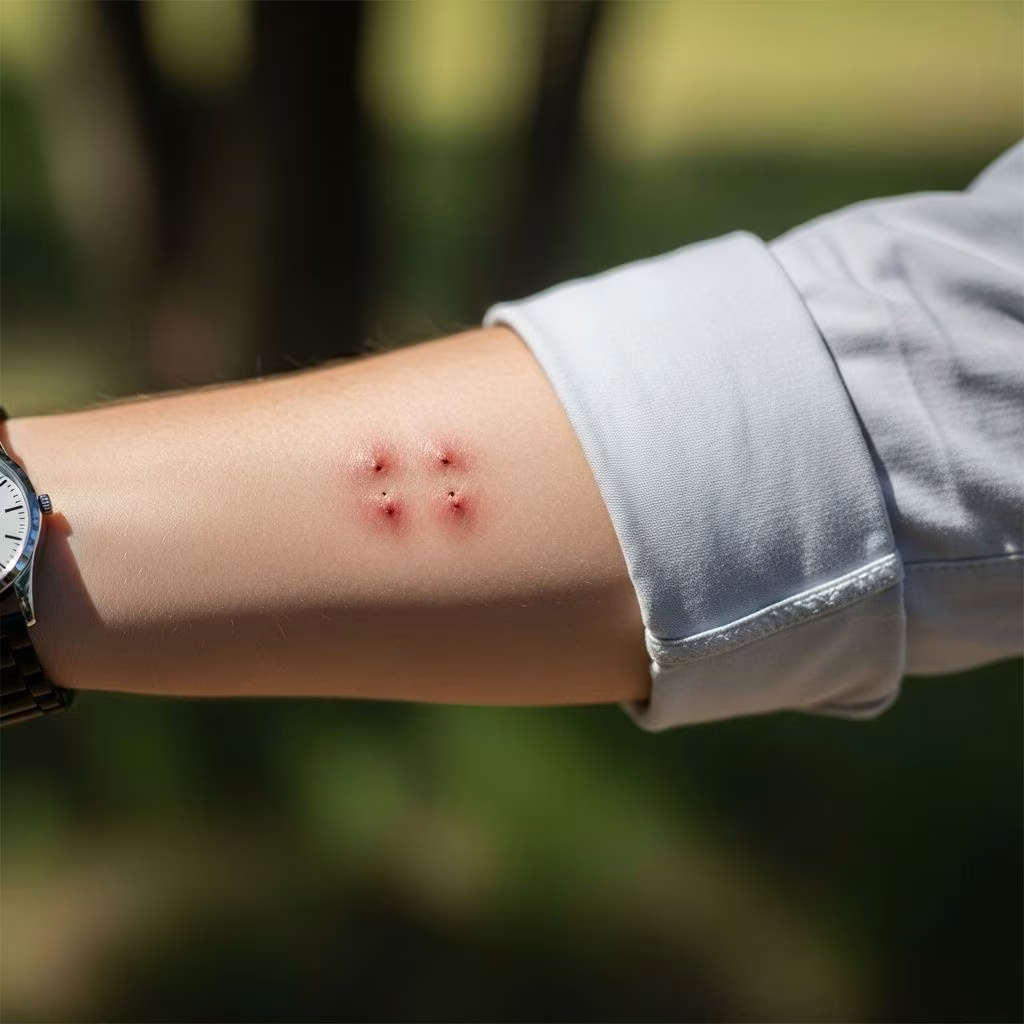
- Visible fang puncture marks—typically two with several smaller teeth impressions.
- Tingling, numbness, or loss of muscle function.
- Nausea, vomiting, or rapid pulse.
- Weakness or loss of coordination.
- Signs of shock: pale, clammy skin; rapid heart rate; confusion.
If any of these symptoms occur—or if a venomous bite is even suspected—seek professional medical care immediately .
Common Myths and Mistakes: What Not To Do
Misinformation about snake bites abounds. Dispelling these myths can make a life-or-death difference:
- Myth: Sucking out the venom helps.
Fact: This doesn’t remove poison and can damage tissue or introduce infection . - Myth: Applying ice or a tourniquet stops the venom.
Fact: Ice can worsen tissue damage, and tourniquets may cause loss of limb. - Myth: Only wild, rural areas have venomous snakes.
Fact: Venomous species are present in many populated, suburban, and garden settings. - Myth: Antivenom is always required.
Fact: Not all bites need antivenom, but always let a medical professional evaluate and decide. - Myth: Dead snakes are harmless.
Fact: Even dead or decapitated snakes can bite due to reflexes . - Myth: All snakes are aggressive.
Fact: Most snakes bite only in self-defense.
How to Identify Venomous vs. Non-Venomous Snakes
Correct identification is important, but never attempt to handle or catch the snake for identification! If possible, snap a clear photo from a safe distance. Here are some general features of common U.S. venomous snakes:
| Snake | Distinctive Features | Habitat |
|---|---|---|
| Copperhead | Hourglass-shaped bands, coppery head | Woodlands, rocky hillsides |
| Coral Snake | Red and yellow bands touch; small head | Sandhills, pine forests |
| Rattlesnake | Rattle on tail, triangular head | Deserts, forests, grasslands |
| Water Moccasin | Thick body, white “cotton” mouth lining | Swamps, streams, lakes |
Prevention Tips: How to Avoid Snake Bites
Most snake bites are avoidable with the right precautions. Keep these practical safety rules in mind whenever you’re outdoors:
- Leave snakes alone: Never try to capture or kill a snake. More than half of all bites happen this way .
- Stay alert: Watch where you step, particularly in tall grass, piles of leaves, or under rocks and logs.
- Wear protective clothing: Boots and long pants offer some protection, especially when hiking or gardening.
- Avoid reaching blindly: Don’t stick your hands under rocks, into holes, or beneath brush where you can’t see.
- Listen for warnings: Many rattlesnakes alert with a characteristic rattle—if you hear it, stand still until you see the snake and then back away slowly .
- Supervise pets and children: Teach children not to touch snakes, and keep pets from investigating wildlife.
- Be cautious at night: Many snakes are more active in the early morning or at dusk and night.
Tip: For information on local species and emergent sightings, use the SnakeBite911 mobile app for alerts and educational resources .
What Happens at the Hospital: Medical Treatment of Snake Bites
Upon arrival at an emergency facility, medical professionals will:
- Assess the patient’s vital signs and the wound appearance.
- Decide if antivenom is needed; not all bites require it .
- Administer intravenous fluids and monitor organ function (kidneys, heart, lungs).
- Clean and dress the wound, give pain management, and observe for developing symptoms.
- Provide a tetanus shot if needed, and monitor for allergic reaction to antivenom.
- Plan follow-up care for possible complications, such as tissue death or infection.
Timely arrival at the hospital is the most important factor in recovery outcome. Call ahead so the hospital can prepare antivenom if possible .
Global Perspective: The Scope of Snake Bites Around the World
The global burden of snake bites is concentrated heavily in rural areas of tropical and subtropical regions. Limited access to healthcare and antivenom makes snake bites a significant health crisis in parts of Africa, Asia, and Latin America .
- Globally, up to 2.5 million people may suffer venomous bites per year, causing more than 100,000 deaths and many more cases of disability or amputation .
- Snake bite mortality in the Americas is lower than in parts of Asia and Africa, but still results in several hundred deaths annually .
Improving access to antivenom and education is vital worldwide to reducing deaths and permanent disabilities.
Frequently Asked Questions (FAQs) About Snake Bites
Q: How can I tell if a snake bite is venomous?
A: Venomous bites often cause rapid swelling, tissue discoloration, severe pain, and two distinct fang marks. Non-venomous bites are usually less severe but can still become infected .
Q: What should I do if my pet is bitten by a snake?
A: Keep your pet calm and restrict movement. Seek immediate veterinary care. Do not attempt first aid measures used for humans unless directed by a vet.
Q: Are children more at risk from snake bites?
A: Yes. Children’s smaller body size means venom can have a more intense effect. Always get emergency medical care immediately.
Q: Can you die from a snake bite in the U.S.?
A: Deaths are rare—averaging fewer than ten annually—but every venomous bite should be treated as a life-threatening medical emergency .
Q: Should I try to identify or catch the snake?
A: Never try to handle or kill the snake after a bite. Take a photograph from a safe distance if possible, which can help medical professionals, but your safety comes first .
Final Tips and Resources
- Stay educated about local snake species and seasonal risks.
- Download a reputable snake identification and safety app, such as SnakeBite911, for field use .
- If you spend significant time outdoors, consider a first aid course covering snake bites and other wildlife emergencies.
- Always seek professional medical help after any snake bite. Even non-venomous bites carry infection risks.
Snake bites are hazardous but preventable. With knowledge, calm action, and proper emergency response, you can dramatically improve outcomes for yourself, loved ones, or anyone you encounter in a bite emergency.
References
- https://www.countryliving.com/life/travel/a38468/snake-bites/
- https://www.usu.edu/today/story/ask-an-expert-living-in-snake-country—six-things-to-consider
- https://journals.plos.org/plosmedicine/article?id=10.1371%2Fjournal.pmed.0050218
- https://pmc.ncbi.nlm.nih.gov/articles/PMC5495519/
- https://pmc.ncbi.nlm.nih.gov/articles/PMC2791200/
- https://www.snakebitefoundation.org/blog/examining-the-unbalanced-impact-of-snakebites-worldwide
- https://www.nature.com/articles/s41467-022-33627-9
- https://www.who.int/news/item/10-07-2020-study-estimates-more-than-one-million-indians-died-from-snakebite-envenoming-over-past-two-decades