Harvest Moon 2024: A Rare Supermoon and Partial Eclipse Explained
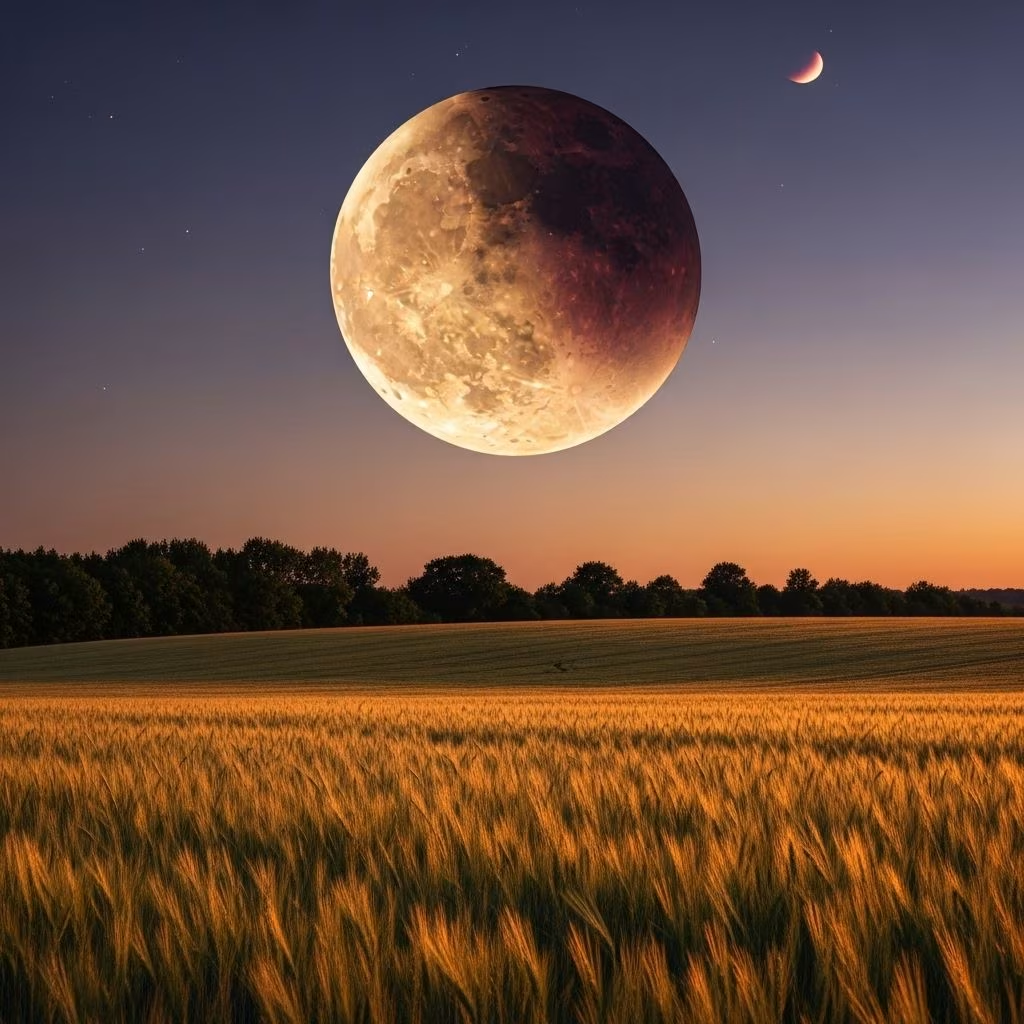
The Harvest Moon in 2024 promises a spectacle of cosmic proportions—combining a supermoon with a partial lunar eclipse on Tuesday, September 17. This phenomenally bright full moon, closest to the autumn equinox, invokes centuries-old traditions and myths, making it more than just an astronomical occurrence. This year’s event is special because both the supermoon and a partial lunar eclipse coincide, offering viewers a chance to witness a slightly dimmed yet extra luminous full moon in the sky, right when sweater weather and pumpkin recipes return to homes across the Northern Hemisphere.
What Makes 2024’s Harvest Moon Unique?
This year, the Harvest Moon stands out due to several rare characteristics:
- Supermoon Status: The full moon will be within 90% of the closest distance to Earth in its orbit (~357,486 km), making it brighter and larger than typical full moons.
- Partial Lunar Eclipse: From 8:41 p.m. to 12:47 a.m. ET, the moon passes through Earth’s partial shadow, with the peak eclipse occurring at 10:44 p.m. ET.
- Extended Moonlight: Seasonal factors ensure several nights of near-full moonlight, providing luminous evenings just as the sun sets—a phenomenon historically crucial for farming and harvests.
- Cultural Resonance: Traditions across cultures align with this moon, from Native American folklore to global festivals like China’s Mooncake Festival and Japan’s Imo Meigetsu.
Supermoon vs. Average Full Moon: Table of Visual Differences
| Moon Type | Distance from Earth | Brightness | Apparent Size |
|---|---|---|---|
| Supermoon | ~357,486 km | Brightest | Slightly larger |
| Average Full Moon | ~384,400 km | Normal | Average |
| Micromoon | ~406,700 km | Faintest | Slightly smaller |
Note: Most people find the size and brightness differences subtle without close comparison.
When and How to Watch the Harvest Moon in 2024
Timing is everything. The Harvest Moon rises as the sun sets on September 17, creating optimal viewing conditions for several consecutive nights. The shortened interval between moonrise on successive days means you can expect nearly full moonlight as dusk falls, extending prime gazing opportunities for three to five evenings, depending on your latitude.
- Partial Lunar Eclipse Timeline (Eastern Time):
- Dimming begins: 8:41 p.m.
- Umbra entry: 10:13 p.m.
- Peak eclipse: 10:44 p.m.
- Umbra exit: 11:16 p.m.
- Event ends: 12:47 a.m.
- Supermoon Viewing: Even with partial eclipse dimming, the moon will appear larger and brighter, weather permitting.
- Planetary Bonus: Look for Saturn to the upper right of the rising moon, if skies are clear.
For the best experience:
- Find an open eastern horizon, away from city lights.
- Use binoculars or a telescope for closer lunar detail.
- Check local weather to maximize your observing opportunities.
Origins and Folklore of the Harvest Moon
What is the Harvest Moon? Meaning & Tradition
The Harvest Moon isn’t tied specifically to September—it’s defined as the full moon closest to the autumn equinox. Its name and lore stem from its practical importance: farmers of old relied on the extra evening light to work longer during crucial harvest periods. Every few years, when the equinox falls late, the Harvest Moon can occur in October.
Across cultures, this moon draws names and symbolism from harvests and seasonal change:
- Indigenous Peoples: Corn Moon, Barley Moon, Wine Moon, Singing Moon, Elk Call Moon—all referencing regional crops and traditions.
- Chinese: The Mooncake Festival celebrates family, abundance, and reunion under the Harvest Moon’s glow.
- Hindu: Pitru Paksha, a period for honoring ancestors, begins with the Harvest Moon.
- Buddhist: Madhu Purnima (Honey Full Moon) marks charity and peace.
- Japanese: Imo Meigetsu (Potato or Taro Moon), celebrating bountiful harvest.
The Science Behind the Harvest Moon’s Extended Glow
The timing of the Harvest Moon owes its luminous nights to a distinct orbital geometry:
- The moon’s path runs nearly parallel to the Earth’s eastern horizon during September.
- This shortens the usual daily delay in moonrise from about 50 minutes to only 25–30 minutes in mid-latitudes.
- Farther north, the gap shrinks further, illuminating several consecutive nights with near-full moons right at sunset.
Spiritual and Symbolic Meaning of the Harvest Moon
The Harvest Moon has deep spiritual resonance:
- Abundance and Nourishment: The bright, enduring light symbolizes hope, prosperity, and gratitude for the earth’s bounty.
- Renewal: Marking the end of one agricultural season and the onset of autumn, the Harvest Moon is linked to spiritual renewal and preparation for winter.
- Balance: Occurring near the autumn equinox, which itself represents equilibrium between day and night, the Harvest Moon carries themes of balance and reflection.
- Connection: Communities worldwide gather for moon festivals and family celebrations, expressing gratitude and strengthening bonds.
Many spiritual traditions take this opportunity to conduct rituals for cleansing, reflection, and manifesting abundance. The moon’s energy is considered potent for setting intentions and expressing gratitude, making the weeks around the Harvest Moon ideal for mindful practices.
Harvest Moon in Magic and Witchcraft
The Harvest Moon traditionally holds power for witches and spiritual seekers:
- It’s considered optimal for rituals and spellwork related to completion, gratitude, and gathering wisdom.
- Its energies are harnessed for manifestations and seasonal enchantments, particularly those invoking abundance, successful harvests, and spiritual fulfillment.
Global Harvest Moon Celebrations and Traditions
- The Mooncake Festival (China):
- Families unite for feasting and storytelling.
- Exquisite mooncakes symbolize unity and prosperity.
- Imo Meigetsu (Japan):
- Japanese people admire the moon, share taro-based dishes, and honor the season’s harvest.
- Pitru Paksha (India):
- Tradition calls for honoring ancestors and reflecting on family legacy.
- Honey Full Moon (Buddhism):
- A day for charity and spiritual reflection.
These diverse celebrations illustrate the universal appeal of the Harvest Moon in fostering gratitude, family, and community.
How Farmers Benefited From the Harvest Moon
Before electric light, the Harvest Moon’s extended glow provided critical support to agricultural communities:
- Enabled farmers to work into the evening during the busiest harvest weeks.
- Reduced the risk of crop loss from autumn frost.
- Created a natural rhythm for rural communities to organize work and celebration.
This practical boon translated into lore, rituals, and even dances connected to the moon’s reliable cycle.
Tips for Photographing and Observing the Harvest Moon
- Scout locations with open unobstructed views of the eastern horizon.
- Use low ISO settings and fast shutter speeds for crisp moon images.
- Include foreground elements—trees, silos, or fields—to capture the moon’s scale and seasonal mood.
- If using a smartphone, tap the moon and adjust exposure manually.
- Consider tracking the moonrise times for consecutive nights to achieve a range of photo opportunities.
Frequently Asked Questions (FAQs)
When and where can I see the Harvest Moon in 2024?
The Harvest Moon will be visible starting at sunset on September 17, with partial eclipse effects between 8:41 p.m. and 12:47 a.m. ET. The spectacle can be admired best from locations with an open eastern horizon and clear skies.
What is a supermoon and how does it differ from a regular full moon?
A supermoon occurs when a full moon coincides with the moon’s closest approach to Earth in its orbit, making it appear slightly larger and brighter than usual. The effect is subtle to casual observers but noticeable to seasoned skywatchers.
Will the Harvest Moon appear red during the partial eclipse?
Unlike a total lunar eclipse (blood moon), the 2024 Harvest Moon’s partial eclipse will only slightly dim the moon, with possibly just a hint of reddish color near the peak shadow but generally keeping its silvery glow.
Why is the Harvest Moon important across cultures?
The Harvest Moon signifies the height of harvest season—both literally for farmers and symbolically in cultural traditions. It has inspired festivals, folklore, songs, and rituals worldwide, uniting communities in gratitude and celebration.
Can I see other planets during the Harvest Moon?
Saturn may be visible to the upper right of the Harvest Moon just after moonrise, if conditions permit.
Summary Table: 2024 Harvest Moon Highlights
| Key Feature | Details |
|---|---|
| Date | September 17, 2024 |
| Moon Status | Supermoon, Partial Lunar Eclipse |
| Peak Eclipse | 10:44 p.m. ET |
| Closest Distance | 357,486 km from Earth |
| Cultural Festivals | Mooncake Festival (China), Imo Meigetsu (Japan), Pitru Paksha (Hindu), Honey Full Moon (Buddhist) |
Conclusion
The 2024 Harvest Moon invites people of all backgrounds to witness a dazzling supermoon, a partial eclipse, and a rich tapestry of traditions. From practical agricultural benefits to spiritual rituals and family gatherings, its unique beauty makes autumn’s arrival both magical and meaningful. Whether you’re moon gazing, celebrating, or simply taking in the serene lunar glow, this year’s Harvest Moon offers an unforgettable celestial experience.
References
- https://www.countryliving.com/life/travel/a23339622/harvest-moon-special-meaning-fall-2024/
- https://www.skyatnightmagazine.com/astrophotography/moon/harvest-moon
- https://www.californiapsychics.com/blog/astrology-numerology/harvest-moon.html
- https://www.wickedmystics.com/blogs/wicked-spirit/witches-and-the-full-moon-the-magical-power-of-october-s-harvest-moon
- https://www.marca.com/en/lifestyle/world-news/2024/09/18/66ea8111e2704e12078b459a.html
- https://www.farmersalmanac.com/full-moon-dates-and-times
- https://www.timeanddate.com/astronomy/moon/harvest.html